Inhalers for COPD (including inhaled steroids)
Comprehensive guide to inhalers for managing COPD symptoms, types of devices, medications, and safe usage techniques.
Chronic obstructive pulmonary disease (COPD) is a progressive lung condition characterized by airflow limitation, often caused by smoking or long-term exposure to irritants. Inhalers are the cornerstone of COPD management, delivering medications directly to the lungs to relieve symptoms like breathlessness, cough, and wheezing, while reducing exacerbations. This article covers the types of inhalers, medications including bronchodilators and inhaled steroids, proper techniques, and practical advice for effective use.
What are inhalers?
Inhalers are handheld devices that administer medication as a mist or powder directly into the lungs. They are essential for COPD treatment because they target the airways efficiently, minimizing systemic side effects compared to oral or injected drugs. There are two main categories: reliever inhalers for immediate symptom relief and preventer (maintenance) inhalers for long-term control. Most people with COPD use a combination of both.
Reliever inhalers, often containing short-acting bronchodilators like albuterol, provide quick relief during breathlessness. Preventer inhalers include long-acting bronchodilators or inhaled corticosteroids (ICS) taken daily to keep airways open and reduce inflammation.
Types of inhaler devices
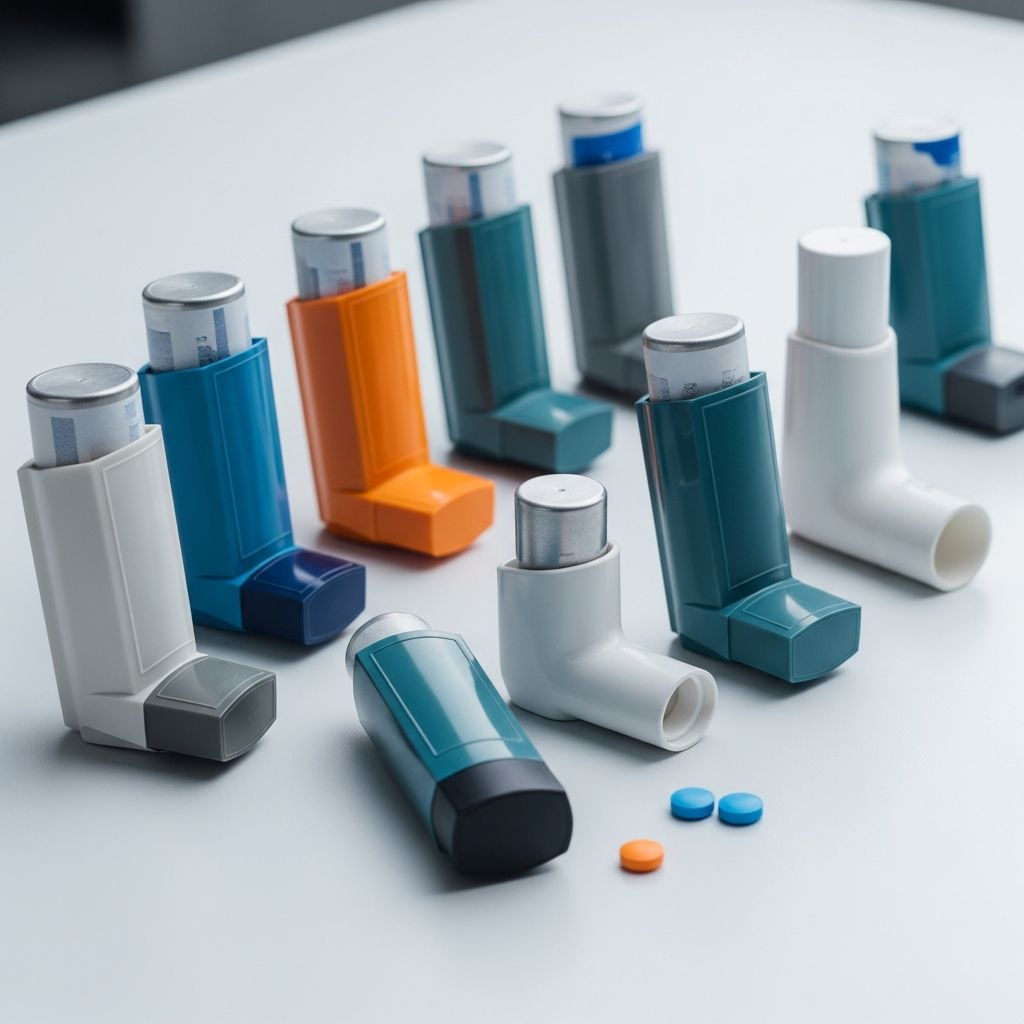
Several inhaler types exist, each with unique mechanisms. Choosing the right one depends on lung capacity, coordination, and preference. Common types include:
- Metered Dose Inhalers (MDIs): Pressurized aerosols releasing a measured dose. Often used with a spacer (valved holding chamber) for better drug delivery, especially in hospitalized patients where MDI + spacer equals nebulizer efficacy.
- Dry Powder Inhalers (DPIs): Breath-activated powders, easier for those with poor coordination but require strong inhalation. Examples include Ellipta and Diskus devices.
- Soft Mist Inhalers (SMIs): Produce a slow-moving mist, like Respimat, suitable for patients with weaker inhalation.
- Nebulizers: Convert liquid into mist via compressor, used for severe cases or acute exacerbations, though MDIs are equally effective when used correctly.
| Device Type | Pros | Cons | Examples |
|---|---|---|---|
| MDI ± Spacer | Portable, fast-acting, cost-effective | Requires coordination; cold freon sensation | Albuterol HFA, Ventolin |
| DPI | No coordination needed, quick | Requires forceful breath; not for very weak patients | Anoro Ellipta, Advair Diskus |
| SMI | Slow mist, less coordination | Bulkier, battery-operated options | Stiolto Respimat |
| Nebulizer | Easy for severe cases | Not portable, time-consuming | Home compressors |
Bronchodilators
Bronchodilators relax airway muscles, improving airflow. They are first-line COPD therapy.
Short-acting bronchodilators (SABAs and SAACAs)
Used as relievers 4-6 times daily or as needed. SABAs like albuterol (Ventolin, Salamol) act in minutes, lasting 4-6 hours. Short-acting anticholinergics (SAACAs) like ipratropium (Atrovent) last 3-6 hours. Often combined (Combivent) for better effect. In hospitals, 97% of COPD patients receive nebulized albuterol ± ipratropium.
Long-acting bronchodilators (LABAs and LAACAs)
Taken daily for maintenance. LABAs like salmeterol (Serevent), formoterol (Oxis) last 12 hours. LAACAs like tiotropium (Spiriva), aclidinium (Genuair) last 12-24 hours. Combinations like umeclidinium/vilanterol (Anoro Ellipta), tiotropium/olodaterol (Stiolto Respimat) are preferred for moderate-severe COPD.
Inhaled steroids
Inhaled corticosteroids (ICS) reduce airway inflammation, used in severe COPD with frequent exacerbations or asthma overlap. Not for mild cases due to risks like pneumonia. Examples: beclometasone (Qvar), budesonide (Pulmicort), fluticasone (Flixotide). Always combine with LABA/LAMA; monotherapy is ineffective for COPD.
ICS/LABA combinations
- Fluticasone/salmeterol (Seretide, Advair)
- Budesonide/formoterol (Symbicort)
- Beclometasone/formoterol (Fostair)
Triple therapy (ICS/LABA/LAMA)
For advanced COPD: fluticasone/umeclidinium/vilanterol (Trelegy Ellipta), budesonide/glycopyrronium/formoterol (Trimbow). Improves lung function and reduces exacerbations.
Related Stories



How to use inhalers correctly
Poor technique affects 50-90% of patients, reducing efficacy. Practice with a spacer or demo device.
MDI technique
- Shake inhaler, attach spacer if used.
- Breathe out fully, seal lips around mouthpiece.
- Press canister while inhaling slowly (3-5 seconds).
- Hold breath 10 seconds, exhale slowly.
- Wait 30-60 seconds between puffs.
DPI technique
- Load dose (twist/click).
- Breathe out away from device.
- Seal lips, inhale forcefully and deeply.
- Hold breath 10 seconds.
- Close device.
Clean devices weekly; spacers monthly. Check dose counters.
What if I become breathless whilst using my inhaler?
If breathless during inhalation, use a spacer with MDI or switch to DPI/nebulizer. Sit upright, try pursed-lip breathing. If unrelieved, use reliever and seek help.
Difficulties using inhalers
Common issues: arthritis (use halers with grips), weak inspiration (Nebulizer/SMI), cognitive impairment (caregiver assistance). Alternatives: nebulizers for acute settings, though MDIs suffice.
- Tremor/arthritis: Spacers, breath-actuated MDIs.
- Weak lungs: Respimat, Ellipta.
- Children/elderly: Nebulizers.
Side-effects of inhalers
Bronchodilators: tremor, palpitations (SABAs), dry mouth (anticholinergics), paradoxical bronchospasm. ICS: oral thrush (rinse mouth), hoarseness, pneumonia risk. Rare: glaucoma, cataracts.
| Class | Side Effects |
|---|---|
| SABA/LABA | Tremor, tachycardia, headache |
| LAMA | Dry mouth, constipation, urinary retention |
| ICS | Oral candidiasis, dysphonia, bruising |
Using more than one inhaler
Order matters: reliever first if needed, then LAACAs (30 min before LABA/ICS). Separate by 30-60 seconds. Use a daily action plan chart.
When not to use steroid inhalers
Avoid ICS in non-exacerbators or mild COPD; prefer LAMA/LABA. Stop if no benefit or side effects dominate. Blood eosinophils guide use (>300/µL).
Further reading & references
For more: NICE COPD guidelines, GOLD reports.
Frequently Asked Questions (FAQs)
Q: How often should I use my reliever inhaler?
A: As needed, up to 4-6 times daily. More than 3/week indicates poor control—see doctor.
Q: Do I need a spacer with my MDI?
A: Yes, especially for ICS or coordination issues; doubles lung deposition.
Q: Can I use nebulizers at home?
A: For severe COPD or poor inhaler technique, but MDIs are preferable for portability.
Q: Are combination inhalers better?
A: Yes, for severe COPD; simplify regimen and improve adherence.
Q: What if my inhaler is empty?
A: Check counter; request repeat prescription 1-2 weeks early.
References
- Inhaler Use in Hospitalized Patients with Chronic Obstructive Pulmonary Disease — Patel N, et al. Respiratory Care. 2015-08-25. https://pmc.ncbi.nlm.nih.gov/articles/PMC4567205/
- Inhalers for COPD: A Guide to Types and Brands — GoodRx Health. 2024. https://www.goodrx.com/conditions/copd/guide-to-inhalers
- Inhalers: Overview, Types, Dosing & How To Use — Cleveland Clinic. 2023-07-13. https://my.clevelandclinic.org/health/treatments/8694-inhalers
- COPD – Diagnosis and treatment — Mayo Clinic Staff. 2023-09-22. https://www.mayoclinic.org/diseases-conditions/copd/diagnosis-treatment/drc-20353685
- TRELEGY for COPD — GSK. 2025. https://www.trelegy.com/copd/why-trelegy-for-copd/
Similar Articles








Read full bio of medha deb