10 Food Safety Tips For The Slow Cooker To Keep Meals Safe
Master slow cooker safety with these 10 essential tips to prevent foodborne illness and ensure delicious, safe meals every time.
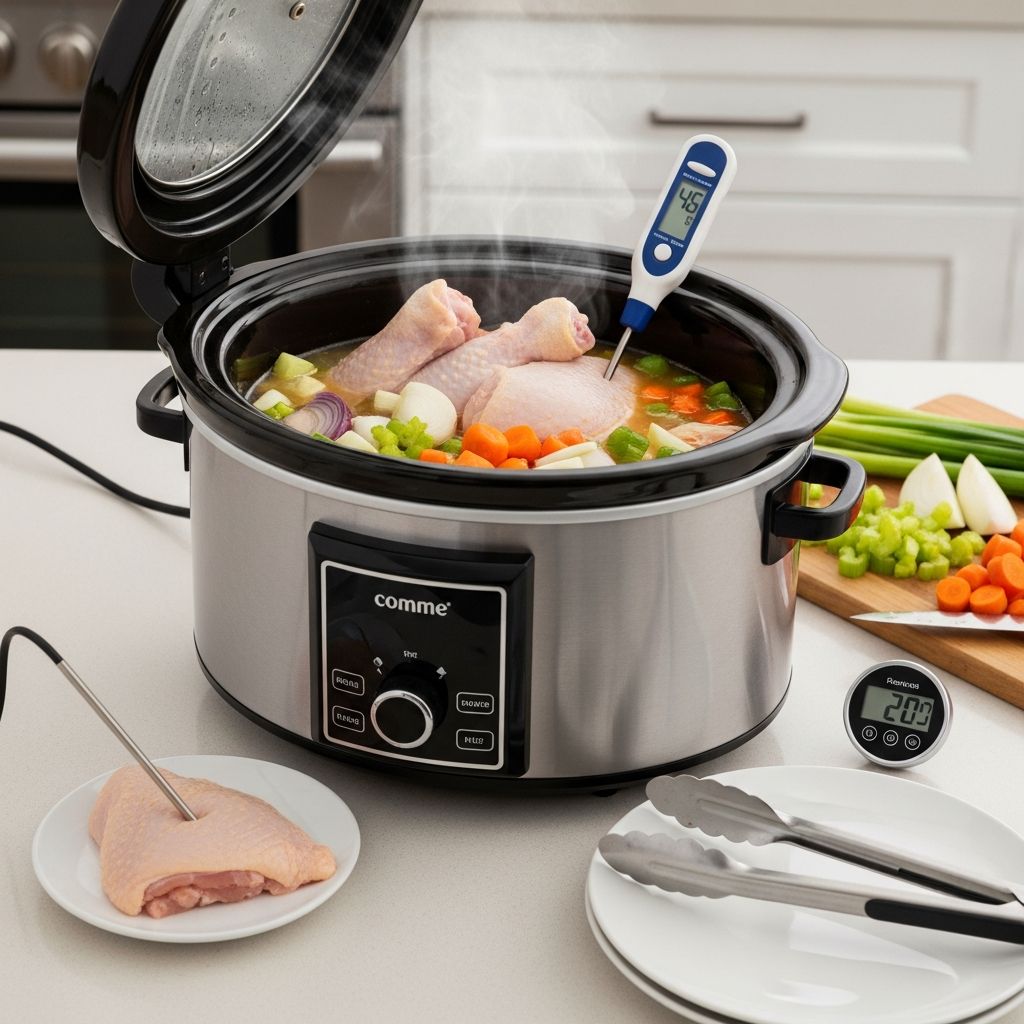
Slow cookers are a busy home cook’s best friend, offering convenient, hands-off meals like hearty stews, tender roasts, and flavorful soups. However, their low-and-slow cooking method requires strict adherence to food safety practices to prevent bacterial growth in the temperature danger zone (40°F to 140°F), where pathogens like Salmonella and E. coli multiply rapidly. Following these 10 essential tips ensures your slow cooker meals are not only delicious but also safe for consumption.
Understand How Slow Cookers Work Safely
Slow cookers heat food gradually to safe internal temperatures, typically reaching 185°F to 200°F after several hours on low. This process generates steam from moisture in the food, raising the temperature quickly out of the danger zone. According to USDA guidelines, a properly functioning slow cooker cooks slowly enough for unattended use yet fast enough to inhibit pathogen growth. Always verify your model’s performance, as older or faulty units may not heat adequately, posing a risk for foodborne illness.
Tip 1: Test Your Slow Cooker’s Temperature
Before relying on your slow cooker for family meals, test its heating capacity to ensure it reaches safe temperatures. Fill the cooker halfway to two-thirds full with water, cover it, and set to low for 8 hours. Use a food thermometer to check the water temperature—it should be at least 185°F. If below this, contact the manufacturer if under warranty (typically 2 years) or dispose of it safely through local guidelines. This simple test, recommended by Colorado State University Extension, confirms your appliance can prevent bacterial proliferation.
- Quick test steps: Fill with water, heat on low for 8 hours, measure at 185°F+.
- Why it matters: Inadequate heating keeps food in the 40-140°F danger zone.
Tip 2: Start with Clean Hands, Tools, and Surfaces
Hygiene is the first line of defense against cross-contamination. Wash hands thoroughly with soap and water before and during prep. Clean the slow cooker insert, utensils, cutting boards, and countertops. A clean workspace minimizes the transfer of bacteria from raw meats to vegetables or ready-to-eat foods. The Academy of Nutrition and Dietetics emphasizes that poor hygiene can introduce pathogens early in the cooking process.
Tip 3: Thaw Meats Completely Before Adding
Never place frozen meat or poultry directly into the slow cooker. Frozen items thaw too slowly, keeping the center in the danger zone for hours, allowing bacteria to multiply. Thaw in the refrigerator overnight or use cold water (changed every 30 minutes) for faster results. USDA Food Safety and Inspection Service warns that this is a common mistake leading to unsafe meals.
| Thawing Method | Time per Pound | Safety Notes |
|---|---|---|
| Refrigerator | 24 hours | Safest; keeps food below 40°F. |
| Cold Water | 1-2 hours | Change water every 30 min; seal in bag. |
| Microwave | Varies | Cook immediately after; not ideal for slow cooking. |
Tip 4: Keep Perishables Refrigerated Until Prep Time
Related Stories



Refrigerate meats, dairy, and chopped veggies separately until just before adding to the cooker. Pre-cutting ingredients? Store in airtight containers in the fridge to avoid the danger zone. This prevents bacterial growth during wait times, especially crucial for busy weeknight preps.
Tip 5: Use High-Moisture Recipes and Correct Liquid Amounts
Opt for soups, stews, or chilis with plenty of liquid, as moisture creates steam to boost cooking temperature quickly. Follow recipes precisely: fill the cooker at least half-full but no more than two-thirds to ensure even heating without overflow. Too little liquid slows heating; too much dilutes flavors and extends cook time. Check manufacturer guidelines for meat sizes suitable for your model.
Tip 6: Prep Ingredients in Advance Safely
Chop veggies, trim meats, and soak beans on weekends, storing in fridge-safe containers for up to 3 days. For removable inserts, assemble the night before and refrigerate overnight—but note this may add 30-60 minutes to cook time due to starting cold. Uniform cuts ensure even cooking, reducing hot spots where bacteria could survive.
- Pro tip: Label containers with prep date to track freshness.
Tip 7: Position and Operate the Cooker Correctly
Place the slow cooker on a flat, stable surface away from edges, cabinets, or flammables. Plug directly into a grounded outlet—avoid extension cords. Keep the lid on during cooking; removing it drops temperature by 10-15°F, potentially re-entering the danger zone. Stir or check only when necessary.
Tip 8: Avoid Overfilling and Follow Meat Size Guidelines
Overloading prevents proper heat circulation. Consult your manual for max capacities—e.g., 3-4 lbs chicken for a 6-quart model. Cut large roasts into smaller pieces for faster, safer cooking. Commercial frozen meals? Follow package instructions precisely.
Tip 9: Handle Leftovers Properly—Never Reheat in the Cooker
Do not reheat leftovers in the slow cooker; it reheats too slowly. Instead, use stovetop, oven, or microwave to reach 165°F internal temperature, verified with a thermometer. Cool leftovers quickly in shallow containers, refrigerate within 2 hours, and store for up to 3-4 days. To keep food warm for serving, transfer hot food to a preheated slow cooker held at 140°F+. Reinvent leftovers: turn roast into tacos or sandwiches.
Tip 10: Invest in a Reliable Food Thermometer
A food thermometer is essential for verifying doneness. Check thickest parts of meat (avoid bone) for 165°F poultry, 160°F ground meats, 145°F steaks/roasts. Test thermometer accuracy in boiling water (212°F at sea level). Resources like the Academy’s guide help master this tool.
Common Slow Cooker Myths Busted
- Myth: All slow cookers heat the same. Fact: Test yours—older models may fail.
- Myth: ‘Set it and forget it’ means no checks. Fact: Peek sparingly to maintain heat.
- Myth: Frozen food is fine. Fact: Thaw first to avoid danger zone.
Safe Slow Cooker Recipes Ideas
Beyond basics, try vegetable lasagna, pulled pork for tacos, or apple crisp desserts. Always prioritize safety: high-moisture, thawed proteins, proper fill levels. Prep ahead for weeknights—kids get nutrients from home-cooked meals without fast food.
Frequently Asked Questions (FAQs)
What is the temperature danger zone for slow cooking?
The danger zone is 40°F to 140°F, where bacteria grow rapidly. Slow cookers must exceed this quickly.
Can I cook frozen meat in a slow cooker?
No—thaw first to ensure safe heating and prevent bacterial growth.
How long can leftovers stay in the fridge?
3-4 days in shallow containers at 40°F or below. Reheat to 165°F.
Is my old slow cooker safe?
Test it; if under 185°F after 8 hours on low, replace it.
Can I leave the slow cooker on all day?
Yes, if tested safe and lid stays on, for low setting up to 8-10 hours.
Why Food Safety Matters in Slow Cooking
Foodborne illnesses affect millions annually, with vulnerable groups like children, elderly, and pregnant people at higher risk. Slow cookers’ convenience doesn’t override science—proper temps kill pathogens. By following these tips, you enjoy flavorful meals worry-free. For more, consult registered dietitians via eatright.org.
(Word count: 1678)
References
- Cooking Safely With a Slow Cooker — Michigan State University Extension. Accessed 2026. https://www.canr.msu.edu/safe_food_water/uploads/E3255%20Slow%20Cooker_AA.pdf
- Slow Cooker Tips for Busy Weeknights — Academy of Nutrition and Dietetics. Accessed 2026. https://www.eatright.org/food/food-preparation/cooking-tips/slow-cooker-tips-for-busy-weeknights
- Danger Zone (40°F – 140°F) — U.S. Department of Agriculture Food Safety and Inspection Service. 2017-06-28. https://www.fsis.usda.gov/food-safety/safe-food-handling-and-preparation/food-safety-basics/danger-zone-40f-140f
Similar Articles








Read full bio of Sneha Tete