16 Best Exercises For Bigger Arms: Sleeve-Splitting Results
Master arm-building with these proven exercises for biceps, triceps, and forearms.
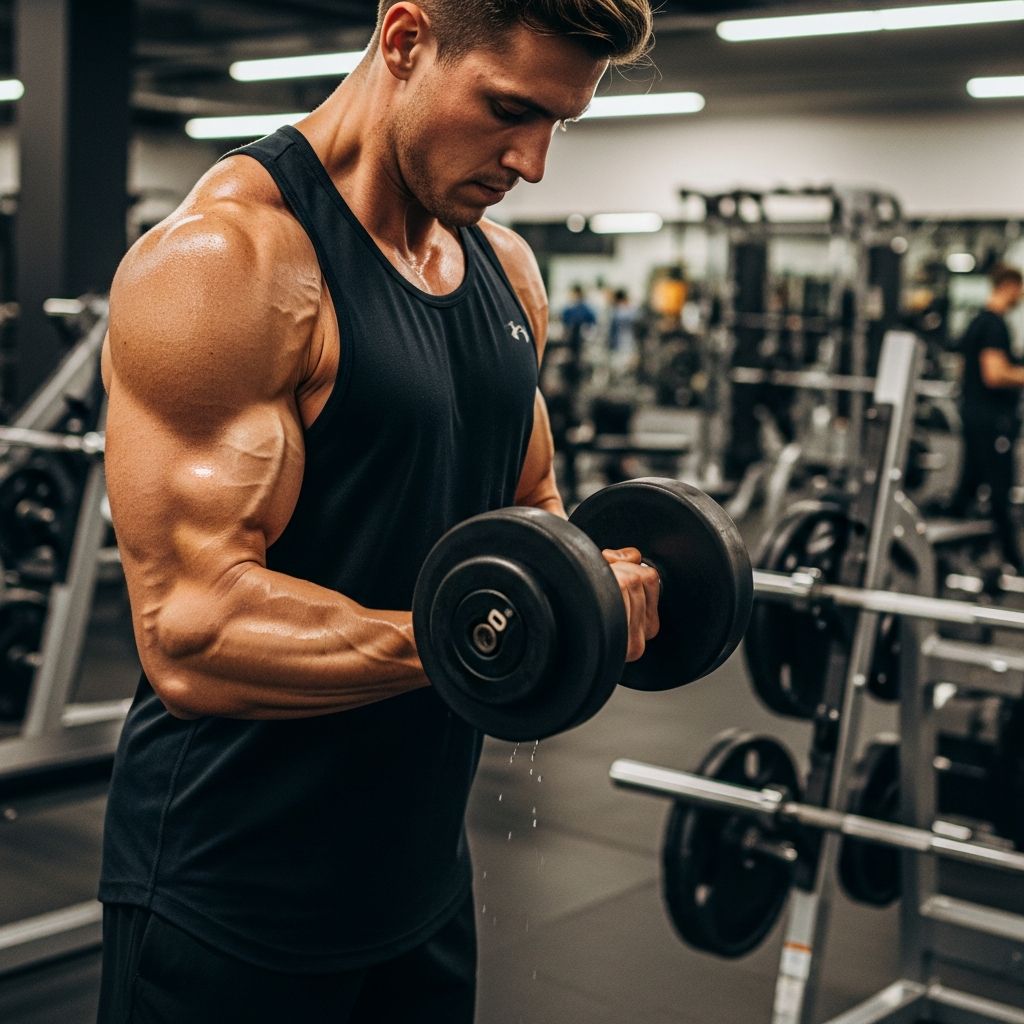
16 Best Exercises for Bigger Arms: Your Complete Guide to Building Sleeve-Splitting Muscle
Building bigger arms is one of the most popular fitness goals, and for good reason. Well-developed biceps and triceps not only look impressive but also indicate overall upper body strength and dedication to your training. However, achieving significant arm growth requires more than just doing a few random curls. You need a strategic approach combining the right exercises, proper form, progressive overload, and consistent training. This comprehensive guide will walk you through the 16 best exercises for building bigger arms, complete with detailed instructions, rep ranges, and proven training principles.
Understanding Arm Anatomy for Maximum Growth
Before diving into specific exercises, it’s crucial to understand the anatomy of the arm. The upper arm consists of two main muscle groups: the biceps and the triceps. While many people focus primarily on biceps, the triceps actually make up approximately two-thirds of your upper arm mass. This means that to truly maximize arm growth, you must prioritize tricep training alongside bicep work. Additionally, your forearms contribute to overall arm size and grip strength, making them worthy of dedicated training time.
The biceps function as the flexors of the elbow, pulling weight toward your body. The triceps, conversely, extend the elbow and push weight away from your body. Understanding these functions helps you appreciate why different exercise variations target different aspects of arm development.
Key Principles for Arm Growth
Progressive Overload
Progressive overload is fundamental to building bigger arms. This principle involves continually challenging your muscles by increasing demands over time. You can apply progressive overload in three primary ways: increasing resistance by adding more weight, increasing sets to add more total volume, or increasing reps to vary your training stimulus. A systematic approach to progressive overload ensures consistent gains in muscle size, strength, and endurance.
Training Arms with Synergistic Muscle Groups
To build bigger arms, work the muscles hard and often. One effective strategy involves training your arms with supporting muscle groups. When training back, you naturally perform many pull exercises that engage your biceps, so pairing bicep training with back workouts makes logical sense. Similarly, training chest and triceps together capitalizes on the overlapping movement patterns. This approach allows you to train arms frequently while maintaining proper recovery.
The Best Bicep Exercises
1. Preacher Curl
The preacher curl stands out as one of the best bicep exercises available. This movement allows you to isolate your biceps effectively while minimizing momentum and cheating. Set up behind an inclined bench, laying the back of your arm against its surface while hugging your armpit to the top. Squat down and engage your glutes, hamstrings, and abs for stability. Curl the weight up, keeping your upper arm glued to the bench and maintaining a neutral wrist position. Keep constant tension by avoiding full lockout at the top or complete rest at the bottom. Perform 3 sets of 8 to 12 reps for optimal results.
2. Incline Dumbbell Curl
The incline dumbbell curl shifts the angle of the movement, emphasizing different portions of the bicep. Make a fist with your off-hand and extend it out to your side for core balance and stability. This removes any leverage that would reduce biceps engagement. Curl the weight up with control, maintaining a neutral wrist position and emphasizing the squeeze at the top of each rep. Avoid any backward lean or shoulder movement. Complete 3 sets of 8 to 12 reps, focusing on controlled lowering back to the starting position.
3. Hammer Curl
By shifting to a neutral grip where your palms face each other, the hammer curl targets the brachialis muscle beneath the biceps, which will make your arms pop from different angles. Stand with your feet hip-width apart, holding dumbbells in a neutral grip. Squeeze your shoulder blades, abs, and glutes to create full-body tension. Curl the dumbbell up, moving only at the elbow joint while keeping your upper arms still and perpendicular to the floor. Squeeze your biceps at the top, then lower under control. Perform 3 sets of 8 to 12 reps.
Related Stories



4. Barbell Curl
The barbell curl remains a foundational bicep exercise that allows you to lift heavier weight than dumbbell variations. Stand with feet shoulder-width apart and grab the barbell with hands slightly wider than shoulder-width. Keep your elbows at your sides throughout the movement. Curl the weight up in a controlled manner, squeezing your biceps at the top. Lower slowly back to the starting position with your arms nearly straight but not locked out. Incorporate different tempos, such as a 4-0-1-0 tempo (4 seconds down, 0 seconds pause, 1 second up, 0 seconds pause at top), to vary your stimulus and maximize gains. Perform 3 to 4 sets of 8 to 12 reps.
5. Seated Alternating Dumbbell Curl
Seated dumbbell curls eliminate momentum and body English, forcing your biceps to work independently. Kneel on the floor with arms at your sides holding dumbbells. Tuck your pelvis under slightly so it’s parallel to the floor and brace your abs and glutes. Draw your shoulder blades back and downward while keeping your upper arms at your sides. Begin curling the dumbbells up, moving only at the elbow. As you raise the weights, twist your wrists outward so your palms face the ceiling at the halfway point. Squeeze your biceps at the top and lower back to the starting position. Complete 3 sets of 8 to 12 reps.
6. Chinup
While primarily known as a back exercise, the chinup sculpts massive arms when performed with a supinated (underhand) grip. This grip shifts more emphasis onto the biceps. Get into a good hanging position with a supinated grip, squeezing your shoulders, abs, and glutes to maintain tension. Drive your elbows into your hips to pull yourself up to the bar. Continue until your head is above the bar, pausing briefly at the top. Lower back down until your elbows are extended, maintaining control and keeping tension throughout. To maximize arm development, extend time under tension by slowly emphasizing the eccentric (descending) portion. Perform 3 sets of 8 to 12 reps.
The Best Tricep Exercises
7. Rope Pushdown
The rope pushdown is an excellent isolationexercise that allows constant tension throughout the movement. Attach a rope to a high pulley and grab with both hands at chest height. Keep your elbows tucked at your sides and core engaged. Push the rope down by extending your elbows, allowing the rope to separate slightly at the bottom. Squeeze your triceps at the bottom position, then control the weight back up. This exercise works exceptionally well as a dropset, where you perform maximum reps, reduce the weight, and immediately perform more reps. Complete 3 sets total, or perform 3 sets of standard reps for 10 to 15 repetitions.
8. Dumbbell Skull Crusher
The dumbbell skull crusher effectively isolates the triceps through a full range of motion. Lie back on a flat or slight incline bench holding a dumbbell with both hands. Position the weight above your chest with elbows bent approximately 90 degrees. Lower the dumbbell in a controlled manner by bending your elbows, bringing the weight toward your forehead or just behind your head. Extend your elbows to drive the weight back to the starting position. This exercise delivers significant tricep activation when performed with proper control. Execute 3 sets of 12 reps for optimal results.
9. Tricep Dips
Bodyweight dips represent one of the most effective tricep exercises available. Use parallel bars or a dip station, maintaining an upright posture. Lower your body by bending your elbows until they reach approximately 90 degrees. Push through your hands to extend your elbows and return to the starting position. Beginners should use just their bodyweight, while advanced athletes can add weight using a weightlifting belt. For building arm mass, perform 3 sets of 12 to 15 reps, or work to failure if that yields fewer reps.
10. Close Grip Barbell Bench Press
The close grip barbell bench press shifts emphasis from the chest to the triceps through hand positioning. Set up on a flat bench and grab the barbell with hands closer than shoulder-width apart, typically 8 to 12 inches apart. Lower the weight to your chest while keeping your elbows tucked at your sides rather than flared out. Explode up with your triceps, driving the weight away from your body. Keep your elbows tucked in at your sides throughout the movement. Complete 3 sets of 10 reps, focusing on explosive concentric (pushing) action powered by your triceps.
11. Overhead Dumbbell Extension
The overhead dumbbell extension effectively targets all three heads of the triceps. Stand or sit upright holding a single dumbbell or two dumbbells overhead. Position the weight directly above your head with elbows bent. Lower the weight behind your head by bending your elbows while keeping your upper arms vertical and shoulders stable. Extend your elbows to drive the weight back to the starting position. Set a bench to roughly 45 degrees and take the dumbbell overhead if performing an incline variation. Bend the elbows so the dumbbells travel behind your head with elbows kept high and in line with your shoulders, then extend your arms. Perform 3 to 4 sets of 8 to 12 reps.
12. Incline Tricep Extension
Setting a bench to approximately 45 degrees and performing tricep extensions on the incline provides a unique angle and increased range of motion compared to flat bench variations. Take the dumbbell overhead and bend the elbows so the dumbbells travel behind your head with elbows kept high and in line with your shoulders. Extend the arms so that the dumbbells return to their original position. This variation increases flexibility demands and provides an excellent stretch in the triceps. Complete 3 sets of 8 to 12 reps.
Supporting Exercises for Complete Arm Development
13. Strict Press
The strict press builds overhead pressing strength while engaging the triceps and shoulders. Begin standing with dumbbells at your shoulders and palms facing inward. With your core locked, press the dumbbells directly overhead. Return the weights under control back to the beginning position ready to repeat. This compound movement recruits the entire upper body and is particularly valuable for building lockout strength in the triceps. Perform 3 sets of 8 to 12 reps.
14. Lateral Raises
While not directly an arm exercise, lateral raises develop shoulder width and contribute to overall upper arm aesthetics. Grab moderately light dumbbells that you can lift with control. Hold them next to your sides with a slight bend at the elbow. Stand with your feet shoulder-width apart and squeeze your core, bending your elbows slightly. Raise your arms straight out to the sides, maintaining your elbow position, until they reach shoulder height, forming a T-shape or cross with your body. Pause at the top for a beat, then lower the weights at a controlled pace back to the starting position. Complete 3 sets of 10 to 15 reps.
15. Dumbbell Chest Press
The dumbbell chest press involves significant tricep recruitment, particularly when using a neutral or close grip. Lie back on a flat bench and position dumbbells at chest height with elbows bent. Press the weights up and slightly together, engaging your chest, shoulders, and triceps. Lower the weights back down with control. This compound movement allows you to train arms while building overall upper body strength. Perform 3 to 4 sets of 8 to 12 reps.
16. Bent Over Rows
Bent over rows effectively train the back while recruiting the biceps and building grip strength. Stand with feet hip-width apart holding a barbell or dumbbells with a slight bend in your knees. Bend at the hips until your torso is nearly parallel to the floor. Row the weight up to your chest by driving your elbows back and squeezing your shoulder blades. Lower the weight back down with control. This compound movement provides bicep stimulation as a secondary benefit while primarily strengthening your back. Complete 3 to 4 sets of 8 to 12 reps.
Sample 4-Week Arm Building Program
To systematically apply these exercises and progressive overload principles, consider this structured approach:
Week 1: Volume Phase (4 sets × 12 reps)
- Preacher Curl
- Hammer Curl
- Barbell Curl
- Rope Pushdown
- Overhead Dumbbell Extension
- Parallel Bar Dips (to failure)
Week 2: Strength Phase (4 sets × 10 reps)
- Preacher Curl
- Hammer Curl
- Barbell Curl (4-0-1-0 tempo)
- Rope Pushdown (4-0-1-0 tempo)
- Overhead Dumbbell Extension
- Dips (to failure)
Week 3: Hypertrophy Phase (5 sets × 12 reps)
- Preacher Curl
- Hammer Curl
- Barbell Curl
- Rope Pushdown
- Overhead Dumbbell Extension
- Dips (to failure)
Comparison of Arm Building Approaches
| Exercise Type | Primary Muscle | Best For | Rep Range | Difficulty |
|---|---|---|---|---|
| Preacher Curl | Biceps | Isolation, Form Development | 8-12 | Beginner-Friendly |
| Hammer Curl | Biceps/Brachialis | Building Peak Height | 8-12 | Beginner-Friendly |
| Barbell Curl | Biceps | Heavy Strength | 8-12 | Intermediate |
| Chinup | Biceps/Back | Compound Strength | 8-12 | Advanced |
| Close Grip Bench | Triceps | Heavy Pressing Strength | 8-12 | Intermediate |
| Rope Pushdown | Triceps | Isolation, Dropsets | 10-15 | Beginner-Friendly |
| Tricep Dips | Triceps | Bodyweight Strength | 8-15 | Intermediate |
| Overhead Extension | Triceps | Full Range of Motion | 8-12 | Beginner-Friendly |
Frequently Asked Questions About Building Bigger Arms
Q: How often should I train my arms?
A: For optimal growth, train arms 2 to 3 times per week. You can train them more frequently by pairing bicep work with back training and tricep work with chest training. This approach distributes volume while allowing adequate recovery between direct arm sessions.
Q: Why aren’t my arms growing despite training hard?
A: Arms may fail to grow due to insufficient tricep training (remember, triceps comprise two-thirds of arm mass), inadequate progressive overload, improper form reducing muscle engagement, insufficient nutrition and recovery, or lack of volume. Address these factors systematically to break through plateaus.
Q: What’s the best way to apply progressive overload to arm training?
A: Progressive overload involves three main approaches: increasing weight lifted, increasing total sets and reps (volume), or increasing training frequency. Vary these throughout your training cycle. A simple approach involves adding weight when you can complete all sets and reps with good form, then building back up in reps before adding weight again.
Q: Should I train arms on separate days or with other muscle groups?
A: Both approaches work, but pairing arms with synergistic muscle groups (biceps with back, triceps with chest) often provides superior results. This strategy allows you to train arms frequently while managing overall training volume and recovery. Alternatively, a dedicated arm day works well for those with adequate recovery capacity.
Q: How important is form compared to weight lifted?
A: Form is absolutely critical for arm development. Sloppy form reduces muscle engagement and increases injury risk. Focus on controlled movements with lighter weight that allows proper form over heavier weight with compromised technique. As you build strength and control, gradually increase weight while maintaining form integrity.
Q: Can I build bigger arms with just dumbbells?
A: Yes, dumbbells are excellent for arm development. They allow greater range of motion than barbells, require more stabilization (increasing muscle engagement), and permit unilateral training. Combine dumbbell curls, hammer curls, extensions, and presses for comprehensive arm development without requiring barbells.
Conclusion
Building bigger arms requires strategic exercise selection, consistent training, and intelligent progression. By incorporating these 16 exercises, understanding arm anatomy, and applying progressive overload principles, you’ll maximize muscle growth in your biceps, triceps, and forearms. Remember that triceps comprise the majority of arm mass, so prioritize tricep training alongside bicep work. Train arms 2 to 3 times weekly, pair them with synergistic muscle groups, maintain proper form, and steadily increase demands through progressive overload. With dedication and patience, you’ll achieve the impressive, sleeve-splitting arms you desire.
References
- 30 Arm-Building Exercises for Men – Biceps and Triceps Workouts — Men’s Health. 2024. https://www.menshealth.com/fitness/a35082707/big-arms-exercises-workout/
- The Arm Workouts You Need to Build Bigger Biceps and Triceps — Men’s Health UK. 2024. https://www.menshealth.com/uk/building-muscle/a34423471/arm-workouts/
- Build Stronger Arms With This 15-Minute Dumbbell Arm Workout — Men’s Health UK. 2024. https://www.menshealth.com/uk/building-muscle/g752112/upper-body-arm-workout/
- How to Get Bigger Arms in 4 Weeks — Men’s Journal. 2024. https://www.mensjournal.com/health-fitness/how-get-bigger-arms-2-techniques-you-need-know
Similar Articles








Read full bio of medha deb