24-Hour pH Impedance Testing: Diagnosis & Procedure
Comprehensive guide to 24-hour pH impedance testing for GERD diagnosis and reflux monitoring.
What Is 24-Hour pH Impedance Testing?
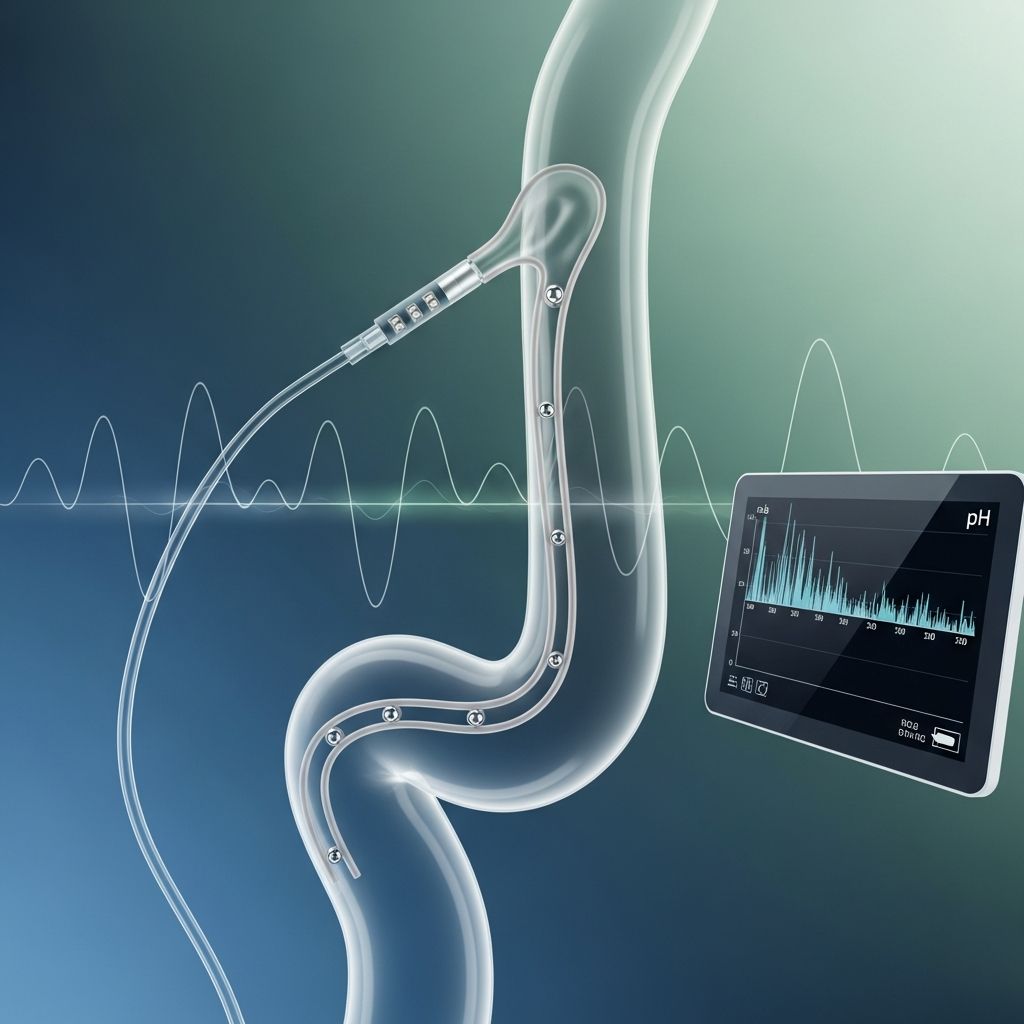
24-hour pH impedance testing is a minimally invasive diagnostic procedure designed to measure the amount and frequency of acid reflux entering the esophagus from the stomach over a 24-hour period. This test helps healthcare providers diagnose gastroesophageal reflux disease (GERD) and other reflux-related conditions by monitoring both acidic and non-acidic reflux events. Unlike office-based tests that provide only a snapshot of esophageal function, the 24-hour pH impedance test captures reflux patterns during your typical daily activities, meals, and sleep cycles, providing a comprehensive picture of your reflux disorder.
The test utilizes a thin, flexible catheter equipped with specialized sensors that detect changes in acid levels within the esophagus. This catheter remains in place for 24 hours while you maintain your normal routine, allowing physicians to correlate your symptoms with actual reflux episodes. The procedure is particularly valuable for patients with chronic heartburn, chest pain, or other symptoms suggestive of GERD who have not responded adequately to medical management.
Why Is 24-Hour pH Impedance Testing Performed?
Healthcare providers order 24-hour pH impedance testing for several important clinical reasons. The primary indication is to confirm or exclude a diagnosis of GERD in patients with persistent symptoms. When patients experience chronic heartburn, regurgitation, chest pain, or difficulty swallowing despite treatment, this test provides objective evidence of whether acid reflux is occurring and how frequently it happens.
The test is also performed to assess the effectiveness of current GERD treatments and to determine whether your symptoms are directly related to reflux episodes. Additionally, some patients may be candidates for surgical interventions like anti-reflux surgery, and this test helps physicians determine if surgery would be beneficial. The procedure can also evaluate whether non-acidic reflux is contributing to your symptoms, which is particularly useful when acid-suppressing medications alone have not resolved your discomfort.
Another important use is in patients with atypical GERD symptoms, such as persistent cough, hoarseness, asthma, or laryngitis that may be attributed to reflux. By documenting the temporal relationship between reflux events and symptom occurrence, physicians can make more informed treatment decisions.
Understanding Your Lower Esophageal Sphincter
To appreciate the importance of pH impedance testing, it is helpful to understand the role of the lower esophageal sphincter (LES). The LES is a circular muscle located at the junction between your esophagus and stomach that normally remains closed to prevent stomach contents from backing up into the esophagus. When you swallow, the LES relaxes momentarily to allow food and liquids to pass into the stomach, then contracts again to maintain a protective seal.
In patients with GERD, the LES fails to close properly or relaxes too frequently, allowing stomach acid and other contents to escape into the esophagus. This malfunction of the LES is the fundamental problem that pH impedance testing helps to identify and quantify. By measuring how much acid enters the esophagus and how often reflux episodes occur, the test provides crucial information about LES dysfunction severity.
How Is 24-Hour pH Impedance Testing Performed?
Pre-Procedure Preparation
Proper preparation is essential for accurate test results. You will typically be instructed to fast for at least four hours before the procedure. Your healthcare provider will review your current medications, and you may need to discontinue certain acid-reducing medications for a specified period before the test, as these could interfere with results. It is important to follow all pre-procedure instructions precisely, as deviations may necessitate rescheduling.
Related Stories



On the day of the procedure, wear comfortable, loose-fitting clothing that allows easy access to your nasal passages. Avoid eating or drinking anything except water after your fasting period begins. If you take regular medications, discuss with your provider which ones should be continued and which should be held before the test.
Catheter Placement
During the procedure, you will be seated in a comfortable position. Your healthcare provider will apply a local anesthetic gel to your nostril to numb the area and minimize discomfort during catheter placement. The thin, flexible catheter—typically about the size and flexibility of a smartphone charging cable—is then gently guided through your nostril, down the back of your throat, and into your esophagus.
Once the catheter reaches the proper position in the esophagus, an X-ray may be performed to confirm accurate placement. Your healthcare provider may make minor adjustments to ensure the sensors are optimally positioned to measure reflux. The catheter is then secured with tape around your nose to prevent accidental displacement during the 24-hour monitoring period.
The 24-Hour Monitoring Period
After catheter placement, you will be connected to a small recording device that you wear on your belt or carry in a shoulder bag. This portable recorder receives data from the catheter sensors throughout the day and night. The recorder displays the current time and date, which you will reference when maintaining your symptom diary.
During the entire 24-hour period, you should maintain your normal daily routine. This includes eating regular meals, performing your usual activities, exercising, and sleeping. Maintaining normal activities is crucial because the test is designed to capture reflux patterns during typical conditions. You can shower or bathe normally, but you should avoid submerging the recording device or catheter in water.
Throughout the monitoring period, you will keep a detailed diary documenting all meals and beverages consumed, noting the times you lie down or sleep, and recording any gastrointestinal symptoms you experience such as heartburn, chest pain, regurgitation, or difficulty swallowing. The recorder includes buttons you will press to mark symptom events, which helps correlate reflux episodes with your symptoms.
Catheter Removal
After 24 hours, you will return to your healthcare provider’s office for catheter removal. This process is quick and generally painless. Your provider will gently withdraw the catheter from your esophagus through your nostril. You can resume all normal activities immediately after removal, including eating, drinking, and showering.
What to Expect During the Test
While many patients tolerate the 24-hour pH impedance test well, you should be aware of what to expect. During catheter placement, you may experience mild discomfort or a gagging sensation as the tube is advanced through your throat. The local anesthetic helps minimize these sensations. Some patients report a feeling of throat irritation or mild sore throat during the monitoring period, particularly when swallowing. You may also notice the catheter’s presence or occasional mild nasal discomfort from the securing tape.
Once the catheter is in place and you return home, most patients adapt quickly to wearing the recorder. Some find the sensation of the catheter becomes less noticeable as the day progresses. The recording device is generally lightweight and can be worn discreetly under clothing. You should not experience significant pain, and any discomfort typically resolves quickly after catheter removal.
Maintaining your normal routine during the test is important, so plan your schedule accordingly. If you have a very sensitive gag reflex or anticipate significant difficulty with catheter placement, discuss this with your healthcare provider beforehand, as alternative testing methods may be available.
Interpreting Your Test Results
Your healthcare provider will analyze the data collected during the 24-hour monitoring period in conjunction with your symptom diary and the recordings from the portable device. The results will show the total number of reflux episodes, the duration of each episode, and the percentage of time acid is present in your esophagus. The data will also indicate whether reflux is more frequent when you are upright, lying down, or sleeping.
Correlation between your recorded symptoms and reflux episodes is particularly valuable. If you consistently experience heartburn within minutes of documented acid reflux, this strengthens the diagnosis of GERD. Conversely, if you report significant symptoms at times when little or no reflux is detected, this may suggest alternative diagnoses or other factors contributing to your discomfort.
Your physician will compare your results to established normative values. Healthy individuals typically have minimal reflux, usually occurring only after meals. Abnormal results showing frequent reflux episodes, prolonged acid exposure, or strong symptom-reflux correlation support a GERD diagnosis and help guide treatment decisions.
Risks and Side Effects
24-hour pH impedance testing is a safe, minimally invasive procedure with minimal risks. Most patients experience no complications. The primary discomfort is typically limited to the sensation during catheter placement and mild throat irritation while wearing the catheter. Some patients report temporary nasal irritation from the tape securing the catheter or slight hoarseness that resolves within a few hours after removal.
Serious complications are extremely rare. Minor side effects may include mild nosebleed, though this is uncommon. Patients with a very sensitive gag reflex may find the procedure challenging, and in such cases, alternative diagnostic methods such as esophagogastroduodenoscopy (EGD) with light sedation may be considered.
Alternative Testing Methods
While 24-hour pH impedance testing is the gold standard for GERD diagnosis, alternative options exist for patients who cannot tolerate catheter placement. Esophagogastroduodenoscopy (EGD) is an endoscopic procedure that allows direct visualization of the esophagus, stomach, and upper small intestine. Because EGD is an invasive endoscopic procedure, it is typically performed with light sedation, making it more comfortable than catheter-based testing for some patients. However, EGD is more invasive and carries greater risks than pH impedance testing.
Wireless pH monitoring systems represent an emerging alternative that may offer greater comfort, as they involve placement of a small capsule in the esophagus that transmits data wirelessly. These systems allow for longer monitoring periods and may be particularly useful for patients with severe catheter intolerance.
Before Your Test: Preparation Checklist
To ensure your test proceeds smoothly and yields accurate results, follow this preparation checklist:
- Confirm fasting requirements with your healthcare provider, typically 4+ hours before the procedure
- Obtain a list of medications to hold or continue from your provider
- Wear comfortable, loose-fitting clothing on the day of your test
- Arrange for someone to drive you home if sedation is used, though this is typically not necessary for pH impedance testing
- Plan to take the full 24 hours to complete the monitoring period; do not schedule the removal before exactly 24 hours
- Prepare to maintain a detailed diary of meals, activities, and symptoms during the monitoring period
- Review the recorder’s button functions and diary format with the technician before leaving the office
After Your Test: Recovery and Follow-Up
Recovery from 24-hour pH impedance testing is straightforward. You can resume normal eating, drinking, and activities immediately after catheter removal. Mild throat soreness or nasal irritation may persist for a few hours and typically resolves without treatment. You may resume showering and normal hygiene immediately.
Your healthcare provider will review the test results with you during a follow-up appointment, typically within one to two weeks. Results will be discussed in the context of your symptoms and medical history to determine whether GERD is present and to guide treatment decisions. Depending on the findings, your provider may recommend lifestyle modifications, medication adjustments, or in some cases, surgical intervention.
Frequently Asked Questions
Q: How accurate is 24-hour pH impedance testing?
A: 24-hour pH impedance testing is highly accurate for diagnosing GERD when interpreted by experienced gastroenterologists. It remains the gold standard diagnostic test for confirming acid reflux disease and assessing its severity.
Q: Can I eat and drink normally during the test?
A: Yes, maintaining your normal diet and fluid intake during the 24-hour monitoring period is essential for obtaining accurate results that reflect your typical reflux patterns. You should eat what you normally eat and drink your usual beverages.
Q: Will the catheter interfere with swallowing?
A: Most patients can swallow normally with the catheter in place, though you may feel slight resistance or irritation initially. The thin, flexible catheter is designed to cause minimal interference with swallowing function.
Q: How soon will I receive my test results?
A: Your healthcare provider will typically review the results and schedule a follow-up appointment within one to two weeks to discuss findings and recommend treatment options.
Q: Is 24-hour pH impedance testing covered by insurance?
A: Most insurance plans cover 24-hour pH impedance testing when ordered by a physician for appropriate clinical indications such as suspected GERD. Contact your insurance provider to confirm coverage before your procedure.
Q: Can I return to work during the 24-hour monitoring period?
A: Yes, you can return to work and maintain your normal routine during the test. In fact, this is encouraged to ensure the test captures your typical reflux patterns during regular daily activities.
Q: What if I experience severe discomfort during the procedure?
A: Contact your healthcare provider immediately if you experience severe pain or difficulty breathing. While serious complications are rare, your provider can address any concerns and discuss alternative testing options if needed.
References
- Esophageal 24-hour pH/Impedance Reflux Monitoring — University of Michigan Health. 2025. https://www.uofmhealth.org/our-care/specialties-services/esophageal-24-hour-phimpedance-reflux-monitoring
- Esophageal pH Test: MedlinePlus Medical Test — National Library of Medicine. 2024. https://medlineplus.gov/lab-tests/esophageal-ph-test/
- 24-Hour pH Monitoring — Stanford Healthcare. 2025. https://stanfordhealthcare.org/medical-treatments/e/endoscopy/types/24-hour-ph-monitoring.html
- Esophageal High Resolution Manometry and 24 Hr pH Impedance Testing — Monmouth Gastroenterology. 2025. https://monmouthgastro.com/procedures/esophageal-high-resolution-manometry-and-24-hr-ph-impedance-testing/
- 24-Hour pH Impedance Study in Fort Collins & Greeley, CO — Centers for Gastroenterology. 2025. https://www.digestive-health.net/procedures/24-hour-ph-impedance-study/
- 24-Hour Probe Study — Cedars-Sinai. 2025. https://www.cedars-sinai.org/health-library/tests-and-procedures/2/24-hour-probe-study.html
- Preparing for Your 24-Hour pH Impedance Test — Optum. 2022. https://east.optum.com/wp-content/uploads/2022/07/Preparing-for-your-24-hour-pH-impedance-.pdf
Similar Articles








Read full bio of Sneha Tete