3 Easy Ways to Strengthen Your Shoulders
Simple, effective shoulder strengthening exercises you can do at home.
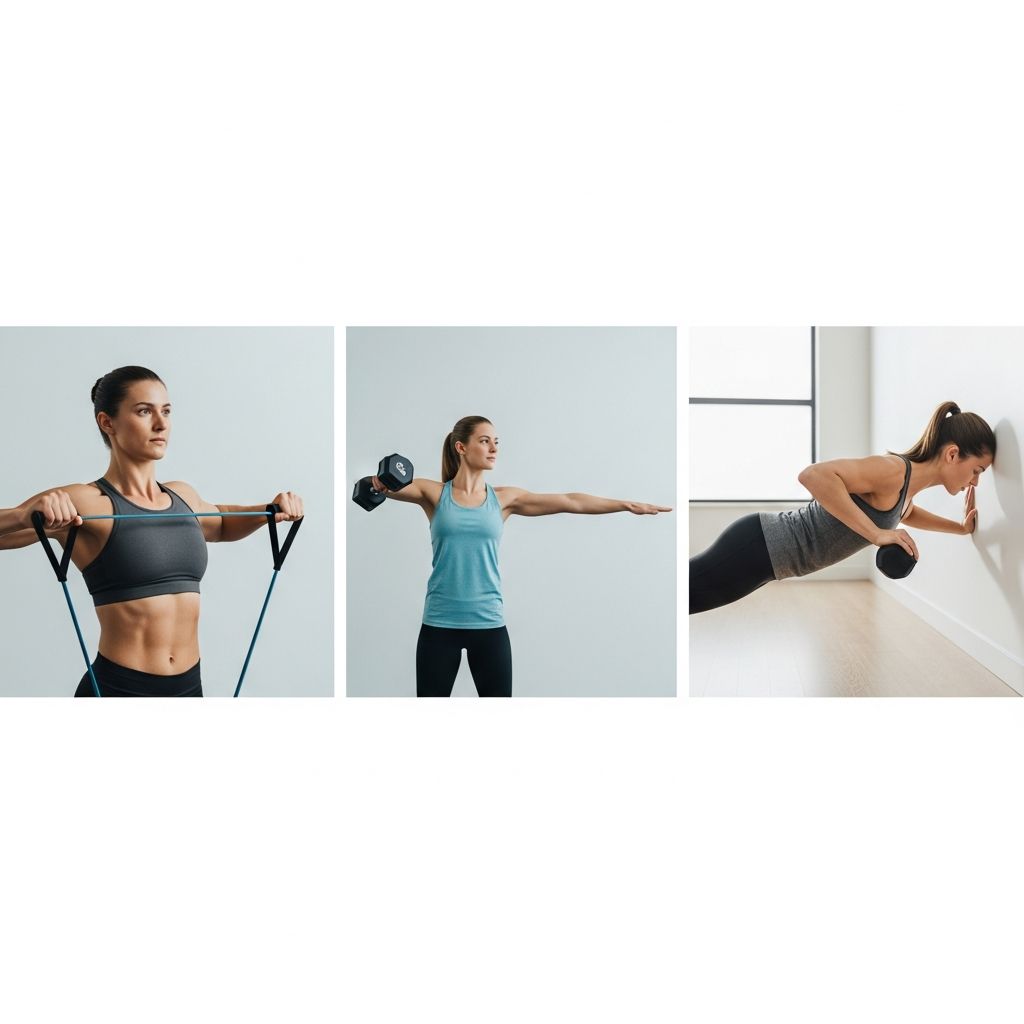
Shoulder strength is crucial for maintaining mobility, preventing injury, and performing everyday activities with ease. Whether you spend long hours at a desk, participate in sports, or simply want to maintain good posture and function, strengthening your shoulders should be a priority. Many people struggle with shoulder pain, stiffness, or weakness, but the good news is that you don’t need expensive equipment or a gym membership to address these issues. With consistent practice of targeted exercises, you can significantly improve your shoulder strength and mobility from the comfort of your own home.
The shoulders are complex joints that require balanced strength across multiple muscle groups to function optimally. The deltoids, rotator cuff muscles, and scapular stabilizers all play important roles in shoulder health. When these muscles are weak or imbalanced, it can lead to poor posture, decreased range of motion, and increased risk of injury. This guide presents three foundational approaches to shoulder strengthening that are accessible, effective, and can be incorporated into your regular fitness routine.
Understanding Shoulder Anatomy and Function
Before diving into specific exercises, it’s helpful to understand how your shoulder works. The shoulder is a ball-and-socket joint, which gives it tremendous range of motion but also makes it vulnerable to injury if the supporting muscles aren’t strong enough. The rotator cuff consists of four small muscles that stabilize the shoulder joint, while the deltoids provide the visible muscle bulk and are responsible for arm elevation and rotation. The scapula, or shoulder blade, serves as an anchor point for many of these muscles and must move correctly for optimal shoulder function.
Method 1: Pendulum Exercises for Mobility and Pain Relief
Pendulum exercises, also known as Codman exercises, are among the most gentle yet effective techniques for improving shoulder mobility and reducing pain. These exercises work by using gravity and momentum to help the shoulder joint through a controlled range of motion without requiring active muscle contraction from the shoulder itself. This makes them particularly valuable for people recovering from shoulder injuries or dealing with frozen shoulder syndrome.
How to Perform Pendulum Exercises
To perform pendulum exercises, start by bending forward at the waist so your arm hangs naturally, perpendicular to the ground. Let your arm relax completely, imagining it as a dead weight suspended from a string. Begin moving your arm in small circles, both clockwise and counterclockwise, for approximately 20 repetitions in each direction. You can also swing your arm forward and backward, and side to side, using the natural momentum of gravity to guide the movement.
The key to effective pendulum exercises is maintaining complete relaxation in the shoulder. Your hip and torso should move with the motion, not just your arm. This allows the shoulder joint to glide smoothly through its range of motion without restriction. Many people make the mistake of trying to control the movement with their shoulder muscles, which defeats the purpose of the exercise. Instead, focus on being as passive as possible and letting gravity do the work.
Benefits and Progression
Pendulum exercises are particularly beneficial because they promote joint lubrication, gently stretch the shoulder capsule, and help reduce inflammation. As your shoulder improves, you can increase the size of the circular motions or add slight resistance by holding a light weight. You can also experiment with different hand positions, such as facing your palm inward or outward, to engage different structures of the shoulder joint. Perform pendulum exercises daily, especially in the early stages of shoulder rehabilitation.
Related Stories



Method 2: Progressive Resistance Strengthening
While mobility exercises are essential, building actual strength in the shoulder muscles is equally important for long-term shoulder health. Progressive resistance exercises challenge your muscles to adapt and become stronger over time. These exercises target the deltoids, rotator cuff, and scapular stabilizers that support the shoulder joint.
Internal and External Rotation Exercises
Rotator cuff strength is critical for shoulder stability and injury prevention. Internal rotation exercises can be performed using a resistance band or pulley system. Position yourself with your elbow bent at 90 degrees at your side, and slowly rotate your forearm inward against resistance. Hold the end position for a moment, then slowly return to the starting position. Perform 10 to 15 repetitions for 2 to 3 sets.
External rotation exercises work the muscles on the back of the shoulder. Using a resistance band, anchor one end at chest height. With your elbow bent and tucked against your ribs, rotate your forearm outward against the resistance. These exercises are fundamental for maintaining rotator cuff integrity and preventing impingement syndrome.
Scapular Stabilization
The scapula must move correctly for the shoulder to function properly. Exercises that promote scapular retraction and stabilization include wall slides and prone shoulder exercises. These movements help strengthen the rhomboids and lower trapezius muscles that hold your shoulder blade in the correct position. Proper scapular control reduces excess stress on the rotator cuff and improves overall shoulder mechanics.
Method 3: Flexibility and Range of Motion Work
Flexibility is just as important as strength when it comes to shoulder health. Tight shoulders restrict movement and can contribute to pain and dysfunction. A comprehensive shoulder strengthening program must include stretching and range of motion exercises that address all planes of movement.
Cross-Body Shoulder Stretch
The cross-body shoulder stretch targets the posterior deltoid and rotator cuff muscles. Bring one arm across your body at approximately shoulder height, and use your opposite hand to gently pull the arm closer to your chest. You should feel a stretch in the back of the shoulder. Hold this position for 30 seconds and repeat on both sides. This stretch is particularly beneficial after resistance exercises or at the end of your workout.
Armpit Stretch
The armpit stretch addresses the pectoralis muscles and anterior shoulder structures that often become tight from desk work and poor posture. Stand at a counter or bench and place your hand on the surface. Slowly lower your body by bending your knees, allowing your armpit to stretch. You’ll feel a deep stretch along the inside of your shoulder and chest. Hold for 30 seconds and repeat as needed. This stretch is particularly valuable because it targets musculature that restricts overhead reaching when tight.
Wall Walks and Towel Slides
Wall walks involve placing your hand against a wall and slowly walking your fingers upward, using your unaffected arm to assist if needed. This exercise progressively challenges your shoulder’s range of motion in the frontal plane. You can also perform towel slides on a smooth wall or surface using a cloth or pillowcase, which provides smoother movement than finger contact with the wall. These exercises gently increase your overhead reaching capability.
Creating Your Shoulder Strengthening Program
An effective shoulder strengthening program combines all three methods: mobility work, resistance training, and flexibility exercises. Begin with gentler exercises like pendulums and stretches, especially if you’re dealing with pain or stiffness. As your shoulder improves, gradually incorporate more challenging resistance exercises. Consistency is more important than intensity—performing these exercises regularly, even for short periods, yields better results than sporadic intense sessions.
Recommended Weekly Schedule
For optimal results, perform your shoulder exercises at least 4 to 5 days per week. Begin each session with 5 to 10 minutes of mobility work, such as pendulum exercises. Follow with 10 to 15 minutes of resistance training, focusing on rotator cuff and scapular strengthening. Finish with 5 to 10 minutes of flexibility work, emphasizing the stretches that target your areas of tightness. As you progress, you can increase duration and intensity gradually.
Common Mistakes to Avoid
Many people sabotage their shoulder strengthening efforts by making common mistakes. Rushing through exercises without proper form reduces effectiveness and increases injury risk. Moving too quickly through the full range of motion before your shoulder is ready can cause pain and setback. Using too much weight or resistance before establishing a solid foundation of strength and stability can lead to overuse injuries. Additionally, neglecting the non-working side or focusing only on strength without flexibility creates imbalances that ultimately limit progress.
When to Seek Professional Guidance
If you experience persistent pain, significant weakness, or limited range of motion despite consistent exercise, consult a healthcare provider or physical therapist. Certain shoulder conditions, such as rotator cuff tears or severe arthritis, may require professional assessment and specialized treatment. A physical therapist can provide personalized modifications based on your specific condition and can ensure you’re performing exercises with proper form.
Frequently Asked Questions
Q: How long does it take to see results from shoulder strengthening exercises?
A: Most people notice improved mobility within 2 to 4 weeks of consistent exercise. Strength gains typically become apparent within 4 to 8 weeks, depending on your starting point and consistency with the program.
Q: Can I do these exercises if I have shoulder pain?
A: Start with gentle mobility exercises like pendulums and stretches. If pain persists or worsens, consult a healthcare provider before continuing. Exercise should not cause sharp pain, though mild discomfort during stretching is normal.
Q: Do I need equipment to strengthen my shoulders?
A: No. While resistance bands and light weights are helpful, you can perform many effective shoulder exercises using just your body weight and gravity. Household items like towels and pillows can also serve as useful props.
Q: How often should I rest between shoulder workouts?
A: You can perform shoulder exercises most days of the week. However, ensure you’re not doing identical high-intensity resistance work on consecutive days. Alternate between mobility-focused sessions and resistance-focused sessions to allow adequate recovery.
Q: Is it normal to feel sore after shoulder exercises?
A: Mild muscle soreness 24 to 48 hours after exercise is normal as your muscles adapt to new demands. However, sharp pain during or immediately after exercise is a warning sign to reduce intensity or modify the movement.
References
- Stretching Exercises for a Frozen Shoulder — Harvard Health Publishing. 2021. https://www.health.harvard.edu/exercise-and-fitness/stretching-exercises-frozen-shoulder
- Shoulder Injuries and Disorders: Key Points — National Institute of Arthritis and Musculoskeletal and Skin Diseases (NIAMS), U.S. Department of Health and Human Services. 2023. https://www.niams.nih.gov/health-topics/shoulder-problems
- The Rotator Cuff: Anatomy and Function — American Academy of Orthopaedic Surgeons (AAOS). 2024. https://orthoinfo.aaos.org/en/diseases–conditions/rotator-cuff-tears
- Physical Activity Guidelines for Americans — U.S. Department of Health and Human Services. 2018. https://health.gov/our-work/physical-activity/physical-activity-guidelines/americans
- Codman Pendulum Exercises: Technique and Benefits — Journal of Athletic Training. 2020. https://www.nata.org/sites/default/files/jat_20-1_editorial_final.pdf
Similar Articles








Read full bio of medha deb