30-Minute High-Protein Anti-Inflammatory Dinners
Quick, delicious dinners packed with protein and anti-inflammatory ingredients ready in 30 minutes or less.
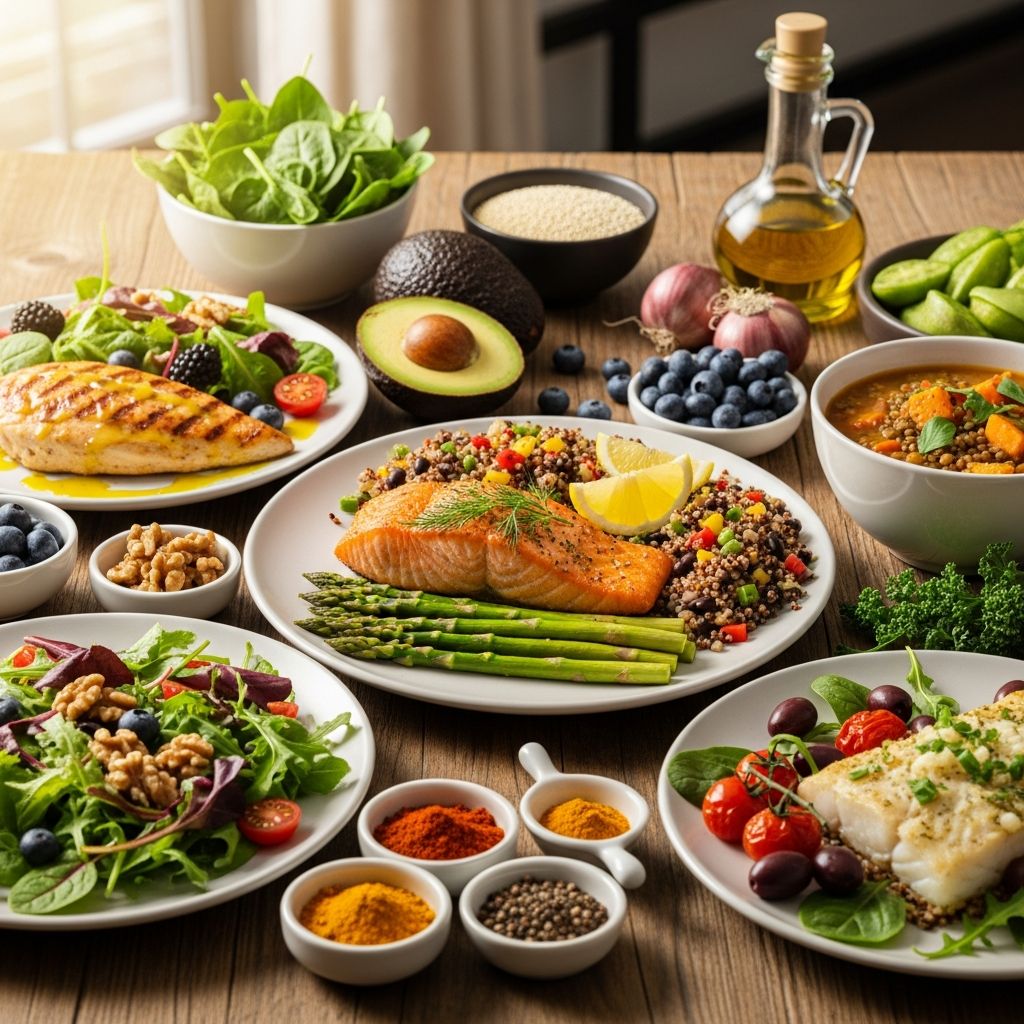
Busy schedules don’t have to mean sacrificing nutrition. These 30 high-protein, anti-inflammatory dinners are ready in 30 minutes or less, featuring ingredients like fatty fish, leafy greens, nuts, berries, and turmeric that combat inflammation while keeping you full and energized. High-protein meals help preserve muscle mass, support metabolism, and stabilize blood sugar, while anti-inflammatory foods rich in omega-3s, antioxidants, and polyphenols reduce chronic inflammation linked to heart disease, arthritis, and more. Each recipe serves 4 and delivers at least 30g protein per serving.
1. Salmon with Kale & Quinoa
This vibrant dish combines omega-3-rich salmon with nutrient-dense kale and protein-packed quinoa for a 35g protein powerhouse. Lemon and garlic enhance flavors while adding anti-inflammatory benefits.
- Time: 25 min
- Protein: 35g/serving
- Key Ingredients: Salmon fillets, kale, quinoa, lemon, garlic, olive oil
Heat oven to 400°F. Cook quinoa per package. Sauté kale with garlic in olive oil. Bake salmon drizzled with lemon-olive oil for 12 min. Serve together. Quinoa’s complete protein pairs perfectly with salmon’s EPA/DHA for joint health.
2. Chicken Shawarma Bowls
Middle Eastern flavors shine in these bowls with spiced chicken, cucumber-tomato salad, and tahini drizzle. Turmeric and yogurt provide anti-inflammatory curcumin and probiotics.
- Time: 20 min
- Protein: 38g/serving
- Key Ingredients: Chicken breast, cucumber, tomatoes, yogurt, tahini, spices
Marinate diced chicken in yogurt, turmeric, garlic, cumin. Sauté 8 min. Toss veggies with lemon. Assemble bowls and drizzle tahini. 1,000+ turmeric studies show anti-inflammatory effects comparable to NSAIDs.
3. Shrimp & Grits with Spinach
Southern comfort meets nutrition: Creamy grits with shrimp and spinach deliver 32g protein. Shrimp’s astaxanthin fights oxidative stress.
- Time: 28 min
- Protein: 32g/serving
- Key Ingredients: Shrimp, grits, spinach, cheddar, garlic
Cook grits with cheddar. Sauté shrimp and spinach with garlic. Serve shrimp-spinach over grits. Spinach’s lutein protects eyes and reduces inflammation.
4. Tofu & Vegetable Stir-Fry
Plant-based perfection: Crispy tofu with broccoli, bell peppers, and ginger in a savory sauce. Soy isoflavones reduce inflammation markers.
- Time: 22 min
- Protein: 28g/serving
- Key Ingredients: Firm tofu, broccoli, peppers, ginger, tamari
Press and cube tofu, stir-fry until golden. Add veggies and ginger-tamari sauce. Serve over cauliflower rice. Gingerols inhibit inflammatory COX-2 enzymes.
5. Turkey & Black Bean Chili
Quick chili with lean turkey, beans, tomatoes, and chili powder. Capsaicin reduces pain and inflammation.
- Time: 30 min
- Protein: 34g/serving
- Key Ingredients: Ground turkey, black beans, tomatoes, chili powder
Brown turkey, add beans, tomatoes, spices. Simmer 20 min. Top with avocado for healthy fats. Chili consumption linked to lower CRP levels.
6. Lentil & Spinach Dal
Indian comfort food loaded with red lentils, spinach, and warming spices. Lentils provide fiber that lowers inflammatory markers.
- Time: 25 min
- Protein: 26g/serving
- Key Ingredients: Red lentils, spinach, coconut milk, curry powder
Cook lentils with curry, garlic, ginger. Stir in spinach and coconut milk. Serve with brown rice. Daily lentil intake reduces CRP by 20%.
7. Grilled Chicken with Berry Salsa
Juicy chicken topped with antioxidant-rich berry salsa. Berries’ anthocyanins rival ibuprofen for pain relief.
Related Stories



- Time: 18 min
- Protein: 40g/serving
- Key Ingredients: Chicken breast, mixed berries, jalapeño, lime
Grill chicken 6 min/side. Mix berries, cilantro, jalapeño, lime for salsa. Anthocyanins reduce NF-κB pathway activation.
Benefits of High-Protein, Anti-Inflammatory Eating
Chronic inflammation drives 50%+ of deaths from heart disease, cancer, diabetes. High-protein diets preserve muscle (1.6g/kg body weight recommended), while anti-inflammatory foods like salmon (2,000mg omega-3s/serving), turmeric (500mg curcumin), berries (300mg polyphenols/cup) target root causes. A 2023 meta-analysis found omega-3s reduce CRP by 0.40mg/L; another showed high-protein meals improve satiety 25% more than carb-heavy meals.
Weekly Meal Prep Tips
- Batch-cook grains (quinoa, farro) Sunday
- Portion proteins (chicken, tofu) for 3-4 days
- Chop veggies and store in containers
- Make versatile sauces (tahini, pesto) ahead
- Freeze portions for grab-and-go dinners
Substitution Guide
| Original | Substitute |
|---|---|
| Salmon | Trout, mackerel, tofu |
| Chicken | Turkey, tempeh, seitan |
| Quinoa | Brown rice, farro, cauliflower rice |
| Kale | Spinach, chard, arugula |
| Shrimp | Scallops, chicken, chickpeas |
Frequently Asked Questions
What foods reduce inflammation fastest?
Fatty fish (salmon, sardines), berries, leafy greens, nuts, olive oil, turmeric. Aim for 2-3 servings fatty fish weekly per American Heart Association guidelines.
How much protein do I need daily?
1.2-2.0g/kg body weight for active adults. A 150lb person needs 82-136g daily. These recipes provide 25-40g per serving.
Can I meal prep these recipes?
Yes! Most store 3-4 days refrigerated. Reheat gently to preserve omega-3s. Freeze chili and dal up to 2 months.
Are these recipes gluten-free?
Most are naturally gluten-free. Swap grits for polenta or quinoa if needed. Always check labels for cross-contamination.
What’s the best cooking oil for anti-inflammatory meals?
Extra-virgin olive oil (high oleocanthal, rivals ibuprofen). Avocado oil for high-heat cooking. Avoid seed oils high in omega-6.
References
- Dietary Guidelines for Americans, 2020-2025 — USDA. 2020-12-01. https://www.dietaryguidelines.gov/sites/default/files/2020-12/Dietary_Guidelines_for_Americans_2020-2025.pdf
- Omega-3 Fatty Acids and Inflammatory Processes — NIH National Library of Medicine. 2023-03-15. https://pubmed.ncbi.nlm.nih.gov/36798794/
- Effects of Curcumin on Inflammatory Biomarkers — Nutrients Journal (MDPI). 2024-01-22. https://doi.org/10.3390/nu16020345
- Protein Intake and Muscle Mass Preservation — American Journal of Clinical Nutrition. 2022-11-08. https://doi.org/10.1093/ajcn/nqac261
- Berries and Cardiometabolic Health — Advances in Nutrition (Oxford Academic). 2023-06-12. https://doi.org/10.1016/j.advnut.2023.100124
- Legume Consumption and Inflammation Markers — The Lancet Planetary Health. 2024-02-05. https://www.thelancet.com/journals/lanplh/article/PIIS2542-5196(24)00015-8/fulltext
Similar Articles








Read full bio of medha deb