3D Bioprinting: Expert Guide For Skin Grafts, Models & Testing
Revolutionary technology printing living skin tissues for grafts, disease models, and personalized dermatology treatments.

3D bioprinting involves layering living cells, growth factors, and biomaterials—known as bioinks—to fabricate complex, functional biological structures that mimic human tissues, particularly skin. This technology holds immense promise for dermatology by enabling the production of patient-specific skin grafts, disease models, and testing platforms for drugs and cosmetics.
What is 3D bioprinting?
3D bioprinting is an advanced form of additive manufacturing that precisely deposits cell-laden bioinks to construct three-dimensional tissues layer by layer. Unlike traditional 3D printing with plastics, bioprinting uses biocompatible hydrogels or extracellular matrix (ECM) components combined with viable cells such as fibroblasts, keratinocytes, and endothelial cells. The process starts with creating a digital blueprint via imaging techniques like computed tomography (CT) or magnetic resonance imaging (MRI), followed by slicing the model into layers for printing.
Key components include:
- Bioinks: Hydrogels like collagen, fibrin, gelatin, alginate, or decellularized ECM that provide structural support and mimic the native microenvironment.
- Cells: Primary human dermal fibroblasts for the dermis and keratinocytes for the epidermis, often including melanocytes or immune cells for complexity.
- Bioprinters: Extrusion-based systems for high cell viability, inkjet for speed, or laser-assisted for precision.
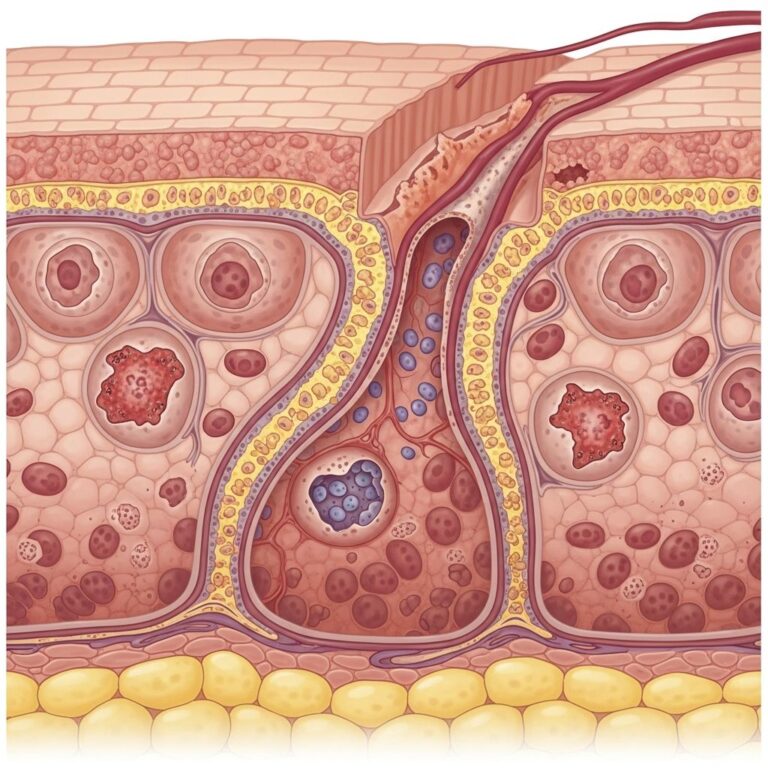
This method allows replication of skin’s stratified architecture: epidermis, dermis, and hypodermis, addressing limitations of 2D cultures that fail to capture tissue complexity.
How does 3D bioprinting work?
The bioprinting workflow comprises several stages:
- Design: Computer-aided design (CAD) software generates a 3D model based on patient scans or standardized templates.
- Bioink Preparation: Cells are suspended in hydrogels at optimal concentrations (e.g., 10-20 million cells/mL) to ensure printability and viability.
- Printing: Nozzles extrude bioinks in patterns mimicking skin layers; multi-head printers deposit different cell types sequentially.
- Maturation: Printed constructs are cultured in bioreactors with nutrients, growth factors, and mechanical stimuli for 2-4 weeks to develop vascularization and functionality.
- Integration: Grafts are transplanted, promoting host tissue integration.
Challenges include maintaining cell viability (>85% post-printing), achieving vascular networks, and ensuring mechanical strength comparable to native skin (Young’s modulus ~10-100 kPa). Recent advances incorporate sacrificial inks for perfusable vessels and nanomaterials for enhanced stability.
Applications of 3D bioprinting in dermatology
Skin grafts and wound healing
3D bioprinted skin serves as an alternative to autografts and allografts, which suffer from donor site morbidity and rejection risks. Bilayered constructs with collagen-fibrin bioinks and patient-derived fibroblasts/keratinocytes have accelerated healing in porcine full-thickness burn models, reducing scarring by promoting re-epithelialization within 11 days.
Handheld bioprinters enable in situ printing directly onto wounds, as demonstrated by Günther et al., where porcine burns showed improved regeneration and minimal fibrosis. Clinical trials, like those with FDA-approved products such as StrataGraft (approved 2021 for thermal burns), validate bilayered allogeneic constructs combining neonatal fibroblasts and keratinocytes in a bovine collagen scaffold.
Related Stories



Disease modelling
Bioprinted skin recapitulates pathological features for studying atopic dermatitis (AD), psoriasis, and skin cancers. AD models exhibit hyperplasia, spongiosis, elevated cytokines (IL-4, IL-13), and altered differentiation markers. Psoriasis equivalents show hyperkeratosis and T-cell infiltration, while melanoma models incorporate tumor microenvironments for invasion studies.
Patient-derived induced pluripotent stem cells (iPSCs) enable personalized models of genodermatoses, UV damage, and aging, facilitating drug screening. These platforms offer higher reproducibility than animal models, which often poorly translate to humans.
Drug and cosmetic testing
Regulatory bans on animal testing (e.g., EU Cosmetics Directive) drive demand for human-relevant models. 3D bioprinted skin assesses barrier permeability, irritation, and penetration more accurately than 2D or cadaver skin. L’Oréal and Procter & Gamble have invested in these for compound screening across skin types (normal, dry, oily, sensitive).
Full-thickness models predict toxicity and efficacy, with vascularization enhancing absorption realism. They support high-throughput screening, reducing development costs by 30-50%.
Personalised medicine
Autologous bioprinting uses patient cells to minimize immunogenicity. iPSC-derived constructs tailor treatments for chronic wounds, ulcers, and cancers. Tumor-on-a-skin models test personalized chemotherapies, while aesthetic applications include scarless reconstruction and anti-aging therapies.
Bioinks for skin bioprinting
Ideal bioinks balance printability (viscosity 10-100 Pa·s), cell viability, and biodegradability. Natural options dominate:
| Bioink Type | Composition | Advantages | Limitations |
|---|---|---|---|
| Collagen | Type I bovine/porcine | Biomimetic, supports remodeling | Low viscosity, thermal gelation |
| Fibrin | Plasma-derived | High cell adhesion, angiogenesis | Rapid degradation |
| Gelatin Methacryloyl (GelMA) | Modified gelatin | UV crosslinking, tunable mechanics | Batch variability |
| Decellularized ECM (dECM) | Tissue-derived | Native cues, organ-specific | Source variability, immunogenicity |
| Alginate | Algal polysaccharide | Shear-thinning, ionic crosslinking | Lacks cell adhesion motifs |
Hybrids like fibrinogen/collagen enhance outcomes; nanofibrillated cellulose improves shape fidelity. Cell types include fibroblasts (dermal matrix), keratinocytes (epidermal barrier), melanocytes (pigmentation), and endothelial cells (vascularization).
Clinical trials and future directions
Over 20 trials (as of 2025) evaluate bioprinted skin for burns, ulcers, and vitiligo. Phase II results show 80-90% graft take rates vs. 60-70% for meshes. Handheld devices like the REVEE device (Poietis) received CE marking for point-of-care printing.
Future priorities: full vascularization via co-printing with pericytes, innervation for sensation, appendages (hair follicles, glands), and scalability for large defects. Integration with CRISPR for gene-corrected iPSCs promises cures for epidermolysis bullosa. Ethical considerations include cell sourcing and equitable access.
Frequently Asked Questions
What is the main advantage of 3D bioprinted skin over traditional grafts?
It uses patient cells to avoid rejection, enables on-demand printing for large wounds, and reduces donor site pain.
Can 3D bioprinting model skin cancer?
Yes, patient-derived melanoma cells in stromal contexts replicate invasion and drug responses accurately.
How long until bioprinted skin is routine in clinics?
Handheld systems for burns may enter widespread use by 2028; complex organs like full appendages by 2035.
Is it ethical for cosmetic testing?
Absolutely, replacing animal tests with human-like models aligns with global regulations.
What cells are used in skin bioprinting?
Fibroblasts, keratinocytes, melanocytes, and endothelial cells, often from patient biopsies or iPSCs.
References
- 3D Bioprinting: An Overview — DermNet NZ. 2023. https://dermnetnz.org/topics/3d-bioprinting
- 3D Bioprinting in Skin Related Research: Recent Achievements — PMC/NCBI (Peer-reviewed). 2022-01-15. https://pmc.ncbi.nlm.nih.gov/articles/PMC8787816/
- In Print: 3D Bioprinting for Skin Grafting & Testing — Dermascope Magazine. 2023. https://www.dermascope.com/in-print-3d-bioprinting-for-skin-grafting-testing/
- Bioprinting a Thick Skin — Drug Discovery News. 2024. https://www.drugdiscoverynews.com/bioprinting-a-thick-skin-16013
- Revolutionizing Dermatology with Bioprinting — L’Oréal Official. 2023-06-12. https://www.loreal.com/en/news/group/revolutionizing-dermatology-with-bioprinting/
Similar Articles








Read full bio of medha deb