4 Fast Facts About the Somatosensory System
Essential insights into how your body senses touch, pain, temperature, and pressure through the somatosensory system.
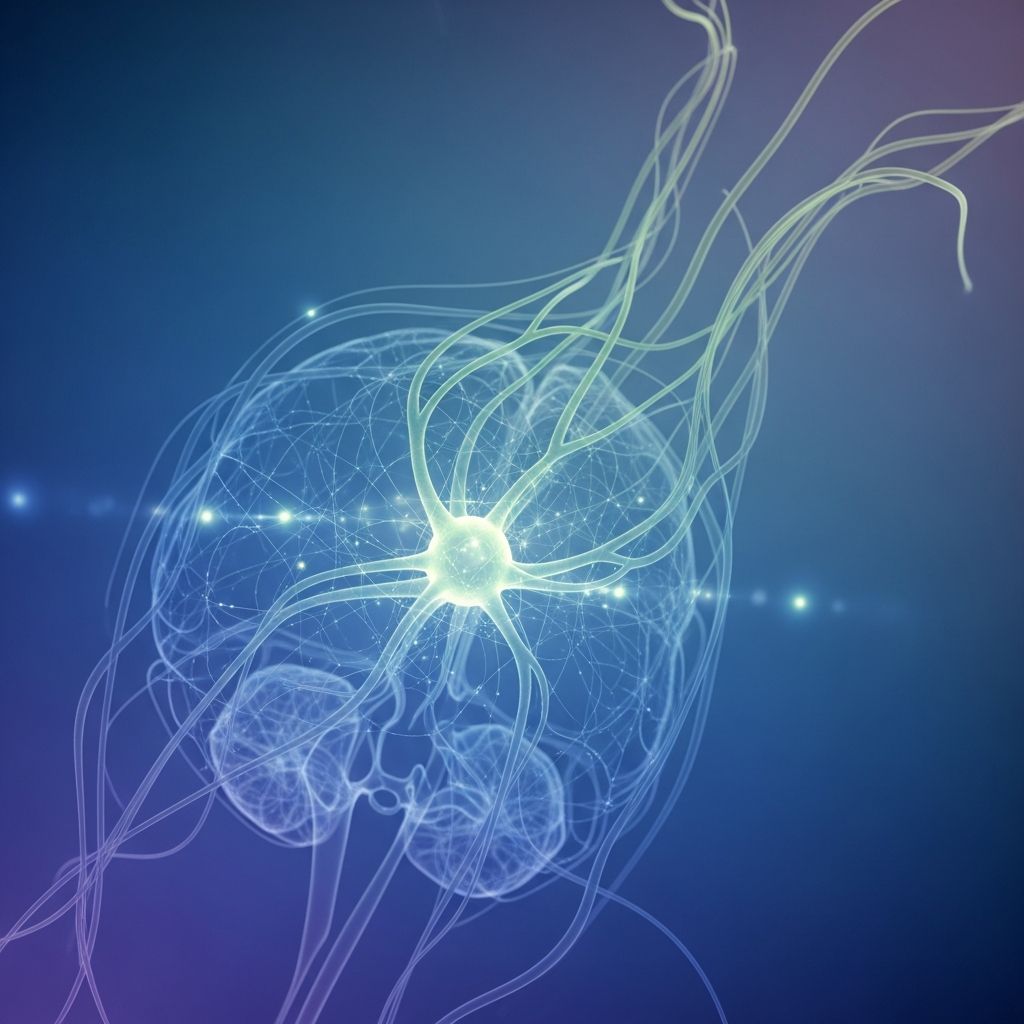
The somatosensory system is one of the most remarkable and intricate sensory systems in the human body. It allows us to perceive and respond to our environment through a complex network of specialized neurons and brain regions. Unlike our other senses—vision, hearing, smell, and taste—which rely on specific sensory organs, the somatosensory system is distributed throughout our entire body. From the tips of our fingers to our toes, specialized sensory receptors constantly gather information about touch, temperature, pain, and pressure. This information travels through peripheral nerves to the spinal cord and ultimately to the brain, where it is processed and interpreted. Understanding how the somatosensory system works provides crucial insights into sensation, perception, and pain management. Here are four essential facts about this fascinating system.
Fact 1: Specialized Neurons Detect Different Types of Sensations
The foundation of the somatosensory system lies in its diverse population of specialized sensory neurons. Scientists have identified that distinct types of neurons detect different types of sensations, including touch, heat, cold, pain, pressure, and vibration. This specialization allows the nervous system to discriminate between various stimuli with remarkable precision and accuracy.
Each type of sensory neuron is uniquely tuned to respond to specific stimuli. For example, some neurons are exquisitely sensitive to gentle touch, while others only respond to intense pressure or damaging stimuli. This specialization begins at the peripheral level—in the skin and other tissues where sensory receptors are located. The endings of these sensory neurons come in various forms, from simple free nerve endings to highly specialized structures like Meissner’s corpuscles, Pacinian corpuscles, and Merkel cells.
Remarkably, researchers have recently discovered previously unknown types of sensory neurons. Scientists know more about neurons involved with temperature and touch than those underlying mechanical pain. However, breakthrough research has revealed specialized high-threshold mechanoreceptors (HTMRs) called “circ-HTMRs” that respond robustly to specific mechanical stimuli, such as hair pulling. These neurons make unusual lasso-like structures around the base of hair follicles, representing a unique neuronal category that was previously undescribed in scientific literature.
The discovery of these specialized neurons demonstrates that the sensory system is far more sophisticated than previously understood. The nervous system maintains a specialized workforce of neurons, each with its own role in detecting and transmitting sensory information. This division of labor allows for rapid and accurate localization of sensations and appropriate behavioral responses.
Fact 2: Sensory Information Travels Through Multiple Brain Regions
Once sensory information is detected by peripheral neurons, it must be transmitted to the brain for processing and perception. This journey involves multiple relay stations and complex neural circuits. The process begins when peripheral sensory neurons send signals through the spinal cord, where initial processing occurs. From there, information ascends through various pathways to reach the brain.
The primary processing of somatosensory information occurs in two distinct cortical regions: the primary somatosensory cortex (S1) and the secondary somatosensory cortex (S2). These regions work in concert to process and interpret sensory signals. The primary somatosensory cortex, located in the postcentral gyrus, receives direct input from the thalamus and represents the initial cortical processing stage. It maintains a somatotopic organization, meaning that adjacent areas of the brain process information from adjacent areas of the body—this is why neuroscientists often refer to the “sensory homunculus,” a distorted map of the body on the brain’s surface.
The secondary somatosensory cortex processes information differently and plays a crucial role in encoding aspects of the somatosensory experience that the primary cortex does not. Research has shown that S1 has a strong bias toward mechanical and cooling inputs but lacks significant heat encoding. In contrast, the secondary somatosensory cortex has emerged as an essential structure that governs mechanical and heat sensitivity through connections to other brain regions. Specifically, S2 projections to the secondary motor cortex (M2) govern mechanical and heat sensitivity without affecting motor performance or anxiety.
This parallel processing arrangement allows the brain to simultaneously handle multiple aspects of somatosensory information. Top-down circuits from S1 can modulate mechanical and cooling stimuli, while S2 contributes to processing heat and mechanical sensations through descending pathways. This hierarchical and parallel organization ensures that sensory information is thoroughly processed and integrated with motor commands to produce appropriate behavioral responses.
Fact 3: The Somatosensory System Involves Both Ascending and Descending Pathways
The somatosensory system is not a one-way street from the periphery to the brain. Instead, it involves bidirectional communication through both ascending and descending neural pathways. Ascending pathways carry sensory information from the body to the brain, while descending pathways carry motor commands and modulatory signals from the brain back to the spinal cord and periphery.
The ascending pathways include several major routes. The dorsal column-medial lemniscal pathway carries information about fine touch, vibration, and proprioception. The spinothalamic tract transmits information about pain, temperature, and crude touch. These pathways converge at the thalamus, which acts as a relay station, filtering and organizing information before it reaches the cortex.
Equally important are the descending pathways that originate from the brain. The corticospinal tract carries motor commands from the motor cortex to the spinal cord, enabling voluntary movement. However, the somatosensory cortex also sends descending projections that can modulate sensory processing at the spinal cord level. These top-down circuits allow the brain to regulate which sensory signals are amplified or suppressed based on attention, expectation, and behavioral context.
This descending control is particularly important for understanding pain perception. The brain can enhance or reduce the perceived intensity of pain through descending modulatory circuits. Neurons in the brainstem release neurotransmitters like serotonin and norepinephrine that inhibit pain signals in the spinal cord. This endogenous pain control system explains phenomena such as why pain may be less noticeable during times of stress or excitement, and why attention and expectation can significantly influence pain perception.
Fact 4: The Somatosensory System Underlies Pain Perception and Localization
One of the most clinically significant functions of the somatosensory system is pain perception. Pain is not simply a sensation—it is a complex experience that involves sensory discrimination, emotional evaluation, and behavioral response. The somatosensory system provides the sensory component of pain, allowing us to detect painful stimuli and precisely localize where on the body the pain is occurring.
Pain detection involves specialized neurons called nociceptors, which respond to noxious (harmful) stimuli. Some nociceptors are polymodal, responding to multiple types of harmful stimuli such as heat, cold, and mechanical damage. Others are more selective, responding primarily to specific types of threats. Recent research has identified previously unknown types of mechanoreceptors that contribute to pain sensation, such as the circ-HTMRs that respond to hair pulling and make specialized endings around hair follicles.
These circ-HTMRs represent a unique category of neuron that blurs the traditional distinction between touch and pain neurons. They function like nociceptors, responding to high-threshold mechanical stimulation, yet they make specialized endings that were traditionally associated with touch neurons. Their unique properties make them ideally suited to enable rapid and precise localized sensation of mechanical pain. This discovery has significant implications for understanding how the nervous system discriminates between different types of sensations and how pain can become pathological in certain conditions.
The localization of pain—knowing exactly where pain is occurring—depends on the somatosensory cortex’s ability to maintain an accurate body map. When peripheral nociceptors are activated, they send signals to the spinal cord, where initial processing and integration occur. These signals then ascend through the spinothalamic tract to the thalamus and ultimately to the primary and secondary somatosensory cortices. The cortical representation of the painful area becomes activated, allowing the brain to pinpoint the location of the injury or threat.
Understanding how the somatosensory system encodes pain offers promising avenues for developing new therapeutic approaches. Learning more about the distinctive features of different pain-sensing neurons could contribute to rapid and accurate localization of brain regions activated during mechanical pain, ultimately enabling the rational design of new approaches to pain therapy and management.
How Sensory Information Gets Processed: A Closer Look
The journey of sensory information through the somatosensory system involves sophisticated processing at multiple levels. At the peripheral level, sensory receptors in the skin and deeper tissues detect stimuli and convert them into electrical signals. Different receptor types have different thresholds and adaptation rates, allowing the nervous system to distinguish between sustained pressure and fleeting touch.
In the spinal cord, sensory information undergoes initial integration. Interneurons modulate the transmission of sensory signals, filtering out less important information and enhancing significant signals. This processing at the spinal level explains why we can habituate to constant stimuli—the spinal circuits suppress signals from unchanging stimuli while remaining responsive to novel or changing sensations.
The thalamus acts as a sophisticated gatekeeper, receiving sensory information and filtering it before sending it to the cortex. This filtering is not passive; it is actively regulated by descending inputs from the cortex, allowing the brain to control what information reaches conscious awareness. This thalamic gating mechanism is thought to play a role in attention, allowing us to focus on important sensations while ignoring irrelevant background stimuli.
At the cortical level, sensory information is further processed and integrated with other information. The primary somatosensory cortex maintains a detailed body map and processes the discriminative aspects of sensation—recognizing what stimulus is being applied and where. The secondary somatosensory cortex integrates information across different modalities and contributes to higher-order aspects of sensation, such as texture discrimination and pain evaluation.
Clinical and Research Implications
Understanding the somatosensory system has important clinical implications. Dysfunction in the somatosensory system can lead to various disorders, including neuropathic pain, phantom limb pain, and complex regional pain syndrome. By identifying the specific neural circuits and neurons involved in sensation and pain, researchers can develop more targeted therapeutic interventions.
Current research is exploring multiple avenues for improving pain management. One approach involves targeting specific subtypes of nociceptors to selectively block pain signals without affecting other sensations. Another involves modulating descending pain control pathways to enhance the brain’s endogenous ability to suppress pain. Yet another approach focuses on understanding how inflammation alters the properties of sensory neurons, which could lead to treatments that prevent the transition from acute to chronic pain.
Frequently Asked Questions
What is the somatosensory system?
The somatosensory system is the sensory system responsible for detecting touch, temperature, pain, and proprioception (body position). It involves peripheral sensory receptors, nerves, the spinal cord, and brain regions that collectively allow us to perceive and respond to stimuli from our body and environment.
How do sensory neurons differ from each other?
Different sensory neurons are specialized to detect different types of stimuli. Some neurons respond to gentle touch, while others detect temperature changes, painful stimuli, or vibration. Each neuron type has unique morphology and firing properties that make it suited to its specific sensory role.
What are circ-HTMRs and why are they significant?
Circ-HTMRs (circumferential high-threshold mechanoreceptors) are a newly discovered class of sensory neurons that respond to mechanical stimulation such as hair pulling. They make lasso-like structures around hair follicles and represent a unique type of neuron that combines features of both pain-sensing and touch-sensing neurons, expanding our understanding of sensory diversity.
How does the brain localize pain?
Pain localization occurs through the maintenance of a detailed body map in the somatosensory cortex. When nociceptors are activated, their signals travel through the spinal cord to the thalamus and then to the primary and secondary somatosensory cortices, which activate the corresponding cortical representation of the painful area, allowing precise localization.
Can the brain control pain perception?
Yes, the brain has descending pathways that can modulate pain signals in the spinal cord. The brainstem releases neurotransmitters that can suppress pain signals, which is why factors like attention, expectation, and emotional state can significantly influence how much pain we perceive.
What is the role of the secondary somatosensory cortex?
The secondary somatosensory cortex (S2) processes somatosensory information in ways that complement the primary cortex. It is essential for governing mechanical and heat sensitivity through connections to the secondary motor cortex, and it contributes to higher-order aspects of sensory perception such as integration across multiple sensations.
How might understanding the somatosensory system improve pain treatment?
By identifying specific neurons and circuits involved in pain perception, researchers can develop more targeted therapies. These might include selectively blocking certain types of pain-sensing neurons, enhancing descending pain control pathways, or preventing the transition from acute to chronic pain through better understanding of how inflammation affects sensory neurons.
References
- NCCIH Researchers Describe Specialized Neurons That Sense Hair Pulling — National Center for Complementary and Integrative Health (NCCIH), National Institutes of Health. 2024-02-15. https://nccih.nih.gov/research/results/spotlight/specialized-neurons
- The secondary somatosensory cortex gates mechanical and heat sensitivity — Nature Communications. 2024-03-14. https://doi.org/10.1038/s41467-024-45729-7
- NIH study uncovers specialized mouse neurons that play a unique role in pain—previously unknown category of neuron responds to pulling of a single hair — National Center for Complementary and Integrative Health (NCCIH), National Institutes of Health. 2024-02-15. https://nccih.nih.gov/news/press-releases/nih-study-uncovers-specialized-mouse-neurons-play-unique-role-pain-previously-unknown-category-neuron
- The Somatosensory System and Sensory Neurons — National Center for Complementary and Integrative Health (NCCIH), National Institutes of Health. 2024. https://nccih.nih.gov/news/events/sensory-neurons-touch-function-dysfunction
- New Study Advances Understanding of How Heat and Pain Are Sensed and How Touch Can Become Painful — National Center for Complementary and Integrative Health (NCCIH), National Institutes of Health. 2024. https://nccih.nih.gov/research/research-results/new-study-advances-understanding-how-heat-and-pain-are-sensed-and-how-touch-can-become-painful
Similar Articles








Read full bio of Sneha Tete