4 First Aid Tips for a Safe and Merry Christmas
Essential first aid guidance to keep your family safe during the festive season.
The festive season brings joy, family gatherings, and celebrations, but it also increases the risk of accidents and medical emergencies when healthcare services may have limited availability. St John Ambulance, a leading provider of first aid training and emergency response guidance, shares practical, down-to-earth first aid tips designed to help you and your family stay safe and healthy throughout Christmas. Whether you’re hosting a large gathering, entertaining guests, or simply enjoying time with loved ones, understanding these essential first aid techniques could make a significant difference in an emergency situation.
Understanding the Importance of First Aid During the Holidays
The Christmas period presents unique challenges for medical preparedness. With healthcare facilities operating on reduced schedules, emergency services potentially busier than usual, and families gathered in numbers that may exceed normal household occupancy, the likelihood of requiring first aid assistance increases substantially. Common festive emergencies include burns from candles and decorative lights, choking incidents during holiday meals, allergic reactions to new foods or decorations, falls from ladders while hanging decorations, and cardiovascular events triggered by stress or overexertion. Being equipped with basic first aid knowledge empowers you to respond effectively while waiting for professional medical help to arrive.
Tip 1: Cardiopulmonary Resuscitation (CPR) for Unresponsive Casualties
One of the most critical first aid skills during any emergency is knowing how to perform cardiopulmonary resuscitation (CPR). CPR can be lifesaving when someone becomes unresponsive and stops breathing, such as during a cardiac arrest triggered by a heart attack or other serious medical event.
Recognizing the Emergency
First, assess whether the casualty is responsive by speaking to them and gently tapping their shoulders. If they do not respond and are not breathing normally, this is a medical emergency requiring immediate action.
Calling for Help
Your first priority should be to call 999 or 112 immediately if the casualty is unresponsive and not breathing. Provide the emergency operator with clear information about the casualty’s condition and your location. Keep the phone line open to receive guidance from the operator, who can provide real-time instructions throughout the resuscitation process.
Performing Chest Compressions
Begin CPR by positioning yourself appropriately. Kneel beside the casualty’s chest, then place the heel of one hand in the centre of their chest. Position your other hand on top and interlock your fingers together. Keep your arms straight and press down firmly on the breastbone, compressing the chest by 2-3 inches, then release without lifting your hands completely off the chest.
Maintain a steady rhythm of 100-120 compressions per minute. This pace is crucial for ensuring adequate blood circulation to vital organs. Many people find it helpful to perform compressions in time with a familiar song that has an appropriate tempo, such as the Bee Gees’ “Stayin’ Alive” or similar music with a beat around 100-120 BPM.
Adding Rescue Breaths
If you have received formal first aid training and feel confident doing so, you can incorporate rescue breaths into your CPR protocol. Give 30 chest compressions followed by 2 rescue breaths, then repeat this cycle continuously. However, if you’re unwilling or unable to give rescue breaths, continue with steady chest compressions alone until emergency help arrives. Research shows that continuous chest compression-only CPR is highly effective, particularly for adults.
Related Stories



Tip 2: Responding to Anaphylactic Shock
Anaphylactic shock is a severe, potentially life-threatening allergic reaction that requires immediate emergency intervention. During the Christmas season, with increased food offerings, new decorations, and guests bringing pets or plants into the home, the risk of anaphylaxis may increase for those with known allergies. Recognizing and responding appropriately to anaphylactic shock could save a life.
Identifying Anaphylactic Shock
Anaphylactic reactions typically develop rapidly and may include symptoms such as difficulty breathing, swelling of the lips, tongue, or throat, rapid heartbeat, dizziness, skin rashes or hives, and loss of consciousness. If someone exhibits these symptoms suddenly, anaphylaxis should be suspected.
Immediate Response Steps
Call 999 or 112 immediately and inform the operator that you suspect anaphylactic shock. Do not wait to see if symptoms improve; anaphylaxis is a medical emergency. While waiting for the ambulance, assist the casualty with their adrenaline auto-injector (EpiPen or similar) if they have one available. Many people with known severe allergies carry these devices at all times.
Using an Adrenaline Auto-Injector
To administer an auto-injector correctly: First, remove the safety cap from the device. Hold the injector in your fist and press the tip firmly against the casualty’s outer thigh until you hear or feel a click, indicating the injection has been delivered. The medicine can be administered through clothing if necessary, so do not waste time removing trousers or tights. Hold the injector in place for 10 seconds (or follow the specific instructions provided with the device), then carefully remove it and massage the injection site for 10 seconds to aid absorption.
Positioning and Monitoring
After administering the auto-injector, position the casualty to aid breathing. Help them sit upright if possible. However, if they become pale and develop a weak pulse, lay them down and raise and support their legs to maintain blood circulation to vital organs. Monitor their condition closely while waiting for emergency help.
Administering Additional Doses
If multiple auto-injectors are available and there is no improvement in symptoms after several minutes, a second dose can be given after 5 minutes while continuing to wait for emergency help. Always call for professional medical assistance; even if the initial injection appears to have worked, anaphylaxis can recur, and medical professionals need to evaluate the casualty.
Tip 3: Managing Choking Incidents
Choking poses a significant risk during Christmas meals and festive gatherings when people are eating traditional foods, talking excitedly, and consuming alcohol. Knowing how to manage a choking casualty effectively could prevent a tragic outcome.
Initial Response to Choking
If someone begins choking, your first action should be to ask the casualty to cough. A strong cough is often effective at dislodging the obstruction and allowing normal breathing to resume. Encourage them to continue coughing forcefully.
When Coughing Fails
If coughing does not relieve the obstruction within a few seconds, call 000 (or 999/112 depending on your location) for emergency assistance. Do not delay seeking professional help if the casualty cannot dislodge the object.
Back Blows Technique
If the casualty cannot cough effectively, administer back blows. Position yourself slightly to the side and behind the casualty. Support their chest with one hand and lean them forward. Using the heel of your other hand, give 5 firm back blows between the shoulder blades. Check after each blow to see if the obstruction has been relieved and normal breathing has resumed.
Chest Thrusts as an Alternative
If back blows do not successfully dislodge the object, proceed to chest thrusts. Position yourself behind the casualty, place your fist just above their navel and below the ribcage, and grasp your fist with your other hand. Give 5 chest thrusts with an upward and inward movement. Check between each thrust to determine if the obstruction has been relieved.
Continuing the Cycle
Continue with cycles of five back blows and five chest thrusts and follow the guidance of the 999 ambulance operator if you have called for emergency help. Do not give up until professional help arrives or the obstruction is successfully removed.
Tip 4: Treating Burns from Candles and Decorative Lights
Burns from candles, Christmas lights, and open flames are common festive injuries, particularly when children are present or when decorations are being hung. Knowing how to treat a burn correctly in the immediate aftermath can significantly reduce pain, swelling, and the risk of permanent scarring.
Immediate Cooling Treatment
The most critical first aid step for any burn is cooling the affected area as quickly as possible. Run the burnt area under cool running water for at least 20 minutes. Cooling the burn reduces pain, minimizes swelling, and decreases the risk of deeper tissue damage and scarring. The sooner you apply cooling treatment and the longer you maintain it, the better the outcome for the casualty.
Covering the Burn
After cooling the burn thoroughly, cover the burn with a non-adherent dressing or plastic wrap. A non-adherent dressing is specially designed to prevent sticking to the wound, which can cause further trauma when removing the dressing. Alternatively, clean plastic wrap provides a barrier against infection while allowing visibility of the burn. Do not use adhesive plasters or regular gauze that may stick to the burn.
Avoiding Common Mistakes
Do not apply ice directly to the burn, as this can cause ice burns to the already-damaged skin. Do not use butter, oil, or other home remedies, as these can trap heat and worsen the injury. Do not burst any blisters that may form, as the fluid protects the wound from infection. Seek professional medical evaluation for any significant burns, deep burns, or burns covering a large area of the body.
Additional First Aid Considerations During Christmas
Preparing Your First Aid Kit
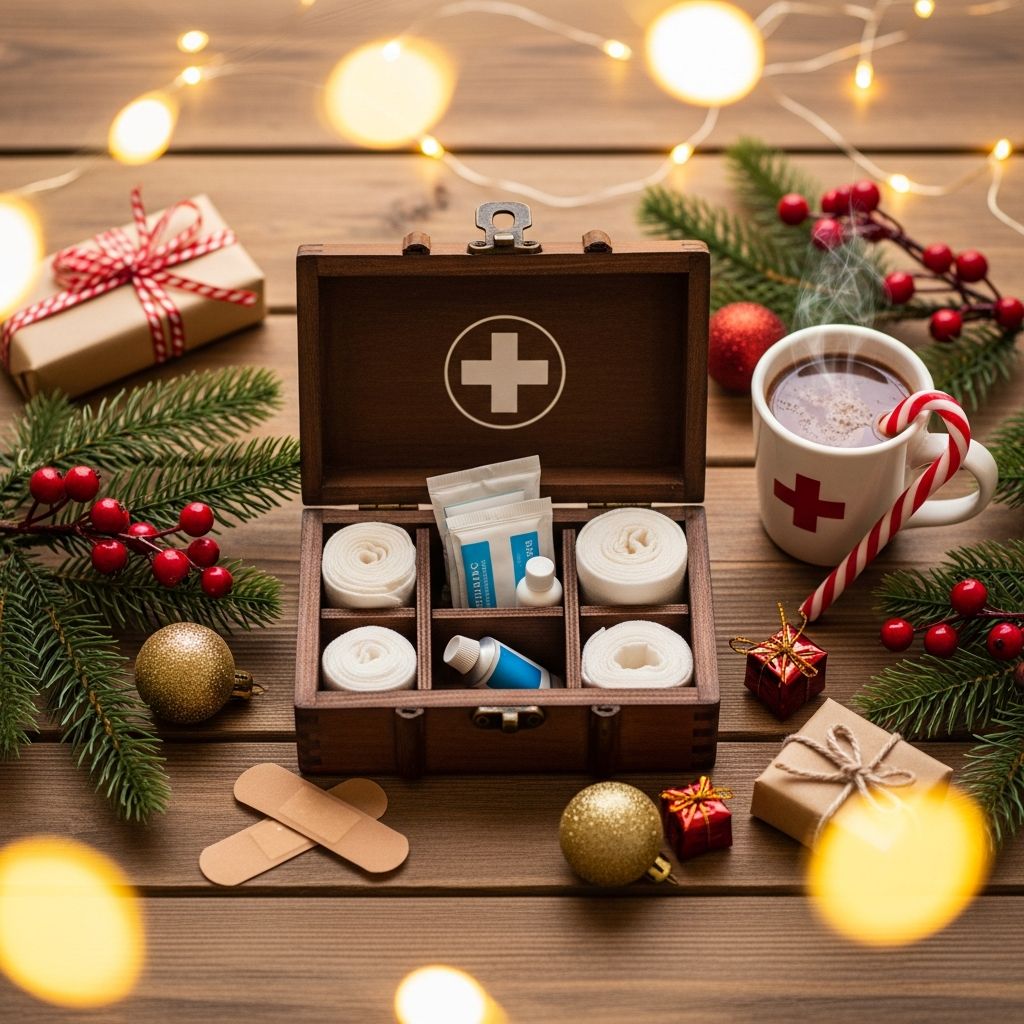
Before the festive season begins, ensure that your home first aid kit is well-stocked and accessible. Essential items should include:
- Paracetamol and ibuprofen for pain relief and fever
- Antihistamine tablets for allergic reactions
- A thermometer for monitoring temperature
- Sterile plasters in various sizes
- Sterile gauze and non-adherent dressings
- Bandages and crepe bandages for sprains
- Sterile wipes and antiseptic cream
- An instant ice pack or access to frozen vegetables
- Triangular bandages for slings and support
- Tweezers for removing splinters
- Eye dressings for eye injuries
Managing Medications During the Holidays
If you or family members take regular prescription medications, plan ahead to ensure you have adequate supplies throughout the Christmas period. Many pharmacies and medical practices operate on reduced schedules or close entirely during the holidays. Order prescriptions well in advance and do not let supplies run out. If relatives are staying with you, confirm that they have brought sufficient quantities of any medications, inhalers, or medical devices they require.
Understanding Drug and Alcohol Interactions
Be mindful that alcohol can interact with many medications, including over-the-counter products. If you are taking any medications, consult your pharmacist or GP about whether it is safe to drink alcohol. Additionally, be aware that many cold, flu, and pain medicines contain paracetamol, so check ingredient labels carefully to avoid accidentally exceeding the maximum daily dose.
Frequently Asked Questions
Q: How can I tell if someone needs CPR?
A: If someone becomes unresponsive and is not breathing normally or only gasping, they require CPR. Check for responsiveness by speaking to them and gently tapping their shoulders. If there is no response, call 999 or 112 immediately and begin chest compressions.
Q: Is mouth-to-mouth resuscitation always necessary?
A: No. Hands-only CPR consisting of continuous chest compressions at 100-120 compressions per minute is highly effective, especially for adults. If you are untrained or uncomfortable providing rescue breaths, continue with chest compressions alone until help arrives.
Q: What should I do if I do not know how to use an EpiPen?
A: Call 999 or 112 immediately. Tell the operator you suspect anaphylaxis and ask for guidance. Most modern auto-injectors are designed to be user-friendly with clear instructions printed on the device itself. Remove the safety cap and press the tip firmly against the outer thigh until it clicks.
Q: How long should I cool a burn under water?
A: Cool a burn under cool running water for at least 20 minutes. The longer you cool it and the sooner you start, the better the outcome for pain reduction, swelling management, and preventing scarring.
Q: What is the best way to remove something lodged in a choking casualty’s throat?
A: Start by encouraging the casualty to cough forcefully. If that does not work, use a combination of back blows and chest thrusts. Give 5 back blows between the shoulder blades, checking between each blow. If unsuccessful, give 5 chest thrusts. Continue this cycle while waiting for emergency help.
Q: Should I apply ice directly to a burn?
A: No. Never apply ice directly to a burn, as it can cause ice burns to the already-damaged skin. Instead, run cool running water over the burn for at least 20 minutes. At home, you can wrap frozen vegetables in a clean cloth and apply it to the area if necessary, but direct ice contact should be avoided.
Q: When should I seek professional medical help for a burn?
A: Seek professional medical evaluation for any significant burns, deep burns that penetrate multiple skin layers, burns covering a large body area, or burns on sensitive areas such as the face, hands, genitals, or joints. All severe burns require professional assessment and treatment.
Conclusion
By familiarizing yourself with these four essential first aid tips from St John Ambulance—CPR, anaphylaxis response, choking management, and burn treatment—you can significantly improve your ability to respond effectively in medical emergencies during the Christmas season. Preparation, including maintaining a well-stocked first aid kit and ensuring adequate medication supplies, combined with basic first aid knowledge, enables you to provide potentially life-saving assistance while waiting for professional emergency services to arrive. The holidays should be a time of celebration and togetherness; being prepared ensures that you and your family can enjoy the festive season safely and with confidence.
References
- 4 first aid tips for a safe and merry Christmas — Patient.info. 2024. https://patient.info/features/treatment-medication/4-first-aid-tips-for-a-safe-and-merry-christmas
- Top tips for using medicines and medical devices safely this festive season — Health Products Regulatory Authority (HPRA). 2024. https://www.hpra.ie/news-events/news/article/top-tips-for-using-medicines-and-medical-devices-safely-this-festive-season
- Christmas First Aid Tips — St John Vic. 2024. https://www.stjohnvic.com.au/news/christmas-first-aid-tips/
- British Red Cross: Christmas First Aid Tips — Morton Michel. 2024. https://www.mortonmichel.com/news/british-red-cross-christmas-first-aid-tips
- Holiday first aid kit essentials — Patient.info. 2024. https://patient.info/features/travel-and-vaccinations/holiday-first-aid-kit-essentials
- Essential first aid items for your home — Patient.info. 2024. https://patient.info/features/treatment-medication/essential-first-aid-items-for-your-home
Similar Articles








Read full bio of medha deb