5 Exercises To Improve Hand Mobility: Simple Daily Routine
Enhance hand flexibility and strength with proven exercises for better mobility.
5 Exercises to Improve Hand Mobility
Hand mobility is essential for performing everyday tasks, from typing and cooking to writing and gripping objects. Many people experience stiffness, swelling, or pain in their hands due to arthritis, injury, or overuse, which can significantly impact their quality of life. Fortunately, targeted hand exercises can help restore flexibility, improve strength, and reduce discomfort. This guide presents five effective exercises recommended by Harvard Health to enhance hand mobility and maintain optimal hand function.
Understanding Hand Mobility and Its Importance
Hand mobility refers to the ability of your hands and fingers to move freely through their full range of motion. This includes flexion, extension, abduction, and adduction of the fingers, as well as rotation and movement of the wrist. When hand mobility is compromised, even simple tasks become challenging and painful.
Common causes of reduced hand mobility include:
- Osteoarthritis and rheumatoid arthritis
- Carpal tunnel syndrome
- Tendinitis and other inflammatory conditions
- Repetitive strain injuries
- Post-injury or post-surgery stiffness
- Age-related changes in joints and tissues
Regular hand exercises can help increase flexibility, build strength, reduce pain, and improve your ability to perform daily activities independently.
Preparing Your Hands for Exercise
Before beginning any hand mobility routine, it’s important to prepare your hands properly. Warming up your hands increases blood flow to the tissues, making them more pliable and less prone to injury during stretching and strengthening exercises.
Effective Warm-Up Methods
According to medical experts, several warm-up techniques can help prepare your hands for exercise:
- Warm water soak: Immerse your hands in warm (not hot) water for 5-10 minutes to relax muscles and tendons
- Heated towel wrap: Wrap warm towels around your hands and forearms for soothing relief
- Heating pad application: Apply a heating pad to your hands for 5-10 minutes before exercising
- Oil massage: Gently massage warm oil into your hands, then wear rubber gloves while soaking in warm water
These warm-up methods are particularly beneficial if you experience regular pain or stiffness in your hands and fingers. The increased warmth helps reduce discomfort and makes subsequent stretching and movement easier and more effective.
The 5 Essential Hand Mobility Exercises
1. Palm to Sky and Pump to Floor
This foundational exercise targets the rotational muscles of your forearms and helps improve pronation and supination—the ability to rotate your palm upward and downward.
How to perform:
- Sit or stand comfortably with your arms extended in front of you at shoulder height, as if in a “T” position
- Slowly rotate your hands so your palms face upward toward the sky
- Then rotate your hands so your palms face downward toward the floor
- Continue this pumping motion alternately between positions
- Repeat for 10-15 seconds or perform 10-15 repetitions
Benefits: This exercise improves wrist and forearm flexibility, reduces stiffness, and enhances rotational mobility that’s crucial for daily activities like using utensils, turning doorknobs, and writing.
Related Stories



2. Wrist Flexion and Extension
Wrist flexion and extension exercises help maintain and improve the up-and-down bending motion of your wrist, which is essential for countless daily activities.
How to perform:
- Extend your arm in front of you with your palm facing downward
- Make a “stop” gesture with your hand, fingers pointing upward
- With your other hand, gently bend your wrist backward (extension), feeling a mild to moderate stretch in your forearm
- Hold this stretched position for 15-30 seconds
- Then gently bend your wrist forward (flexion) toward your palm
- Hold for 15-30 seconds
- Repeat 2-4 times on each arm
Benefits: This exercise increases wrist range of motion, reduces stiffness, alleviates forearm tension, and helps manage wrist pain associated with conditions like carpal tunnel syndrome.
3. Wrist Radial and Ulnar Deviation
This exercise targets the side-to-side movement of your wrist, moving your hand toward your thumb (radial deviation) and toward your pinky finger (ulnar deviation).
How to perform:
- Rest your forearm on a table with a rolled-up towel for padding underneath
- Position your thumb pointing upward
- Gently move your wrist upward and downward through its full range of motion
- This movement is similar to a waving gesture, with the wrist supported by padding
- Repeat as tolerated, moving slowly and controlled
Benefits: This exercise improves side-to-side wrist mobility, helps manage ulnar and radial nerve symptoms, and enhances the ability to perform activities requiring lateral wrist movement.
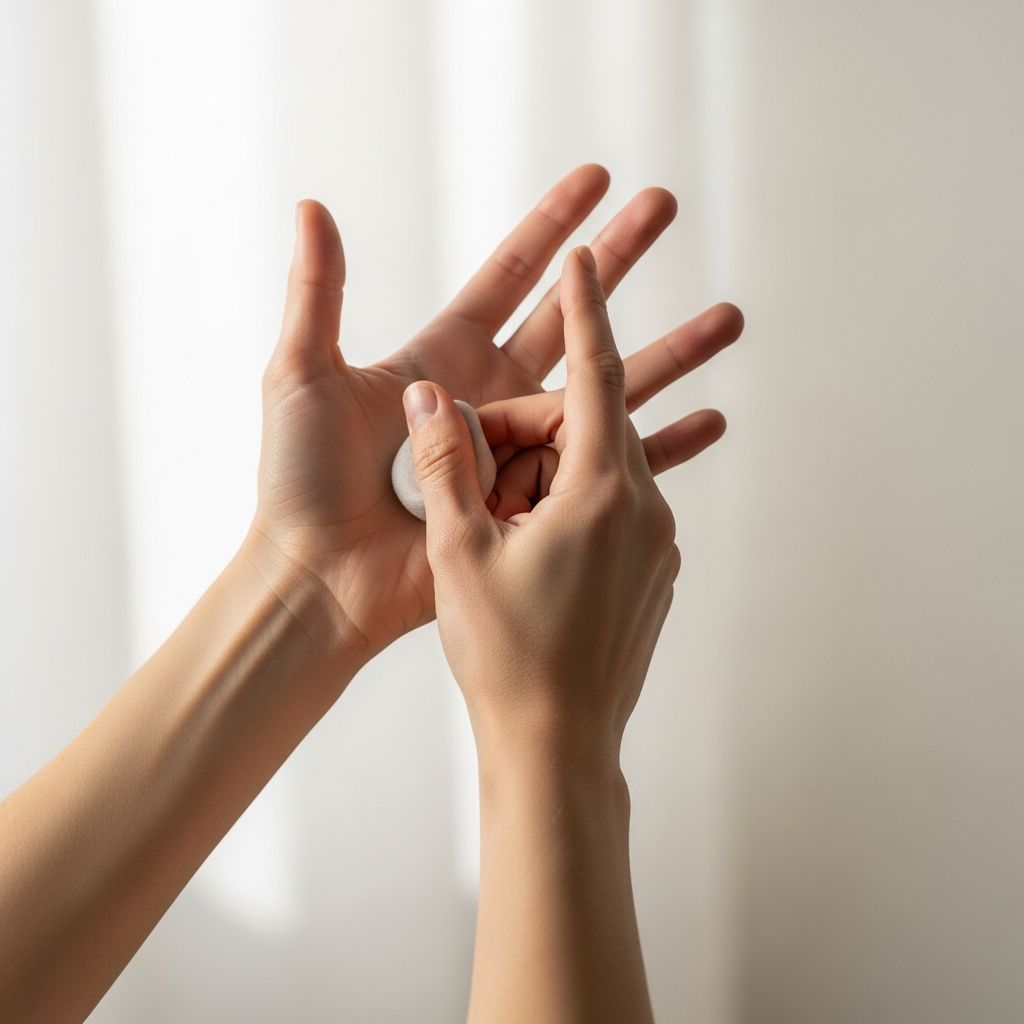
4. Thumb Flexion and Extension
The thumb requires special attention because it’s responsible for grip strength and fine motor control. This exercise specifically targets thumb mobility and strength.
How to perform:
- Hold your hand in front of you with your palm facing outward, fingers spread
- Make a “stop” gesture with your hand, thumb pointing outward
- Slowly move your thumb across your palm toward the center of your wrist
- Return your thumb to the starting position
- Repeat this in-and-out motion 8-10 times
- Perform on both hands
Benefits: This exercise maintains thumb dexterity, improves opposition (the ability to touch your thumb to each finger), and enhances overall grip function essential for picking up small objects.
5. Hand and Finger Tendon Glide
The tendon glide exercise is particularly effective for improving finger flexibility and preventing tendon adhesions. It takes your fingers through multiple positions, helping tendons move smoothly within their sheaths.
How to perform:
- Extend all your fingers straight out in front of you (stop sign position)
- Make a hook fist by bending only at your knuckles, keeping your fingers curved like a hook
- Return to the straight hand position
- Make a full fist with all fingers curled into your palm
- Return to the straight hand position
- Make a straight fist with fingers extended forward but knuckles curled
- Return to the straight hand position
- Repeat this entire sequence 5-10 times
Benefits: The tendon glide exercise improves finger flexibility, prevents stiffness, enhances the smooth movement of tendons, and helps restore full range of motion to all joints in the hand and fingers.
Exercise Frequency and Safety Guidelines
To achieve optimal results from hand mobility exercises, consistency is key. Here are important guidelines to follow:
| Aspect | Recommendation |
|---|---|
| Frequency | Perform exercises daily or at least 4-5 times per week |
| Duration | Each exercise session should last 10-15 minutes |
| Warm-up | Always warm your hands for 5-10 minutes before exercising |
| Pain Level | Exercise should cause mild to moderate stretch, never sharp pain |
| Progression | Gradually increase repetitions and duration as tolerance improves |
Important Safety Precautions
Stop exercising and seek medical attention if you experience:
- Sharp, shooting pain during or after exercise
- Significant swelling or inflammation
- Numbness or tingling that worsens
- Loss of grip strength or dexterity
- Signs of nerve compression or circulation problems
Before starting a new exercise program, consult with your healthcare provider or physical therapist, especially if you have arthritis, prior hand injuries, or other medical conditions affecting your hands.
Maximizing Results from Hand Exercises
Consistency and Patience: Hand mobility improvements typically develop gradually over weeks to months of regular practice. Stay committed to your exercise routine even if you don’t notice immediate changes.
Combine Multiple Modalities: For best results, combine these exercises with other therapeutic approaches such as heat therapy, massage, and anti-inflammatory medications as recommended by your healthcare provider.
Track Your Progress: Keep a simple log of your exercises, noting which movements feel easier and which still cause discomfort. This helps you identify improvements and adjust your routine accordingly.
Lifestyle Adjustments: In addition to exercises, make ergonomic adjustments to reduce strain on your hands during daily activities, take frequent breaks from repetitive tasks, and use assistive devices when needed.
When to Seek Professional Help
If hand stiffness, pain, or reduced mobility persists despite regular exercise, or if symptoms worsen, consult a healthcare professional. A physical therapist can customize exercises to your specific condition, and your doctor can evaluate whether underlying medical conditions need treatment.
Frequently Asked Questions
Q: How long does it take to see improvement in hand mobility?
A: Most people notice improvements within 2-4 weeks of consistent daily practice. Significant improvements typically develop over 8-12 weeks. Results vary depending on the underlying cause of reduced mobility and individual factors.
Q: Can these exercises help with arthritis in the hands?
A: Yes, these exercises are specifically beneficial for managing hand arthritis. Range-of-motion exercises help maintain flexibility and reduce stiffness associated with osteoarthritis and rheumatoid arthritis.
Q: Are these exercises suitable for older adults?
A: Yes, these exercises are safe and effective for older adults. They can be modified to match individual fitness levels and tolerances. Older adults should warm up thoroughly and perform movements slowly and carefully.
Q: Can I perform these exercises if I have carpal tunnel syndrome?
A: Yes, certain exercises like wrist flexion and extension can help manage carpal tunnel symptoms. However, consult your healthcare provider before starting, as some movements might need modification based on symptom severity.
Q: Should I perform these exercises if my hands are currently swollen or painful?
A: Always warm your hands first, and be gentle with movements. If swelling or pain is severe, apply ice after activity. If symptoms persist or worsen, consult a healthcare provider before continuing exercise.
Q: Can I do these exercises at work during breaks?
A: Absolutely. Many of these exercises can be performed seated and don’t require special equipment, making them perfect for workplace breaks to maintain hand mobility throughout the day.
References
- 5 Exercises to Improve Hand Mobility — Harvard Health Publishing. Accessed 2025. https://www.health.harvard.edu/pain/5-exercises-to-improve-hand-mobility
- Hand and Wrist Exercises for Joint Health — Keck Medicine of USC. 2024. https://www.usc.edu
- Therapeutic Hand Exercises for Mobility and Strength — American Hand Society. 2024. https://www.assh.org
- Management of Hand and Wrist Pain — American Academy of Orthopaedic Surgeons. 2024. https://www.aaos.org
- Exercise Therapy for Hand Osteoarthritis — National Institute of Arthritis and Musculoskeletal and Skin Diseases. 2024. https://www.niams.nih.gov
Similar Articles








Read full bio of Sneha Tete