Indoor Tanning: 5 Myths Busted With Evidence-Based Facts
Debunk dangerous indoor tanning myths and learn the truth about UV radiation risks.
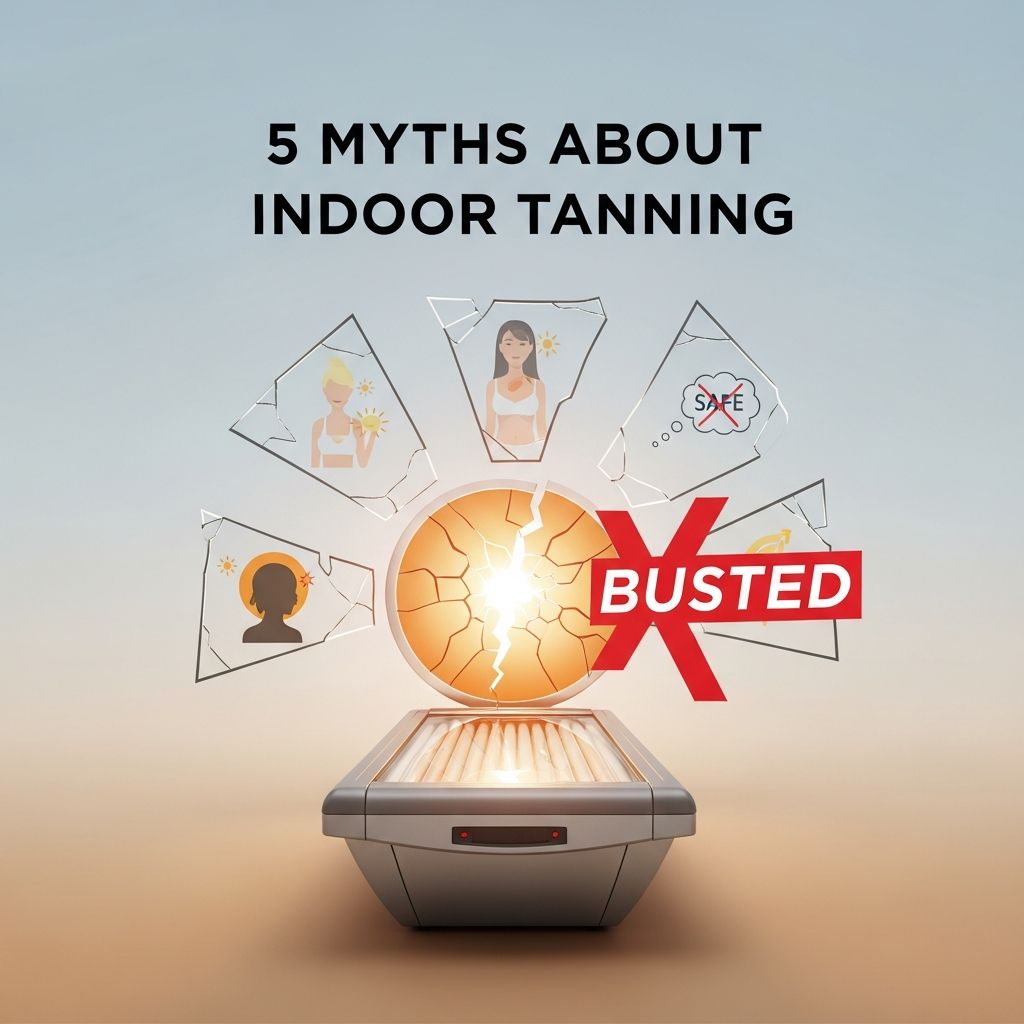
Indoor tanning remains a popular activity despite overwhelming scientific evidence about its dangers. Many people continue to use tanning beds based on misconceptions about their safety and benefits. This comprehensive guide addresses five of the most prevalent myths about indoor tanning and provides evidence-based facts to counter them. Understanding the truth about tanning beds is essential for protecting your skin health and reducing your risk of skin cancer.
Understanding the Dangers of Indoor Tanning
Before diving into specific myths, it’s important to understand the fundamental danger of indoor tanning. Tanning beds emit ultraviolet (UV) radiation that is significantly more intense than natural sunlight. The UV radiation from tanning devices delivers UVA dosages 5-15 times higher than the summer midday sun on a Mediterranean beach. This concentrated exposure to artificial UV light poses serious health risks, including increased melanoma risk, premature skin aging, and other forms of skin cancer.
Myth #1: Tanning Beds Are Safer Than Tanning Outdoors
One of the most persistent and dangerous myths about indoor tanning is that tanning beds are safer than sun exposure. This belief could not be further from the truth.
The Reality Behind This Myth
There is no such thing as a safe tanning bed. According to the American Academy of Dermatology Association, indoor tanning can greatly elevate your risk of developing skin cancer. The scientific evidence is so compelling that the U.S. Food and Drug Administration (FDA) requires warning labels on all indoor tanning equipment, acknowledging the serious health risks associated with their use.
Whether UV radiation comes from a tanning bed or the sun, it damages your skin cells in the same way. UV rays penetrate the skin and cause DNA damage that can lead to cancerous mutations. The key difference is that tanning beds deliver this harmful radiation in a more concentrated dose. When you use a tanning bed, you’re exposing yourself to UV radiation at levels that are up to 15 times more intense than peak sun exposure.
Supporting Evidence
- Indoor tanning can increase the risk of developing squamous cell carcinoma by 58%
- Basal cell carcinoma risk increases by 24% with tanning bed use
- The Skin Cancer Foundation reports that there are more skin cancer cases due to indoor tanning than there are lung cancer cases due to smoking
- Tanning beds primarily emit UVA light, which has been closely linked with premature aging
Myth #2: Young People Don’t Need to Worry About Melanoma
Another dangerous myth is that melanoma and other skin cancers are problems only for older adults, so young people can safely use tanning beds without concern. This misconception has contributed to increased melanoma rates among young adults, particularly women.
The Facts About Young People and Skin Cancer
Youth does not provide protection from skin cancer risk. In fact, young people who use tanning beds face significantly elevated risks. Research shows that melanoma is now the most common cancer among females aged 25-29 in the United States. This rise is directly linked to indoor tanning use among young women.
Related Stories



UV radiation is cumulative, meaning that exposure adds up over time. While it may take years for melanoma to develop, the damage from UV exposure during adolescence and early adulthood significantly increases cancer risk later in life. A single blistering sunburn during childhood or adolescence can nearly double a person’s risk of developing melanoma.
Risk Statistics for Young Users
- Indoor tanning before age 35 increases melanoma risk by 59%
- Using tanning beds before age 20 increases melanoma risk by 47%, with risk increasing with each use
- Indoor tanning before age 25 increases squamous cell carcinoma risk by 102%
- Basal cell carcinoma risk increases by 40% for tanning bed use before age 25
- A six-fold increase in melanoma risk occurs among women younger than age 30 who use indoor tanning
Myth #3: Indoor Tanning Doesn’t Cause Melanoma
Some people believe that indoor tanning might cause minor skin damage but won’t lead to melanoma, the most dangerous form of skin cancer. This myth dangerously underestimates the serious risks of tanning bed use.
The Melanoma Connection
Indoor tanning is directly linked to melanoma development. Use of an indoor tanning device is associated with a 20% increase in the risk of developing melanoma skin cancer. More importantly, the risk increases substantially based on age of exposure and frequency of use.
The carcinogenic effect of tanning beds is particularly pronounced when use begins in youth. According to a systematic review of research by the International Agency for Research on Cancer, any use of a tanning bed before age 35 is associated with a 75% increase in risk for melanoma. This represents one of the strongest associations between any behavioral factor and melanoma risk.
Scale of the Problem
The impact of indoor tanning on melanoma rates is substantial at the population level. In the United States, more than 6,000 cases of melanoma are directly attributable to indoor tanning each year. When combined with non-melanoma skin cancers, the total impact is staggering: more than 400,000 cases of non-melanoma skin cancer are linked to indoor tanning annually.
Myth #4: A Base Tan Provides Protection Against Sunburn
Many people use tanning beds to develop a “base tan” before sun exposure, believing this will protect them from sunburn. This myth persists despite clear scientific evidence proving it false.
Why a Base Tan Doesn’t Work
A base tan provides virtually no meaningful sun protection. While tanned skin is technically slightly darker and may provide a minimal SPF-equivalent of perhaps 3-4, this level of protection is negligible. More importantly, a tan is not a sign of skin health—it’s a sign of damage. Tanned skin represents your body’s response to harmful UV radiation, indicating that DNA damage has occurred.
The tan itself comes from increased melanin production, which is your skin’s attempt to protect itself from the UV damage it has already sustained. Using a tanning bed to establish a base tan simply compounds the UV damage before you even go outside. You’re not building protection; you’re accumulating injury.
The Dangerous Logic
This myth is particularly dangerous because it encourages people to use tanning beds specifically to increase their UV exposure. Research clearly shows that there is no safe level of tan. If you have a base tan, you can still burn, and more importantly, you’ve already sustained skin damage from the tanning bed itself. The belief that a base tan will prevent sunburn is contradicted by dermatological evidence and represents one of the most misleading tanning myths.
Myth #5: Tanning Beds Are a Safe Way to Get Vitamin D
Some people justify tanning bed use by claiming that the UV exposure helps their body produce vitamin D. While vitamin D is essential for health, tanning beds are neither an effective nor safe source of this nutrient.
Why Tanning Beds Don’t Produce Vitamin D Effectively
Tanning beds cannot effectively produce vitamin D. This myth stems from a misunderstanding of how vitamin D is synthesized. Your body needs UVB light to manufacture vitamin D naturally. However, tanning bed bulbs emit primarily UVA light, not UVB. Since UVA does not trigger vitamin D production, spending time in a tanning bed provides minimal to no vitamin D benefit.
Even if tanning beds did produce vitamin D effectively, the risks would far outweigh any benefits. Vitamin D from food sources and supplements is well-absorbed, provides consistent dosing, and carries no skin cancer risk. The small amount of vitamin D your body might produce from sun exposure is easily obtained through safer dietary sources or supplementation.
Better Alternatives for Vitamin D
- Vitamin D-rich foods including fatty fish, egg yolks, and fortified dairy products
- Vitamin D supplements, available over-the-counter in various dosages
- Brief, unintentional sun exposure during normal daily activities
- Consultation with a healthcare provider about appropriate vitamin D levels for your individual needs
Additional Risks Beyond Skin Cancer
While skin cancer is the primary concern with indoor tanning, the risks extend beyond malignancy. Tanning beds cause several other documented health problems.
Premature Skin Aging
Both UVA and UVB radiation cause premature skin aging. Wrinkles, age spots, and loss of skin firmness tend to appear years earlier in people who tan regularly. People who use tanning beds often develop leathery skin texture, a condition that people who never tan rarely experience. The aging effects are particularly pronounced with indoor tanning because of the intense, concentrated UV dose.
Eye and Burn Injuries
In emergency rooms across the United States, people receive treatment for injuries caused by indoor tanning, including burns, loss of consciousness, and eye injuries. These acute injuries, while less common than long-term cancer risk, demonstrate that tanning beds pose immediate physical dangers in addition to long-term health risks.
The Bottom Line on Indoor Tanning Safety
The scientific evidence is overwhelming and unambiguous: there is no safe way to use a tanning bed. Dermatologists and major medical organizations universally recommend avoiding indoor tanning. The FDA’s requirement for warning labels on tanning equipment reflects the strength of evidence linking tanning beds to serious health risks.
The cumulative effect of tanning bed use means that every exposure increases your cancer risk. There is no “safe” number of tanning sessions, and no level of UV exposure from tanning beds is risk-free.
Frequently Asked Questions
Q: Can I use tanning beds occasionally without significant risk?
A: No. Research shows that even occasional tanning bed use increases skin cancer risk, and this risk accumulates with each use. There is no safe threshold for indoor tanning.
Q: Are newer tanning beds safer than older ones?
A: No. Newer tanning beds still emit UV radiation at dangerous levels. The fundamental risk—UV-induced DNA damage leading to skin cancer—remains the same regardless of equipment age or manufacturer.
Q: What should I do if I’ve used tanning beds in the past?
A: Stop using tanning beds immediately and schedule a skin cancer screening with a dermatologist. Regular monitoring and sun protection going forward can help detect any skin cancer early when it’s most treatable.
Q: Are spray tans safer than tanning beds?
A: Yes. Spray tans use topical pigments rather than UV radiation and do not cause skin cancer risk. However, they provide no sun protection, so sun safety measures are still necessary.
Q: How can I protect myself if I must be in the sun?
A: Use broad-spectrum sunscreen with SPF 30 or higher, wear protective clothing, seek shade during peak sun hours (10 a.m. to 4 p.m.), and wear sunglasses. Avoid tanning beds entirely.
References
- Facts & Myths About Tanning & Risks of Skin Cancer — GentleCure. Accessed 2026. https://www.gentlecure.com/tanning-myths-and-facts/
- Just the Facts: Indoor Tanning — American Institute for Cancer Research. 2020. https://www.fightcancer.org/
- The Dangers of Indoor Tanning — Georgetown University School of Nursing & Health Studies. Accessed 2026. https://online.nursing.georgetown.edu/blog/dangers_of_indoor_tanning_infographic/
- 10 Surprising Facts About Indoor Tanning — American Academy of Dermatology Association. Accessed 2026. https://www.aad.org/public/diseases/skin-cancer/surprising-facts-about-indoor-tanning
- Use of Tanning Beds and Incidence of Skin Cancer — National Center for Biotechnology Information. 2012. https://pmc.ncbi.nlm.nih.gov/articles/PMC3383111/
- Skin Cancer Myths — American Society for Dermatologic Surgery. Accessed 2026. https://www.asds.net/skin-experts/skin-cancer/skin-cancer-myths
- 7 Skin Cancer Myths — Debunked — Fred Hutchinson Cancer Research Center. 2017. https://www.fredhutch.org/en/news/center-news/2017/08/debunking-skin-cancer-myths.html
Similar Articles








Read full bio of medha deb