5 Common Skin Spots You Probably Don’t Need To Worry About
Learn which common skin spots are harmless and when to see a dermatologist for peace of mind.
Understanding Common Skin Spots
Our skin changes throughout our lifetime, and one of the most common concerns people have is the appearance of various spots and blemishes. While some skin spots warrant immediate medical attention, many are completely harmless and require no treatment beyond basic skincare and sun protection. Understanding the difference between concerning and benign skin spots can help reduce unnecessary anxiety and allow you to focus your healthcare efforts where they matter most.
The human skin is the body’s largest organ, and it’s constantly exposed to environmental stressors, ultraviolet radiation, and the natural aging process. As we age, our skin develops various marks, spots, and discolorations that are part of normal skin biology. In many cases, these spots are not only harmless but also extremely common among adults of all ages and skin types. This comprehensive guide will explore five common skin spots that you likely don’t need to worry about, while also providing guidance on when professional dermatological evaluation is appropriate.
Age Spots: Understanding Sun-Induced Pigmentation
Age spots, also known as sun spots or liver spots, are among the most frequently occurring skin blemishes in adults, particularly those over 50 years old. These spots are caused by long-term exposure to ultraviolet (UV) rays, which accelerate the production of melanin—the pigment that gives skin its color. When melanin clusters in concentrated areas, it creates the flat, brown or tan patches commonly known as age spots.
Characteristics of Age Spots:
- Typically appear as flat, round or oval patches
- Brown, tan, or dark patches on the skin
- Usually found on sun-exposed areas like the face, hands, shoulders, and forearms
- Range from a few millimeters to over a centimeter in diameter
- Occur in people of all skin types, regardless of ethnicity or gender
The good news is that age spots are entirely benign and pose no health risk. They are not cancerous and do not develop into cancer. However, many people seek treatment for cosmetic reasons, as they may prefer a more uniform complexion. If you’re interested in minimizing their appearance, several options are available through both over-the-counter skincare products and professional treatments administered by dermatologists.
Seborrheic Keratosis: Harmless Growth
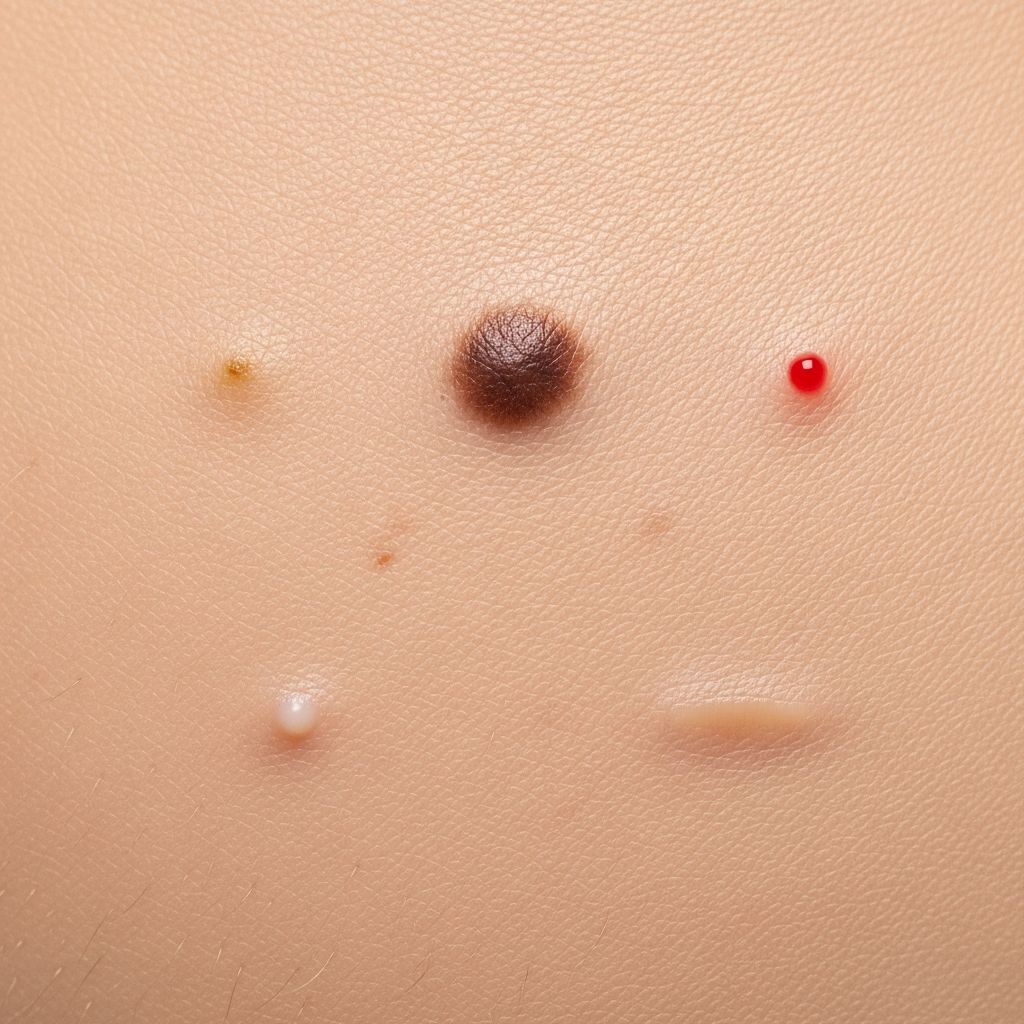
Seborrheic keratosis is a very common, benign skin growth that typically appears as people age. These growths are non-cancerous and do not require treatment unless they become irritated or you prefer removal for cosmetic reasons. Seborrheic keratoses are characterized by their waxy, scaly appearance and can range from light tan to dark brown in color.
Key Features of Seborrheic Keratosis:
- Raised, waxy, or scaly growths on the skin
- Can appear anywhere on the body
- Generally painless and non-itchy unless irritated
- More common with age and sun exposure
- Completely benign with no cancer risk
These growths are so common that most dermatologists encounter them daily in their practice. While they’re harmless, it’s important to have any new skin growth evaluated by a healthcare professional to confirm it’s indeed a seborrheic keratosis and not something requiring attention. If a seborrheic keratosis becomes irritated from friction or cosmetic concerns arise, a dermatologist can easily remove it through various methods.
Related Stories



Cherry Angiomas: Small Red Spots
Cherry angiomas are small, benign vascular growths that appear as bright red or reddish-purple bumps on the skin. They become increasingly common as people age and are completely harmless. These small lesions are composed of dilated blood vessels and typically measure less than a quarter-inch in diameter, though some may grow slightly larger.
Cherry angiomas are among the most common vascular lesions in adults and are found equally across all skin types and ethnicities. They don’t cause any symptoms, don’t itch or hurt, and don’t develop into anything serious. The only reason people typically seek removal is for cosmetic purposes. If a cherry angioma is in a location where it gets repeatedly irritated—such as if clothing rubs against it—a dermatologist can remove it for comfort reasons.
Moles: Common and Usually Benign
Moles are clusters of pigment-producing cells that appear as small, usually dark brown spots on the skin. Most people have multiple moles, and the majority are completely harmless. Moles can be present from birth or develop throughout life, particularly after sun exposure. They’re one of the most common skin features found in people worldwide.
Understanding Mole Characteristics:
Most moles are round or oval, have a defined border, and are uniform in color. They typically don’t change much over time, though some may gradually darken or lighten with age. The important distinction is recognizing when a mole’s appearance changes significantly, which could warrant professional evaluation.
While the vast majority of moles are benign, dermatologists use the ABCDE rule to identify potentially problematic moles that might indicate melanoma. This rule includes Asymmetry (uneven shape), Border irregularity (jagged edges), Color variation (multiple colors within one spot), Diameter (larger than a pencil eraser or 6 millimeters), and Evolution (recent changes in size, shape, or color). If you notice any of these warning signs, professional evaluation is essential.
Skin Tags: Small, Harmless Growths
Skin tags are small, flesh-colored growths that commonly appear in skin folds and areas prone to friction. They’re among the most common benign skin conditions, affecting a significant percentage of the population, particularly as people age. Skin tags are completely harmless and cause no symptoms unless they’re irritated by clothing or jewelry.
Common Characteristics of Skin Tags:
- Small, soft, usually flesh-colored growths
- Often appear on neck, underarms, groin, and under breasts
- Attached to skin by a thin stalk
- Painless and non-cancerous
- May increase in number with age
Skin tags don’t require any medical treatment and won’t develop into anything serious. However, if they’re located in an area where they get irritated or rubbed by clothing, or if you have cosmetic concerns, a dermatologist can easily remove them through various simple procedures.
When to Seek Professional Evaluation
While many common skin spots are harmless, it’s important to know when professional dermatological evaluation is appropriate. Regular skin checks are valuable for everyone, particularly for those with a family history of skin cancer, significant sun exposure, or a history of sunburns. Dermatologists recommend annual skin examinations as part of preventive healthcare.
Reasons to Consult a Dermatologist:
- Any new or changing skin growth or spot
- Moles showing ABCDE warning signs of melanoma
- Spots that bleed, itch, or become painful
- Skin lesions that don’t heal within a few weeks
- Unusual pigmentation patterns or color changes
- Growths that are rapidly increasing in size
- Any spot causing you concern or anxiety
Professional skin checks provide peace of mind and can catch potentially serious conditions early. A dermatologist can distinguish between benign and concerning skin spots quickly and accurately, and can recommend appropriate treatment options when necessary.
Sun Protection: Preventing Future Skin Spots
The best approach to skin health is prevention. Since many common skin spots, particularly age spots and certain moles, are related to sun exposure, implementing a comprehensive sun protection routine is essential. This doesn’t require expensive products or complicated routines—it simply requires consistency and commitment to protecting your skin from harmful UV rays.
Essential Sun Protection Strategies:
- Apply broad-spectrum sunscreen with SPF 30 or higher daily
- Reapply sunscreen every two hours or after swimming
- Wear protective clothing, hats, and sunglasses
- Minimize sun exposure during peak hours (10 a.m. to 4 p.m.)
- Seek shade when possible during midday hours
- Avoid indoor tanning beds completely
Sunscreen should be applied to all exposed skin areas, including often-forgotten spots like ears, the back of your neck, and your hands. Remember that UV protection is necessary even on cloudy days, as UV rays penetrate clouds. Additionally, some medications and skincare products can increase sun sensitivity, so discuss sun protection measures with your healthcare provider if you take any medications.
Skincare Routine for Healthy Skin
Beyond sun protection, maintaining a consistent skincare routine supports overall skin health and can help minimize the appearance of common spots. A basic routine should include gentle cleansing, appropriate moisturization, and sun protection.
Basic Skincare Steps:
- Cleanse: Use a gentle, pH-balanced cleanser twice daily to remove dirt and oil without stripping your skin
- Treat: Apply targeted treatments as needed for specific concerns
- Moisturize: Use a moisturizer appropriate for your skin type to maintain hydration
- Protect: Apply broad-spectrum sunscreen as the final step in your morning routine
For those interested in specifically addressing age spots or other pigmentation concerns, certain skincare ingredients can help support a more even complexion. Ingredients like niacinamide, vitamin C, and other antioxidants can support skin brightness and overall appearance. However, these products work best when combined with consistent sun protection to prevent new spots from forming.
Professional Treatment Options
If you have common skin spots that concern you aesthetically or cause irritation, several professional treatment options are available. A dermatologist can help determine the best approach for your specific situation and skin type.
Available Treatment Modalities:
| Treatment Type | Best For | Considerations |
|---|---|---|
| Prescription Topical Treatments | Age spots, pigmentation | Requires consistent application over weeks to months |
| Laser Therapy | Age spots, certain growths | May require multiple sessions; results vary by skin type |
| Chemical Peels | Surface-level spots and discoloration | Can improve overall skin appearance |
| Cryotherapy | Warts, certain growths | Quick procedure with minimal downtime |
| Surgical Removal | Skin tags, certain growths | Simple office procedure with quick recovery |
Frequently Asked Questions
Q: Are age spots a sign of skin cancer?
A: No, age spots are benign pigmentation caused by sun exposure and are not cancerous. However, it’s always good to have any new or changing skin spots evaluated by a dermatologist to ensure they’re benign.
Q: Can I prevent skin spots from developing?
A: While you cannot prevent all skin spots, consistent sun protection can significantly reduce the development of UV-related spots like age spots. Starting sun protection early in life is particularly effective.
Q: How often should I have my skin checked by a dermatologist?
A: Annual skin checks are recommended for most people. If you have risk factors like a family history of skin cancer or significant sun exposure history, more frequent checks may be appropriate.
Q: Do skin tags need to be removed?
A: Skin tags are harmless and don’t require removal unless they’re irritated by friction or cause cosmetic concerns. Removal is a simple office procedure if desired.
Q: What should I do if I notice a new spot on my skin?
A: Monitor the spot for changes in size, color, or appearance. If it changes significantly or you’re concerned, schedule an appointment with a dermatologist for professional evaluation.
References
- 5 Skin Spots You Shouldn’t Worry About — Harvard Health Publishing, Harvard Medical School. 2019. https://www.health.harvard.edu/diseases-and-conditions/5-skin-spots-you-shouldnt-worry-about
- Skin Cancer Types: Prevention Tips & How to Identify — Massachusetts General Hospital, Mass General Brigham. May 2, 2022. https://www.massgeneralbrigham.org/en/about/newsroom/articles/signs-skin-cancer
- Melanoma and Skin Cancer Statistics — American Academy of Dermatology. https://www.aad.org/
- UV Radiation and Sun Protection — Centers for Disease Control and Prevention (CDC). https://www.cdc.gov/cancer/skin/basic_info/prevention.htm
- Benign Skin Lesions: Recognition and Management — National Institutes of Health (NIH). https://www.nih.gov/
Similar Articles








Read full bio of Sneha Tete