Vaping: 5 Truths You Need To Know About Health Risks
Essential facts about vaping risks: what you need to know about e-cigarettes.
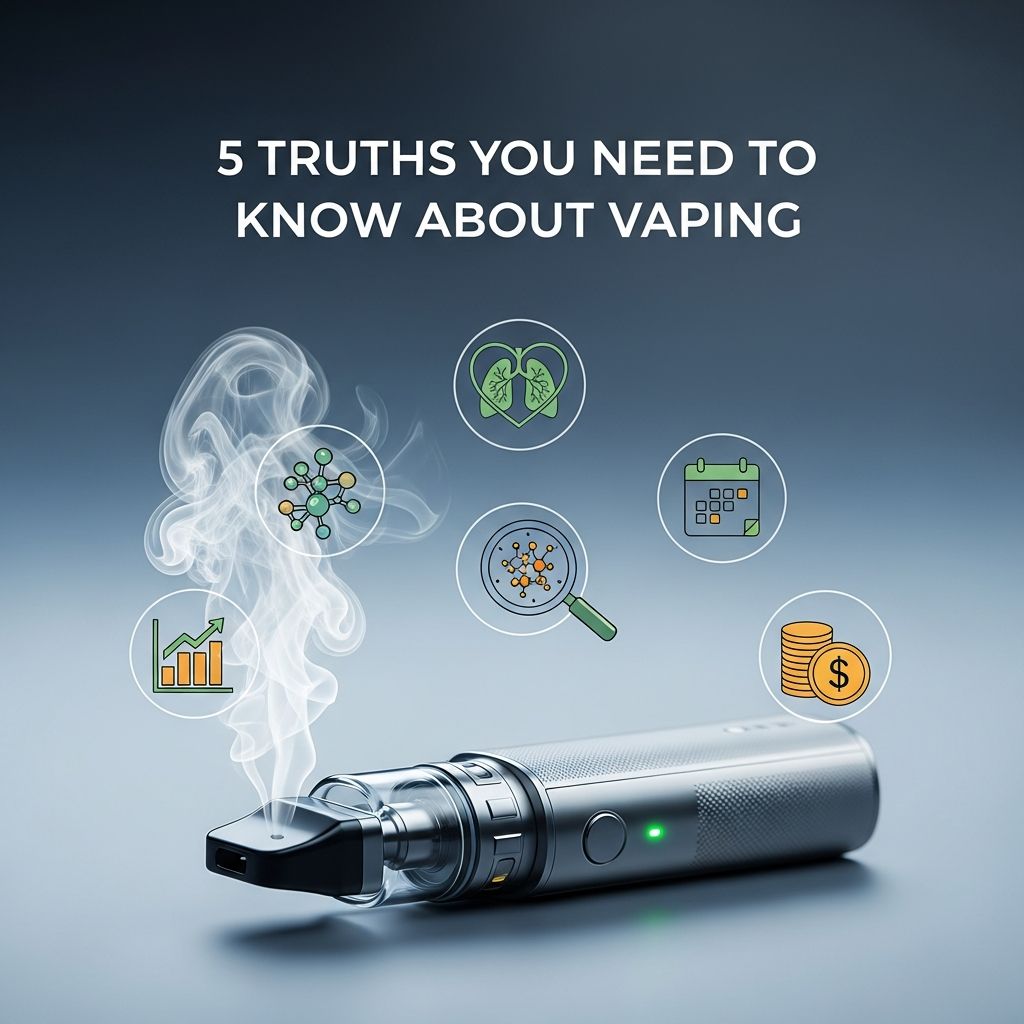
Electronic cigarettes, commonly known as e-cigarettes or vapes, have become increasingly popular over the past decade, particularly among young people. Marketed as a safer alternative to traditional cigarettes, these devices deliver nicotine through an aerosol rather than smoke. However, recent research from leading health institutions, including Johns Hopkins University, reveals that the reality of vaping is far more complex and concerning than marketing claims suggest. Understanding the truth about vaping is essential for making informed decisions about your health and the health of those around you.
Truth #1: Vaping Aerosol Contains Thousands of Unknown Chemicals
One of the most significant findings from recent research is that vaping products contain far more than just nicotine and water vapor. Johns Hopkins University researchers conducted a groundbreaking study using advanced chemical fingerprinting techniques to analyze the contents of vaping liquids and aerosols. The results were startling: they discovered thousands of unknown chemicals in vaping aerosols, with the vast majority remaining unidentified and uncharacterized.
Using chromatography and high-resolution mass spectrometry—techniques typically employed to identify organic compounds in wastewater and food—the research team analyzed tobacco-flavored e-liquids from four popular brands. They found nearly 2,000 chemicals in the aerosol alone, most of which have never been properly studied for their health effects.
What this means for you: When you vape, you’re inhaling a complex mixture of chemicals whose safety profile remains largely unknown. Manufacturers are not required to disclose all ingredients, and many substances in vaping products have not undergone rigorous safety testing for inhalation exposure. This represents a significant gap in consumer knowledge and protection.
Truth #2: E-Cigarettes May Contain Harmful and Toxic Substances
Beyond the thousands of unidentified chemicals, researchers have identified specific harmful compounds in vaping products. The Johns Hopkins study detected six potentially harmful substances in the tested e-liquids, including three chemicals that had never been previously found in e-cigarettes.
Among the concerning findings:
- Industrial chemicals with unknown inhalation safety profiles
- Pesticides and chemical residues
- Flavorings linked to respiratory irritation and toxic effects
- Condensed hydrocarbon-like compounds typically associated with combustion processes
The discovery of condensed hydrocarbons is particularly troubling because manufacturers claim that vaping operates at temperatures below combustion—one of the primary marketing points suggesting that e-cigarettes are safer than traditional cigarettes. However, the presence of these combustion-like products suggests that more complex chemical reactions may be occurring than previously understood.
What this means for you: Some of the chemicals you inhale when vaping have known toxic properties. Certain flavorings, while approved for ingestion in food, may cause serious respiratory irritation when inhaled directly into the lungs. The long-term health consequences of chronic exposure to these substances remain largely unknown.
Truth #3: Vaping Products May Contain Undisclosed Additives Like Caffeine
In a surprising discovery, Johns Hopkins researchers found caffeine in two of the four vaping products they tested—and in products that were not marketed as caffeine-flavored. This suggests that caffeine may be intentionally added to e-cigarettes without being disclosed to consumers.
While caffeine has been detected in some e-cigarettes before, it was previously only noted in products with coffee or chocolate flavoring. Finding caffeine in non-flavored products raises questions about whether manufacturers are deliberately adding this stimulant to enhance the product’s effects and create additional dependency.
Related Stories



What this means for you: You may be consuming more caffeine than you realize through vaping, which could lead to increased heart rate, anxiety, and sleep disruption. The undisclosed addition of stimulants represents a lack of transparency in the industry and removes your ability to make fully informed choices about your consumption.
Truth #4: Marketing Claims About Vaping Safety Are Not Supported by Evidence
One of the most pervasive marketing strategies for e-cigarettes is the claim that they are significantly safer than traditional cigarettes because they operate at temperatures below combustion. However, recent research challenges this fundamental marketing premise.
Senior researcher Carsten Prasse from Johns Hopkins notes that while existing research comparing e-cigarettes to traditional cigarettes has found that cigarette contaminants are lower in e-cigarettes, this comparison misses a critical point: e-cigarette aerosols contain entirely different, uncharacterized chemicals that may pose their own health risks.
Additionally, the discovery of combustion-like byproducts in vaping aerosols suggests that the claimed safety advantage of operating below combustion temperatures may not be accurate. When chemical reactions occur during heating and aerosolization, they may produce harmful substances similar to those found in combustion.
What this means for you: Marketing claims that position vaping as a safe alternative to smoking are not supported by current scientific evidence. At best, the relative safety of vaping compared to smoking remains uncertain. Claiming that something is “safer” when its full chemical composition and health effects are unknown is misleading to consumers.
Truth #5: Vaping Poses Particular Risks for Young People and Non-Smokers
While some adults have used vaping as a tool to quit smoking, the broader adoption of e-cigarettes presents serious public health concerns, particularly for young people who may never have smoked traditional cigarettes.
Currently, 3.2% of American adults use e-cigarettes daily or on some days. However, the rates are much higher among younger populations. Millions of middle school and high school students are now vaping, many of whom would never have considered smoking traditional cigarettes. For these young people, vaping does not represent a harm reduction choice—it represents an entirely new risk exposure.
The developing adolescent brain is particularly vulnerable to nicotine’s addictive effects. Nicotine exposure during critical developmental periods can impair attention, learning, and impulse control. Additionally, young people experimenting with vaping may be more likely to transition to traditional cigarettes later.
Ana M. Rule, an expert in metals exposures from vaping at Johns Hopkins Bloomberg School of Public Health, emphasizes this point: for young non-smokers, there is no risk reduction—only increased risk. The flavoring options and sleek designs of many vaping products are particularly appealing to younger users, raising concerns about intentional marketing toward this vulnerable population.
What this means for you and your family: If you’re a young person or a parent concerned about youth vaping, understand that these products carry real health risks. The long-term consequences of early nicotine exposure are not fully known, and the chemical exposures from vaping aerosol add additional concerns beyond nicotine addiction.
Understanding the Research Behind These Truths
The findings presented here come from rigorous scientific research, not speculation or advocacy. The Johns Hopkins study that revealed thousands of unknown chemicals in vaping products was published in the peer-reviewed journal Chemical Research in Toxicology and represents the first application of advanced chemical fingerprinting techniques to vaping products.
Rather than looking specifically for known harmful chemicals from traditional cigarettes, this nontargeted analysis explored the full range of chemicals present in both e-liquids and the aerosols they produce. This approach provides a more complete and honest assessment of what vaping products actually contain.
What You Should Do With This Information
If you currently vape, these truths should prompt several considerations:
- Reassess your assumptions: If you vape believing it’s a safe habit or a proven safer alternative to smoking, that assumption lacks scientific support.
- Consider cessation: If you’re using vaping as a smoking cessation tool, consult with a healthcare provider about evidence-based methods like FDA-approved nicotine replacement therapy or prescription medications.
- Talk to your doctor: Discuss your vaping habits with your healthcare provider to understand your individual risk profile and explore alternatives.
- Protect young people: If you’re a parent, educator, or work with young people, use this information to have informed conversations about the real risks of vaping.
- Demand transparency: Support efforts to require manufacturers to disclose all ingredients and conduct safety testing on vaping products.
Frequently Asked Questions About Vaping
Q: Isn’t vaping just water vapor?
A: No. While marketing materials often use the term “vapor,” vaping aerosol is not simply water vapor. It’s a complex mixture of chemical compounds, many of which are unknown and potentially harmful. The aerosol contains propylene glycol, vegetable glycerin, nicotine, flavorings, and thousands of other chemicals produced during the heating and aerosolization process.
Q: Are there any safe levels of vaping?
A: The safety of any level of vaping remains unproven. Because the chemical composition of vaping products is largely unknown and unregulated, and because long-term health effects have not been established, no safe level can be defined.
Q: Can vaping help me quit smoking?
A: While some smokers have used vaping to transition away from cigarettes, it is not an FDA-approved smoking cessation device. Proven methods for quitting smoking include FDA-approved nicotine replacement therapies, prescription medications like varenicline or bupropion, and behavioral support programs. Talk to your healthcare provider about options that are right for you.
Q: Is secondhand vaping exposure harmful?
A: Yes. Secondhand exposure to vaping aerosol exposes bystanders to the same unknown chemicals and harmful substances present in the aerosol. Children, pregnant women, and people with respiratory conditions are particularly vulnerable.
Q: Why aren’t vaping products more heavily regulated?
A: Vaping products occupy a regulatory gray area. The FDA has authority over e-cigarettes as tobacco products, but enforcement and regulation have been inconsistent. Manufacturers are not required to disclose all ingredients or conduct comprehensive safety testing before marketing products to consumers.
References
- Vaping aerosols contain thousands of unknown chemicals — Johns Hopkins University Hub. October 7, 2021. https://hub.jhu.edu/2021/10/07/vaping-unknown-chemicals/
- The Vaping and Patterns of E-Cigarette Use Research Study Protocol — Johns Hopkins University Pure Research Portal. https://pure.johnshopkins.edu/en/publications/the-vaping-and-patterns-of-e-cigarette-use-research-study-protoco/
- Chemical Research in Toxicology Journal Publication — American Chemical Society. Published research on vaping aerosol chemical analysis. https://pubs.acs.org/journal/crtoec
Similar Articles








Read full bio of Sneha Tete