5 Types Of Insulin: How They Work And When To Use Each
Understanding insulin types: from rapid-acting to long-acting options for diabetes management.
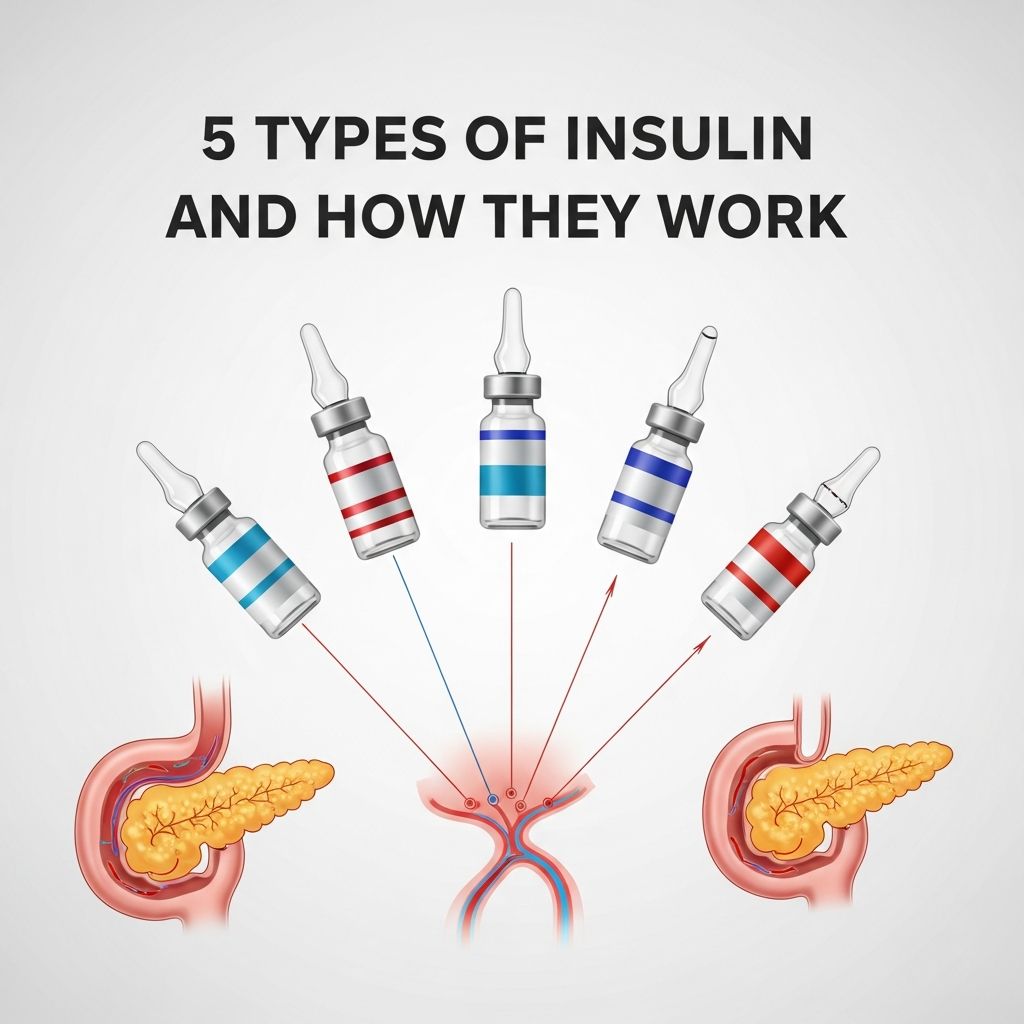
Insulin is a crucial hormone that helps regulate blood glucose levels by enabling cells to absorb glucose from the bloodstream for energy. For people with diabetes—whether type 1 or type 2—insulin therapy plays a vital role in managing their condition. Understanding the different types of insulin available is essential for effective diabetes management. There are five main categories of insulin, each with distinct characteristics regarding how quickly they work, when they peak, and how long they remain active in the body.
This comprehensive guide explores each type of insulin, their mechanisms of action, and how healthcare providers determine which insulin therapy is most appropriate for individual patients.
Understanding How Insulin Works
Insulin is produced by beta cells in the pancreas, which are specialized clusters of cells that sense when glucose levels rise in the bloodstream, such as after eating a meal. When functioning properly, insulin acts as a key that unlocks cells, allowing glucose to enter and be used for energy. In diabetes, this process is disrupted. In type 1 diabetes, the body stops producing insulin entirely, requiring daily insulin injections or pump therapy for survival. In type 2 diabetes, the body produces some insulin, but cells become resistant to its effects—a condition called insulin resistance.
Insulin therapy works by supplementing or replacing the insulin the body cannot adequately produce or utilize. By injecting insulin, patients can maintain healthy blood glucose levels between approximately 70 and 140 milligrams per deciliter. The choice of insulin type depends on individual needs, lifestyle, meal patterns, and how the body responds to different formulations.
The Five Main Types of Insulin
Insulin is classified based on how quickly it begins working, when it reaches peak effectiveness, and how long it remains active in the body. Understanding these distinctions helps patients and healthcare providers select the most appropriate insulin regimen.
1. Rapid-Acting Insulin
Rapid-acting insulin is the fastest-working type of insulin available. This insulin begins working approximately 15 minutes after injection, reaches its peak effect in about one to two hours, and remains active for two to four hours. Because of its quick action, rapid-acting insulin is typically taken immediately before or right at the start of a meal.
Common rapid-acting insulin types include:
- Insulin aspart (brand names: Fiasp, NovoLog)
- Insulin lispro (brand names: Admelog, Humalog, Lyumjev)
- Insulin glulisine (brand name: Apidra)
Among these, Fiasp and Lyumjev are classified as very rapid-acting insulins with even faster onset of action. Rapid-acting insulins are particularly useful for covering the blood glucose rise that occurs after meals. Many patients with type 1 diabetes and some with type 2 diabetes use rapid-acting insulin as part of their daily regimen, often in combination with longer-acting insulin.
2. Short-Acting (Regular) Insulin
Short-acting insulin, also called regular insulin, works more slowly than rapid-acting varieties but faster than intermediate-acting types. This insulin usually reaches the bloodstream within 30 minutes after injection, peaks two to three hours after injection, and remains effective for approximately three to six hours.
Common short-acting insulin types include:
- Human Regular insulin (brand names: Humulin R, Novolin R, Velosulin R)
Short-acting insulin is typically injected 30 to 60 minutes before a meal. While not as convenient as rapid-acting insulins due to the longer wait time before eating, short-acting insulins remain an important option for many patients. They may be preferred in certain situations or as part of a mixed insulin regimen.
Related Stories



3. Intermediate-Acting Insulin
Intermediate-acting insulin provides a middle ground between short and long-acting options. This insulin generally reaches the bloodstream two to four hours after injection, peaks four to twelve hours later, and is effective for approximately 12 to 18 hours.
The primary intermediate-acting insulin type is:
- NPH insulin (brand names: Humulin N, Novolin N, ReliOn)
Intermediate-acting insulin is typically injected up to one hour before a meal. Before injecting cloudy insulins like NPH, the vial or pen should be gently rolled between the hands to ensure even mixing until it appears milky. Intermediate-acting insulins work for about half a day and are often used in combination with rapid or short-acting insulins to provide more comprehensive blood glucose coverage throughout the day.
4. Mixed (Combination) Insulin
Mixed insulin contains a pre-mixed combination of either rapid-acting or short-acting insulin together with intermediate-acting insulin. This type offers convenience for patients who benefit from the quick action of short-acting insulin combined with the longer duration of intermediate-acting insulin in a single injection.
Mixed insulins provide coverage for both mealtime glucose spikes and baseline insulin needs. The specific onset, peak, and duration depend on the particular combination formulation. Like intermediate-acting insulins, mixed insulins should be gently rolled before injection to ensure proper mixing if they appear cloudy.
5. Long-Acting Insulin
Long-acting insulin provides the most extended insulin coverage, working to manage baseline blood glucose levels throughout the day and night. Long-acting insulin reaches the bloodstream several hours after injection and tends to lower glucose levels for up to 24 hours.
Common long-acting insulin types include:
- Insulin glargine (brand names: Basaglar, Lantus)
- Insulin detemir (brand name: Levemir)
- Insulin degludec (brand name: Tresiba)
Long-acting insulins are typically clear in appearance and do not require mixing. They are often used once daily and provide about a day’s worth of coverage. Some patients use long-acting insulin as a basal (background) insulin in combination with rapid-acting insulin taken at meals, an approach called basal-bolus therapy.
Ultra Long-Acting Insulin
A newer category of insulin, ultra long-acting insulin, provides even more extended coverage than traditional long-acting options. This type reaches the bloodstream in approximately six hours, does not peak, and lasts about 36 hours or longer.
The primary ultra long-acting insulin is:
- Insulin glargine U-300 (brand name: Toujeo)
Ultra long-acting insulins offer greater flexibility in dosing schedules and may reduce the frequency of injections needed. They provide steady insulin levels for extended periods, making them an option for patients seeking simpler insulin regimens.
Insulin Onset, Peak, and Duration Comparison
| Insulin Type | Onset (Start Time) | Peak Time | Duration (How Long It Works) |
|---|---|---|---|
| Rapid-Acting | 15 minutes | 1-2 hours | 2-4 hours |
| Short-Acting | 30 minutes | 2-3 hours | 3-6 hours |
| Intermediate-Acting | 2-4 hours | 4-12 hours | 12-18 hours |
| Long-Acting | Several hours | Does not peak | Up to 24 hours |
| Ultra Long-Acting | 6 hours | Does not peak | 36+ hours |
When to Take Different Types of Insulin
The timing of insulin injections is critical for effective blood glucose management. Different insulin types are taken at different times relative to meals:
- Rapid-acting insulin: About 15 minutes before mealtime, or immediately before eating
- Short-acting insulin: 30 to 60 minutes before a meal
- Intermediate-acting insulin: Up to 1 hour prior to a meal
- Long-acting insulin: Usually taken once daily at the same time each day, regardless of meals
- Ultra long-acting insulin: Taken on a flexible schedule due to extended duration
Many patients require combinations of insulin types to achieve optimal blood glucose control. For example, a typical regimen might include long-acting insulin for basal coverage plus rapid-acting insulin taken with meals. Healthcare providers work with patients to determine the most effective insulin combination for their individual circumstances.
Insulin Strength and Delivery Methods
Insulin is available in different strengths, with U-100 being the most common formulation. U-100 means there are 100 units of insulin in one milliliter of fluid. All insulin available in the United States is manufactured in laboratories.
Insulin can be administered through several methods:
- Insulin pens (prefilled or refillable)
- Insulin vials with syringes
- Insulin pumps
- Insulin inhalers
Patients should consult with their healthcare providers and pharmacists about proper injection technique and storage of insulin, as some types are clear while others are cloudy and require mixing.
Insulin Therapy for Type 2 Diabetes
People with type 2 diabetes who cannot control their blood sugar through lifestyle changes and oral medications may need insulin therapy. Some people with type 2 diabetes use insulin in combination with other diabetes medications to achieve better glucose control. The decision to start insulin therapy is individualized based on each patient’s response to other treatments and their specific health goals.
Frequently Asked Questions
Q: How many types of human insulin are there?
A: There are five general types of insulin made for treating diabetes: rapid-acting, short-acting, intermediate-acting, long-acting, and ultra long-acting. All types help cells use glucose for energy, but they differ in how quickly they work and how long they last in the body.
Q: Is Lantus a long-acting insulin?
A: Yes, Lantus (insulin glargine) is a long-acting insulin. Its effects last up to 24 hours. Other long-acting options include Basaglar and Levemir, as well as ultra long-acting options like Toujeo.
Q: Do I need to mix my insulin before injecting?
A: It depends on the type of insulin. Cloudy insulins like NPH (intermediate-acting) and mixed insulins should be gently rolled between your hands until they look milky before injection. Clear insulins like long-acting insulins do not require mixing and should not be used if they appear cloudy.
Q: Why do some people need multiple types of insulin?
A: Many people need both rapid-acting (or short-acting) and longer-acting insulin to effectively manage blood glucose throughout the day. Rapid-acting insulin covers the glucose rise from meals, while long-acting insulin provides baseline coverage. Everyone’s insulin needs are different.
Q: Can I switch between different insulin brands?
A: While different brands may contain the same type of insulin, switching between brands should only be done under the guidance of your healthcare provider. Your dosage may need adjustment, and you should monitor your blood glucose carefully after any changes.
References
- Types of Insulin for Diabetes Treatment — WebMD. Accessed January 2026. https://www.webmd.com/diabetes/diabetes-types-insulin
- Insulin Basics — American Diabetes Association. Accessed January 2026. https://diabetes.org/health-wellness/medication/insulin-basics
- The Difference Between Type 1 and Type 2 — Joslin Diabetes Center. September 2019. https://joslin.org/news-stories/all-news-stories/education/2019/09/difference-between-type-1-and-type-2
- Types of Insulin — Centers for Disease Control and Prevention. Accessed January 2026. https://www.cdc.gov/diabetes/about/how-to-use-insulin.html
- Insulin Types — Association of Diabetes Care & Education Specialists. Accessed January 2026. https://www.adces.org/education/danatech/insulin-medicine-delivery/insulin-medicine-delivery-101/insulin-types
Similar Articles








Read full bio of Sneha Tete