7 Ways To Gain Weight If You Have COPD: Practical Diet Plan
Discover practical strategies to combat weight loss in COPD patients and improve health outcomes through targeted nutrition and lifestyle adjustments.
Chronic Obstructive Pulmonary Disease (COPD) often leads to unintentional weight loss due to factors like reduced appetite, higher energy expenditure from breathing, and fatigue, a condition known as COPD wasting. Maintaining or gaining weight is crucial as it improves muscle function, quality of life, and survival rates; studies show even a 2 kg gain can enhance prognosis. This article outlines seven practical strategies to help COPD patients achieve healthy weight gain while managing symptoms.
Why Weight Loss Happens in COPD
People with COPD frequently experience malnutrition from lack of appetite, which the COPD Foundation identifies as the primary cause. Difficulty breathing makes eating tiring, food tastes altered, and medications suppress hunger. Additionally, the extra effort to breathe elevates metabolic rate, requiring 430–720 extra daily calories. As COPD progresses, muscle mass diminishes, worsening function and increasing comorbidity risks. Gaining weight counters these effects, boosting energy and preventing complications.
1. Eat Small, Frequent Meals
Instead of three large meals, aim for 5-6 smaller ones daily to avoid breathlessness during eating and combat low appetite. This approach maintains steady calorie intake without overwhelming the respiratory system. Space meals every 2-3 hours, including nutrient-dense snacks like yogurt, nuts, or smoothies. Research supports this for underweight COPD patients, facilitating weight gain by easing digestion and energy demands.
- Breakfast: Oatmeal with peanut butter and banana.
- Mid-morning: Cheese and crackers.
- Lunch: Small soup with added cream.
- Afternoon: Handful of trail mix.
- Dinner: Bite-sized portions of protein and veggies.
- Evening: Milkshake or pudding.
Consult a dietitian to tailor this to your caloric needs, targeting 180% of resting energy expenditure (REE) or 186 kJ/kg body weight for 2 kg gain.
2. Boost Calories Without Extra Volume
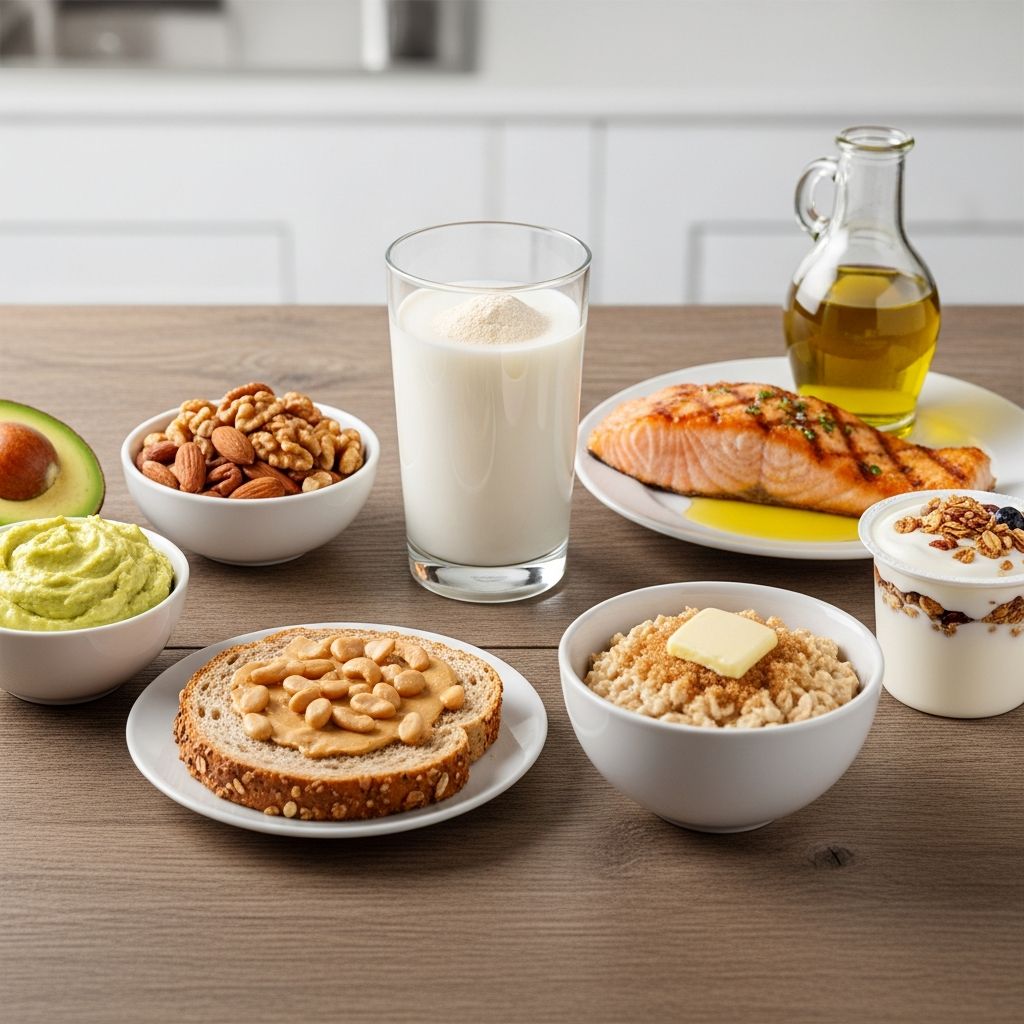
High-calorie, low-volume foods prevent fullness from large portions. Add fats like butter, oil, or avocado to meals—these provide 9 calories per gram versus 4 from carbs or protein. Drizzle olive oil on veggies, mix cream into coffee, or spread nut butter on toast. Nutritional supplements, if recommended, can add 500+ calories daily without bulk. This strategy is vital as COPD raises energy needs significantly.
| Low-Volume Calorie Booster | Calories per Serving | How to Use |
|---|---|---|
| Olive oil (1 tbsp) | 120 | Drizzle on pasta or salads |
| Peanut butter (2 tbsp) | 190 | Spread on fruit or crackers |
| Heavy cream (1/4 cup) | 200 | Add to soups or hot chocolate |
| Cheese (1 oz) | 110 | Melt into meals or eat with fruit |
| Avocado (1/2) | 160 | Mash into dips or sandwiches |
Incorporate these to reach the extra 3448 kJ average intake seen in successful weight-gainers.
3. Prioritize Protein for Muscle Mass
Weight gain in COPD should focus on lean muscle, not just fat. Aim for 1.2-1.5 grams of protein per kg body weight daily from eggs, fish, lean meats, dairy, and legumes. Protein combats muscle wasting, improving strength and breathing efficiency. A study of underweight COPD patients showed higher protein intake correlated with better weight maintenance post-intervention.
- Include protein in every small meal/snack.
- Opt for shakes with whey or Greek yogurt if chewing is hard.
- Pair with resistance exercises if energy allows, to build fat-free mass.
Related Stories



4. Stay Hydrated with Caloric Drinks
Dehydration exacerbates fatigue, but plain water fills without calories. Choose nourishing beverages like whole milk, fortified smoothies, or oral supplements. Limit water intake before meals to save room for food. Milk-based drinks provide protein, fats, and carbs; aim for 2-3 glasses daily plus snacks.
Pro tip: Blend fruits with ice cream or yogurt for appealing, easy-to-sip options that deliver 300-500 calories per serving.
5. Use Nutritional Supplements Wisely
Doctor-approved supplements bridge calorie gaps, especially during exacerbations. High-calorie formulas (e.g., 2 kcal/mL) offer complete nutrition without cooking effort. Studies indicate they support weight gain comparably to food alone when energy intake hits targets. Use between meals, not as meal replacements.
- Types: Polymeric (standard), disease-specific for COPD.
- Dosage: 1-2 servings daily, per healthcare guidance.
- Benefits: Reduced infection risk, better prognosis.
6. Manage Symptoms to Eat Better
Control breathlessness, nausea, or depression hindering intake. Optimize COPD meds, use bronchodilators pre-meal, eat in upright positions, and address side effects promptly. Pulmonary rehab builds endurance for meal prep. Mental health support combats appetite suppression from depression, common in COPD.
Track intake with a journal; involve family for encouragement and easy-prep meals.
7. Exercise Lightly to Build Strength
Paradoxically, gentle exercise stimulates appetite and preserves muscle during weight gain. Pulmonary rehabilitation or home exercises like walking, leg lifts, or light weights enhance outcomes. A 22-week intervention combining diet and activity yielded 2.8 kg average gain in underweight patients. Start slow, supervised by a therapist.
- Daily walks: 10-20 minutes.
- Strength training: 2-3x/week, targeting major muscles.
- Breathing exercises: Pursed-lip to ease activity.
Additional Tips for Success
Work with a multidisciplinary team: pulmonologist, dietitian, therapist. Monitor weight weekly; aim for 0.5-1 lb gain. Avoid infections, which hinder progress—over 50% of non-responders had them. Note: While obesity risks exist, for underweight COPD patients, gain is beneficial; balance prevents excess.
Frequently Asked Questions (FAQs)
What causes weight loss in COPD?
Loss of appetite from breathing difficulty, altered taste, meds, high metabolic rate needing extra calories, and fatigue.
How many extra calories do COPD patients need?
About 430–720 daily, or 180% REE/186 kJ/kg for 2 kg gain.
Can supplements replace food?
No, use as add-ons; food provides satiety and variety.
Is weight gain safe for COPD?
Yes for underweight; improves survival. Monitor to avoid obesity complications.
How long to see weight gain?
8-22 weeks with consistent 180% REE intake.
References
- COPD and weight loss: Maintaining a healthy weight, risks, and more — Medical News Today. 2023-10-15. https://www.medicalnewstoday.com/articles/copd-and-weight-loss
- The Energy Intake That is Needed for Weight Gain in COPD — Taylor & Francis Online (COPD: Journal of Chronic Obstructive Pulmonary Disease). 2005-09-01. https://www.tandfonline.com/doi/full/10.1080/15412550500346451
- Weight change across adulthood in relation to the risk of COPD — NIH PMC. 2025-01-01. https://pmc.ncbi.nlm.nih.gov/articles/PMC12358758/
- Obesity and COPD: How Weight Affects Your Breathing — MyObesityTeam. 2024-05-20. https://www.myobesityteam.com/resources/obesity-and-copd-how-weight-affects-your-breathing
Similar Articles








Read full bio of Sneha Tete