ABCDEFG Of Melanoma: 7 Key Signs For Early Detection
Learn the ABCDEFG rule to spot melanoma early: asymmetry, borders, color, diameter, elevation, firmness, and growth in skin lesions.
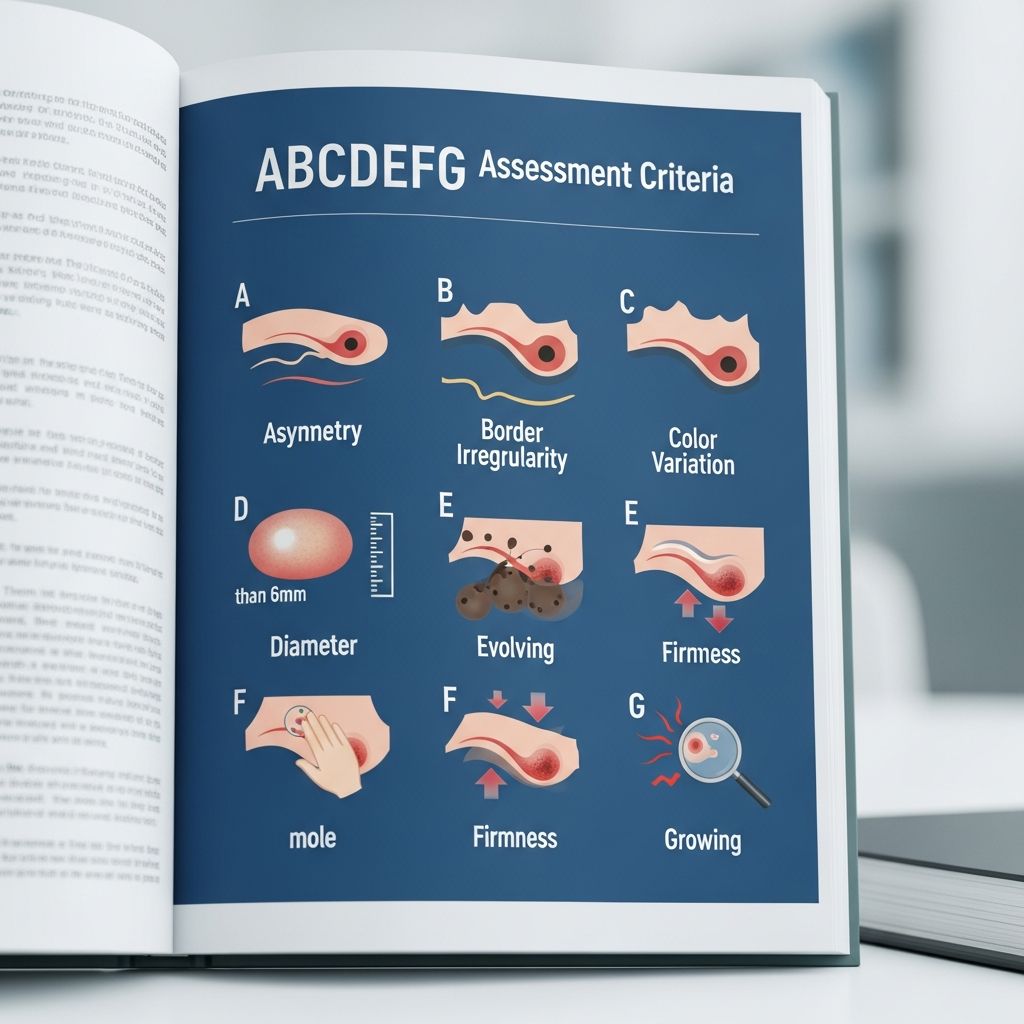
Melanoma is the most dangerous form of skin cancer, originating from melanocytes, the pigment-producing cells in the skin. Early detection significantly improves survival rates, as superficial melanomas can often be cured with simple excision. The ‘ABCDEFG’ rule is a mnemonic tool designed to assist both the public and healthcare professionals in identifying skin lesions that may indicate early or in situ melanoma, such as superficial spreading melanoma, lentigo maligna melanoma, or acral lentiginous melanoma. This expanded acronym builds on the classic ABCDE rule by incorporating additional features particularly relevant for nodular melanomas.
What is the ‘ABCDEFG’ of melanoma?
The ABCDEFG acronym provides a systematic checklist for evaluating skin lesions. While benign moles (naevus) are typically symmetrical, uniform in color, and stable, melanomas exhibit irregularities that warrant further investigation. Regular self-examination using these criteria, combined with professional dermatological checks, is crucial for timely intervention.
Melanoma ABCD signs
The core ABCD features focus on morphological characteristics visible upon inspection:
- A – Asymmetry: One half of the lesion does not match the other in shape or color. Benign lesions are usually symmetrical, like a mirror image.
- B – Border irregularity: Edges that are jagged, notched, blurred, or poorly defined, unlike the smooth borders of benign naevi.
- C – Color variation: Multiple shades within the lesion, such as tan, brown, black, red, white, or blue.
- D – Diameter: Typically larger than 6 mm (pencil eraser size), though melanomas can be smaller at diagnosis.
Asymmetry
In a benign melanocytic naevus, both halves are symmetrical in outline and pigmentation. Melanomas, however, show asymmetry of shape and/or colour, where drawing an imaginary line through the center reveals mismatched halves. This irregularity arises as melanoma cells grow haphazardly.
Border irregularity
A melanocytic naevus has smooth, even borders, whereas a melanoma often has irregular, blurry, or jagged edges with hard-to-define margins. On close inspection, benign flat naevi fade gradually at the edges, solar lentigines and seborrhoeic keratoses have sharp definitions, but melanomas mix well-defined and fading segments.
Colour
Benign lesions like naevi or lentigines are uniform in color. Melanomas display variegated hues due to uneven melanin production, hemorrhage, or regression. Shades may include brown, black, red (from inflammation), white (regression), or blue (deep pigmentation).
Diameter
While melanomas are often >6 mm when diagnosed, early detection means smaller sizes are possible. Any lesion larger than this threshold, especially with other ABCDE signs, merits evaluation.
Elevated in the EFG acronym
E – Elevated: Benign lesions like dermal naevi, dermatofibromas, or cysts can be raised, but a newly elevated or thickened lesion raises suspicion for nodular melanoma or other skin cancers. Nodular melanomas present as firm, dome-shaped nodules, often lacking the flat asymmetry of superficial types.
Firm
F – Firm: While some benign lesions feel firm (e.g., dermatofibroma), firmness is a key feature of nodular melanoma. Palpate lesions; undue hardness compared to surrounding skin is concerning.
Related Stories



Growing
G – Growing: Nodular melanomas grow rapidly, with noticeable changes over days or weeks. Benign lesions remain stable or change slowly over years. Temporary changes from trauma, inflammation, or eczema (e.g., Meyerson naevus) do not involve size increase.
Other skin lesions with ABCDEFG features
The ABCDEFG criteria lack specificity; other conditions can mimic these signs:
- Pigmented basal cell carcinoma: Asymmetrical, irregular borders, multicolored (pearly white with pigmentation), often firm and growing.
- Pigmented squamous cell carcinoma: Similar irregularities, may ulcerate or grow quickly.
- Benign mimics: Congenital melanocytic naevus (asymmetrical, large), atypical naevus (border irregularity, color variation), solar lentigo (diameter >6 mm, color change), seborrhoeic keratosis (stuck-on appearance, irregular borders).
Thus, any lesion meeting ABCDEFG warrants biopsy for confirmation.
Melanomas without ABCDEFG features
Not all melanomas fit the ABCDEFG mold. Amelanotic melanomas lack pigment, appearing pink or flesh-colored, and may only show Evolving or Growing traits. Spitz naevi in children can mimic nodular melanoma but are benign. Always consider clinical context and dermoscopy.
Importance of ABCDEFG
Early recognition via ABCDEFG enables curative treatment. Melanoma incidence is rising, with UV exposure as a primary risk factor. Self-exams monthly, using tools like body mole maps, and annual dermatologist visits are recommended, especially for high-risk individuals (fair skin, many moles, family history). Statistics from the American Academy of Dermatology highlight that detecting melanoma early boosts 5-year survival to over 99%.
What to do about concerning lesions
If a lesion exhibits ABCDEFG features:
- Document with photos, noting size, date, and changes.
- Avoid self-treatment; seek a dermatologist promptly.
- Expect dermoscopy, total body photography, or biopsy (excisional preferred).
- Follow-up with excision if melanoma confirmed, with margins based on Breslow depth.
Prevention includes sun protection: SPF 30+ sunscreen, UPF clothing, shade-seeking.
Frequently Asked Questions (FAQs)
Q: Can benign moles have ABCDE features?
A: Yes, atypical naevi or seborrhoeic keratoses may mimic, but professional evaluation distinguishes them.
Q: Is diameter always >6 mm in melanoma?
A: No, melanomas can be smaller; combine with other signs.
Q: What if a lesion is changing rapidly?
A: Urgent dermatologist visit; could indicate nodular melanoma.
Q: How often should I self-examine?
A: Monthly, using ABCDEFG, and annually professionally.
Q: Are all melanomas pigmented?
A: No, amelanotic types lack color and rely on EFG signs.
References
- What to look for: ABCDEs of melanoma — American Academy of Dermatology. 2023. https://www.aad.org/public/diseases/skin-cancer/find/at-risk/abcdes
- ABCDEs of Melanoma — Biscayne Dermatology. 2024. https://www.biscaynedermatology.com/skin-cancer/abcdes-of-melanoma-miami/
- ABCDEFG of melanoma — DermNet NZ. 2024-01-15. https://dermnetnz.org/topics/abcdes-of-melanoma
- Understanding the ABCDEs of Melanoma — GHS Hospital. 2024. https://ghshospital.org/blog/uv-safety-awareness-month-the-abcdes-of-melanoma/
- Know The ABCDE Rule for Melanoma — UMass Memorial Health. 2023. https://www.ummhealth.org/simply-well/know-the-abcde-rule-for-melanoma
- ABCDEs of Melanoma: Warning Signs of Skin Cancer — Cleveland Clinic. 2024-06-12. https://my.clevelandclinic.org/health/diagnostics/8648-skin-self-exam
Similar Articles








Read full bio of Sneha Tete