Abdominal CT Scan: Purpose, Procedure & Safety
Comprehensive guide to computed tomography scanning of the abdomen and pelvis.
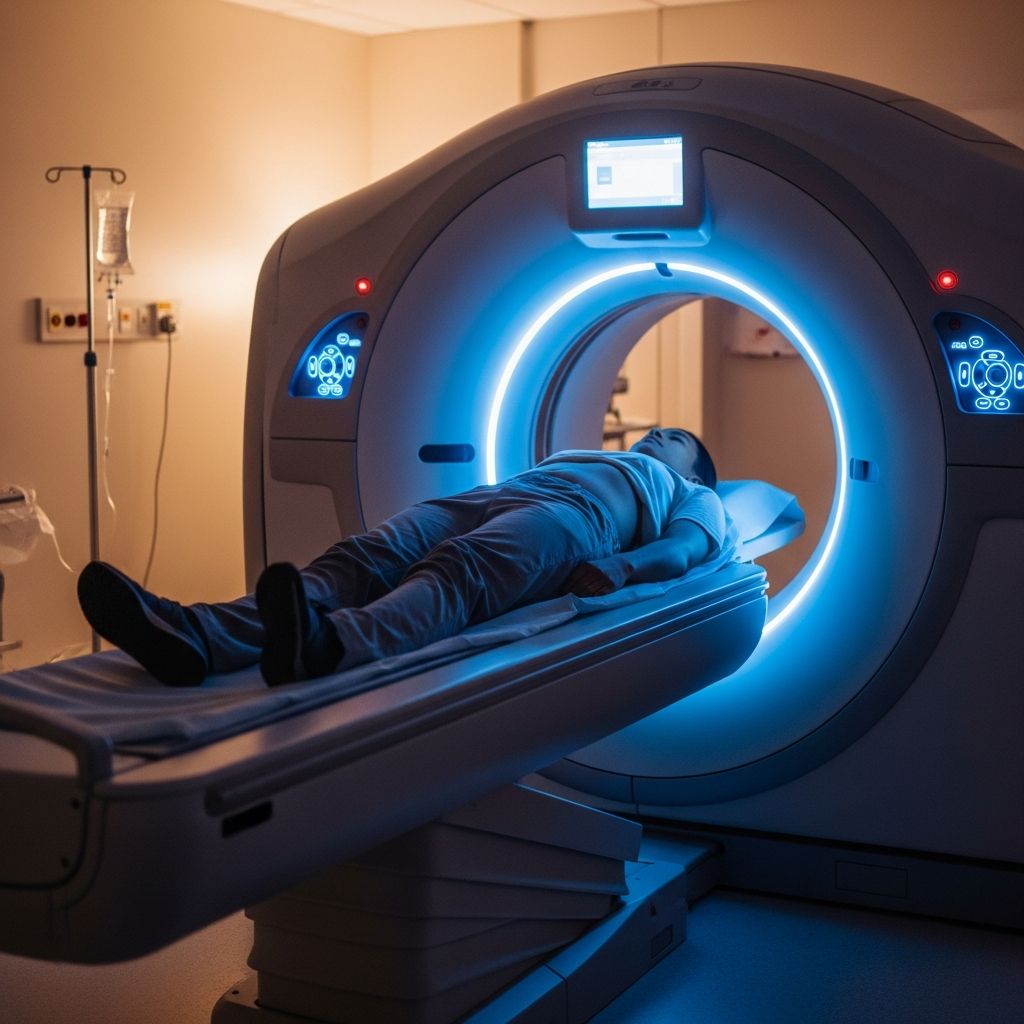
Computed Tomography CT or CAT Scan of the Abdomen
A computed tomography (CT) scan, also known as a CAT scan, is a sophisticated diagnostic imaging test that uses X-rays and computer technology to create detailed, cross-sectional images of the abdomen and its contents. This imaging technique has become an essential tool in modern medicine, allowing healthcare providers to visualize internal structures with remarkable clarity and precision. Unlike traditional X-rays, which produce flat, two-dimensional images, CT scans generate multiple images that can be reformatted in various planes and even assembled into three-dimensional representations of the body.
The abdomen is a complex region containing numerous vital organs and structures, including the liver, pancreas, kidneys, stomach, intestines, and blood vessels. When healthcare providers need detailed information about these organs or suspect abdominal pathology, a CT scan of the abdomen and pelvis offers superior diagnostic capability compared to conventional imaging methods. The procedure is fast, painless, noninvasive, and remarkably accurate, making it one of the most valuable diagnostic tools in clinical practice today.
What Is an Abdominal CT Scan?
An abdominal CT scan is a diagnostic imaging examination that combines X-ray technology with advanced computer processing to generate highly detailed images of abdominal structures. During the scan, X-ray beams and electronic detectors rotate around your body in a circular motion, similar to a doughnut-shaped device called a gantry. As these components rotate, they capture multiple measurements of how X-rays are absorbed by different tissues throughout your body.
The fundamental principle underlying CT imaging is that different tissues absorb X-rays in varying amounts. Bones appear white on the resulting images because they absorb more radiation, soft tissues such as the liver and heart appear in shades of gray, and air-filled structures appear black. The computer workstation processes the vast amount of data collected during the scan and transforms it into cross-sectional images, often compared to slicing a loaf of bread into thin sections. When these image slices are reassembled by computer software, they create an exceptionally detailed, multidimensional view of the body’s interior.
One of the significant advantages of CT imaging is its ability to generate images that can be reformatted in multiple planes—horizontal, vertical, and oblique—providing radiologists with comprehensive views of anatomical structures from different angles. Advanced three-dimensional reconstruction techniques can also create volumetric representations of organs and tissues, which can be particularly valuable for surgical planning and treatment assessment.
Why Your Doctor May Order an Abdominal CT Scan
Healthcare providers order abdominal CT scans for numerous clinical indications. The test is particularly valuable when investigating symptoms or conditions that require detailed visualization of abdominal structures. Common reasons for ordering an abdominal CT scan include:
- Evaluation of unexplained abdominal or pelvic pain
- Investigation of persistent nausea and vomiting
- Detection and evaluation of kidney stones
- Assessment of suspected appendicitis or diverticulitis
- Identification of abdominal aortic aneurysms
- Evaluation of traumatic injuries to abdominal organs
- Detection and staging of tumors in abdominal or pelvic organs
- Assessment of infections and inflammatory conditions
- Evaluation of blood vessel abnormalities
- Detection of internal bleeding or hemorrhage
- Assessment of organ function and integrity
Beyond diagnostic purposes, CT scans of the abdomen are also used to guide minimally invasive procedures such as biopsies, abscess drainages, and targeted tumor treatments. Additionally, physicians use abdominal CT imaging to plan surgical procedures, assess surgical outcomes such as organ transplants, stage cancers and plan radiation therapy, and monitor patient response to chemotherapy or other treatments.
Related Stories



How the Abdominal CT Scan Procedure Works
Understanding how CT scanning functions requires knowledge of basic X-ray principles combined with advanced computer technology. Like conventional X-ray examinations, CT scanning involves passing radiation through the body. However, whereas traditional X-rays direct a small amount of radiation through a body part and capture the image on a single plate, CT scanning employs a fundamentally different approach.
In a CT scan, multiple X-ray beams and electronic detectors continuously rotate around your body as it lies on a motorized examination table. These rotating components measure the amount of radiation absorbed throughout your entire body from multiple angles. Simultaneously, the examination table moves slowly through the scanner opening during the actual scanning process, allowing the equipment to capture images of successive thin sections of your body.
A specialized computer program processes this enormous volume of data collected from the rotating X-ray beams and detectors. The computer performs complex calculations to determine how much radiation was absorbed by different tissues at each position, then synthesizes this information into detailed cross-sectional images. These two-dimensional images represent “slices” through your body, each typically just a few millimeters thick. The radiologist can then examine these individual images or request that the computer software reassemble them into three-dimensional visualizations for more comprehensive assessment.
This slicing technique provides exceptional anatomical detail. Soft tissues and blood vessels, which appear only as vague shadows on conventional X-rays, are clearly visible on CT images. This enhanced visualization capability is particularly valuable for detecting small abnormalities, evaluating the extent of disease, and planning surgical or therapeutic interventions.
What to Expect During Your Abdominal CT Scan
Knowing what to expect during your abdominal CT scan can help reduce anxiety and ensure the best possible image quality. The procedure typically follows a standard sequence of steps.
Preparation and Positioning: When you arrive at the imaging center, you will be asked to remove any clothing, jewelry, or metallic objects that might interfere with the scanning process. The technologist will then position you on the CT examination table, typically lying flat on your back. To ensure you maintain the correct position and remain still during the scan—which is critical for image quality—the technologist may use straps, pillows, or other positioning aids.
Localization Scan: Before the actual diagnostic scan begins, the table will move quickly through the scanner to determine the correct starting position for the examination. This brief localization scan, sometimes called a “scout” or “topogram,” establishes the precise anatomical region to be scanned.
The Actual Scan: Once the correct starting position is established, the examination table will move slowly through the scanner opening during the actual CT scan. The X-ray tube and detectors rotate around your body, producing the detailed cross-sectional images. Most abdominal CT scans are remarkably quick, typically requiring only a few minutes inside the machine. Depending on the specific clinical question and type of CT scan ordered, the machine may make several passes through different anatomical levels.
Contrast Administration: Many abdominal CT scans involve the use of contrast dye, which highlights specific structures and enhances image clarity. Contrast may be administered orally (by mouth), intravenously (through a vein), or by both routes. If contrast is used, you will typically be removed from the scanner after the first set of scans is completed. The contrast dye is then administered, and a second set of scans is obtained to visualize structures as they appear with the contrast material present.
Communication and Monitoring: Throughout the procedure, the technologist remains in the control room but maintains continuous visual contact with you through a window. Speakers and a microphone allow two-way communication, and you will be provided with a call button to alert the technologist if you experience any problems or discomfort. The technologist will monitor you continuously throughout the examination.
During the Scan: As the scanner rotates around you, you will hear clicking and whirring sounds—these are normal operational noises. You will be asked to remain very still during the scan, as any movement can blur the images and reduce diagnostic quality, similar to how movement affects photographs. You may also be asked to hold your breath for short periods at various times during the scan to prevent motion artifact in specific anatomical regions.
After the Scan: Once the scanning is complete, you will be removed from the scanner. If an intravenous line was inserted for contrast administration, it will be removed. You may be asked to wait briefly while the radiologist examines the scans to ensure they are of adequate quality and diagnostic value.
Key Advantages of Abdominal CT Scanning
Abdominal CT scanning offers numerous advantages that have made it an indispensable diagnostic tool in modern medical practice. The procedure is painless and noninvasive, requiring no needles, incisions, or other invasive interventions. CT imaging is remarkably fast—most abdominal scans take only minutes—making it ideal even for acutely ill patients or those in emergency situations. In traumatic injuries with internal bleeding, CT scans can provide life-saving information quickly enough to guide emergency interventions and potentially save lives.
Unlike magnetic resonance imaging (MRI), the presence of metallic implants or medical devices does not prevent patients from undergoing CT scans, making this modality accessible to a broader patient population. CT imaging provides excellent real-time imaging capabilities, making it an outstanding tool for guiding needle biopsies and needle aspiration procedures, particularly for lesions in the lungs, abdomen, pelvis, and bones.
A definitive CT scan diagnosis may eliminate the need for exploratory surgery and surgical biopsy, thereby reducing patient risk and healthcare costs. Additionally, no radiation remains in the patient’s body after a CT examination, and the X-rays used in CT scanning should produce no immediate side effects.
Special Considerations for Different Patients
While abdominal CT scanning is suitable for most patients, certain populations require special consideration. Many modern CT scanners are fast enough to acquire diagnostic-quality images in children without the need for sedation. However, children who are unable to remain still or highly anxious may require sedation to prevent motion artifact and ensure successful image acquisition. Motion during scanning can blur images and significantly degrade diagnostic quality, making this consideration particularly important in pediatric patients.
Pregnant patients should inform their healthcare provider, as the radiation exposure from CT scanning needs to be carefully weighed against diagnostic benefit. The benefits of imaging to diagnose a serious abdominal condition often outweigh potential risks from radiation exposure to a developing fetus, but this decision should be made in consultation with both the radiologist and the treating physician.
Frequently Asked Questions About Abdominal CT Scans
Q: Is an abdominal CT scan safe?
A: Yes, abdominal CT scans are generally safe and well-tolerated. Like all X-ray procedures, CT does involve ionizing radiation exposure, but the diagnostic benefit typically outweighs potential risks. Modern CT scanners use optimized protocols to minimize radiation dose while maintaining excellent image quality. The radiation dose is not retained in your body after the scan.
Q: Will I need contrast for my abdominal CT scan?
A: Whether contrast is needed depends on the clinical question being addressed. Your physician will determine if contrast administration is necessary. Some scans require oral contrast, intravenous contrast, both, or neither. Your doctor and the radiology team will discuss this with you before your procedure.
Q: How long does an abdominal CT scan take?
A: The actual scanning time is typically just a few minutes. However, the entire appointment may take longer due to registration, positioning, and potential waiting time for the radiologist to verify image quality.
Q: Can I eat or drink before my CT scan?
A: Preparation requirements vary depending on whether contrast will be used. Your imaging facility will provide specific preparation instructions when you schedule your appointment. Generally, if IV contrast is planned, you may be asked to fast for several hours beforehand.
Q: When will I receive my results?
A: A radiologist will review your images and prepare a detailed report. This typically takes a few hours to a day, depending on the urgency of your situation and the imaging facility’s workflow. Your physician will discuss the results with you.
References
- Abdominal and Pelvic CT — Radiological Society of North America (RSNA). 2024. https://www.radiologyinfo.org/en/info/abdominct
- CT Scan of the Abdomen — University of Rochester Medical Center. 2024. https://www.urmc.rochester.edu/encyclopedia/content
- CT Scan (Computed Tomography Scan) — Cleveland Clinic. 2024. https://my.clevelandclinic.org/health/diagnostics/4808-ct-computed-tomography-scan
- CT Scan of the Abdomen — Cedars-Sinai Health Library. 2024. https://www.cedars-sinai.org/health-library/tests-and-procedures/c/ct-scan-of-the-abdomen.html
- CT Scan of the Abdomen: About This Test — Kaiser Permanente Health Encyclopedia. 2024. https://healthy.kaiserpermanente.org/health-wellness/health-encyclopedia/he.ct-scan-of-the-abdomen-about-this-test.ug6586
- CT Scan — Mayo Clinic. 2024. https://www.mayoclinic.org/tests-procedures/ct-scan/about/pac-20393675
Similar Articles








Read full bio of Sneha Tete