Abnormal Wound Healing: Comprehensive Guide To Causes & Care
Explore the causes, risk factors, and treatments for impaired wound healing, hypertrophic scars, and keloids in dermatological practice.
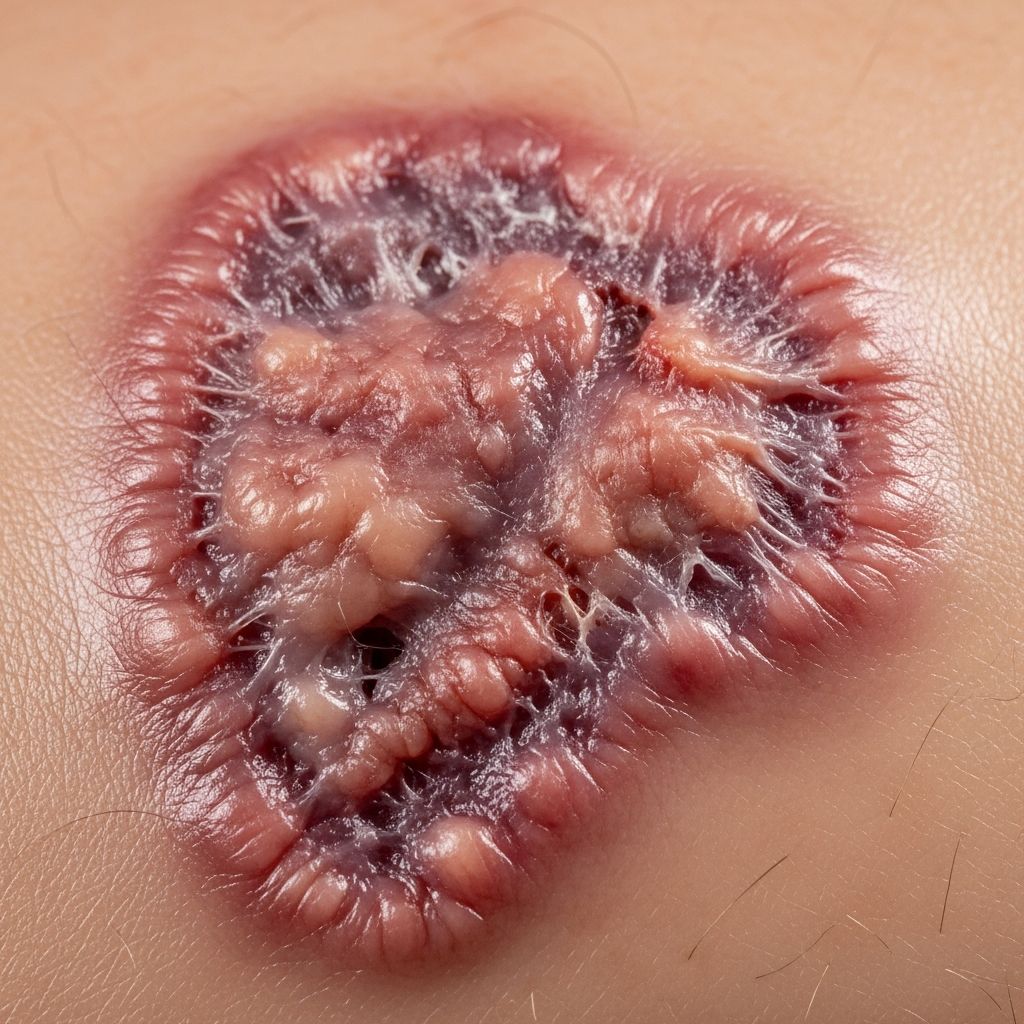
Impaired wound healing arises from defects in the normal tissue response to injury or inadequate wound management. Chronic wounds, defined as those failing to heal within 4 weeks, commonly affect the lower leg, foot, and pelvic regions, where aetiology is complex and reversal measures challenging.
Hypertrophic Scars and Keloids
**Hypertrophic scars** and
keloids
represent excessive collagen synthesis post-injury, leading to thickened scars. Hypertrophic scars remain within the original wound boundaries and often regress over time, while keloids extend beyond and persist elevated.Hypertrophic scars typically follow known trauma like surgery, lacerations, abrasions, or inflammatory conditions such as acne. Risk increases with wound tension, infection, or electrosurgery. Keloids may arise spontaneously, grow slowly for years, and develop after minor injuries including burns, insect bites, acne, or vaccinations.
Pathogenesis involves dysregulation of healing, with excessive production of collagen, elastin, proteoglycans, and extracellular matrix. Fibroblast and mast cell proliferation occurs, alongside altered growth factors like increased TNF-alpha, interferon-beta, and interleukin-6.
Treatment of Hypertrophic Scars and Keloids
Treatment aims to reduce collagen formation, induce collagenase, alleviate symptoms like itch and pain, and improve cosmetics/function. Options include:
- Silicone gel sheets or dressings: Applied 12–24 hours/day for 8–12 weeks or longer to hydrate and apply pressure.
- Intralesional corticosteroids: Triamcinolone injections every 4–6 weeks to inhibit inflammation and collagen synthesis.
- Cryotherapy: Freezing scars, often combined with steroids for keloids.
- Laser therapy: Pulsed-dye or fractional lasers to reduce redness and thickness.
- Surgical excision: Followed by adjuvant therapies to prevent recurrence, as keloids often regrow.
- 5-Fluorouracil or bleomycin injections: Antifibrotic agents for resistant cases.
- Radiation therapy: Low-dose superficial radiotherapy post-excision for high-risk keloids.
Hypertrophic scars respond better and may resolve spontaneously, unlike persistent keloids. Prevention involves early silicone use, tension minimization, and prompt infection control post-trauma.
Factors Impairing Wound Healing
Multiple
intrinsic
andextrinsic
factors disrupt healing. These are categorized as local, regional, systemic, and miscellaneous.Local Factors
- Infection: Pathogen levels >105 CFU/g correlate with clinical infection (erythema, oedema, pain, purulence). Histology shows pathogen invasion and PMN response.
- Foreign bodies: Sutures, dirt, or devitalized tissue provoke inflammation.
- Trauma: Repeated injury delays repair.
- Necrosis: Dead tissue impedes angiogenesis and epithelialization.
- Pressure: On weight-bearing areas like feet.
Regional Factors
- Oedema: Increases diffusion distance for oxygen/nutrients.
- Poor blood supply: Arterial insufficiency (e.g., peripheral artery disease) or venous hypertension (e.g., ulcers).
Systemic Factors
| Factor | Description | Impact on Healing |
|---|---|---|
| Smoking | Nicotine vasoconstriction, CO reduces oxygen delivery | Infection risk, necrosis, flap failure |
| Nutrition | Deficiencies in protein, vitamins A/C, zinc | Delayed epithelialization, poor collagen |
| Diabetes | Hyperglycaemia, neuropathy | Impaired inflammation/angiogenesis |
| Immune deficiency | Aging, HIV, immunosuppressants | Infection susceptibility |
| Coagulation defects | Haemophilia, anticoagulants | Haematoma, poor clot stability |
| Collagen disorders | Ehlers-Danlos syndrome subtypes | Fragile ‘cigarette paper’ scars |
Miscellaneous Factors
- Age: Elderly have thinner skin, reduced cell proliferation.
- Obesity: Poor perfusion in adipose tissue.
- Cancer/chemotherapy: Suppresses repair.
- Steroids: Inhibit fibroblasts/macrophages.
Smoking specifically raises infection, necrosis, and haematoma risks via vasoconstriction and impaired immunity. Nutrition requires carbs, proteins, fats, vitamins/minerals; deficiencies like hypovitaminosis A delay healing, while excess vitamin A promotes granulation. Zinc deficiency (e.g., acrodermatitis enteropathica, alcoholism) benefits from supplementation.
Related Stories



Wound Infection
Infection >105 organisms impairs healing via inflammation and tissue invasion. Signs: local (pain, pus) and systemic (fever).
Treatment of Wound Infection
- Cleansing/debridement: Remove necrotic tissue/foreign bodies via surgical, enzymatic, autolytic, or mechanical methods.
- Antimicrobials: Avoid routine topical antibiotics due to resistance; prefer silver dressings, honey, or peptides.
- Systemic antibiotics: For cellulitis/osteomyelitis.
- Oxygenation: Elevate/compress to reduce oedema; hyperbaric oxygen for select cases.
Management of Impaired Wound Healing
Correct intrinsic factors: optimize nutrition, cease smoking, control glycaemia. Provide moist environment to enhance epithelialization (2–3x faster than dry). Use advanced dressings, negative pressure therapy, growth factors for chronic wounds.
Future therapies target genetics/immunology, including biological dressings and recombinant growth factors.
Wound Healing in Skin Disease
The
isomorphic (Koebner) response
triggers diseases like psoriasis, lichen planus, vitiligo in traumatized/scarred skin, forming linear lesions.Prevention of Abnormal Scarring
Evidence supports pressure garments, silicone, and early intervention. Minimize tension, treat infection promptly.
Frequently Asked Questions (FAQs)
What causes chronic wounds?
Chronic wounds persist >4 weeks due to infection, poor perfusion, nutrition deficits, or systemic diseases like diabetes.
How to differentiate hypertrophic scars from keloids?
Hypertrophic scars stay within wound edges and regress; keloids extend beyond and persist.
Does smoking affect wound healing?
Yes, via vasoconstriction, hypoxia, and immunity impairment, increasing complications.
Can keloids be completely cured?
Keloids often recur post-treatment; multimodal therapy offers best control, not always cure.
What nutritional supplements aid healing?
Zinc, vitamin A/C, protein/arginine for deficient patients.
Hypertrophic/keloid scars are benign but raise skin cancer risk slightly. Consult dermatologists for persistent issues.
References
- Abnormal wound healing — DermNet NZ. 2009 (updated). https://dermnetnz.org/cme/wound-healing/abnormal-wound-healing
- Normal wound healing — DermNet NZ. 2009 (updated). https://dermnetnz.org/cme/wound-healing/normal-wound-healing
- Keloid and hypertrophic scar — DermNet NZ. https://dermnetnz.org/topics/keloid-and-hypertrophic-scar
- Inflammation in Wound Healing and Pathological Scarring — Mary Ann Liebert, Inc. 2022-10-01. https://www.liebertpub.com/doi/10.1089/wound.2021.0161
- Wound healing: cellular mechanisms and pathological outcomes — Royal Society Publishing. 2020-09-30. https://royalsocietypublishing.org/rsob/article/10/9/200223/91045/Wound-healing-cellular-mechanisms-and-pathological
Similar Articles








Read full bio of Sneha Tete