AC Joint Problems: Causes, Symptoms & Treatment
Complete guide to understanding AC joint problems, from diagnosis to effective treatment options.
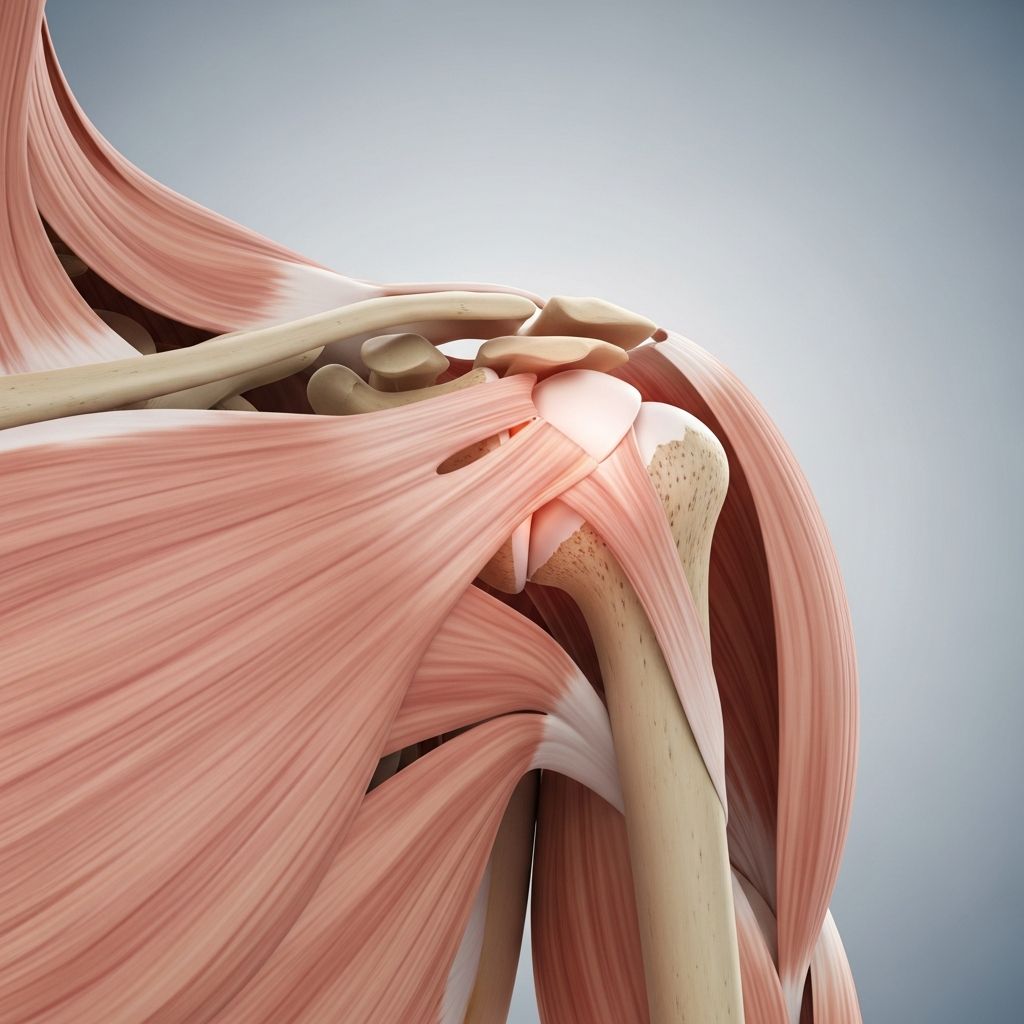
Understanding AC Joint Problems
The acromioclavicular (AC) joint, commonly referred to as the AC joint, is a crucial articulation located where the clavicle (collarbone) meets the acromion process of the scapula (shoulder blade). This joint is reinforced by ligaments that maintain stability and allow for proper shoulder movement. AC joint problems represent a significant source of shoulder discomfort and can range from mild inflammation to severe degenerative conditions that impact daily function and athletic performance.
AC joint problems are increasingly common in both athletic and sedentary populations. Whether due to traumatic injury, repetitive stress, or age-related degeneration, understanding these conditions is essential for appropriate management and recovery. The joint itself is relatively small but bears considerable stress during arm movements, overhead activities, and weight-bearing exercises.
Common Causes of AC Joint Problems
AC joint problems develop through various mechanisms, each requiring different treatment approaches and recovery timelines. Understanding the underlying cause is fundamental to developing an effective treatment strategy.
Osteoarthritis and Wear-and-Tear Degeneration
Osteoarthritis, commonly known as wear-and-tear arthritis, represents one of the most frequent causes of AC joint problems. This degenerative condition occurs when the articular cartilage—the smooth protective covering on bone surfaces—deteriorates over time. As cartilage wears away and becomes frayed and rough, the protective space between the bones diminishes, causing direct bone-to-bone contact during movement. This process typically affects individuals over 50 years of age, though posttraumatic arthritis can develop earlier following shoulder injuries such as fractures or dislocations.
The progression of osteoarthritis in the AC joint often leads to the formation of bone spurs and osteophytes around the joint margins. These bony growths can contribute to ongoing inflammation and may eventually require surgical intervention if conservative management fails.
AC Joint Separation
AC joint separations, also called shoulder separations or AC sprains, occur when the ligaments holding the clavicle and scapula together are stretched or torn. These injuries typically result from direct trauma to the shoulder, falls onto the shoulder, or high-impact sports activities. The severity of separations is classified using the Rockwood grading system, ranging from Type I (mild ligament sprains) to Type VI (severe with complete ligament rupture and clavicle displacement).
AC separations vary significantly in severity. Less intense ligament sprains may cause only mild pain and limited swelling, while complete ligament tears can result in intense pain, visible deformity, and substantial loss of shoulder mobility. The characteristic “bump” seen with more severe separations results from clavicle elevation relative to the acromion process.
Repetitive Overuse and Athletic Stress
Repetitive overhead activities and heavy lifting place tremendous stress on the AC joint, making it a common injury site in athletes and fitness enthusiasts. Weight lifters, swimmers, throwers, and other overhead sport participants frequently develop inflammation and cartilage degradation at this joint. The repeated stress from bench pressing, overhead pressing, and similar activities can lead to progressive cartilage erosion, a condition sometimes called distal clavicle osteolysis.
Related Stories



Over time, this chronic overuse breaks down the cartilage that normally allows smooth joint movement. Unlike acute injuries that develop suddenly, overuse-related AC joint problems typically develop gradually, with symptoms initially appearing only during or immediately after aggravating activities.
Other Contributing Factors
Additional factors that can precipitate AC joint problems include shoulder dislocation in the glenohumeral joint, rotator cuff injuries, and inflammatory conditions affecting the shoulder complex. Some individuals may experience referred pain from thoracic outlet syndrome or cervical spine pathology that mimics AC joint dysfunction.
Recognizing Symptoms of AC Joint Problems
AC joint problems produce characteristic symptoms that often localize to the top of the shoulder. Recognizing these signs enables early intervention and prevents progression to more severe conditions.
Primary Symptoms
The most prominent symptom of AC joint problems is pain localized to the superior aspect of the shoulder, directly over the joint. This pain frequently radiates toward the neck and deltoid region. Many patients report that symptoms worsen with specific movements, particularly those involving arm adduction (bringing the arm across the body), overhead reaching, or horizontal adduction (cross-body movements).
Patients often experience increased pain when:
- Performing overhead activities or reaching upward
- Lying on the affected shoulder
- Lifting or carrying objects
- Pushing or pulling movements
- Throwing or racquet sports activities
Associated Physical Signs
Upon examination, the AC joint typically demonstrates visible or palpable swelling and tenderness. In more severe cases, particularly with AC separations, patients may observe a visible deformity or prominence at the top of the shoulder. Some individuals develop a guarded posture, holding the upper extremity in adduction with shoulder depression to minimize discomfort.
Loss of normal shoulder motion frequently accompanies AC joint problems, with patients reporting difficulty achieving full range of motion, particularly in overhead positions and rotational movements.
Diagnostic Evaluation
Healthcare providers employ multiple diagnostic strategies to confirm AC joint involvement and determine the severity of pathology. Physical examination typically includes specific provocative tests such as the cross-body adduction test (O’Brien’s test) and direct palpation of the joint. Imaging studies, including X-rays to assess joint space narrowing and osteophyte formation, help confirm arthritis. MRI or ultrasound imaging may be utilized to evaluate soft tissue structures and ligament integrity in cases of suspected separation.
Conservative Treatment Approaches
The vast majority of AC joint problems respond favorably to conservative, non-surgical management. Treatment progression typically follows a stepwise approach, advancing to more invasive interventions only when simpler measures fail.
Activity Modification and Rest
Initial management focuses on activity modification—deliberately avoiding or minimizing movements that provoke AC joint pain. This represents the first-line treatment for both arthritis and acute separations. Patients are counseled to avoid heavy overhead lifting, excessive cross-body adduction, and repetitive stress activities.
For acute AC joint injuries, immediate rest of the affected joint is essential. In the first 24 hours following injury, athletes should minimize shoulder use while allowing finger, wrist, and elbow movements to prevent stiffness.
Ice Therapy and Immobilization
Ice application to the joint effectively decreases pain and inflammation, particularly in acute injuries. Ice should be applied for 20-30 minutes every two hours as needed during the acute phase. Immobilization using a sling helps protect the joint from excessive motion and provides pain relief, though prolonged immobilization (beyond one to two weeks) may lead to frozen shoulder and should be avoided.
Pharmacological Management
Nonsteroidal anti-inflammatory drugs (NSAIDs) such as ibuprofen, naproxen, and aspirin effectively manage pain and reduce inflammation associated with AC joint problems. These medications may be obtained over-the-counter or as prescription-strength formulations. NSAIDs should be taken with food and used at the minimum effective dose for the shortest duration necessary to minimize gastrointestinal side effects.
Acetaminophen (Tylenol) provides alternative pain relief for patients unable to tolerate NSAIDs. However, NSAIDs are generally preferred for AC joint problems due to their additional anti-inflammatory properties.
Physical Therapy
Physical therapy plays a critical role in AC joint recovery by restoring strength, flexibility, and functional movement patterns. Early mobilization of uninvolved joints (fingers, wrist, elbow) prevents development of frozen shoulder. Progressive therapeutic exercises address shoulder stabilizers, rotator cuff muscles, and scapular stabilizers to reduce stress on the AC joint during functional activities.
Corticosteroid Injections
When conservative measures including rest, ice, medication, and activity modification fail to provide adequate symptom relief, corticosteroid injections represent the next treatment level. These injections deliver anti-inflammatory medication directly into the AC joint space, providing pain relief and reducing inflammation. Ultrasound guidance ensures accurate needle placement within the small AC joint space, improving injection efficacy.
Corticosteroid injection results are variable. Some patients experience permanent or long-lasting pain relief, while others obtain only temporary benefit. On average, cortisone injections provide symptom relief lasting approximately 2-3 months. Multiple injections may be repeated, though there are practical and physiological limits to this approach.
Surgical Treatment Options
Surgical intervention becomes necessary when conservative management fails to relieve symptoms or when structural damage requires anatomical restoration. Multiple surgical techniques address different aspects of AC joint pathology.
Distal Clavicle Resection
The most common surgical procedure for AC joint arthritis involves removing a small amount (typically less than one centimeter) of bone from the distal (end) clavicle. This procedure, called distal clavicle resection, prevents the bone ends from rubbing against each other during joint motion. The surgery can be performed through a small one-inch incision using open technique or arthroscopically using several tiny incisions. Recovery and functional outcomes are comparable regardless of surgical approach.
Most patients achieve full shoulder motion within six weeks and return to sports activities by twelve weeks following distal clavicle resection.
AC Joint Separation Repair
Severe AC separations (typically Type III or higher) that fail conservative treatment may require surgical repair. Several surgical methods exist, including hook plate fixation, coracoacromial ligament transfer, coracoclavicular interval fixation, and ligament reconstruction. These procedures aim to reattach the bones and restore stability by reconstructing torn ligaments. However, any permanent deformity or bump caused by the initial injury typically cannot be completely eliminated through surgery.
Treatment Timeline and Recovery Expectations
| Condition Type | Conservative Treatment Duration | Expected Return to Activity | Surgical Recovery Timeline |
|---|---|---|---|
| Type I AC Separation | 2-3 weeks | 2-4 weeks | Not typically required |
| Type II AC Separation | 3-6 weeks | 6-8 weeks | Not typically required |
| Mild AC Arthritis | Ongoing management | Variable | 6-12 weeks (if surgery needed) |
| Moderate AC Arthritis | 6-12 weeks | 3-6 months | 8-12 weeks |
Prevention Strategies
Preventing AC joint problems requires attention to biomechanics, progressive training programs, and adequate recovery. Athletes should avoid sudden increases in training volume or intensity. Proper lifting technique—maintaining loads closer to the body and avoiding excessive weight—reduces AC joint stress. Cross-training with varied activities prevents overuse of specific movement patterns. Adequate rest between intense training sessions allows tissue recovery and adaptation.
When to Seek Medical Evaluation
Individuals experiencing persistent shoulder pain, particularly pain localized to the top of the shoulder, should seek medical evaluation. Immediate medical attention is warranted for acute shoulder injuries with severe pain, inability to move the shoulder, visible deformity, or suspected dislocation. Seeking timely evaluation prevents chronic changes and facilitates more effective treatment.
Frequently Asked Questions
Q: Can AC joint problems resolve without treatment?
A: Mild AC joint problems may improve with simple rest and activity modification. However, most arthritis-related problems require ongoing management, and some conditions benefit significantly from early intervention to prevent worsening.
Q: How long does recovery from AC joint surgery take?
A: Recovery timelines vary depending on the surgical procedure performed. Most patients achieve full range of motion within 6-8 weeks and return to sports activities between 8-12 weeks after surgery.
Q: Are corticosteroid injections safe for AC joint problems?
A: Corticosteroid injections are generally considered safe when performed by experienced practitioners with appropriate ultrasound guidance. Risks are minimal but should be discussed with your physician before injection.
Q: Can I prevent AC joint arthritis?
A: While age-related arthritis cannot be completely prevented, maintaining proper biomechanics, avoiding excessive overhead stress, and managing prior shoulder injuries can reduce your risk of developing symptomatic AC joint arthritis.
Q: What is the difference between an AC joint separation and a dislocation?
A: An AC joint separation involves injury to the ligaments connecting the clavicle to the scapula. A shoulder dislocation typically refers to displacement of the humeral head from the glenohumeral joint, a different structure that represents a distinct injury.
Q: Can I return to weight lifting after AC joint surgery?
A: Most patients can gradually return to weight lifting after appropriate rehabilitation. Your surgeon will provide specific guidelines regarding progression and load limits based on your individual healing and recovery.
References
- AC Joint Injury & Treatment — Reno Orthopedic Center. Accessed 2025. https://www.renoortho.com/specialties/center-for-sports-medicine/ac-joint/
- AC Joint Inflammation — Shoreline Ortho. Accessed 2025. https://shorelineortho.com/specialty/ac-joint-inflammation/
- Acromioclavicular (AC) Arthritis — Dr. Syed Hasan, MD. Accessed 2025. https://www.syedashfaqhasanmd.com/acromioclavicular-ac-arthritis-professor-orthopaedics-shoulder-elbow-cloumbia-baltimore-md/
- AC Joint Injury: Symptoms & Treatment — Mass General Brigham Sports Medicine. Accessed 2025. https://www.massgeneralbrigham.org/en/patient-care/services-and-specialties/sports-medicine/conditions/shoulder/ac-joint-injuries
- Acromioclavicular Joint Disorders — Physiopedia. Accessed 2025. https://www.physio-pedia.com/Acromioclavicular_Joint_Disorders
- Acromioclavicular (AC) Joint Injury (Shoulder Separation) — UPMC Orthopaedics. Accessed 2025. https://www.upmc.com/services/orthopaedics/conditions/acromioclavicular-joint-injury
- AC Joint (Acromioclavicular Joint): What It Is & Function — Cleveland Clinic. Accessed 2025. https://my.clevelandclinic.org/health/body/ac-joint-acromioclavicular-joint
Similar Articles








Read full bio of medha deb