Aceclofenac Tablets for Pain and Inflammation (Preservex)
Aceclofenac provides effective relief from pain and inflammation in arthritis conditions like osteoarthritis and rheumatoid arthritis.
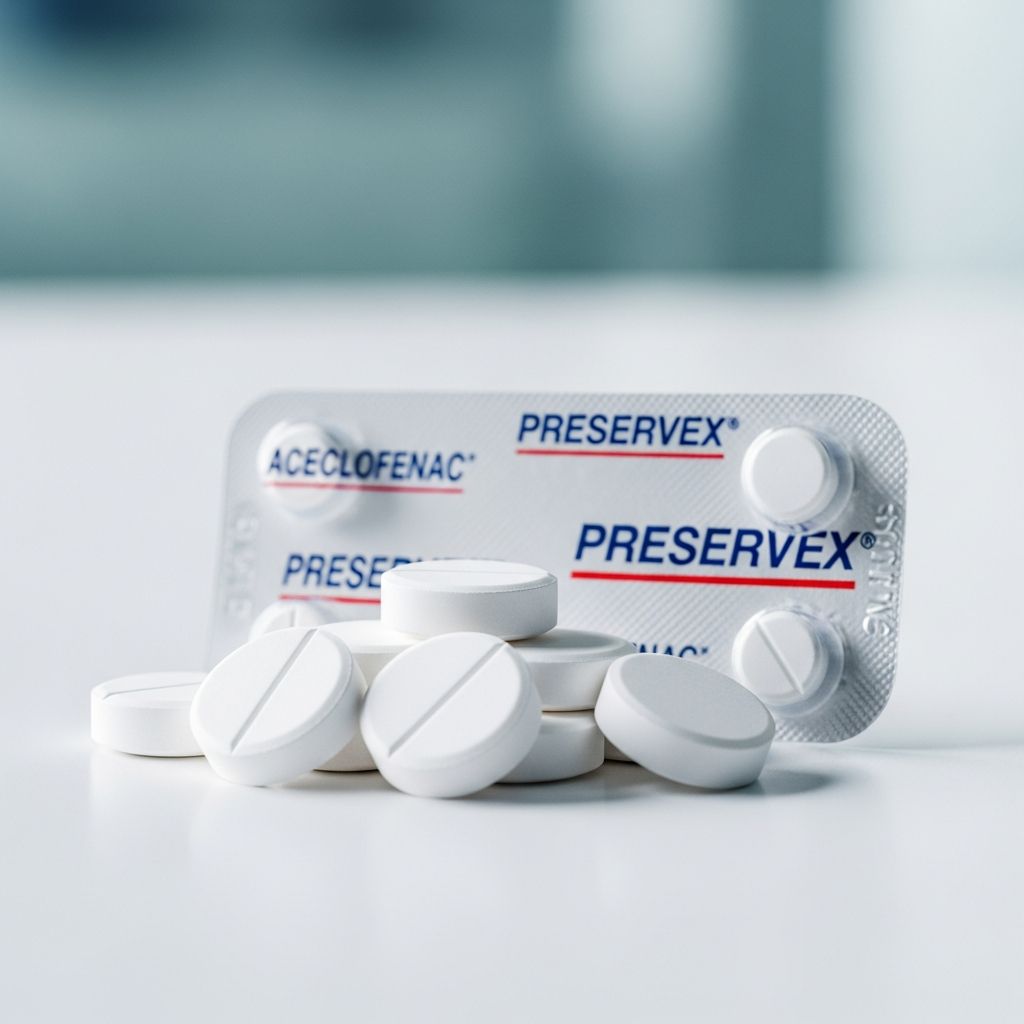
Aceclofenac is a non-steroidal anti-inflammatory drug (NSAID) used to relieve pain and inflammation associated with conditions like rheumatoid arthritis, osteoarthritis, and ankylosing spondylitis.
About aceclofenac tablets
| Type of medicine | A non-steroidal anti-inflammatory drug (NSAID) |
|---|---|
| Used for | Relief of pain and inflammation in adults with arthritis or ankylosing spondylitis |
| Also called | Preservex® |
| Available as | Tablets |
Anti-inflammatory painkillers like aceclofenac belong to a group of medicines known as non-steroidal anti-inflammatory drugs (NSAIDs), often simply referred to as ‘anti-inflammatories’. These medications are commonly prescribed for individuals suffering from painful rheumatic conditions, including osteoarthritis, rheumatoid arthritis, and ankylosing spondylitis. Aceclofenac effectively eases pain while also reducing associated inflammation, helping patients manage daily activities more comfortably.
Aceclofenac works by blocking the effects of natural substances in the body called cyclo-oxygenase (COX) enzymes. These enzymes play a key role in producing other chemicals known as prostaglandins. Prostaglandins are generated at sites of injury or damage and contribute to pain and inflammation. By inhibiting COX enzymes, aceclofenac reduces prostaglandin production, thereby alleviating pain and swelling.
Aceclofenac is rapidly absorbed from the gastrointestinal tract after oral administration, reaching peak plasma concentrations within 1.25 to 3 hours. It penetrates well into synovial fluid, achieving concentrations up to 60% of plasma levels, which is beneficial for joint-related conditions. There is no significant accumulation with regular dosing.
Before taking aceclofenac
Before starting aceclofenac, inform your doctor if you have experienced an allergic reaction to any other anti-inflammatory painkiller, such as aspirin, ibuprofen, or naproxen. Also disclose any history of asthma, particularly if it worsens with NSAID use.
Do not take aceclofenac if:
- You are allergic to aceclofenac or any similar medicines.
- You have ever had ulceration or bleeding in your stomach or intestine.
- You have ever had any severe allergic reactions.
- You have severe heart failure.
- You are pregnant (especially in the last three months of pregnancy).
- You are trying to get pregnant.
- You have severely run-down blood (anaemia) or other blood disorders.
- You have severe liver or kidney problems.
Caution is advised if you have:
- A connection with heart disease, have had a previous heart attack, or have had a stroke (including ‘mini-stroke’).
- High blood pressure that has not been well controlled with medicines.
- Angina or have had a previous heart bypass operation.
- Had any problems with your stomach in the past or if you have Crohn’s disease or ulcerative colitis.
- Chickenpox or shingles (do not take this medicine until 7 days after the rash has gone as it can increase the risk of complications).
- Asthma or any allergies.
- Problems with your kidneys, liver or with your blood.
How to take aceclofenac
Related Stories



Take aceclofenac precisely as directed by your doctor. The standard dosage for adults is one 100 mg tablet twice daily, preferably one in the morning and one in the evening. Swallow the tablets whole with a glass of water, ideally during or immediately after a meal or snack to minimize stomach upset.
Dosing guidelines:
- Adults: 100 mg twice daily (morning and evening).
- Elderly: Same as adults, but use the lowest effective dose for the shortest duration due to higher risk of side effects.
- Hepatic impairment: Initial dose reduced to 100 mg once daily.
- Renal impairment: Use with caution; dose adjustment may be needed.
Do not exceed the recommended dose or duration of treatment. If you forget a dose, take it as soon as you remember unless it is nearly time for the next one. Never take two doses together. Always read the manufacturer’s leaflet inside the pack for full details.
Getting the most from your treatment
To optimize the benefits of aceclofenac:
- Take it with food to protect your stomach.
- If physiotherapy is part of your treatment for arthritis, continue with it alongside aceclofenac.
- Avoid alcohol, as it can irritate the stomach lining and increase bleeding risk.
- Use the lowest effective dose for the shortest time necessary.
- Do not take other NSAIDs (e.g., ibuprofen, aspirin) unless advised by your doctor.
Regular monitoring may be required, especially for long-term use, including blood tests for liver function or kidney health.
Common questions about aceclofenac tablets
How long does it take to work? Aceclofenac typically starts relieving pain within a few hours, with full anti-inflammatory effects noticeable after a few days of consistent use.
Can I take paracetamol with it? Yes, but only if recommended by your doctor. Do not combine with other NSAIDs.
Does it cause drowsiness? Drowsiness is uncommon, but dizziness can occur. Avoid driving or operating machinery if affected.
Side-effects
Most people tolerate aceclofenac well, but side effects can occur. Common ones are mild and often resolve as your body adjusts.
| Common side-effects | What can I do if I experience this? |
|---|---|
| Indigestion, heartburn (reflux), stomach pain | Remember to take the tablets with something to eat. If the discomfort continues, speak with your doctor |
| Feeling sick (nausea) | Stick to simple meals – avoid fatty or spicy foods |
| Diarrhoea | Drink plenty of water to replace the lost fluids |
Less common but serious side effects: Stop taking aceclofenac and contact your doctor immediately if you experience:
- Any breathing difficulties such as wheeze or breathlessness.
- Any signs of an allergic reaction such as swelling around the mouth or face, or a severe itchy skin rash.
- Passing blood or black stools, bringing up blood, or severe abdominal pains.
- Yellowing of the skin or eyes, dark urine, or pale stools (signs of liver issues).
- Swelling of ankles or feet, high blood pressure, or heart failure symptoms.
Rare side effects include blood disorders (e.g., anaemia, low white cells), kidney problems, or severe skin reactions. Elderly patients are at higher risk of gastrointestinal bleeding and should be monitored closely.
Who can and cannot take aceclofenac tablets
Aceclofenac is suitable for most adults over 18 with painful inflammatory conditions but is contraindicated in certain groups as outlined earlier. It is not recommended during pregnancy (especially third trimester), breastfeeding, or in children under 18 unless specifically prescribed.
How and when to take aceclofenac tablets
Administer orally with water, preferably with or after food. Standard regimen: 100 mg morning and evening. Duration should be as short as possible; long-term use requires regular review.
Pregnancy, breastfeeding and fertility while taking aceclofenac tablets
Pregnancy: Avoid aceclofenac, especially in the third trimester, as it may harm the fetus or prolong labor. Consult your doctor for alternatives.
Breastfeeding: Not recommended; small amounts pass into breast milk. Discuss safer options with your healthcare provider.
Fertility: NSAIDs like aceclofenac may temporarily reduce fertility in women, particularly those trying to conceive. Effects reverse upon discontinuation.
Frequently asked questions (FAQs)
What is aceclofenac used for?
Aceclofenac treats pain and inflammation in osteoarthritis, rheumatoid arthritis, and ankylosing spondylitis.
How should I take aceclofenac?
One 100 mg tablet twice daily with food. Swallow whole; do not crush.
What are the side effects of aceclofenac?
Common: stomach upset, nausea. Serious: bleeding, allergic reactions—seek immediate help.
Can I drink alcohol while taking aceclofenac?
Avoid alcohol to reduce stomach irritation risk.
Is aceclofenac safe for long-term use?
Use lowest dose shortest time; monitor with doctor for extended therapy.
References
- Instructions for Using Aceclofenac — Vinmec. 2023. https://www.vinmec.com/eng/blog/instructions-for-use-aceclofenac-en
- DOLOWIN 100 (Aceclofenac) Film Coated Tablet Patient Information Leaflet — Rwanda FDA. 2022-11. https://rwandafda.gov.rw/wp-content/uploads/2022/11/DOLOWIN_100__ACECLOFENAC__FILM_COATED_TABLET-PIL.pdf
- Aceclofenac tablets for pain and inflammation (Preservex) — Patient.info. Accessed 2026. https://patient.info/medicine/aceclofenac-tablets-for-pain-and-inflammation-preservex
- Aceclofenac: Uses, Interactions, Mechanism of Action — DrugBank. Accessed 2026. https://go.drugbank.com/drugs/DB06736
- Aceclofenac | Uses | Dosages | Side Effects | Precautions — Yashoda Hospitals. Accessed 2026. https://www.yashodahospitals.com/medicine-faqs/aceclofenac/
- Vitafen 100 mg Film-coated Tablets (Aceclofenac) Summary of Product Characteristics — HPRA. Accessed 2026. https://assets.hpra.ie/products/Human/24921/269c05e5-6329-4bb4-a68b-f50ebcb9e979.pdf
Similar Articles








Read full bio of medha deb