Achondroplasia: Causes, Symptoms, and Treatment
Understanding achondroplasia: the most common form of dwarfism and its management.
What Is Achondroplasia?
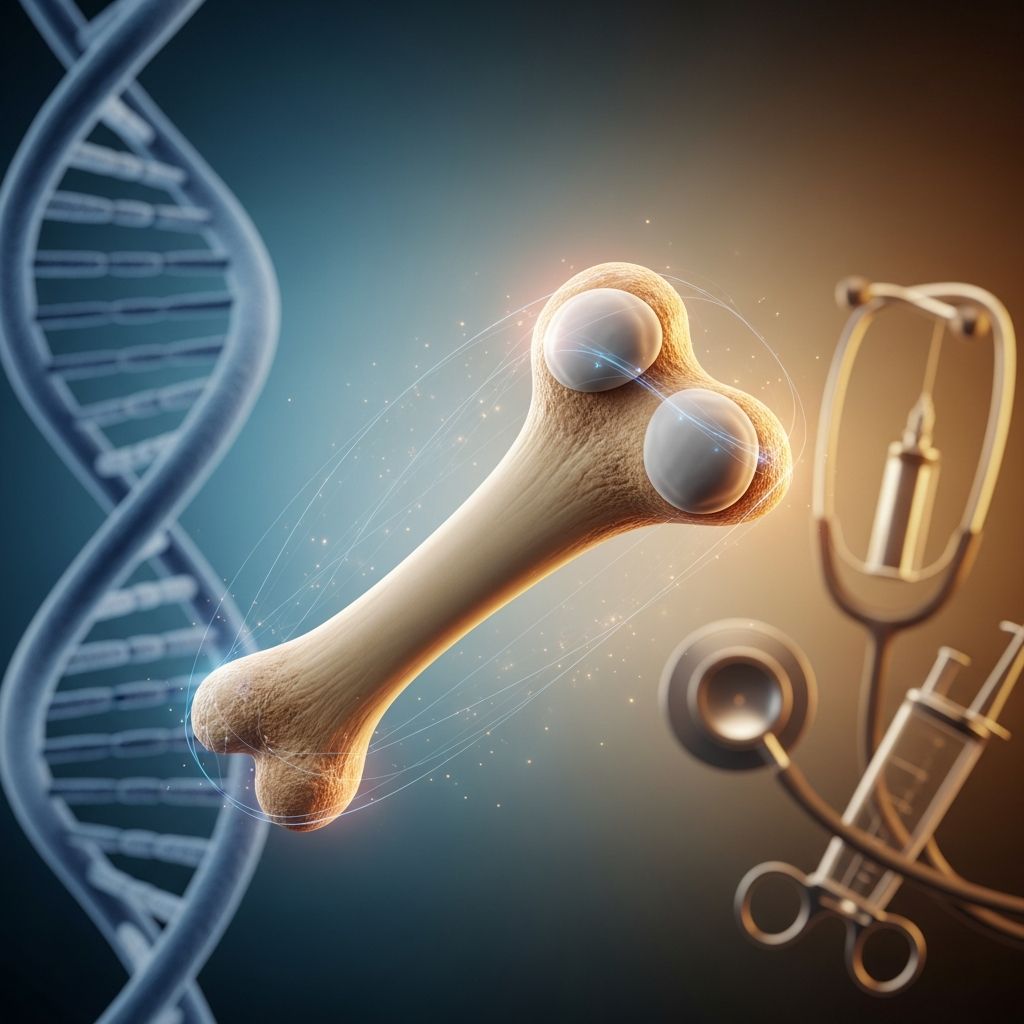
Achondroplasia is a genetic disorder that affects bone growth and is the most common form of dwarfism, occurring in approximately 1 in 20,000 to 30,000 live births. The term achondroplasia literally means “without cartilage formation,” though the actual problem lies not in forming cartilage but in converting it to bone through a process called ossification. This condition primarily affects the long bones of the arms and legs, resulting in disproportionate short stature where the limbs are significantly shorter than the torso.
The average adult height for males with achondroplasia is approximately 52 inches (4 feet 4 inches), while females typically reach about 49 inches (4 feet 1 inch). Despite the physical differences, individuals with achondroplasia generally have normal intelligence and a normal life expectancy, though they may face various health challenges throughout their lives.
Causes and Genetic Basis
Achondroplasia results from a mutation in the fibroblast growth factor receptor 3 (FGFR3) gene located on chromosome 4. This gene encodes a protein that contributes to the production of collagen and other structural components essential for bone development. When the FGFR3 gene is mutated, it causes the protein to become overactive, which interferes with how this protein interacts with growth factors and leads to complications with bone production. The mutation follows an autosomal dominant inheritance pattern, meaning only one mutated copy of the gene from either parent is necessary for the condition to develop.
Over 80% of achondroplasia cases arise from spontaneous de novo mutations, occurring in the egg or sperm cell before conception. Most individuals with achondroplasia have parents of average height without the condition. Advanced paternal age is a known risk factor for spontaneous mutations. In cases where inheritance is involved, an affected parent with only one mutated gene has a 50% chance of passing the condition to each child. In the rare event that both parents have achondroplasia, the risk of severe complications or homozygous achondroplasia significantly increases.
Clinical Features and Physical Characteristics
Achondroplasia presents a distinctive phenotype that is often recognizable at birth or through prenatal imaging. The condition affects skeletal development in characteristic ways that create a recognizable appearance and functional challenges.
Limb and Hand Characteristics
The most prominent features include shortened thighs and upper arms (rhizomelic shortening), bowed lower legs, and short fingers with characteristic spacing between the middle and ring fingers that creates a trident-hand appearance. Short feet and difficulty straightening the elbows are also typical features. The disproportion between limb length and trunk length becomes more apparent as the child grows.
Head and Facial Features
Individuals with achondroplasia typically have an enlarged head (macrocephaly) with a prominent forehead (frontal bossing) and midface hypoplasia, characterized by a small, flat nose with a depressed nasal bridge. These facial features are often one of the first diagnostic clues recognized by healthcare providers. The base of the skull may be affected, though the flat bones of the skull are generally spared from the typical effects of achondroplasia.
Related Stories



Spinal and Skeletal Complications
The spine frequently develops abnormal curvatures. Lordosis, a pronounced and permanent sway of the lower back, commonly develops during childhood and may lead to kyphosis, characterized by a small hump near the shoulders that typically resolves after the child begins walking. Some individuals also develop thoracolumbar kyphosis and anterior-posterior curvature abnormalities. Varus (bowleg) or valgus (knock-knee) deformities are common, affecting gait and mobility.
Health Complications and Associated Conditions
While achondroplasia primarily affects bone growth, it can lead to several health complications that require medical management and monitoring throughout life.
Respiratory Issues
One of the most significant complications is obstructive sleep apnea, occurring in a substantial percentage of individuals with achondroplasia. This condition involves short spells of slow or stopped breathing, particularly during sleep. Sleep apnea can result from upper airway obstruction or, less commonly, central nervous system involvement. This complication requires careful monitoring and may necessitate interventions such as sleep studies and medical or surgical management.
Neurological Complications
Hydrocephalus, an accumulation of cerebrospinal fluid in the brain, can occur and may require monitoring or intervention. Spinal cord compression is another serious concern, particularly at the craniocervical junction where the skull meets the spine. This compression increases the risk of mortality in infancy and can cause numbness, tingling, or weakness in the legs as the child grows. Adults with achondroplasia often experience nerve compression symptoms due to spinal stenosis, the abnormal narrowing of the spinal canal.
Ear and Hearing Issues
Recurrent ear infections are common due to Eustachian tube blockages, which may lead to hearing loss if not properly managed. Regular audiological monitoring and prompt treatment of ear infections are important preventive measures.
Other Associated Conditions
Dental malocclusion, or misalignment of the teeth, frequently occurs and may require orthodontic intervention. Obesity is a common concern in both children and adults with achondroplasia and requires careful dietary and activity management. Delayed developmental milestones such as sitting, crawling, or walking may occur due to the physical characteristics of the condition, though intellectual development is typically normal.
Symptoms in Children Versus Adults
Childhood Presentation
Children with achondroplasia may have poor muscle tone and loose joints in infancy, progressing to the characteristic physical features as growth occurs. Developmental delays are common, and children may be slower to reach motor milestones. Short stature becomes increasingly apparent with age, though newborns are typically born with normal or near-normal length. Crowded teeth often develop, and breathing problems may emerge or become more apparent during sleep.
Adult Complications
Adults with achondroplasia frequently face issues with obesity and sleep apnea. Back pain related to spinal curvature and stenosis becomes increasingly common and can significantly impact quality of life and mobility. Numbness and tingling in the legs due to nerve compression are typical in adulthood. Some research indicates that adults with achondroplasia may experience psychosocial complications often associated with short stature, requiring appropriate psychological support and counseling resources.
Pregnancy in women with achondroplasia is considered higher risk. Due to pelvic structure changes from the condition, women with achondroplasia generally deliver babies through Cesarean section to prevent complications that could occur with vaginal delivery. Careful prenatal monitoring and obstetric planning are essential for optimal outcomes.
Diagnosis and Evaluation
Achondroplasia can often be identified through prenatal ultrasonography, which may reveal shortened limbs and characteristic skeletal features. Newborn examination frequently confirms the diagnosis through recognition of the distinctive physical features. Genetic testing for FGFR3 mutations can confirm the diagnosis definitively and help in genetic counseling for families.
Imaging studies, including X-rays and sometimes advanced imaging like CT or MRI, may be performed to evaluate for spinal complications, assess bone structure, and monitor for conditions like hydrocephalus. Developmental and hearing assessments should be conducted regularly to identify and address complications early.
Management and Treatment Approaches
While achondroplasia cannot be cured, comprehensive medical management can address complications and optimize quality of life. Care typically involves a multidisciplinary team including orthopedic specialists, neurologists, otolaryngologists, geneticists, and other healthcare providers.
Regular monitoring for complications such as sleep apnea, spinal cord compression, and hydrocephalus is essential. Surgical interventions may be necessary to address severe spinal stenosis, hydrocephalus, or other complications. Physical therapy can help with mobility, strength, and development of motor skills. Nutritional counseling and activity management help address obesity concerns. Hearing aids or other interventions may be needed for hearing loss resulting from recurrent ear infections.
Psychological support and access to support communities can help individuals and families cope with the social and emotional aspects of living with achondroplasia. Educational accommodations may be necessary in school settings, though cognitive development is typically normal.
Frequently Asked Questions
Q: Is achondroplasia curable?
A: Currently, achondroplasia cannot be cured, but comprehensive medical management can effectively address complications and optimize quality of life. Ongoing research continues to explore new treatment approaches.
Q: Will my child have normal intelligence with achondroplasia?
A: Yes, individuals with achondroplasia are generally of normal intelligence. Intellectual development is not affected by the condition, though some developmental delays in motor milestones may occur.
Q: Can achondroplasia be detected before birth?
A: Yes, achondroplasia can often be identified through prenatal ultrasonography, which may reveal shortened limbs and skeletal features characteristic of the condition.
Q: What is the life expectancy for someone with achondroplasia?
A: Most individuals with achondroplasia have a normal or near-normal life expectancy. However, close monitoring for complications such as spinal cord compression and sleep apnea is important, as these can potentially increase mortality risk if not properly managed.
Q: If I have achondroplasia, what are the chances my children will inherit it?
A: If only one parent has achondroplasia, there is a 50% chance of passing the condition to each child. If both parents have achondroplasia, the risks and potential complications are significantly higher.
References
- Achondroplasia — MedlinePlus Genetics, U.S. National Library of Medicine. 2024. https://medlineplus.gov/genetics/condition/achondroplasia/
- About Achondroplasia — National Human Genome Research Institute (NHGRI). 2024. https://www.genome.gov/Genetic-Disorders/Achondroplasia
- Achondroplasia: Diagnosis and Management — National Center for Biotechnology Information (NCBI), NIH Bookshelf. 2024. https://www.ncbi.nlm.nih.gov/books/NBK559263/
- Achondroplasia — Children’s Hospital of Philadelphia. 2024. https://www.chop.edu/conditions-diseases/achondroplasia
- Achondroplasia — National Organization for Rare Disorders (NORD). 2024. https://rarediseases.org/rare-diseases/achondroplasia/
Similar Articles








Read full bio of medha deb