Achromic Naevus: Understanding Hypopigmented Birthmarks
Comprehensive guide to achromic naevus: causes, clinical features, diagnosis, and management of this congenital hypopigmented skin condition.
Understanding Achromic Naevus
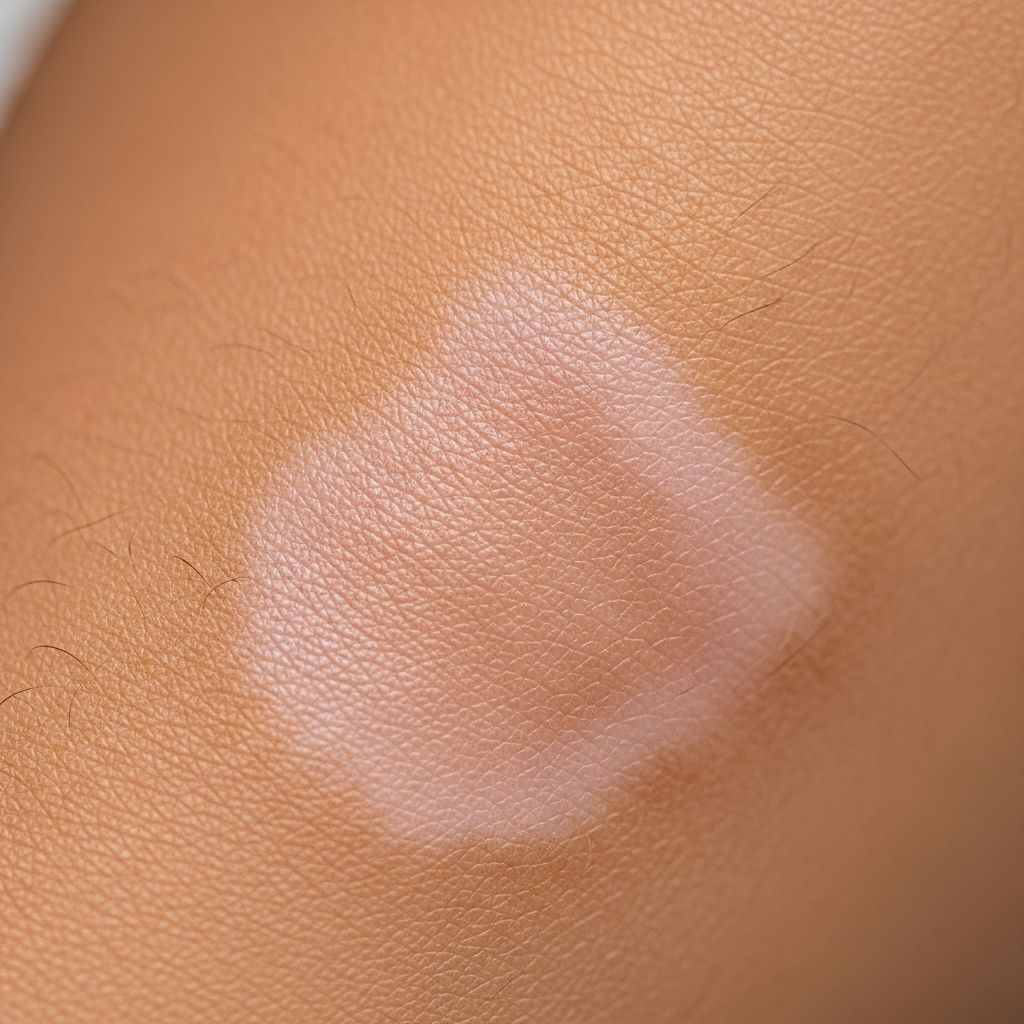
Achromic naevus, also known as naevus depigmentosus or hypochromic naevus, is a congenital hypopigmented birthmark that results from an abnormal clone of melanocytes with impaired ability to transfer melanosomes to keratinocytes. This benign skin condition typically presents as a well-defined pale patch with distinctive morphological characteristics that differentiate it from other hypopigmented lesions. The lesion is harmless and non-progressive, though it remains permanently present throughout life.
Clinical Presentation and Features
Achromic naevus typically manifests during the neonatal period or early childhood as a flat, pale hypopigmented macule. The lesion presents with several characteristic clinical features:
- Well-defined pale patches that are typically several centimetres in diameter
- Irregular but well-defined borders with a characteristic serrated appearance
- Variable shape and size depending on the variant type
- Often surrounded by smaller hypopigmented macules resembling a splash of paint
- Hair color within the lesion appears normal with perifollicular pigmentation
- Normal pigmentation in surrounding skin with no hyperpigmented border
The lesion typically becomes apparent at birth or during early childhood, though in individuals with lighter skin tones, it may not become noticeable until later in childhood. The condition is neither progressive nor degenerative, maintaining stable appearance throughout life.
Clinical Variants
Achromic naevus presents in three distinct clinical variants, each with unique morphological characteristics:
- Localised variant — The most common presentation, appearing as isolated well-defined pale patches, typically on the trunk, neck, face, and proximal extremities
- Segmental variant — Presents in a dermatomal or segmental distribution pattern, often unilateral
- Linear or whorled variant — Follows Blaschko’s lines, creating linear or spiral patterns across the skin surface
The localised variant accounts for the majority of achromic naevus cases and is the most frequently encountered presentation in clinical practice.
Dermoscopic Features and Findings
Dermoscopy plays a crucial diagnostic role in evaluating achromic naevus. The characteristic dermoscopic appearance includes:
- White structureless areas lacking pigmentation
- Irregular serrated borders with sharply demarcated edges
- Pseudopod-like extensions at the lesion margins
- Faint but normal reticular pigment background throughout the lesion
- Hairs of normal colour with intact perifollicular pigmentation
- Normal pigmentation in surrounding skin without hyperpigmented halo
These dermoscopic features collectively create a distinctive appearance that aids in clinical diagnosis and differentiation from other hypopigmented conditions. The faint reticular pattern observed on dermoscopy reflects remaining melanin within melanocytes, while the white structureless areas correspond to reduced melanin in epidermal keratinocytes.
Histopathological Characteristics
Microscopic examination of achromic naevus reveals specific histological findings that confirm the diagnosis. The histopathology demonstrates:
- Normal or slightly reduced number of melanocytes
- Significantly reduced melanosomes within keratinocytes
- Reduced melanin deposition in the epidermal layer
- Normal melanosome transfer mechanisms where functioning
- Preserved dermal architecture without inflammation
The fundamental pathology involves dysfunction in melanosome transfer rather than a deficiency in melanocyte number. This distinguishes achromic naevus from vitiligo and other depigmentary disorders where melanocytes may be entirely absent.
Diagnostic Approach
Clinical diagnosis of achromic naevus relies on several diagnostic techniques and tests:
Wood’s Lamp Examination
Unlike vitiligo, achromic naevus does not show enhanced contrast under Wood’s lamp examination. The lesion appears off-white rather than strikingly white, helping differentiate it from other hypopigmented conditions where the contrast becomes accentuated under ultraviolet light.
Related Stories



Diascopy Testing
The diascopy test yields negative results in achromic naevus, indicating that the hypopigmentation persists even when capillary blood is blanched. This finding helps distinguish achromic naevus from nevus anemicus, where diascopy typically produces a positive result due to vasomotor changes.
Clinical Examination
Careful morphological assessment of the lesion’s borders, distribution pattern, and associated features provides essential diagnostic information. The characteristic serrated borders and splash-like appearance of satellite lesions significantly aid in clinical recognition.
Differential Diagnosis
Several conditions must be differentiated from achromic naevus due to overlapping clinical presentations:
| Condition | Key Distinguishing Features | Diagnostic Tests |
|---|---|---|
| Vitiligo | Complete depigmentation with sharp borders, acquired onset, progressive course | Wood’s lamp shows enhanced contrast; may involve mucous membranes |
| Nevus Anemicus | Vasomotor-mediated pallor, blanches with diascopy, acquired anytime | Positive diascopy test; erythema returns on rubbing |
| Tinea Versicolor | Fine scaling, fungal infection history, variable pigmentation patterns | KOH preparation positive; responds to antifungal therapy |
| Pityriasis Alba | Fine scaling, inflammatory origin, variable morphology, seasonal variation | Responds to emollients and topical steroids |
| Ash-Leaf Spots (Tuberous Sclerosis) | Multiple hypopigmented macules in depigmentary pattern, systemic features present | Genetic testing; systemic evaluation for tuberous sclerosis |
Accurate differentiation requires comprehensive clinical evaluation, appropriate diagnostic testing, and understanding of the pathophysiological mechanisms underlying each condition.
Associated Conditions and Syndromes
While achromic naevus typically presents as an isolated benign lesion, it may occasionally be associated with systemic conditions. Achromic naevus syndrome encompasses presentations where achromic naevus occurs alongside central nervous system anomalies or other systemic features. These associated conditions warrant thorough clinical evaluation to identify any underlying neurological involvement or syndromic presentations that may require additional management or monitoring.
Management and Treatment Considerations
Achromic naevus is a benign, non-progressive condition that does not require treatment. The lesion poses no health risk and typically requires only reassurance and education of the patient and family regarding the benign nature of the condition. Several management approaches may be considered based on patient concerns:
- Observation and reassurance — The primary management approach for most patients
- Cosmetic camouflage — Topical makeup products can conceal the lesion if desired for aesthetic reasons
- Sunscreen application — The hypopigmented lesion may be more susceptible to sun damage, warranting protective measures
- Parental counseling — Education regarding the congenital nature, benign course, and permanent presence of the lesion
No medical or surgical intervention is indicated for achromic naevus, as the lesion does not pose health risks and typically does not cause physical discomfort or functional impairment.
Prognosis and Long-Term Outcomes
Achromic naevus demonstrates a benign clinical course throughout life. The lesion remains stable in size and appearance, showing no tendency toward malignant transformation or spontaneous resolution. As the child grows, the lesion enlarges proportionately with body size but maintains its characteristic morphological features. The permanent nature of achromic naevus necessitates realistic patient and family expectations regarding the lifelong presence of the lesion.
Frequently Asked Questions (FAQs)
Q: Is achromic naevus the same as vitiligo?
A: No. Achromic naevus is a congenital hypopigmented condition present since birth, while vitiligo is an acquired disorder with progressive depigmentation. Wood’s lamp examination, diascopy testing, and clinical presentation help differentiate these conditions.
Q: Will achromic naevus get worse over time?
A: No. Achromic naevus is a non-progressive lesion that remains stable throughout life. While it enlarges proportionately as the child grows, it does not worsen or spread to other areas.
Q: Can achromic naevus be treated or removed?
A: No medical or surgical treatment is indicated for achromic naevus, as it is a benign lesion. However, cosmetic camouflage products can conceal the lesion if desired for aesthetic purposes.
Q: Is achromic naevus associated with other health problems?
A: Achromic naevus is generally isolated and benign. Rarely, it may be associated with central nervous system anomalies as part of achromic naevus syndrome, warranting appropriate clinical evaluation in such cases.
Q: Can achromic naevus turn into skin cancer?
A: No. Achromic naevus is a benign congenital lesion with no risk of malignant transformation. It does not develop into skin cancer.
Q: Why is my child’s achromic naevus not visible under Wood’s lamp?
A: Achromic naevus does not enhance under Wood’s lamp examination because the hypopigmentation is not complete. Unlike vitiligo, the lesion contains residual melanin that does not create striking contrast under ultraviolet light.
References
- Dermoscopy of achromic naevus — DermNet NZ. Accessed January 28, 2026. https://dermnetnz.org/topics/dermoscopy-of-achromic-naevus
- Achromic naevus image — DermNet NZ. Accessed January 28, 2026. https://dermnetnz.org/imagedetail/8951-achromic-naevus
- Clinical profile of hypopigmentary and depigmentary disorders — Journal of Evolution of Medical and Dental Sciences. Accessed January 28, 2026. https://jemds.com
- Nevus Depigmentosus (Achromicus) Picture Image on RxList.com — RxList. Accessed January 28, 2026. https://www.rxlist.com/collection-of-images/nevus_depigmentosus_achromicus_picture/pictures.htm
- Basics of Dermoscopy for Beginners — International Journal of Professional Gynaecology and Dermatology. Accessed January 28, 2026. https://ijpgderma.org/basics-of-dermoscopy-for-beginners/
Similar Articles








Read full bio of medha deb