Aciclovir Cream (Lipsore, Virasorb, Zovirax)
Effective antiviral cream for treating cold sores and genital herpes: usage, benefits, and precautions explained.
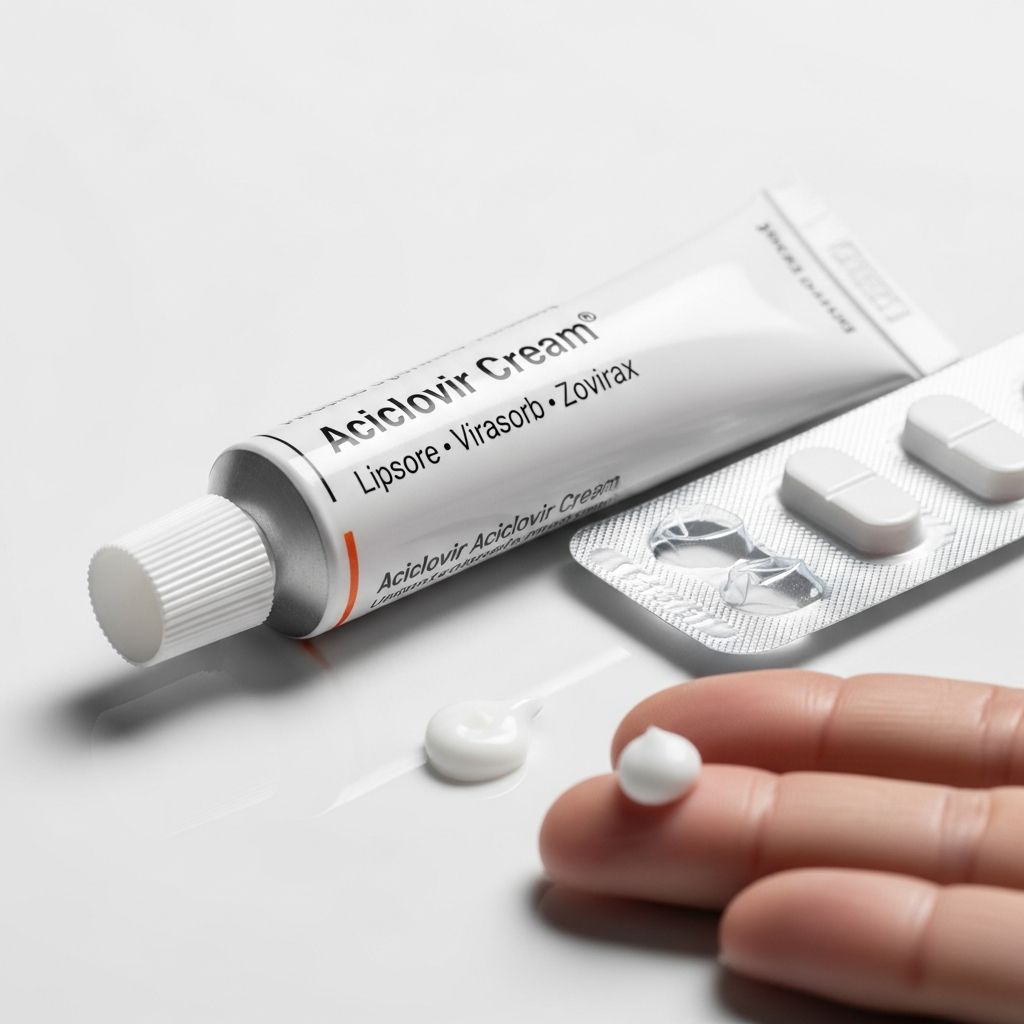
Aciclovir cream is an antiviral medication used to treat cold sores and genital herpes infections caused by the herpes simplex virus. Available on prescription or over-the-counter for cold sores, it helps reduce symptom severity and duration when applied early.
About aciclovir cream
| Type of medicine | An antiviral cream |
|---|---|
| Used for | Treatment of cold sores and genital herpes |
| Also called | Acyclovir (in US); Lipsore®; Virasorb®; Zovirax® |
| Available as | Cream |
Aciclovir is an antiviral agent that targets the herpes simplex virus (HSV), of which there are two main types: HSV-1, commonly causing cold sores on the lips or face, and HSV-2, often linked to genital herpes. The cream works by interfering with viral DNA replication, preventing the virus from multiplying in infected cells. It does not eradicate the virus from the body, as herpes simplex remains latent in nerve cells and can reactivate, but it effectively shortens outbreak duration and severity.
Clinical studies show that early application—at the first sign of tingling, itching, or redness—can reduce healing time by about half a day to a full day compared to no treatment. For cold sores, over-the-counter brands like Zovirax are widely available, while prescription is needed for genital herpes or in immunocompromised patients.
Immunocompromised individuals, such as those with HIV/AIDS or undergoing chemotherapy, may require oral aciclovir or higher doses alongside the cream, as topical treatment alone may be insufficient.
Before using aciclovir cream
Consult a healthcare professional before use if you have any underlying conditions or concerns. Key considerations include:
- Allergies: Inform your doctor if you have ever had an allergic reaction to aciclovir, valaciclovir, or ingredients like propylene glycol, which can cause skin irritation.
- Immune system issues: If your immune system is weakened (e.g., due to HIV, cancer treatment, or organ transplant), topical cream may not suffice; systemic antivirals are often needed.
- Pregnancy and breastfeeding: Aciclovir cream is generally considered safe topically during pregnancy or breastfeeding, as minimal systemic absorption occurs. However, discuss with your doctor.
- Other medications: Check for interactions with other topicals or orals. Avoid combining with other creams unless advised.
- Children: Suitable for children over 12 for cold sores; younger children should consult a pediatrician for dosing.[10]
Always read the patient information leaflet (PIL) supplied with the cream for full details on excipients and warnings.
How to apply aciclovir cream
Follow the manufacturer’s instructions closely for optimal results. Proper application maximizes efficacy while minimizing risks like spreading the virus.
- Wash hands thoroughly with soap and water before and after application to prevent viral spread.
- Clean and dry the affected area gently. Pat dry with a clean towel.
- Apply a thin layer of cream to cover the cold sore or genital lesion and surrounding skin. Use a clean finger, cotton bud, or applicator to dab, not rub, avoiding blister rupture.
- Frequency: Apply
five times daily
, approximately every 4 hours while awake (e.g., 7am, 11am, 3pm, 7pm, 11pm). Do not apply overnight. - Duration: Start at the first symptom (prodrome phase: tingling/itching). Use for at least 4-5 days; extend to 10 days if not healed. Stop after 10 days and consult a doctor.
- Leave uncovered: Do not bandage unless directed; allow to absorb.
Related Stories



If you forget a dose: Apply as soon as remembered, then resume schedule. Do not double dose.
For genital herpes, apply to external lesions only; avoid mucous membranes. Cream is not for internal use (mouth, vagina, eyes).
Getting the most from your treatment
To enhance effectiveness and prevent recurrence:
- Early intervention: The prodromal stage (tingling) is ideal; efficacy drops if blisters fully form.
- Hygiene practices: Avoid touching sores; wash hands frequently. Do not kiss or share utensils during outbreaks to prevent transmission.
- Sun protection: UV exposure triggers outbreaks; use lip balm with SPF 30+.
- Stress and triggers: Manage stress, illness, or fatigue, common triggers.
- Recurrences: Cream treats symptoms but doesn’t prevent future episodes. Frequent outbreaks (>6/year) may warrant oral suppressive therapy.
Monitor progress: Symptoms should improve within 4-5 days. Full healing typically occurs in 7-10 days with treatment.
Side-effects
Aciclovir cream is well-tolerated, with low systemic absorption. Most effects are mild and local.
Common side effects
- Dry or flaking skin
- Burning, stinging, or itching at application site (usually transient)
- Skin redness or irritation
These affect up to 1 in 10 users and resolve post-treatment.
Serious side effects (rare)
- Allergic reactions: Rash, swelling, difficulty breathing—seek emergency care.
- Eczema herpeticum: Widespread rash in those with eczema; requires urgent medical attention.
Report persistent or worsening symptoms to your doctor. Discontinue if severe irritation occurs.
How to store aciclovir cream
Store below 25C in a cool, dry place away from children. Do not use after expiry date. Discard unused portions after treatment course.
Frequently Asked Questions (FAQs)
Can I use aciclovir cream inside my mouth or eyes?
No. For external use only on lips, face, or genitals. Accidental eye contact requires immediate rinsing and medical advice.
Is aciclovir cream safe during pregnancy?
Topical use is low-risk due to minimal absorption; consult your doctor.
How quickly does it work?
Applied early, it reduces duration by ~1 day. Improvement seen in 2-4 days.
Can children use it?
Yes, for ages 12+ for cold sores; younger under medical supervision.[10]
What if the sore doesn’t heal after 10 days?
Stop use and see a doctor; may indicate bacterial infection like impetigo.
When not to use aciclovir cream / Speak to your doctor
Avoid if allergic to aciclovir or similar drugs. Seek advice for:
- First-time genital herpes
- Sores near eyes/mouth
- Immunosuppression
- No improvement after 10 days
- Spreading lesions, fever, or atypical symptoms
Differentiate from impetigo (yellow crusts), which needs antibiotics.
References
- Aciclovir cream (Lipsore, Virasorb, Zovirax) — Patient.info. 2023. https://patient.info/medicine/aciclovir-cream-lipsore-virasorb-zovirax
- Acyclovir Topical: MedlinePlus Drug Information — MedlinePlus (U.S. National Library of Medicine). 2024-01-15. https://medlineplus.gov/druginfo/meds/a606001.html
- Aciclovir Cream — SingHealth (Singapore Ministry of Health). 2023. https://www.singhealth.com.sg/medicine/aciclovir-cream
- Aciclovir Cream 5% for Cold Sores — NHS.uk (via DoctorFox). 2024. https://www.doctorfox.co.uk/cold-sore-treatments/aciclovir-cream.html
- Cold Sore Cream Patient Information Leaflet — Medicines.org.uk (MHRA). 2023-05-01. https://www.medicines.org.uk/emc/files/pil.9273.pdf
- How and when to take or use aciclovir — NHS.uk. 2024-02-20. https://www.nhs.uk/medicines/aciclovir/how-and-when-to-take-or-use-aciclovir/
Similar Articles








Read full bio of medha deb