Aciclovir Eye Ointment: Treatment Guide for Herpes Infections
Complete guide to using aciclovir eye ointment for herpes simplex virus eye infections.
What is Aciclovir Eye Ointment?
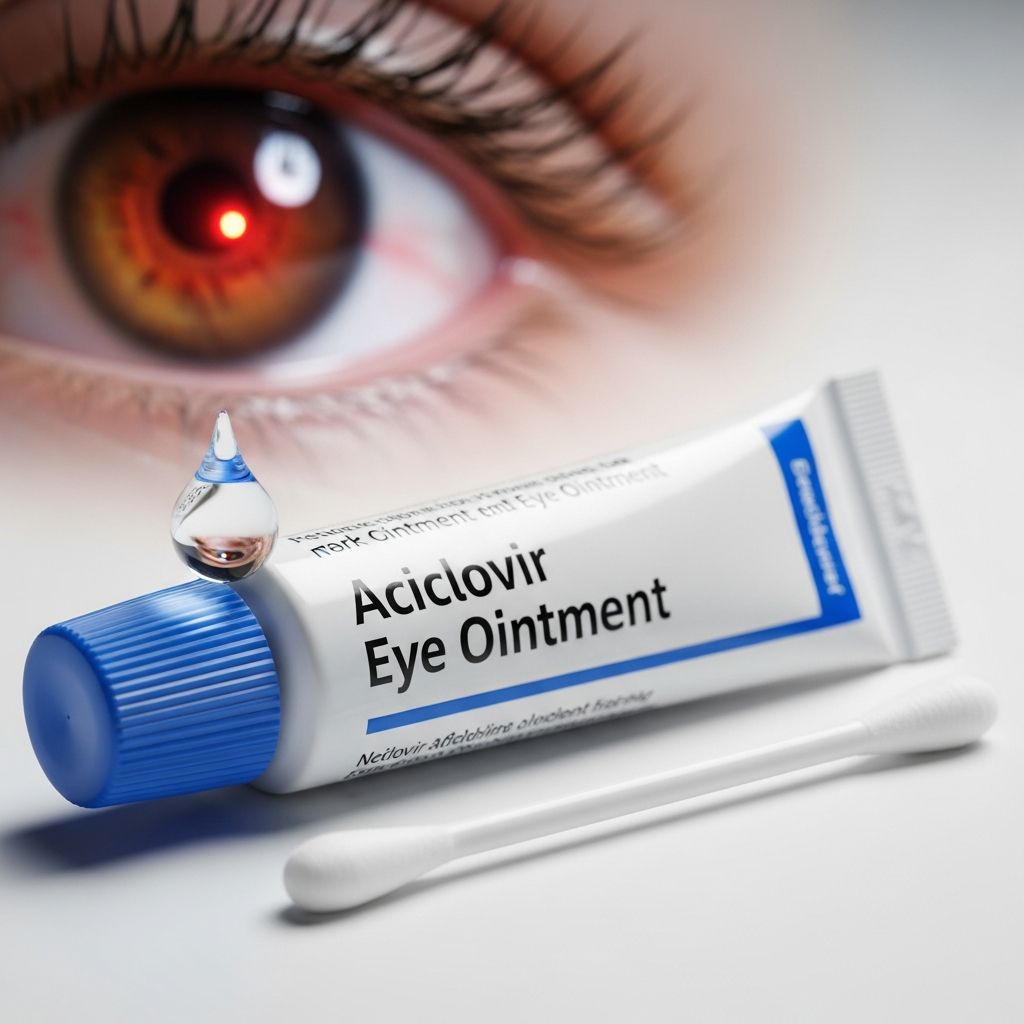
Aciclovir eye ointment is a medication used to treat eye infections caused by the herpes simplex virus (HSV). This antiviral medicine works by interfering with the growth and replication of the virus, helping your eye to heal naturally. The ointment is specifically designed for ocular (eye) use and comes in a topical formulation that is applied directly to the affected eye. Herpes simplex keratitis, also known as dendritic ulcers, is the primary condition treated with this medication. When prescribed by your healthcare provider, aciclovir eye ointment is an effective treatment for managing viral eye infections and preventing complications.
How Does Aciclovir Eye Ointment Work?
Aciclovir is an antiviral medication that targets the herpes simplex virus at the molecular level. The drug works by inhibiting viral DNA polymerase, an enzyme essential for the virus to replicate and spread. By disrupting this process, aciclovir prevents the virus from creating new copies of itself, thereby slowing the infection’s progression and allowing your immune system to clear the virus more effectively. This mechanism of action makes it particularly effective when used consistently and early in the course of infection. The ointment formulation allows the medication to remain in contact with the affected area for an extended period, maximizing its therapeutic effect on the cornea and surrounding tissues.
Indications and Uses
Aciclovir eye ointment is specifically indicated for treating acute herpetic keratitis caused by herpes simplex virus (HSV-1 and HSV-2). This condition involves inflammation of the cornea, the clear front surface of the eye, and can lead to dendritic ulcers—characteristic branching ulcers on the corneal surface. The medication is used in both adult and pediatric populations, with dosing adjustments made for children under 2 years of age as determined by a physician. Beyond acute infection, the medication may be used to prevent recurrent episodes in patients with a history of herpes simplex eye infections. Your doctor will determine whether aciclovir eye ointment is the appropriate treatment based on your specific diagnosis and medical history.
Before Using Aciclovir Eye Ointment
Before starting treatment with aciclovir eye ointment, it is essential to inform your doctor or pharmacist about several important factors:
- If you normally wear contact lenses, as these should not be used during treatment
- If you have ever had an allergic reaction to an eye product or any medication
- If you are pregnant or breastfeeding, although aciclovir is not known to be harmful to babies
- If you have any other eye conditions or are using other eye medications
- If you have a history of allergies to aciclovir or valaciclovir
This information helps your healthcare provider ensure that aciclovir eye ointment is safe and appropriate for your individual situation. Aciclovir eye ointment can be used during pregnancy and breastfeeding when administered at recommended doses, as no side effects are expected during pregnancy, for the fetus, or for newborn children.
Dosage and Application Instructions
Standard Dosage
The recommended dosage of aciclovir eye ointment is a 1 centimeter ribbon of ointment applied 5 times a day to the affected eye. For adults and children 2 years of age and older, this dosing schedule should be maintained until the eye heals, followed by a reduction to 3 times daily for an additional 7 days. The doses should be spaced evenly throughout the day at approximately 4-hour intervals. A suggested dosing schedule is 7:00 AM, 11:00 AM, 3:00 PM, 7:00 PM, and 11:00 PM. For children younger than 2 years of age, the dose must be determined by a physician.
Step-by-Step Application Instructions
Proper application technique is crucial for the effectiveness of aciclovir eye ointment:
Related Stories



- Wash your hands thoroughly with soap and water before application
- Gently pull down your lower eyelid and tilt your head back
- Hold the tube with the nozzle close to your eye
- Gently squeeze approximately 1 centimeter of ointment into the space between your lower lid and your eye (the lower conjunctival sac)
- Close your eye for a few minutes to allow the ointment to spread
- Rotate your eyeball to ensure the ointment is properly distributed across the eye surface
It is essential that you apply aciclovir eye ointment during the day in regular intervals to ensure successful treatment. Try not to miss any doses, but if you do forget, apply the ointment as soon as you remember. Do not ‘double up’ the amount of ointment to make up for a missed dose.
Treatment Duration
Continue using the ointment 5 times daily until your symptoms have completely resolved, and then for at least another 3 days afterward. This extended treatment period is crucial to ensure that all virus infecting your eye is eliminated and to prevent your symptoms from returning. After the inflammation of the cornea has healed, treatment should be continued for at least 3 days, with some formulations recommending continuation for up to 14 days or at least 3 days after healing is completed, whichever is shorter.
Vision and Safety Considerations
Temporary Vision Impairment
Eye ointments can cause blurred vision when first applied. This is a normal and temporary effect that typically resolves within a few minutes as you blink and move your eye. Due to its nature, aciclovir eye ointment may cause temporary vision impairment, so special care should be taken when driving motor vehicles, working without a secure hold, or operating machinery. Do not drive, cycle, or use any tools or machinery until your vision is completely clear again.
Contact Lens Considerations
If you normally wear contact lenses, use glasses instead while you are using aciclovir eye ointment. This is because some medicines or preservatives in eye ointments can build up in contact lenses and may damage them. It is recommended that you wait at least 24 hours after your last use of the ointment before you put your lenses back in again.
Possible Side Effects
Common Side Effects
The following side effects may occur but typically do not require cessation of treatment:
| Side Effect | Description | Management |
|---|---|---|
| Mild stinging or burning | May occur immediately after application | Typically passes quickly and does not require treatment |
| Blurred vision | Temporary vision impairment after application | Ensure clear vision before driving or using machinery |
| Irritation or photophobia | Eye irritation or light sensitivity (superficial punctate keratopathy) | Heals immediately and does not usually require stopping treatment |
| Swollen or runny eyes | Mild inflammation of the eye surface | Speak with your doctor if troublesome |
Uncommon Side Effects
Uncommon side effects that may affect up to 1 in 100 people include transient mild stinging or burning occurring immediately following application and swollen, runny eyes (conjunctivitis). These effects are generally mild and temporary.
Allergic Reactions
Serious allergic reactions are rare but possible. Seek immediate medical attention if you experience rash, itching or hives on your skin, swelling of your face, lips, tongue or other parts of your body, shortness of breath, wheezing or trouble breathing, or unexplained fever with dizziness. If you experience any other symptoms that you think may be due to the eye ointment, speak with your doctor or pharmacist for further advice.
What to Do If You Miss a Dose
If you forget to apply a dose of aciclovir eye ointment, apply it as soon as you remember. However, do not double the amount of ointment to make up for a missed dose. Simply continue with your regular dosing schedule. It is important to maintain consistent dosing intervals throughout the day to ensure the medication remains effective in controlling the viral infection.
When to Seek Medical Advice
Contact your doctor if your symptoms do not improve, and especially if they become worse. You should also arrange to see your doctor as soon as possible if you develop concerning symptoms during treatment. Regular follow-up appointments may be recommended to monitor your progress and ensure the infection is resolving appropriately. If you develop eye pain, vision changes, or signs of allergic reaction, seek medical attention promptly.
Frequently Asked Questions
Q: Can I use aciclovir eye ointment while wearing contact lenses?
A: No, contact lenses should not be worn while using aciclovir eye ointment. Some ingredients in the ointment can build up on contact lenses and damage them. Wear glasses instead and wait at least 24 hours after your last application before reinsetting your lenses.
Q: Is aciclovir eye ointment safe during pregnancy?
A: Yes, aciclovir eye ointment can be used during pregnancy and breastfeeding when used at recommended doses, as no side effects are expected for the mother, fetus, or newborn child. However, always inform your doctor if you are pregnant or breastfeeding.
Q: How long should I continue using the ointment after my symptoms improve?
A: Continue using aciclovir eye ointment for at least 3 days after your symptoms have completely resolved. This ensures all virus is eliminated and prevents the infection from returning. Some formulations recommend up to 14 days of continued treatment.
Q: What should I do if I experience blurred vision?
A: Blurred vision is a normal temporary effect of eye ointment. Blink several times to help clear your vision. Do not drive, cycle, or use machinery until you can see clearly again.
Q: Can I use aciclovir eye ointment for other types of eye infections?
A: Aciclovir eye ointment is specifically indicated for herpes simplex keratitis and infections caused by herpes simplex virus (HSV-1 and HSV-2). Do not use it for other types of eye infections unless directed by your doctor, as it may not be effective for bacterial or fungal infections.
Q: What is the recommended dosing schedule?
A: The standard dosing schedule is 5 times daily at approximately 4-hour intervals, with suggested times of 7:00 AM, 11:00 AM, 3:00 PM, 7:00 PM, and 11:00 PM. Your doctor may adjust this schedule based on your individual needs.
References
- Acyclovir (ophthalmic route) – Side effects & dosage — Mayo Clinic. 2025. https://www.mayoclinic.org/drugs-supplements/acyclovir-ophthalmic-route/description/drg-20461331
- Aciclovir Agepha 30 mg/g eye ointment – Patient Information Leaflet — Medicines.org.uk (UK Medicines Information). 2025. https://www.medicines.org.uk/emc/product/12988/pil
- Aciclovir eye ointment — Patient.info. 2025. https://patient.info/medicine/aciclovir-eye-ointment-2
- How and when to take or use aciclovir — NHS (National Health Service). 2025. https://www.nhs.uk/medicines/aciclovir/how-and-when-to-take-or-use-aciclovir/
- Xorox (Aciclovir) 30 mg/g Eye Ointment Tube – Product Information — NPS MedicineWise (National Prescribing Service Medicine Wise). 2025. https://www.nps.org.au/medicine-finder/xorox-aciclovir-30-mg-g-eye-ointment-tube
- Acyclovir Ophthalmic: MedlinePlus Drug Information — MedlinePlus (U.S. National Library of Medicine). 2025. https://medlineplus.gov/druginfo/meds/a619029.html
Similar Articles








Read full bio of Sneha Tete