Acitretin: Oral Retinoid Treatment for Severe Psoriasis
Comprehensive guide to acitretin: mechanism, dosage, efficacy, and safety for severe psoriasis management.
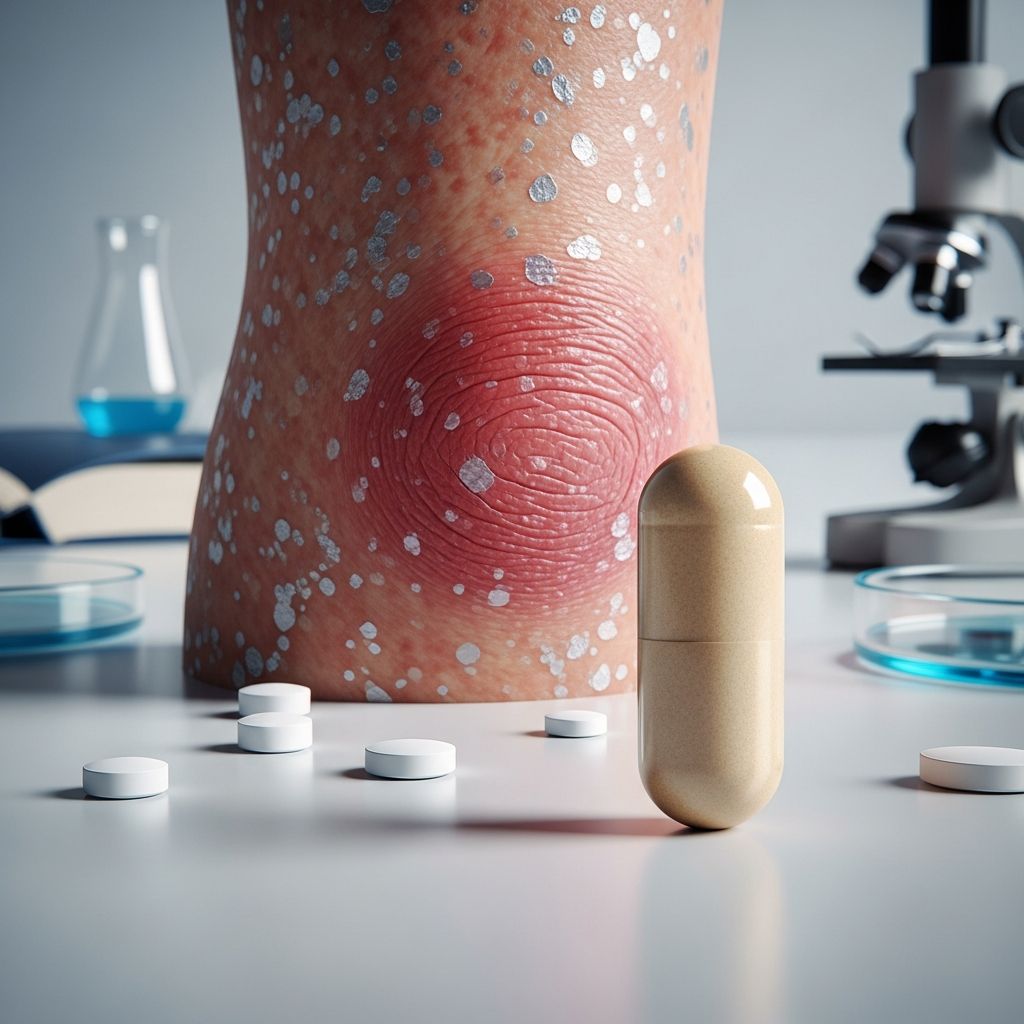
Acitretin is an oral retinoid, which is a synthetic derivative of vitamin A, primarily used to treat severe psoriasis and various other dermatological conditions characterized by abnormal skin cell growth and keratinization. As the only systemic retinoid FDA-approved specifically for treating both pustular and severe plaque-type psoriasis, acitretin represents an important therapeutic option in the dermatologist’s clinical arsenal. The medication is available under trade names including Neotigason™ and Novatretin® and comes in 10 mg and 25 mg capsule formulations.
Classification and Background
Acitretin belongs to a group of medications called retinoids, which are closely related to vitamin A and work by modulating cellular growth processes in the skin. The drug is a metabolite of an earlier antipsoriatic retinoid called etretinate, which is no longer widely available in clinical practice. Compared to its predecessor etretinate, acitretin demonstrates a wider therapeutic index and improved pharmacokinetic profile, making it more suitable for clinical use. The medication is relatively water-soluble and possesses a half-life of approximately 50 to 60 days, allowing for sustained therapeutic effects.
Mechanism of Action
Acitretin exerts its therapeutic effects through a sophisticated mechanism involving gene regulation and cellular differentiation. The drug acts at cytosolic proteins and intranuclear receptors that are part of the steroid-thyroid hormone superfamily. Specifically, the metabolites of acitretin bind to retinoic acid receptors (RARs), which leads to alteration of gene transcription through response elements, ultimately producing antiproliferative and antiinflammatory effects.
In psoriasis and other disorders of keratinization, acitretin operates through several complementary mechanisms:
- Normalizes epidermal cell proliferation, differentiation, and cornification, reversing the accelerated epidermopoiesis characteristic of psoriasis
- Decreases the release of leucotrienes and dihydroeicosatetraenoic acid products
- Inhibits neutrophil chemotaxis into the epidermis
- Interferes with the esterification and incorporation of arachidonic acid into nonphosphorus lipids in human keratinocytes
- Causes inhibition of ornithine decarboxylase, thereby decreasing the synthesis of polyamines
- Inhibits keratinocyte production of vascular endothelial growth factor
- Normalizes keratinocyte differentiation in the epithelium and reduces expression of proinflammatory cytokines including interleukin-6 (IL-6), migration inhibitory factor-related protein-8 (MRP-8), and interferon-gamma (IFN-γ)
Absorption and Administration
The absorption of acitretin is significantly influenced by dietary factors, particularly the presence of fat. For optimal bioavailability, acitretin should ideally be taken with a fatty meal to enhance absorption through the gastrointestinal tract. This consideration is crucial for ensuring consistent therapeutic levels and optimal clinical outcomes. The medication is available in 10 and 25 mg capsules, allowing for flexible dosing regimens tailored to individual patient needs.
Dosage and Treatment Duration
The response to acitretin is dose-dependent, with higher doses generally yielding greater and more rapid improvement in clinical symptoms. However, adverse effects are also dose-dependent, which often prevents the use of higher doses and necessitates careful dose titration. The standard approach to acitretin therapy involves the following dosing strategy:
- Initial dose: 25 or 30 mg daily for 2-4 weeks
- Dose escalation: Gradual dose escalation has been shown to be the most effective approach, allowing gradual onset of tolerance to side effects
- Optimal maintenance dose: 25-50 mg per day for most patients
- Maximum recommended dose: 75-100 mg daily
- Maintenance therapy: Recommended dose of 20-50 mg daily, which may be reduced to as low as 10-25 mg daily or 25 mg on alternate days
- Weight-based dosing: Approximately 0.25-1 mg per kg body weight per day
Related Stories



Clinical response to acitretin is gradual and peaks at approximately 3-6 months of continuous therapy. Improvement typically begins about two weeks after starting treatment and reaches maximum benefit after about twelve weeks. The affected skin either peels off or gradually clears depending on the specific condition being treated.
Clinical Efficacy
Acitretin demonstrates significant therapeutic efficacy across various psoriasis phenotypes and other dermatological conditions. A response is noted in more than half of treated patients, making it a reliable treatment option for difficult-to-manage cases. The drug is particularly useful for several specific types of psoriasis:
- Pustular psoriasis: First-line therapy with excellent results, particularly the palmoplantar form
- Erythrodermic psoriasis: Effective for this severe, widespread form of the disease
- Psoriasis affecting hands and feet: Particularly valuable due to its efficacy in hyperkeratotic variants
- Generalized pustular psoriasis: Produces rapid clinical response with clearing of lesions within 10 days; effective in 84% of patients
Beyond psoriasis, acitretin has established efficacy in treating numerous other dermatological conditions. The drug is effective in keratinization disorders, including severe congenital ichthyosis and severe Darier disease. Due to its ability to regulate keratinization, acitretin should be considered in forms of psoriasis in which the desquamative component predominates over the inflammatory or infiltrative component. It is also utilized as an antineoplastic agent and for cancer prophylaxis in specific clinical contexts.
Importantly, acitretin does not produce satisfactory results for psoriatic arthritis, and it lacks a direct immunosuppressive effect. However, its ability to achieve very long-term response with continued therapy and its capacity to avoid immunosuppression make it valuable for extended treatment strategies involving combination, rotation, or sequential therapy approaches.
Approved and Off-Label Uses
Acitretin has several FDA-approved indications and a broad range of off-label applications in dermatology. Approved uses include severe extensive psoriasis resistant to other therapies, palmoplantar pustular psoriasis, severe congenital ichthyosis, and severe Darier disease. Off-label uses demonstrate the drug’s versatility in treating difficult-to-manage dermatologic diseases, including lichen planus, lichen sclerosus, discoid lupus erythematosus, and prevention of cutaneous malignancies in organ transplant patients.
Acitretin is favored as first-line therapy in cutaneous lichen planus and may be particularly beneficial in the hyperkeratotic variant of lichen planus due to its modulating effects on keratinization. The medication’s broad therapeutic applications underscore its importance in the dermatologist’s therapeutic toolkit.
Relapse and Maintenance Therapy
Relapse may occur within 2-6 months after discontinuing acitretin therapy, necessitating maintenance therapy in most patients. The maintenance approach should be based on clinical efficacy and patient tolerability, with doses typically ranging from 20-50 mg daily and potentially reduced to as low as 10-25 mg daily or 25 mg on alternate days. This gradual tapering approach helps minimize withdrawal effects while maintaining disease control, and reintroduction of the drug typically restores the same efficacy when relapse occurs.
Special Populations and Considerations
An important consideration distinguishing acitretin from some other systemic retinoids concerns its effects on reproductive function and offspring. Acitretin does not affect male sexual function or offspring, so males of all ages can safely take the medication without concerns about transmission of teratogenic effects to future generations. This characteristic makes acitretin a more suitable option for male patients requiring long-term retinoid therapy.
Regulatory Status and Funding
In New Zealand, acitretin is available with a prescription and requires Special Authority application for funding purposes. Since March 2009, PHARMAC (Pharmaceutical Management Agency) funding in New Zealand requires Special Authority application by a dermatologist or vocationally registered general practitioner, with restrictions applying to its use. This regulatory framework ensures appropriate patient selection and monitoring while controlling healthcare expenditure.
Monitoring and Safety Considerations
Due to its potential for adverse effects, baseline blood work should be obtained before initiating acitretin therapy and repeated every three months during treatment. Particular monitoring is essential for women of childbearing potential and for those who consume alcohol, as these factors significantly influence the risk profile of acitretin therapy. The medication’s teratogenic potential is a serious concern requiring adequate monitoring, especially in higher-risk groups. Acitretin can cause severe birth defects in pregnant individuals, necessitating strict contraception protocols for women of reproductive age.
Despite being associated with a wide range of side effects, the benefits of acitretin use often outweigh the adverse effects in appropriately selected patients. However, careful patient selection and comprehensive counseling regarding the medication’s benefits and risks are pivotal to successful therapy.
Frequently Asked Questions
Q: How quickly does acitretin work for psoriasis?
A: Improvement begins about two weeks after starting treatment, with maximum clinical response occurring after approximately twelve weeks of continuous therapy.
Q: Can males take acitretin without concerns about offspring?
A: Yes, acitretin does not affect male sexual function or offspring, so males of all ages can safely take this medication without concerns about transmitting teratogenic effects to future generations.
Q: What is the maximum recommended dose of acitretin?
A: The maximum recommended dose is 75-100 mg daily, though optimal maintenance doses for most patients range from 25-50 mg per day.
Q: Why is acitretin taken with fatty meals?
A: Acitretin requires fat for optimal absorption through the gastrointestinal tract, so taking it with a fatty meal enhances bioavailability and ensures consistent therapeutic levels.
Q: What happens if psoriasis relapses after stopping acitretin?
A: Relapse may occur within 2-6 months of discontinuation, and maintenance therapy is typically required based on clinical efficacy and tolerability. Reintroduction of the drug generally restores the same therapeutic efficacy.
Q: Is acitretin effective for psoriatic arthritis?
A: No, acitretin is not effective for psoriatic arthritis, and this condition represents a relative limitation in the drug’s therapeutic applications.
Q: What monitoring is required during acitretin therapy?
A: Baseline blood work should be obtained before starting treatment and repeated every three months during therapy. Special monitoring is essential for women of childbearing potential and individuals consuming alcohol.
Q: How does acitretin compare to etretinate?
A: Acitretin has a wider therapeutic index and improved pharmacokinetic profile compared to etretinate, making it more suitable for clinical use, though both drugs have similar therapeutic profiles, efficacy, and toxicity levels.
References
- Acitretin in Dermatology — International Journal of Dermatology, Venereology and Leprology. 2024. https://ijdvl.com/acitretin-in-dermatology/
- Acitretin: Drug Information — DermNet New Zealand. 2025. https://dermnetnz.org/topics/acitretin
- New Zealand Data Sheet – Novatretin Capsules — Medsafe (New Zealand Medicines and Medical Devices Safety Authority). 2024. https://medsafe.govt.nz/profs/Datasheet/n/novatretincap.pdf
- Acitretin — Healthify (Health Information and Quality Authority, New Zealand). 2025. https://healthify.nz/medicines-a-z/a/acitretin
- Acitretin for Psoriasis: Therapeutic Cheat Sheet — Next Steps in Dermatology. 2024. https://nextstepsinderm.com/derm-topics/acitretin-for-psoriasis-therapeutic-cheat-sheet/
- Guidelines for the Use of Acitretin in Psoriasis — Actas Dermo-Sifiliográficas. 2013. https://www.actasdermo.org/en-guidelines-for-use-acitretin-in-articulo-S1578219013001479
- Acitretin in Dermatology: A Review — Journal of Drugs in Dermatology. 2011. https://jddonline.com/articles/acitretin-in-dermatology-a-review-S1545961611P0772X
Similar Articles








Read full bio of Sneha Tete