ACL Injury or Tear: Causes, Symptoms, and Treatment
Complete guide to ACL injuries: understand symptoms, diagnosis, and treatment options for knee stability.
Understanding ACL Injuries and Tears
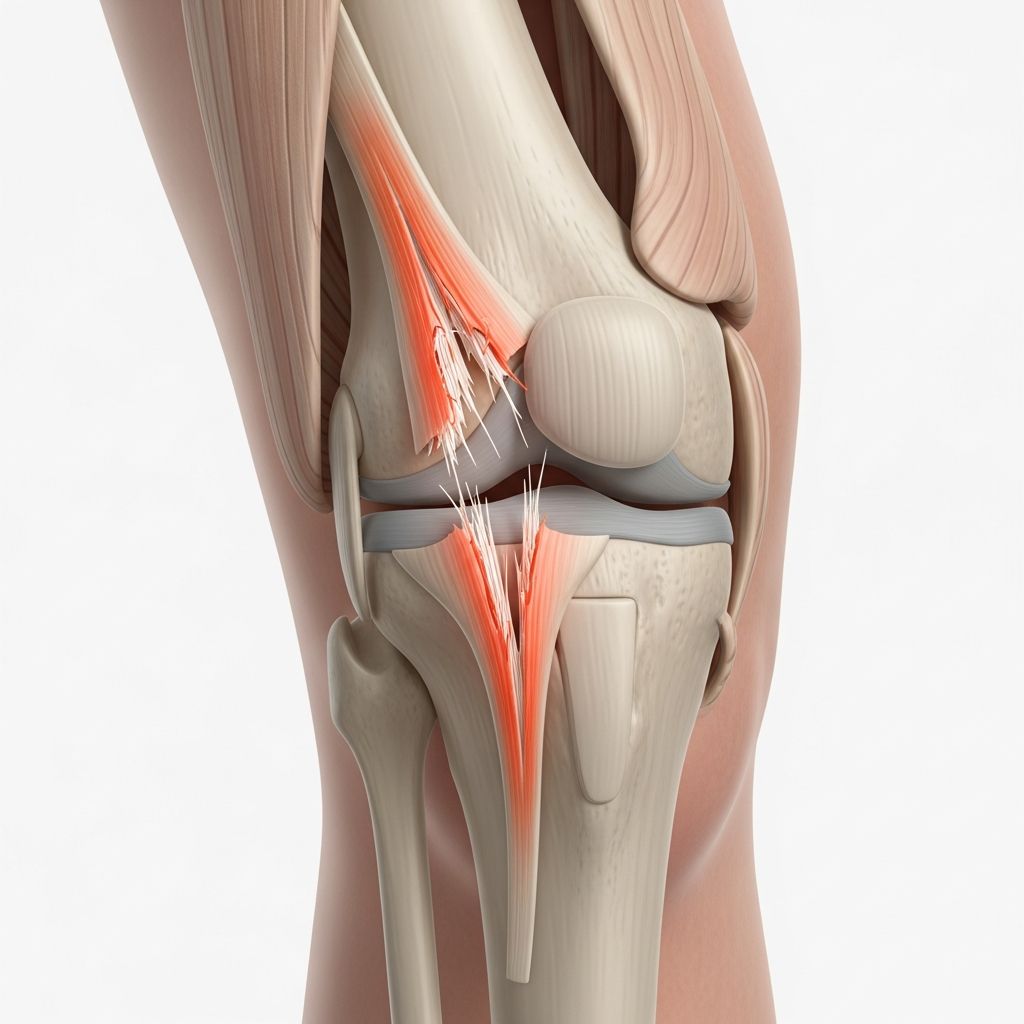
The anterior cruciate ligament (ACL) is one of the most important structures in the knee, serving as a crucial stabilizer for the joint. An ACL injury or tear occurs when this ligament is stretched or torn, resulting in pain, swelling, and loss of knee stability. ACL injuries are among the most common ligament injuries in the knee and frequently affect athletes participating in high-impact sports such as football, soccer, basketball, and tennis. Understanding the nature of ACL injuries, their symptoms, and available treatment options is essential for anyone who has suffered this injury or wishes to prevent it.
What Is the Anterior Cruciate Ligament?
The anterior cruciate ligament is one of four primary ligaments that stabilize the knee joint. Located deep within the knee, the ACL connects the thighbone (femur) to the shinbone (tibia) and plays a vital role in controlling the forward and rotational movement of the knee. When functioning properly, the ACL prevents excessive forward motion of the tibia relative to the femur, allowing for smooth and stable knee movement during activities like running, jumping, and sudden changes in direction. The strength and integrity of the ACL are essential for maintaining proper knee function and preventing long-term complications.
Causes of ACL Injuries
ACL injuries typically result from sudden trauma or high-impact stress on the knee. Common scenarios that lead to ACL injuries include:
- Sudden stops or changes in direction while running
- Direct impact to the knee from contact sports
- Landing awkwardly from a jump
- Overextending the knee beyond its normal range of motion
- Twisting movements that place excessive rotational stress on the joint
Athletes in sports requiring rapid directional changes, such as basketball, football, and soccer, face significantly higher risks of ACL injuries. Women athletes have a notably higher incidence of ACL injuries compared to their male counterparts in similar sports, though the exact causes of this difference remain an area of ongoing research.
Symptoms of ACL Injury
Recognizing the symptoms of an ACL injury is crucial for seeking timely medical attention. Most individuals experience characteristic signs immediately following the injury.
Immediate Symptoms
The moment an ACL injury occurs, patients typically report hearing and feeling a distinctive popping sensation in the knee. This is often accompanied by sudden, deep knee pain that can range from moderate to severe. Approximately 70 percent of ACL injuries result in immediate swelling due to bleeding within the knee joint, a condition known as hemarthrosis. This rapid swelling can significantly limit mobility and range of motion within the first few hours after injury.
Secondary Symptoms
Beyond the immediate signs, individuals with ACL injuries commonly experience:
- Sensation of the knee giving way or feeling unstable
- Difficulty walking or bearing weight on the affected leg
- Reduced knee range of motion
- Tenderness along the joint line
- Continued swelling that may persist for days or weeks
- Discomfort or pain when attempting to perform normal daily activities
Some patients find that initial swelling and pain subside on their own over time, which may create a false sense of recovery. However, attempting to return to sports or high-demand activities without proper treatment often results in the knee becoming unstable, potentially causing additional damage to surrounding structures such as the meniscus or cartilage.
Related Stories



Diagnosis of ACL Injuries
Proper diagnosis of an ACL injury requires a comprehensive evaluation by a healthcare professional, typically an orthopedic surgeon or sports medicine physician.
Physical Examination
During the physical examination, the physician will perform several specific tests to assess ACL integrity. The Lachman test, anterior drawer test, and pivot shift test are considered the gold standard diagnostic maneuvers for ACL injuries. During these tests, the doctor applies gentle pressure to evaluate the stability of the tibia relative to the femur and assesses for abnormal movement patterns.
The clinician will also inspect the knee for swelling, check for range of motion limitations, assess for tenderness along the joint line, and examine the patient’s gait for any abnormal movement patterns such as quadriceps avoidance gait, where patients avoid full active knee extension.
Imaging Studies
While physical examination is often sufficient for diagnosis, imaging studies provide detailed visualization of the injury and help identify associated damage:
- X-rays: Primarily used to rule out bone fractures or other bony abnormalities that may accompany the ligament injury
- MRI (Magnetic Resonance Imaging): Provides detailed images of soft tissue structures, allowing for precise assessment of the ACL tear extent and detection of associated injuries to the meniscus, cartilage, or other ligaments
MRI is particularly valuable as it can identify both primary signs such as edema, increased signal intensity on T2-weighted images, and complete discontinuity of the ACL fibers, as well as secondary signs associated with the injury.
Treatment Options for ACL Injuries
Treatment for ACL injuries must be individualized based on the patient’s age, activity level, functional demands, severity of the injury, and associated injuries to other knee structures. Both surgical and non-surgical approaches are viable options depending on these factors.
Initial First-Aid Care
Immediately following an ACL injury, proper first-aid management can significantly reduce pain and inflammation. The RICE protocol remains the foundation of acute treatment:
- Rest: Cease the activity that caused the injury and limit weight-bearing on the affected leg. Patients may benefit from using crutches or a wheelchair during the acute phase
- Ice: Apply ice to the knee for 20 minutes at a time, repeated every two hours while awake during the first 48-72 hours
- Compression: Wrap the knee with an elastic bandage or compression wrap to control swelling
- Elevation: Prop the knee up on pillows to promote fluid drainage and reduce swelling
Over-the-counter nonsteroidal anti-inflammatory medications such as ibuprofen can help manage pain and reduce inflammation during this acute phase.
Non-Surgical Treatment
Non-operative management is appropriate for patients with partial ACL tears, reduced ACL laxity, or those with low functional demands and activity levels. This approach is also suitable for patients who participate in sports without cutting or pivoting activities. Non-surgical treatment typically consists of:
- Continuation of RICE therapy protocols
- Anti-inflammatory medications as directed by the physician
- Protective bracing to provide external knee stability
- Structured physical therapy lasting approximately 12 weeks
The rehabilitation process begins with restoring full range of motion, then progressively advances to strengthen the quadriceps, hamstrings, hip abductors, and core musculature. Physical therapy is essential to restore dynamic stability to the knee and prevent compensation injuries in other areas.
However, non-operative management carries an increased risk of meniscal and cartilage damage due to repeated episodes of knee instability, particularly in patients with high-demand activities, heavy manual labor, or participation in sports involving jumping, cutting, or side-to-side movements.
Surgical Treatment
Surgical intervention is recommended for patients with complete ACL tears, high functional demands, participation in cutting or pivoting sports, or those with associated injuries to other knee structures. Two main surgical approaches exist:
ACL Repair: In select cases with acute injuries and good tissue quality, the ligament may be directly repaired. However, this approach is less common than reconstruction.
ACL Reconstruction: This is the more common surgical approach, involving replacement of the torn ligament with a graft. The graft can be sourced from the patient’s own tissue (autograft), such as the patellar tendon, hamstring tendons, or quadriceps tendon, or from donor tissue (allograft). The graft is secured in place using various fixation methods including interference screws for aperture fixation or cortical buttons for suspensory fixation.
Proper graft placement and tensioning are critical for optimal outcomes. The graft should ideally be fixed at 20 to 30 degrees of knee flexion to ensure anatomical positioning and maximum stability. Preconditioning of the graft before fixation can reduce stress relaxation by up to 50 percent.
Potential complications of surgical treatment include postoperative anterior knee pain (10-30 percent incidence), particularly with kneeling activities, patella fracture, patellar tendon rupture, and higher re-rupture rates in patients younger than 20 years old or when graft diameter is less than 8 millimeters.
Rehabilitation and Recovery
Regardless of treatment approach, comprehensive rehabilitation is essential for optimal outcomes. Following surgery or during conservative treatment, patients work with physical therapists to progressively restore knee function through structured exercises and activities. Early rehabilitation focuses on regaining full range of motion and reducing swelling, while later phases emphasize strength building and return to sport-specific activities.
The timeline for return to normal activities varies based on the treatment approach and individual healing rates. Most patients can return to light activities within 6 to 8 weeks, while return to sports typically requires 4 to 6 months following non-operative treatment or 6 to 12 months following surgical reconstruction.
Long-Term Considerations
Long-term outcomes following ACL injury depend significantly on the treatment approach selected and adherence to rehabilitation protocols. Patients with untreated complete ACL tears face an increased risk of chronic knee instability and accelerated development of knee arthritis. Those who undergo successful ACL reconstruction and complete comprehensive rehabilitation generally have favorable functional outcomes and can return to their desired activity levels.
Frequently Asked Questions
Q: How long does recovery from an ACL injury take?
A: Recovery time varies depending on treatment approach. Non-operative treatment typically requires 12 weeks of intensive rehabilitation, while surgical reconstruction generally requires 6 to 12 months for full return to sports activities.
Q: Can an ACL injury heal without surgery?
A: Yes, partial ACL tears and some complete tears in low-demand patients can be managed non-surgically with appropriate rest, rehabilitation, and bracing. However, surgery is often recommended for high-level athletes or those with complete tears and high functional demands.
Q: What activities should be avoided after an ACL injury?
A: Initially, avoid any activity involving cutting, pivoting, jumping, or heavy impact. Gradually progress activities under guidance of a healthcare provider and physical therapist as healing progresses.
Q: What is the risk of re-injury after ACL reconstruction?
A: Re-injury rates vary but are generally higher in younger patients and those who return to sports before adequate rehabilitation is complete. Proper rehabilitation significantly reduces this risk.
Q: Will I develop arthritis after an ACL injury?
A: Long-term studies show increased risk of knee arthritis, particularly in patients with untreated complete tears or those who experience repeat instability episodes. Proper treatment and rehabilitation can help mitigate this risk.
References
- Anterior Cruciate Ligament Knee Injury — National Center for Biotechnology Information (NCBI), U.S. National Library of Medicine. 2024. https://www.ncbi.nlm.nih.gov/books/NBK499848/
- Anterior Cruciate Ligament (ACL) Injuries — American Academy of Orthopaedic Surgeons (AAOS). 2024. https://orthoinfo.aaos.org/en/diseases–conditions/anterior-cruciate-ligament-acl-injuries/
- ACL Injury – Diagnosis and Treatment — Mayo Clinic. 2024. https://www.mayoclinic.org/diseases-conditions/acl-injury/diagnosis-treatment/drc-20350744
- ACL Injuries – Symptoms & Treatments — Massachusetts General Hospital, Department of Orthopaedics. 2024. https://www.massgeneral.org/orthopaedics/sports-medicine/conditions-and-treatments/anterior-cruciate-ligament-acl-injuries
- ACL Tear: Symptoms and Treatments for a Torn ACL — Hospital for Special Surgery (HSS). 2024. https://www.hss.edu/health-library/conditions-and-treatments/list/acl-tear
- ACL Injuries Causes, Symptoms, and Treatments — University of Pittsburgh Medical Center (UPMC). 2024. https://www.upmc.com/services/orthopaedics/conditions/acl-injury
- ACL Tear & Injury: Symptoms & Recovery — Cleveland Clinic. 2024. https://my.clevelandclinic.org/health/diseases/16576-acl-tear
Similar Articles








Read full bio of medha deb