ACL Tear: Symptoms, Treatment, and Recovery
Comprehensive guide to ACL tears: causes, symptoms, diagnosis, non-surgical and surgical treatments, recovery timelines, and prevention strategies for optimal knee health.
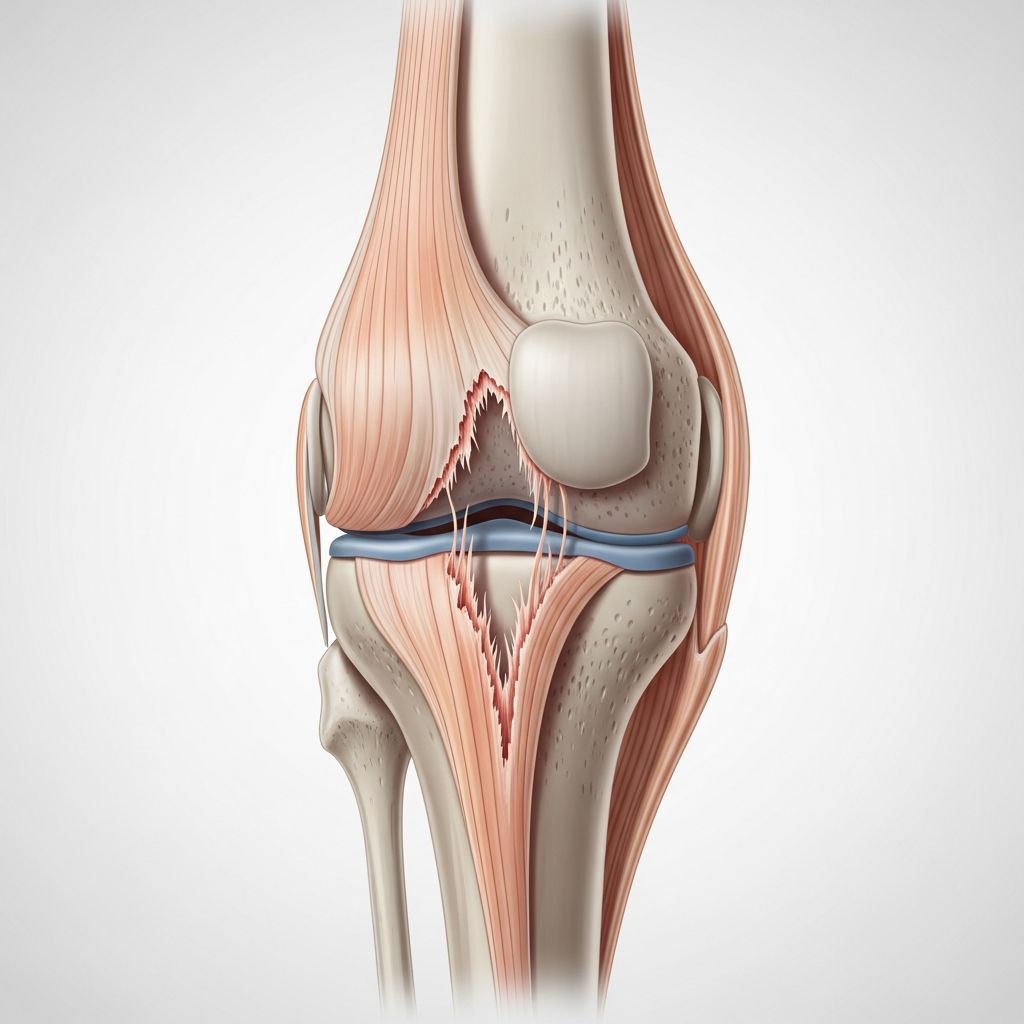
The anterior cruciate ligament (ACL) is a critical band of tissue that stabilizes the knee joint, preventing excessive forward movement of the tibia relative to the femur. An
ACL tear
occurs when this ligament is partially or completely ruptured, often during high-impact sports activities involving sudden stops, pivots, or directional changes. This injury is prevalent among athletes in soccer, basketball, skiing, and football, affecting both professionals and recreational players.Most ACL tears are complete ruptures, meaning the ligament fibers are fully torn, typically in the center. Partial tears, where only some fibers are damaged, are less common. Unlike minor sprains, a torn ACL does not heal on its own due to its poor blood supply, often necessitating intervention to restore knee stability.
What Causes an ACL Tear?
ACL injuries predominantly result from non-contact mechanisms, such as pivoting with the foot planted, sudden deceleration, or landing awkwardly from a jump. Contact injuries, like direct blows to the knee in football tackles, also contribute.
Key risk factors include:
- Sports involvement: Highest incidence in soccer, basketball, skiing, and football due to cutting, pivoting, and jumping.
- Biomechanics: Valgus knee position (inward collapse) with tibia translating anteriorly while the knee is flexed.
- Demographics: More common in females due to anatomical differences like wider pelvis and hormonal influences on ligament laxity; also rising in adolescents with open growth plates.
- Associated injuries: Often accompanies meniscal tears (lateral in acute cases, medial in chronic), MCL strains, or bone contusions.
When the tear happens, many report a loud popping sound, followed by immediate pain and swelling from bleeding into the joint (hemarthrosis).
Symptoms of an ACL Tear
Symptoms vary by tear severity but typically onset rapidly:
- Immediate sensations: Loud pop, sharp pain, and a feeling of instability.
- Swelling: Rapid onset within hours due to joint effusion.
- Instability: Knee buckling or giving way, especially during pivoting or directional changes.
- Functional limitations: Difficulty walking, climbing stairs, jumping, or cutting movements in complete tears (Grade 3).
- Pain location: Often felt on the outside and back of the knee.
Partial tears (Grade 1-2) may present milder symptoms: minimal instability, pain with activity, and some looseness without full rupture.
How Is an ACL Tear Diagnosed?
Diagnosis combines clinical evaluation, imaging, and specialized tests:
- History and physical exam: Patients describe the mechanism and symptoms. Key tests include Lachman (assesses anterior tibial translation; graded by mm displacement: Grade 1: 3-5mm, Grade 2: 5-10mm, Grade 3: >10mm), anterior drawer, and pivot-shift.
- Imaging: MRI confirms tear (primary sign: discontinuous ACL fibers), reveals bone bruises (lateral femoral condyle and posterior tibial plateau), Segond fractures, or associated injuries. X-rays rule out fractures.
- Differential diagnosis: Includes meniscal tears, MCL injuries, PCL tears, patellar dislocation, or tibial spine fractures.
Early diagnosis is crucial to prevent further damage like meniscal tears or chondral injuries.
Related Stories



ACL Tear Treatment Options
Treatment depends on tear grade, activity level, age, and associated injuries. Goals: restore stability, strength, and function.
Non-Surgical Treatment
Suitable for partial tears, low-demand patients (e.g., older adults, non-pivoting sports like cycling), or those with minimal instability:
- RICE protocol: Rest, Ice, Compression, Elevation for acute phase.
- Medications: NSAIDs for pain and inflammation.
- Physical therapy (PT): 12 weeks focusing on ROM, quadriceps/hamstring strengthening, hip/core stability. Bracing may aid stability.
- Outcomes: Many return to daily activities; however, chronic instability risks arthritis and meniscal damage.
Surgical Treatment: ACL Reconstruction
Recommended for active individuals, complete tears, or those with instability. Surgery replaces the torn ACL with a graft (autograft: patellar tendon, hamstring; allograft: donor tissue).
- Timing: Delayed 2-4 weeks post-injury to reduce swelling.
- Techniques: Arthroscopic, preserving growth plates in children.
- Post-op: Brace, crutches initially; PT starts day 1.
Pros and cons of graft types:
| Graft Type | Pros | Cons |
|---|---|---|
| Patellar Tendon Autograft | Strong, fast incorporation; good for athletes | Donor site pain, anterior knee pain |
| Hamstring Autograft | Less harvest morbidity, smaller incision | Slower healing, hamstring weakness risk |
| Allograft | No donor site issues, quicker recovery | Higher failure in young/active patients |
Recovery Timeline After ACL Tear or Surgery
Recovery is phased, emphasizing progressive loading:
- Weeks 0-2: Pain/swelling control, full extension, partial weight-bearing.
- Weeks 2-6: Full weight-bearing, ROM 0-135°, basic strengthening.
- Weeks 6-12: Advanced strengthening, balance, jogging.
- Months 3-6: Agility drills, sport-specific training.
- 6-12 months: Return to sport (RTS) if cleared; ~80-90% athletes achieve high-level RTS.
Children may use physeal-sparing techniques; full recovery takes 9-12 months.
Complications and Long-Term Risks
Untreated tears increase osteoarthritis (OA) risk via cartilage/meniscal damage. Post-surgery risks: graft failure (5-10% in young), infection (<1%), stiffness, or re-tear.
Women face higher re-injury rates; long-term studies show ACL-deficient knees prone to chondral injuries.
Prevention Strategies for ACL Tears
Reduce risk with:
- Neuromuscular training: Programs like FIFA 11+ improve landing mechanics.
- Strengthening: Quads, hamstrings, hips.
- Proper technique: Avoid valgus landing, fatigue monitoring.
- Equipment: Supportive footwear, braces for high-risk.
Frequently Asked Questions (FAQs)
Can you walk with a torn ACL?
Yes, many walk with bracing/PT, but instability limits pivoting sports. Complete tears often require surgery for full activity.
How long does an ACL tear take to heal without surgery?
Non-surgical management stabilizes in 3-6 months via PT, but full function varies; not ideal for athletes.
Is ACL surgery worth it?
For active individuals, yes—restores stability, reduces OA risk. Success rates high, but weigh personal goals.
What’s the success rate of ACL reconstruction?
85-95% return to pre-injury activity; elite athletes ~80%.
Can ACL tears heal naturally?
No, poor vascularity prevents self-healing; scar tissue rarely restores full stability.
References
- ACL Tear: Symptoms and Treatments for a Torn ACL — Hospital for Special Surgery (HSS). 2023. https://www.hss.edu/health-library/conditions-and-treatments/list/acl-tear
- Anterior Cruciate Ligament Knee Injury — StatPearls, NCBI Bookshelf. 2023-10-05. https://www.ncbi.nlm.nih.gov/books/NBK499848/
- Anterior Cruciate Ligament (ACL) Injury: Symptoms and Treatment — Hinge Health. 2024. https://www.hingehealth.com/resources/articles/acl-injury/
- ACL injury – Symptoms and causes — Mayo Clinic. 2023-11-29. https://www.mayoclinic.org/diseases-conditions/acl-injury/symptoms-causes/syc-20350738
- Anterior Cruciate Ligament (ACL) Injuries — OrthoInfo – AAOS. 2023. https://orthoinfo.aaos.org/en/diseases–conditions/anterior-cruciate-ligament-acl-injuries/
Similar Articles








Read full bio of medha deb