ACL Tear Treatment and Reconstruction Guide
Complete guide to ACL tear diagnosis, non-surgical treatment options, and surgical reconstruction procedures.
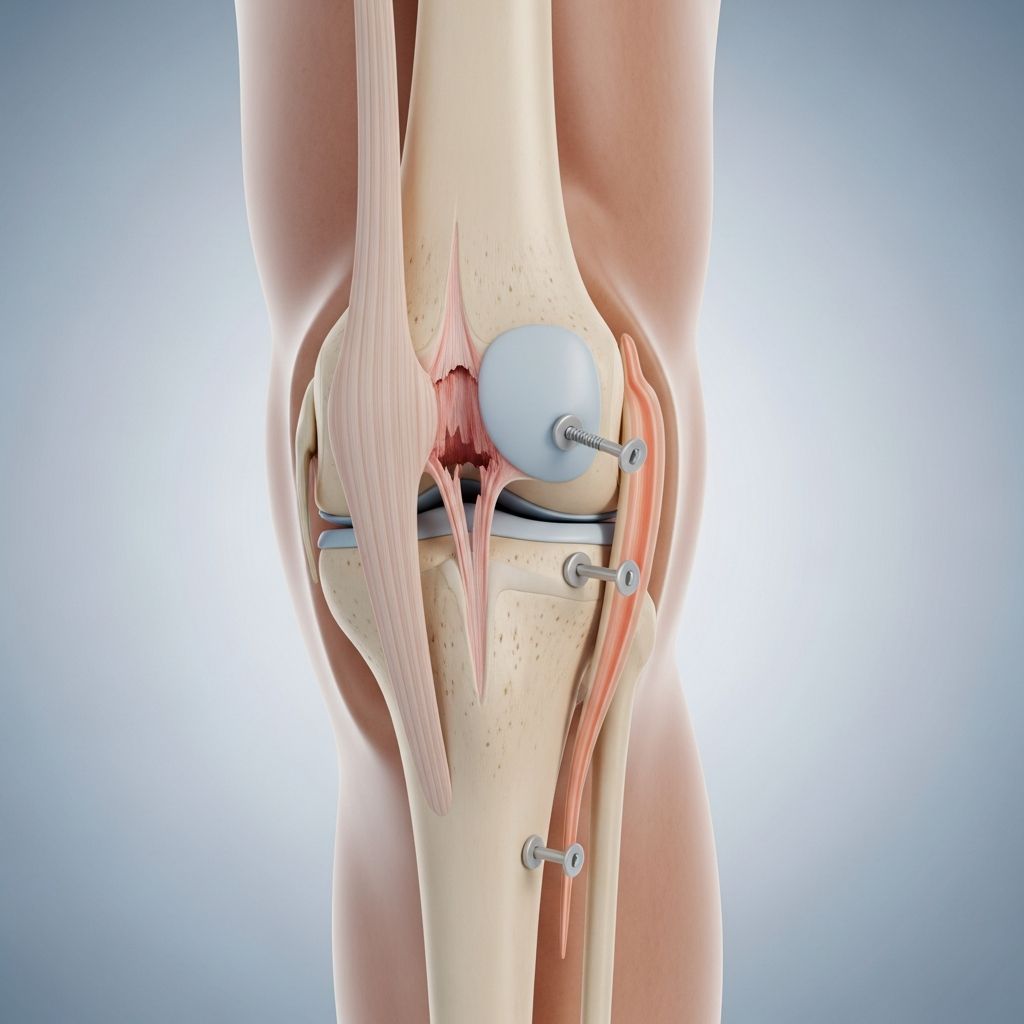
ACL Tear Treatment and Reconstruction
An anterior cruciate ligament (ACL) tear is one of the most common knee injuries, particularly among athletes and active individuals. The ACL is a crucial ligament that provides stability to the knee joint and prevents excessive forward movement of the tibia relative to the femur. When torn, this injury can significantly impact mobility and athletic performance. Understanding the available treatment options, from conservative management to surgical reconstruction, is essential for patients seeking to return to their normal activities.
Understanding ACL Tears
The anterior cruciate ligament is one of four major ligaments in the knee that work together to maintain joint stability. ACL injuries typically occur during sports activities involving sudden stops, direction changes, or direct contact to the knee. The severity of an ACL tear can range from a mild strain to a complete rupture, and the appropriate treatment depends on several factors including the extent of the injury, the patient’s age, activity level, and associated injuries.
Diagnosis of ACL Tears
Diagnosing an ACL tear typically begins with a physical examination by an orthopedic specialist. The physician will perform specific tests, such as the Lachman test and the anterior drawer test, to assess the stability of the knee. Imaging studies, including magnetic resonance imaging (MRI), are often used to confirm the diagnosis and evaluate any associated injuries to the meniscus or cartilage. X-rays may also be taken to rule out fractures or other bone-related injuries.
Non-Surgical Treatment Options
For some patients, particularly those with incomplete tears or lower activity demands, non-surgical treatment may be recommended. Non-operative management focuses on reducing inflammation, restoring function, and preventing further injury through a comprehensive rehabilitation program.
Conservative Management Approach
Non-surgical treatment typically includes the following components:
- Rest and activity modification to allow initial healing and reduce inflammation
- Ice application to manage swelling and pain during the acute phase
- Compression and elevation to minimize fluid accumulation around the joint
- Physical therapy and rehabilitation exercises to restore strength and proprioception
- Use of bracing or knee supports to provide external stability during recovery
- Anti-inflammatory medications as recommended by the healthcare provider
This conservative approach is most suitable for patients with sedentary lifestyles or those who do not require the knee to perform high-level pivoting, cutting, or other demanding movements. Many patients can successfully manage an ACL tear without surgery if they are willing to modify their activities and commit to a structured rehabilitation program.
Surgical Treatment: ACL Reconstruction
ACL reconstruction is the surgical treatment of choice for restoring stability to the knee joint, particularly for active patients and athletes. The goal of surgery is to replace the damaged ligament with a graft material that can restore normal knee function and stability.
Related Stories



When Surgery is Recommended
ACL reconstruction surgery is typically recommended for active adult patients who are involved in sports or occupations that require pivoting, turning, or hard-cutting movements. Surgery may also be considered for patients who experience persistent knee instability despite conservative treatment, or those who have additional injuries to the meniscus or cartilage that require surgical intervention.
Graft Selection for ACL Reconstruction
The success of ACL reconstruction depends significantly on the choice of graft material. Several options are available, each with distinct advantages and considerations.
| Graft Type | Source | Advantages | Disadvantages |
|---|---|---|---|
| Patellar Tendon (Bone-Patellar Tendon-Bone) | Autograft from patient’s own knee | Early bone-to-bone healing (6 weeks), strong healing potential, closely resembles ACL structure | May cause anterior knee pain, larger incision required |
| Hamstring Tendon (Semitendinosus and Gracilis) | Autograft from patient’s hamstring | Less anterior knee pain, faster return to some activities, smaller incisions | Soft tissue to bone healing, longer healing time |
| Quadriceps Tendon | Autograft from patient’s quadriceps | Excellent healing potential, good for revision surgeries | Less commonly used, requires larger surgical approach |
| Allograft | Cadaver tissue | No additional surgery to harvest graft, minimal patient morbidity | Higher re-rupture risk, potential immune response |
| Synthetic Ligament | Laboratory-engineered material | No tissue harvest required, consistent properties | Limited long-term data, potential complications |
The most commonly used autografts are the patellar bone graft and hamstring tendon graft. Comparison studies in the literature show that the outcome is similar regardless of graft choice, making the most important aspects of the operation tunnel placement and surgical technique rather than the specific graft selection.
Surgical Technique and Procedure
ACL reconstruction is typically performed using an arthroscopically assisted approach, which involves minimally invasive techniques to restore the damaged ligament.
Surgical Steps
- Small incisions (approximately 1/4-inch long) are made around the knee to allow insertion of the arthroscope and surgical instruments
- A sterile solution is pumped into the joint to expand it and provide clear visualization of the internal structures
- The surgeon examines the knee condition and addresses any associated injuries to the meniscus or cartilage
- The torn ACL is removed and the pathway for the new tendon graft is prepared
- Bone tunnels are drilled into both the tibia and femur to position the graft as anatomically correct as possible
- The graft is pulled through the predrilled holes and fixed into the bones using screws, buttons, or other fixation devices
- The instruments are withdrawn and incisions are closed with sutures and bandages
Single-Bundle vs. Double-Bundle Reconstruction
Most ACL reconstructions use a single-bundle technique, which involves placing one graft through single tunnels in both the tibia and femur. Double-bundle reconstruction uses two separate grafts to better recreate the native ACL structure and may improve knee kinematics and stability. However, there are no reported significant differences in outcomes between single and double-bundle reconstructions, and single-bundle reconstruction remains the most common technique due to its established success rate and relative simplicity.
Advanced ACL Treatment Options
Beyond traditional reconstruction techniques, several emerging approaches show promise for ACL management.
Bridge Enhanced ACL Restoration (BEAR)
The Bridge Enhanced ACL Restoration (BEAR) implant represents a novel biologically-enhanced approach currently in clinical trials. This bio-engineered device consists of a collagen scaffold derived from cow extracellular matrix combined with the patient’s own blood. The blood activates the scaffold, creating a flexible material that stimulates healing and reconnection of the ACL. This approach aims to enhance the body’s natural healing response while providing structural support during the recovery process.
Ligament Advanced Reinforcement System (LARS)
The LARS is a synthetic ligament option that has demonstrated viability for ACL reconstruction with favorable complication rates and high patient satisfaction scores compared to traditional surgical techniques. However, systematic reviews have highlighted gaps in long-term functional outcome data that require further investigation. Rehabilitation following LARS is recognized as essential, though limited evidence currently guides specific rehabilitation protocols.
Revision ACL Reconstruction
In cases where the initial ACL reconstruction fails, revision surgery may be necessary. Revision procedures require careful assessment of the underlying causes of failure and consideration of stronger graft options such as quadriceps tendon or hamstring grafts. Special attention must be paid to tunnel placement, as previous tunnel dilation or trajectory may require bone grafting and staged procedures for optimal outcomes. Allografts carry a two-fold higher risk of re-rupture when used for primary reconstruction but perform better in revision cases.
Rehabilitation and Recovery
Post-operative rehabilitation is critical to the success of ACL reconstruction and begins immediately after surgery. A structured, progressive rehabilitation protocol guides patients through distinct phases of recovery, each with specific goals and exercises.
Phase 1: Immediate Post-Operative Period (0-2 Weeks)
The immediate post-operative phase focuses on protecting the graft, reducing swelling, and minimizing pain. Key goals include restoring patellar mobility, restoring full extension, and gradually improving flexion. Patients typically use crutches and may wear a brace for protection during this critical early healing phase.
Phase 2: Early Strengthening
As the graft begins to incorporate into the knee joint, strengthening exercises are gradually introduced. Phase 2 strengthening typically consists of isometric exercises that build muscle strength without moving the joint through a range of motion. Extension deficits are common after surgery and are often related to arthrogenic muscle inhibition. Specific exercises and cryotherapy have been proven effective in addressing this issue. If a patellar tendon graft was used, physical therapists will also work on mobilizing the patellar tendon to prevent shortening.
Progression and Return to Activity
The timing of ACL reconstruction surgery significantly influences the rehabilitation timeline. Multiple factors dictate the ideal timing, including the presence of associated injuries. For example, meniscal tears should typically be addressed concurrently during ACL reconstruction, as meniscal repair performed in the same setting as ACL reconstruction has a high healing rate. The progression from passive range of motion to active exercises, and eventually to sport-specific training, is carefully controlled to ensure the graft has sufficient time to heal and integrate.
Factors Affecting Surgical Success
Successful ACL reconstruction depends on numerous factors working in concert:
- Proper patient selection and realistic expectations regarding recovery and return to activity
- Skilled surgical technique with accurate tunnel placement and graft positioning
- Appropriate graft selection matched to the patient’s needs and healing capacity
- Optimal graft fixation and tensioning during surgery
- Comprehensive post-operative rehabilitation and physical therapy
- Assessment and treatment of any associated injuries to secondary restraints or other knee structures
- Patient compliance with rehabilitation protocols and activity modifications during healing
Special Considerations in Pediatric Patients
ACL reconstruction in skeletally immature patients requires special consideration of the growth plates. Surgical options include physeal-sparing (all intra-epiphyseal) techniques, trans-physeal approaches, or partial transphyseal reconstruction leaving one physis undisturbed. Research shows no significant differences in growth disturbances between different surgical techniques, allowing orthopedic surgeons to select the approach best suited to individual patient anatomy and surgeon expertise.
Complications and Prevention
While ACL reconstruction has a high success rate, potential complications can occur. These include graft failure, infection, stiffness, persistent instability, and arthrofibrosis. Errors in graft selection, tunnel placement, tensioning, or fixation methods can lead to graft failure. Meticulous surgical technique, appropriate graft selection, and rigorous rehabilitation are essential for minimizing complications and optimizing long-term outcomes.
Frequently Asked Questions
Q: How long does ACL reconstruction surgery take?
A: ACL reconstruction typically takes 1-2 hours depending on the surgical technique used, the presence of associated injuries, and individual patient factors. The procedure is performed using arthroscopically assisted minimally invasive techniques.
Q: When can I return to sports after ACL reconstruction?
A: Most patients can begin light activities within 2-3 weeks and progress to more demanding activities over 3-6 months. Return to competitive sports typically occurs 6-9 months post-surgery, depending on the individual’s rehabilitation progress and the specific sport’s demands. Your surgeon and physical therapist will provide specific guidance based on your recovery progress.
Q: What is the success rate of ACL reconstruction?
A: ACL reconstruction has success rates exceeding 90% when the procedure is performed by experienced surgeons with proper technique, appropriate graft selection, and comprehensive post-operative rehabilitation. Success is determined by restored knee stability, return to desired activity level, and patient satisfaction.
Q: Do I need surgery for an ACL tear?
A: Not all ACL tears require surgery. Non-surgical treatment may be appropriate for patients with low activity demands or incomplete tears who are willing to modify their activities and comply with rehabilitation. However, active individuals and athletes typically benefit from surgical reconstruction to restore full knee stability and function.
Q: What graft is best for ACL reconstruction?
A: Research shows similar outcomes regardless of graft choice when proper surgical technique and rehabilitation are followed. The most important factors are accurate tunnel placement and surgeon expertise. The choice of graft depends on individual patient factors, patient preference, and surgeon recommendation.
Q: How long is the recovery period after ACL reconstruction?
A: Initial recovery typically takes 2-3 weeks, with return to normal daily activities possible within 3-6 months. Full recovery and return to competitive sports may take 9-12 months. Recovery timelines vary based on the individual’s commitment to rehabilitation and the specific demands of their desired activities.
References
- Anterior Cruciate Ligament (ACL) Reconstruction — Physiopedia. 2024. https://www.physio-pedia.com/Anterior_Cruciate_Ligament_(ACL)_Reconstruction
- Anterior Cruciate Ligament Knee Injury — National Center for Biotechnology Information (NCBI). 2024. https://www.ncbi.nlm.nih.gov/books/NBK499848/
- ACL Injury: Does It Require Surgery? — American Academy of Orthopaedic Surgeons (AAOS). 2024. https://orthoinfo.aaos.org/en/treatment/acl-injury-does-it-require-surgery/
- ACL Injury – Diagnosis and Treatment — Mayo Clinic. 2024. https://www.mayoclinic.org/diseases-conditions/acl-injury/diagnosis-treatment/drc-20350744
- Rehabilitation Protocol for Anterior Cruciate Ligament (ACL) Reconstruction — Massachusetts General Hospital. 2024. https://www.massgeneral.org/assets/mgh/pdf/orthopaedics/sports-medicine/physical-therapy/rehabilitation-protocol-for-acl.pdf
Similar Articles








Read full bio of medha deb