Acne Due To Medicines: 5 Drug Culprits & Management Tips
Explore how various medications trigger acne, their clinical features, diagnosis, and effective management strategies.
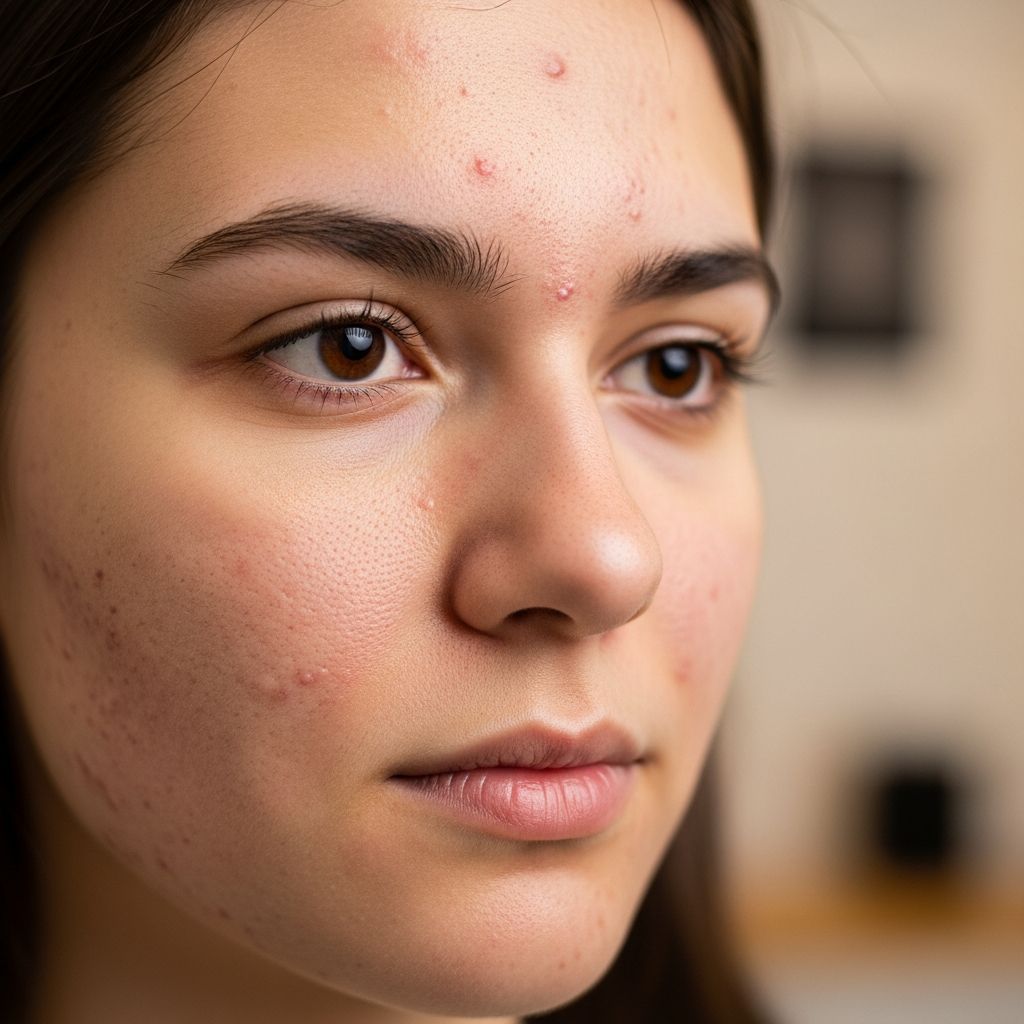
Drug-induced acne, also known as acneiform eruption due to medications, is a common cutaneous adverse effect triggered by various pharmaceuticals. Unlike typical acne vulgaris, which primarily affects adolescents due to hormonal fluctuations, drug-induced acne can occur at any age and often presents with distinct morphological features. Several classes of medications, particularly hormonal agents, immunosuppressants, and psychotropics, are implicated in provoking acne-like lesions by altering sebum production, follicular keratinization, inflammation, or bacterial proliferation within hair follicles.
The condition arises through mechanisms such as increased androgen activity, immune modulation via the mTOR pathway, or direct toxicity to pilosebaceous units. Prompt recognition is crucial, as discontinuing the offending agent often leads to resolution, though persistent cases may require targeted therapies. This article details the epidemiology, causative drugs, clinical presentations, diagnostic approaches, and management protocols.
What is acne due to medicines?
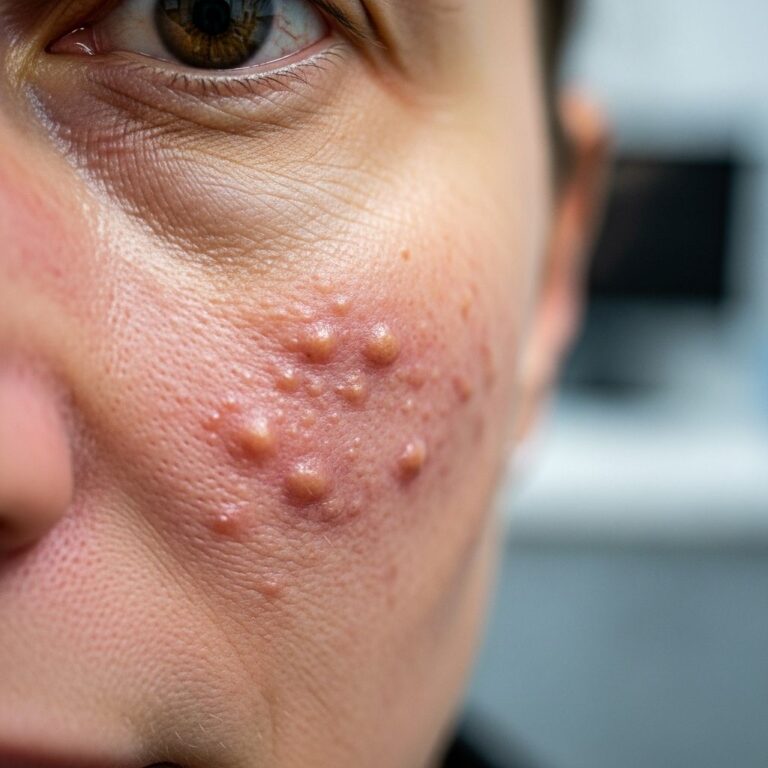
Acne due to medicines refers to acneiform eruptions—clusters of papules, pustules, and nodules resembling acne vulgaris but induced by pharmacological agents rather than endogenous factors like Propionibacterium acnes overgrowth or hyperkeratinization alone. These eruptions typically lack true comedones (blackheads and whiteheads), a hallmark of idiopathic acne, and instead feature monomorphic inflammatory lesions.
The pathophysiology involves drug-mediated stimulation of sebaceous glands, enhanced toll-like receptor expression in keratinocytes, or suppression of immune responses leading to follicular occlusion and inflammation. For instance, corticosteroids promote yeast proliferation (e.g., Malassezia), while anabolic steroids boost androgen levels, exacerbating sebum output. Systemic drugs affect the entire body, but topical agents may cause localized outbreaks. Incidence varies; up to 50% of patients on certain EGFR inhibitors develop acneiform rashes.
Who gets acne due to medicines?
Drug-induced acne affects individuals of all ages, races, and genders, unlike acne vulgaris which peaks in adolescence. It is most common in adults on long-term medications for chronic conditions such as epilepsy, bipolar disorder, organ transplantation, or malignancies. High-risk groups include:
- Athletes and bodybuilders abusing anabolic steroids.
- Patients on prolonged corticosteroid therapy for autoimmune diseases or neurological conditions.
- Transplant recipients using calcineurin inhibitors like cyclosporine.
- Individuals treated for psychiatric disorders with lithium or antiepileptics.
- Cancer patients on EGFR inhibitors (e.g., cetuximab).
Outbreaks often emerge weeks to months after initiating therapy, with higher doses correlating to severity.
What causes acne due to medicines?
A broad spectrum of medications can induce acne through diverse mechanisms:
- Hormonal medications: Anabolic steroids, testosterone, corticosteroids (e.g., prednisone, dexamethasone), progestins (e.g., levonorgestrel IUD).
- Psychotropics: Lithium carbonate, antiepileptics (phenytoin, carbamazepine, valproate), antidepressants (trazodone, haloperidol, aripiprazole).
- Immunosuppressants: Cyclosporine, tacrolimus, sirolimus.
- EGFR inhibitors: Cetuximab, erlotinib—cause folliculitis-like eruptions.
- Others: Vitamin B12, biotin, thyroid hormones, iodides/bromides, isoniazid, disulfiram.
Theories include mTOR pathway activation (insulin/IGF-1 stimulation), immune dysregulation, and direct follicular effects.
What are the clinical features of acne due to medicines?
Lesions mimic acne vulgaris but are distinguished by uniformity and comedone scarcity. Common features include:
- Monomorphic papulopustules: Uniform 2-4 mm sized inflammatory lesions without comedones.
- Distribution: Face, upper trunk, arms; atypical sites like scalp or extremities in some cases.
- Steroid acne: Folliculocentric pustules due to Malassezia overgrowth.
- EGFR acneiform: Periocular sparing, pruritic folliculitis.
- Duration: Onset 1-8 weeks post-drug initiation; resolves 4-6 weeks after discontinuation.
Related Stories



Severity ranges from mild papules to nodulocystic forms; scarring is rare except in prolonged cases.
Diagnosis of acne due to medicines
Diagnosis relies on history (recent medication start), morphology (comedone absence), and exclusion of other acneiform disorders. Key steps:
- Medication review for known culprits.
- Skin biopsy if atypical: shows folliculitis without comedones.
- Culture/swab for gram-negative folliculitis post-antibiotics.
No specific lab tests; temporal association confirms causality.
Differential diagnosis of acne due to medicines
| Condition | Key Distinguishing Features |
|---|---|
| Acne vulgaris | Comedones present; slower onset; hormonal triggers. |
| Gram-negative folliculitis | Post-long-term antibiotics; cysts, larger pustules. |
| Perioral dermatitis | Periorificial; scaling; responds to tetracyclines. |
| Rosacea | Telangiectasia, flushing; older adults. |
| Acne keloidalis | Scalp; keloidal scars; curly hair association. |
Drug history differentiates from idiopathic forms.
Acne due to medicines treatment
Primary treatment is culprit drug discontinuation or dose adjustment, in consultation with prescribing physician. Symptomatic management includes:
- Topical: Benzoyl peroxide, retinoids, antibiotics (clindamycin).
- Oral: Tetracyclines, dapsone for severe cases; isotretinoin if persistent.
- For EGFR-induced: Topical steroids, tetracyclines; continue drug if beneficial.
Avoid comedogenic topicals. Resolution typically follows drug cessation.
Prevention of acne due to medicines
Screen for acne risk pre-prescription; use lowest effective doses; monitor early. Alternatives: switch to non-acnegenic drugs (e.g., tacrolimus over cyclosporine). Patient education on reporting skin changes promptly.
Acne due to medicines FAQs
What medications most commonly cause acne?
Steroids, lithium, antiepileptics, anabolic androgens, cyclosporine.
Does drug-induced acne scar?
Rarely, unlike vulgaris; depends on duration/severity.
How long after stopping the drug does acne resolve?
Typically 4-6 weeks; longer for systemic steroids.
Can topical medications cause acne?
Yes, corticosteroids and tacrolimus can induce local folliculitis.
Is isotretinoin safe for drug-induced acne?
Effective for refractory cases, but assess drug interactions.
References
- Drug-Induced Acne – SOMA Skin & Laser — SOMA Skin & Laser. 2023. https://somalaser.com/drug-induced-acne/
- Drug-Induced Acne and Acneiform Eruptions: A Review — HMP Global Learning Network. 2022-01-15. https://www.hmpgloballearningnetwork.com/site/thederm/article/drug-induced-acne-and-acneiform-eruptions-review
- Medications That Can Cause Acne – WebMD — WebMD. 2024-05-20. https://www.webmd.com/skin-problems-and-treatments/acne/features/medications
- Acne due to medicines – DermNet — DermNet NZ. 2025-03-10. https://dermnetnz.org/topics/acne-due-to-medicine
- Drug-induced acne and rose pearl: similarities – PMC – NIH — National Center for Biotechnology Information. 2014-01-29. https://pmc.ncbi.nlm.nih.gov/articles/PMC3900370/
Similar Articles








Read full bio of medha deb