Facial Acne Images: Visual Guide To Lesion Types & Severity
Comprehensive visual guide to facial acne presentations, types, and severity for accurate diagnosis and treatment.
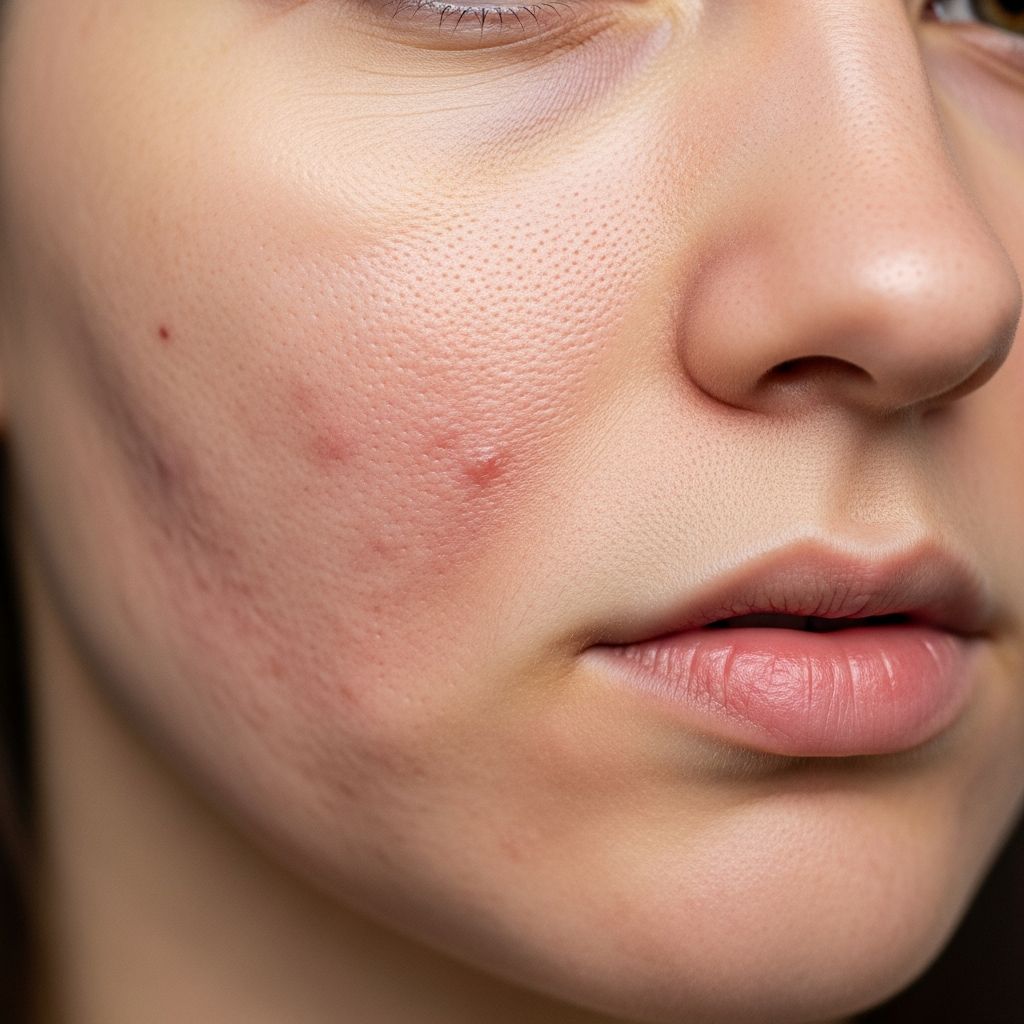
Acne vulgaris is the most common skin condition worldwide, primarily affecting the face due to high sebaceous gland density. This gallery presents authoritative images of facial acne manifestations, aiding in recognition of lesion types, severity grading, and variations across skin types. Understanding these visual characteristics is crucial for timely diagnosis and effective management, as acne can lead to permanent scarring if untreated.
What is Facial Acne?
Facial acne, or acne vulgaris on the face, arises from pilosebaceous unit dysfunction involving excess sebum production, follicular hyperkeratinization, Propionibacterium acnes proliferation, and inflammation. Lesions centre on hair follicles and oil glands, manifesting as non-inflammatory comedones or inflammatory papules, pustules, and nodules. The face is most affected due to abundant sebaceous glands, with common sites including the T-zone (forehead, nose, chin), cheeks, and jawline.
Acne affects 85% of adolescents aged 16-18, but persists into adulthood in 20-40% of cases, impacting all ethnicities. In skin of colour, presentations feature less erythema but prominent post-inflammatory hyperpigmentation (PIH), which often drives treatment-seeking behaviour.
Types of Facial Acne Lesions
Facial acne lesions are classified as non-inflammatory (comedones) or inflammatory (papules, pustules, nodules, cysts). Mixed eruptions are typical. Key types include:
- Comedones: Plugged follicles appearing as open blackheads (oxidized sebum) or closed whiteheads. Predominant on forehead and chin in comedonal acne.
- Papules: Small red inflamed bumps without pus, evolving from microcomedones.
- Pustules: Pus-filled lesions with red halo, common in papulopustular acne.
- Nodules/Cysts: Deep, painful, pus-filled sacs risking scarring in nodulocystic acne.
- Post-inflammatory changes: Erythema, PIH, or atrophic scars (ice-pick, rolling, boxcar).
Severity grading separates comedonal (0-20) and inflammatory (0-40+) lesion counts, or uses photographic scales (Grade 1-12).
Gallery: Mild Acne
Mild papulopustular facial acne
This image depicts scattered small papules and few pustules on the cheeks and forehead in a young adult. Lesions are superficial with minimal erythema, characteristic of mild acne responding well to topical therapies like benzoyl peroxide or retinoids. No scarring evident.
Comedones, papules, and pustules in acne
Forehead shows open and closed comedones interspersed with inflammatory papules and pustules. This mixed mild eruption highlights early intervention to prevent progression.
Papules and comedones in infantile acne on the cheeks
Infantile acne (onset 3-16 months) features inflammatory papules and comedones on cheeks due to transient androgen surge. Resolves spontaneously but may scar; topical treatment if persistent.
Gallery: Moderate Acne
Mixed comedonal and inflammatory facial acne in skin of colour
Prominent comedones on chin and jawline with papulopustules on cheeks. In skin of colour, reduced visible redness but potential for PIH underscores need for non-comedogenic skincare.
Papulopustular chin acne
Chin and perioral area affected by pustules and papules, often hormonal in adult females. Fluctuates with menstrual cycle; oral contraceptives may help.
Comedonal acne
Predominantly closed comedones on forehead and chin, with few inflammatory lesions. Managed with topical retinoids and salicylic acid to normalize keratinization.
Gallery: Severe Acne
Nodulocystic acne
Large, tender nodules and cysts on cheeks and jawline, with overlying pustules. High scarring risk necessitates systemic isotretinoin after failure of topicals/oral antibiotics.
Related Stories



Acne fulminans
Sudden explosive eruption with ulcerated nodules, fever, and systemic symptoms. Rare; requires urgent corticosteroids and isotretinoin.
Acne excoriée
Self-induced erosions and scars from picking papulopustular lesions, common in adolescents with psychological overlay. Behavioural therapy adjunctive to acne treatment.
Special Variants and Skin of Colour
Pomade acne: Comedones along hairline from oil-based hair products, prevalent in skin of colour.
Adult acne: Persistent or late-onset, often lower face in women.
Neonatal acne: Malar cheeks in newborns; self-limiting.
In skin of colour, keloidal scarring and PIH are more common, particularly on jawline. Lasers and chemical peels target pigmentation post-active treatment.
Scarring and Complications
| Scar Type | Description | Image Features |
|---|---|---|
| Ice-pick scars | Deep, narrow pits | Cheeks with punched-out depressions |
| Rolling scars | Undulating surface | Boxcar-like undulations on cheeks |
| Hypertrophic/keloid | Raised firm scars | Jawline and chest in skin of colour |
Early aggressive treatment prevents 80-90% of scarring. Options: fillers, subcision, lasers (ablative/non-ablative).
Diagnosis and Testing
Clinical based on morphology; no tests routine. Atypical: hormonal assays (PCOS), culture (Gram-negative folliculitis).
Treatment Overview
- Mild: Topical benzoyl peroxide, retinoids, azelaic acid.
- Moderate: Add oral antibiotics (doxycycline 3-6 months).
- Severe: Isotretinoin (cumulative 120-150mg/kg).
- Maintenance: Topicals lifelong to prevent relapse.
Hormonal therapies (spironolactone, OCPs) for females. Avoid picking to minimize scarring.
Frequently Asked Questions (FAQs)
Q: What does mild facial acne look like?
A: Few non-inflamed comedones or small papulopustules on T-zone; minimal redness, no deep lesions.
Q: How to identify comedonal acne on face?
A: Predominantly blackheads/whiteheads on forehead/chin; few inflammatory spots. Topical retinoids first-line.
Q: Does acne look different in skin of colour?
A: Yes, less red but more PIH and keloids. Pomade acne along hairline common.
Q: Can facial acne cause permanent scars?
A: Yes, nodules/cysts lead to ice-pick/rolling scars. Treat early; lasers for established scars.
Q: When to see a dermatologist for face acne?
A: No improvement after 8-12 weeks topicals, scarring, cysts, or psychological distress.
This image library draws from DermNet’s extensive dermatology atlas, updated with skin of colour insights (2021). For full galleries: Acne vulgaris images, Acne back images.
References
- Acne Vulgaris Images — DermNet NZ. 2023. https://dermnetnz.org/images/acne-vulgaris-images
- Acne and Other Follicular Disorder Images — DermNet NZ. 2023. https://dermnetnz.org/image-catalogue/acne-and-other-follicular-disorder-images
- Acne — DermNet NZ. Updated 2024. https://dermnetnz.org/topics/acne
- Acne Vulgaris: Features, Types, and Treatments — DermNet NZ. Updated 2021-07-15. https://dermnetnz.org/topics/acne-vulgaris
- Comedonal Acne — DermNet NZ. Updated 2014-04. https://dermnetnz.org/topics/comedonal-acne
- Acne (face) images — DermNet NZ. Created 2007. https://dermnetnz.org/topics/acne-face-images
Similar Articles








Read full bio of medha deb