Acne In Children: Symptoms, Causes, And Treatment
Understanding causes, types, diagnosis, and effective treatments for acne in infants, children, and adolescents.
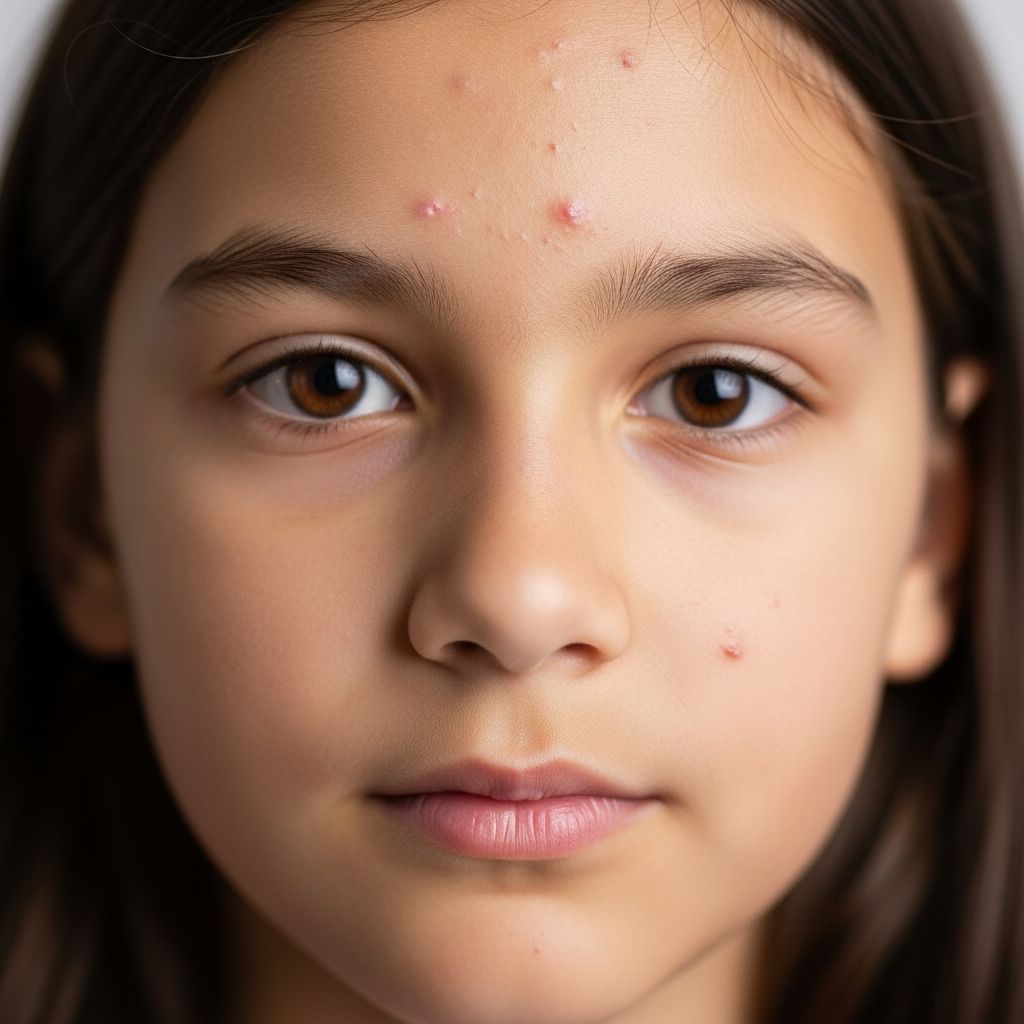
Acne in children, also known as paediatric acne, manifests differently across age groups, from newborns to preadolescents. It arises due to hormonal influences on sebaceous glands, leading to clogged pores, inflammation, and lesions. Early recognition and appropriate treatment prevent scarring and psychological impact.
What is acne in children?
Paediatric acne refers to acne vulgaris occurring before puberty, categorized by age: neonatal (birth to 4 weeks), infantile (1-12 months), mid-childhood (1-7 years), preadolescent (7-12 years), and adolescent (post-puberty). It primarily affects the face but can involve the chest, back, and shoulders. Unlike adult acne, childhood forms often stem from transient hormonal surges like ‘mini-puberty’ in infants, where adrenal and maternal androgens stimulate sebum overproduction.
Key pathogenic factors include hyperkeratinization of follicles, excess sebum, Cutibacterium acnes (formerly Propionibacterium acnes) proliferation, and inflammation. In children, these are amplified by physiological androgen peaks.
Who gets acne in children?
Acne affects up to 20% of neonates and infants, with higher prevalence in males for infantile forms due to stronger androgen responses. Mid-childhood acne is rare (about 1-4%), often signaling underlying endocrinopathies. Preadolescent acne impacts 15-20% of children aged 7-12, preceding full puberty via adrenarche (androgen production restart around age 7). Genetic predisposition plays a role; family history increases risk.
What causes acne in children?
- Hormonal fluctuations: Neonatal acne from maternal and neonatal androgens; infantile from mini-puberty (elevated gonadotropins/steroids in first 3-6 months); mid-childhood from premature adrenarche or disorders like CAH/Cushing’s; preadolescent from early pubertal androgens.
- Sebaceous gland hyperactivity: Androgens enlarge glands, boosting sebum—a thick oil that clogs follicles.
- Bacterial overgrowth: C. acnes thrives in occluded pores, triggering inflammation.
- Other factors: Genetics, occlusion (e.g., helmets), cosmetics; rarely medications or endocrinopathies in mid-childhood.
What are the clinical features of acne in children?
Lesions vary by age:
- Neonatal: Comedones, inflammatory papules/pustules on cheeks; resolves by 4 weeks.
- Infantile: Comedones in T-zone (forehead, nose, chin), papules, pustules; nodules rare; peaks at 3-6 months, resolves by 1-2 years.
- Mid-childhood: Predominantly inflammatory papules/pustules/nodules; minimal comedones; often trunk-involved.
- Preadolescent: Mixed comedonal/inflammatory; T-zone predominant, like adolescent acne.
Symptoms include redness, tenderness; severe cases risk scarring/cysts. Aggravators: squeezing, harsh scrubbing.
Diagnosis
Primarily clinical, based on age, lesion morphology, distribution. History assesses onset, family hx, growth, systemic symptoms. Mid-childhood acne warrants endocrine workup (e.g., DHEAS, testosterone, 17-OHP for CAH) due to hyperandrogenism risk.
Differential includes:
| Condition | Key Features |
|---|---|
| Infantile seborrhoeic dermatitis | Greasy yellow scales, no comedones. |
| Miliaria | Uniform small pustules, heat-related. |
| Perioral dermatitis | Perioral papules, background erythema. |
| Bacterial folliculitis | Deep pustules, culture positive. |
| Hyper IgE syndrome | Recurrent infections, eosinophilia. |
Biopsy rarely needed; endocrinologist referral for mid-childhood cases.
Management
Treatment is age- and severity-based, targeting sebum, comedones, bacteria, inflammation to avert scars. Mild cases may self-resolve; moderate/severe need intervention. Non-comedogenic skincare advised: gentle cleansing 2x/day, oil-free products.
Neonatal acne
Usually resolves spontaneously by 4 weeks; no treatment unless severe. Mild: topical 2% erythromycin or metronidazole. Avoid retinoids/antibiotics routinely.
Infantile acne
Mild: topical benzoyl peroxide (BP 2.5-5%), azelaic acid, or retinoids (adapalene 0.1%). Moderate: add oral erythromycin (30-50 mg/kg/day, 4-6 weeks) with topicals to curb resistance. Severe: consult dermatology; isotretinoin off-label consideration post-6 months.
Mid-childhood acne
Investigate endocrinopathy first. Mild-moderate: topical retinoids/BP ± antibiotics. Moderate-severe: oral erythromycin/cephalexin; tetracyclines avoided (<8 years). Hormonal therapy if applicable (e.g., spironolactone girls post-puberty).
Related Stories



Preadolescent acne
Mild: topical retinoid/BP monotherapy. Moderate: combination topicals ± oral antibiotics (erythromycin/doxycycline if >8 years). Severe: isotretinoin (cumulative dose 120-150 mg/kg over 4-6 months); hormonal agents for girls (OCPs post-menarche).
General principles:
- Combine BP with antibiotics to prevent resistance.
- Monitor growth/labs with systemic therapy.
- Sunscreen use; avoid picking.
Complications
Scarring (atrophic/hypertrophic), post-inflammatory hyperpigmentation, psychological distress (low self-esteem, anxiety). Severe untreated acne risks permanent disfigurement.
Prevention
- Gentle skincare: non-comedogenic products.
- Diet: low glycemic, though evidence mixed.
- Early treatment of mild acne.
- Avoid irritants/occlusives.
Frequently Asked Questions
Does neonatal acne need treatment?
Typically no; it self-resolves. Severe cases may use mild topicals like erythromycin.
Can infantile acne scar?
Yes, if severe/nodular; prompt treatment prevents this.
When to see a dermatologist for childhood acne?
Moderate-severe, treatment failure, mid-childhood onset, scarring.
Are oral antibiotics safe for young children?
Erythromycin is first-line; tetracyclines restricted <8 years due to teeth staining.
Is isotretinoin used in children?
Yes, for severe refractory acne; requires strict monitoring, especially growth.
References
- Acne Vulgaris in Children and Adolescents: What’s the Cause… — National Library of Medicine, NIH. 2024. https://pmc.ncbi.nlm.nih.gov/articles/PMC12172676/
- Acne in Children — Children’s Hospital of Philadelphia (CHOP). 2023. https://www.chop.edu/conditions-diseases/acne-children
- Acne in children — DermNet NZ. 2024. https://dermnetnz.org/topics/acne-in-children
Similar Articles








Read full bio of Sneha Tete