Acne Scarring: Comprehensive Guide To Causes & Treatments
Understand the causes, types, and effective treatments for acne scarring to restore smooth skin.
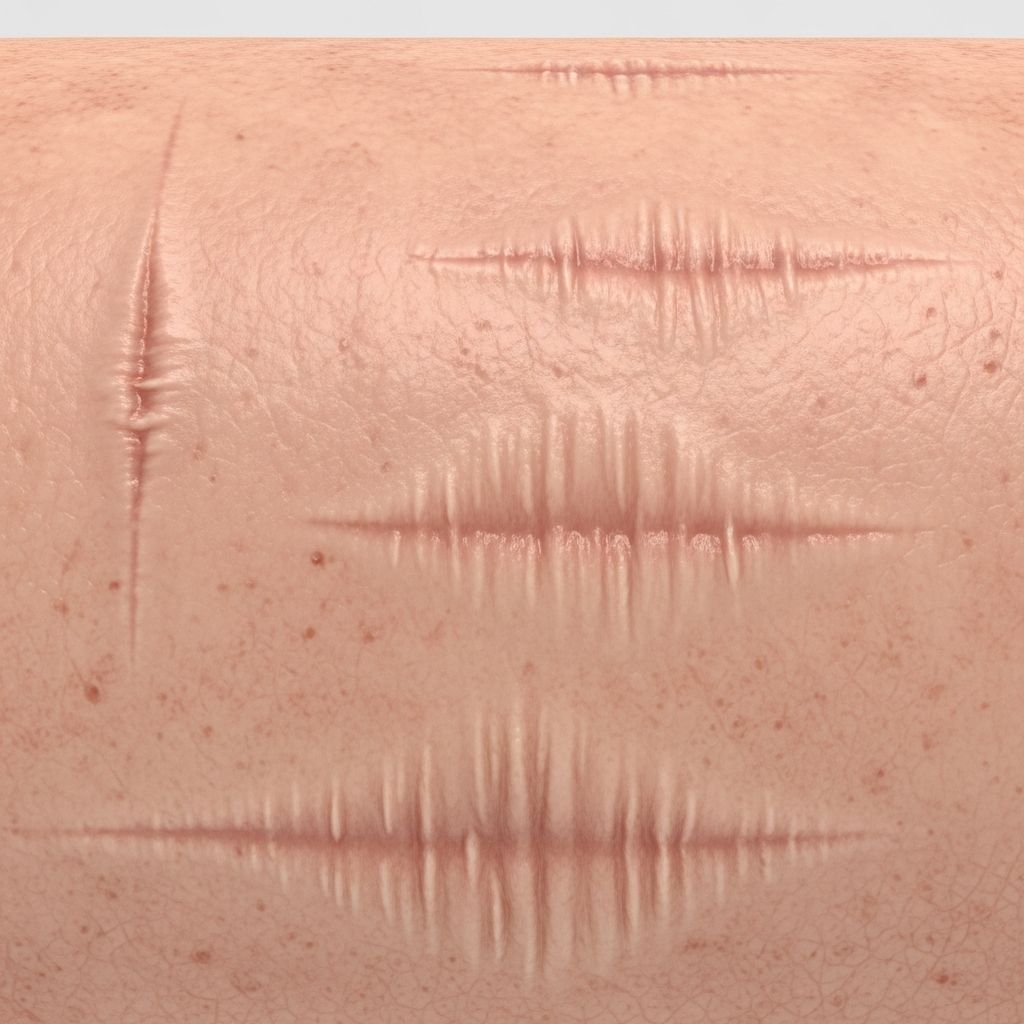
Scarring is a widely recognised sequela of acne, an inflammatory dermatological disorder that frequently affects younger adults and can persist for years. Acne favours the face and upper back but can also develop in other sites with well-developed sebaceous glands. Scarring refers to the fibrous process in which new collagen is laid down to heal a full-thickness injury, such as cutaneous inflammation in acne.
Introduction
Acne vulgaris is one of the most common skin conditions worldwide, impacting up to 85% of adolescents and persisting into adulthood in many cases. While active acne lesions like papules, pustules, nodules, and cysts cause distress, the permanent scars they leave behind often have a more profound psychological impact. Acne scars result from the skin’s natural healing response to inflammation, where collagen production becomes disorganized, leading to textural changes. These scars can significantly affect self-esteem, social interactions, and quality of life, particularly on visible areas like the face.
Understanding acne scarring is crucial for both prevention and management. Early intervention in active acne reduces scarring risk, and a range of treatments can improve existing scars. This article explores the demographics, causes, clinical features, complications, diagnosis, treatments, prevention, and outlook for acne scarring.
Demographics
Epidemiological data on the prevalence and incidence of acne scarring varies widely, but studies indicate it affects approximately 30-50% of individuals with moderate to severe acne vulgaris. Scarring is more common in patients with nodulocystic acne, acne conglobata, and acne fulminans—severe subtypes characterized by deep, inflammatory nodules.
Demographic factors play a role: scarring is more prevalent in males due to higher rates of severe acne, though females may experience more persistent scarring from picking or hormonal influences. Ethnic variations exist; postinflammatory hyperpigmentation and keloid scars are more frequent in skin of colour, such as in individuals of African, Asian, or Hispanic descent. Age-wise, scarring peaks in late teens to early 20s but can occur at any age if acne is untreated. The duration and severity of acne directly correlate with scarring degree—prolonged inflammation increases risk.
Causes
The formation of scars is a normal reaction of the skin to inflammation or injury. In acne, Propionibacterium acnes (now Cutibacterium acnes) bacteria trigger an inflammatory cascade within sebaceous follicles, leading to collagen destruction in the dermis. Further injury, such as picking or squeezing lesions (acne excoriée), exacerbates scarring by introducing additional trauma.
Risk factors include:
- Moderate to severe acne with deep nodules or cysts.
- Delayed or inadequate treatment of active acne.
- Genetic predisposition to abnormal wound healing.
- Smoking, which impairs collagen synthesis and increases scarring severity.
- Mechanical manipulation of lesions.
Atrophic scars arise from net collagen loss, while hypertrophic or keloid scars result from excessive collagen deposition.
Clinical Features
The majority of acne scars are atrophic, classified into three main types:
- Ice-pick scars: Narrow, deep pits (1-2 mm wide, >2 mm deep) resembling V-shaped punctures, common on cheeks.
- Boxcar scars: Broad, rectangular depressions with sharp edges (1.5-4.0 mm wide), often on cheeks and temples.
- Rolling scars: Wide, shallow depressions with sloped edges due to fibrous tethering beneath the skin, giving a wavy appearance.
Related Stories



Less commonly, hypertrophic scars (confined to lesion size) or keloids (overgrowing beyond) form, especially on jawline, chest, and back. Hybrid scars combine atrophic features with pigmentation or erythema. Secondary anetoderma—slack, depressed areas from elastic tissue loss—may occur. Postinflammatory changes include erythema (redness), hyperpigmentation (dark spots), or hypopigmentation (light spots), which may precede or accompany scars.
Scars are most visible on the face (cheeks, forehead, temples), upper back, and chest. In skin of colour, hyperpigmentation and keloids predominate and may evolve over time.
Variation in Skin Types
Skin phototype influences scarring presentation and response to treatment. Fitzpatrick skin types I-II (fair skin) more often develop atrophic scars and erythema, while types III-VI (darker skin) are prone to postinflammatory hyperpigmentation (PIH) and keloids. PIH can persist for months to years and must be addressed alongside textural scars.
Keloid formation is genetically linked and more common in darker phototypes, with recurrence rates up to 50-80% post-treatment. Treatment selection must consider pigmentation risks, as aggressive resurfacing can worsen PIH in higher phototypes.
Complications
Beyond physical changes, acne scarring leads to significant psychosocial complications, including depression, anxiety, and reduced quality of life. Visible scars on the face amplify these effects. Physical complications include persistent PIH, evolving keloids, and secondary infections from picking.
Untreated scars may worsen with age due to cumulative sun damage, which degrades collagen further. Hybrid scars with mixed features complicate treatment.
Diagnosis
Acne scarring is diagnosed clinically based on a history of acne and characteristic scar morphology. No lab tests are typically needed. For uncertainty (e.g., evolving keloids), a 4-mm punch biopsy may confirm fibrosis or keloidal collagen. Patient photography under standardized lighting aids assessment. Scar grading scales like the Goodman and Baron Qualitative Global Acne Scarring System classify severity (mild, moderate, severe).
Differential Diagnoses
| Condition | Key Features | Differentiator from Acne Scars |
|---|---|---|
| Chickenpox scars | Uniform, round pits | History of varicella; symmetrical distribution |
| Varicella zoster scars | Dermatomal distribution | Neurological symptoms; unilateral |
| Folliculitis scars | Perifollicular | Infection history; hair-bearing areas |
| Hidradenitis suppurativa scars | Intertriginous | Recurrent abscesses in axillae/groin |
| Sarcoidosis | Grouped papules | Systemic symptoms; biopsy shows granulomas |
Distinguishing requires history and exam; biopsy if needed.
Treatment
Treat active acne first to prevent worsening. An individualized, multimodal approach addresses scar type, skin type, and patient goals. Makeup camouflages superficial scars.
Resurfacing Procedures
For superficial atrophic scars, these blend edges and stimulate collagen:
- Chemical peels: TCA (20-35%) CROSS for ice-pick; multiple sessions.
- Microneedling: Induces collagen via dermal injury; safe for all phototypes.
- Laser resurfacing: Fractional CO2 or erbium:YAG for moderate scars; radiofrequency (e.g., Fraxel) for pigmentation.
- Dermabrasion/microdermabrasion: Mechanical polishing.
Multiple treatments (3-6) needed; downtime varies.
Lifting Procedures
For volume loss in rolling/boxcar scars:
- Fillers: Hyaluronic acid (e.g., Juvederm) for temporary lift (6-18 months).
- Subcision: Needle releases tethered scars.
- Fat grafting/autologous fillers: Permanent volume.
Combine with resurfacing.
Excisional Techniques
For deep, fibrotic scars:
- Punch excision, elevation, or grafting.
- Elliptical excision with closure.
Leaves linear scar.
For Hypertrophic/Keloid Scars
- Steroid injections (triamcinolone).
- Cryotherapy, laser (PDL), 5-FU, or radiation (post-excision).
- Silicone sheets/pressure.
High recurrence risk.
Pigmentation Management
Topicals: Hydroquinone, retinoids, azelaic acid; chemical peels; lasers (Q-switched Nd:YAG).
Prevention
More inflamed lesions scar more. Key strategies:
- Treat acne early with topicals (retinoids, benzoyl peroxide) or orals (isotretinoin for severe cases).
- Avoid picking/squeezing.
- Use non-comedogenic products and sunscreen.
- Quit smoking.
Early treatment prevents 50-80% of scars.
Outlook
Acne scars are usually permanent but may improve spontaneously (20-30% over years) or with treatment (50-80% improvement). Severe scars require combination therapy; results vary by scar type and skin response. Maintenance prevents recurrence.
Frequently Asked Questions (FAQs)
Q: Are all acne lesions scarring?
A: No, only deep inflammatory ones like nodules/cysts; mild comedonal acne rarely scars.
Q: Can acne scars fade naturally?
A: Discoloration fades in months; textural scars persist without intervention.
Q: Is laser treatment safe for dark skin?
A: Yes, with non-ablative fractional lasers; ablative ones risk PIH.
Q: How many treatments for scars?
A: 3-6 sessions typically, spaced 4-6 weeks apart.
Q: Does isotretinoin prevent scars?
A: Yes, by resolving severe acne quickly.
References
- Acne Scarring — DermNet NZ. 2024. https://dermnetnz.org/topics/acne-scarring
- Acne scars: Overview — American Academy of Dermatology (AAD). 2024. https://www.aad.org/public/diseases/acne/derm-treat/scars
- Laser interventions for facial acne scars: a network meta-analysis — National Library of Medicine (PMC). 2023-01-12. https://pmc.ncbi.nlm.nih.gov/articles/PMC9843402/
- Acne Scars and How to Get Rid of Them — DermNet NZ. 2024. https://dermnetnz.org/topics/acne/acne-scars-how-to-get-rid-of-them
- Acne — DermNet NZ. 2024. https://dermnetnz.org/topics/acne
Similar Articles








Read full bio of Sneha Tete