Acne Treatments: Dermatologist-Recommended Options That Work
Comprehensive guide to acne treatments: from topical medications to oral therapies and professional procedures.
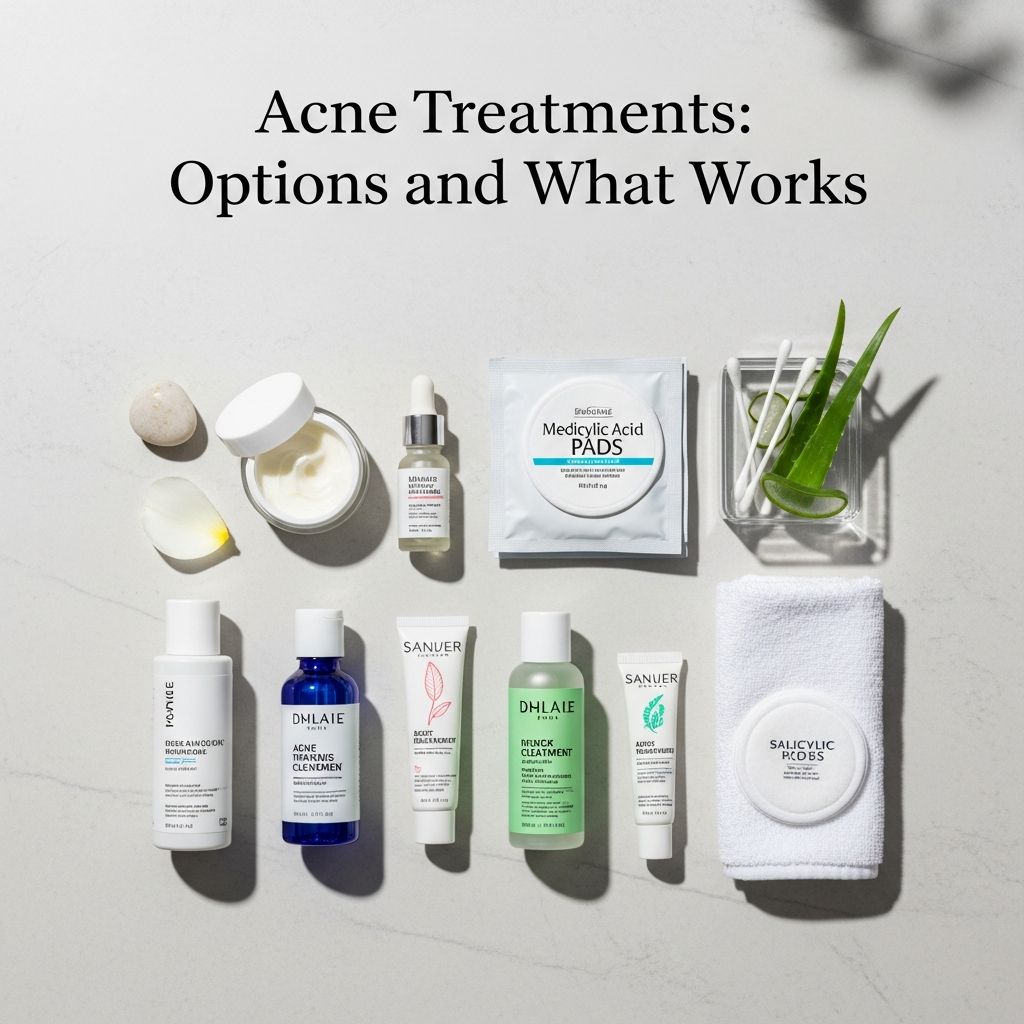
Acne Treatments: Options and What Works
Acne is a common skin condition that affects people of all ages, but the good news is that it is highly treatable. The key to successful acne management is starting treatment early to prevent scarring and reduce the psychological impact of this condition. Treatment approaches vary depending on the severity of your acne, your skin type, and how your skin responds to different medications. Most people require consistent treatment for several months to achieve and maintain clear skin.
Understanding Your Treatment Options
The range of acne treatments available today is extensive, from over-the-counter products to prescription medications and professional procedures. Your doctor will recommend a treatment regimen based on your age, the type and severity of your acne, and your willingness to commit to a treatment plan. Treatment success typically requires 2 to 3 months of consistent application before you can assess whether a particular therapy is working effectively for you.
Topical Medications for Acne
Topical treatments are the standard of care for mild to moderate acne. These medications are applied directly to the skin and work at the application site to prevent new lesions from forming. The main advantage of topical treatments is that they have fewer systemic side effects compared to oral medications.
Retinoids and Retinoid-Like Drugs
Retinoids are among the most effective topical treatments for acne, particularly for moderate cases. These medications contain retinoic acids or similar compounds that work by preventing the plugging of hair follicles and promoting skin cell turnover. Retinoids decrease the number of comedones and inflammatory lesions by 40 to 70 percent, making them a cornerstone of acne therapy.
Common retinoid options include:
- Tretinoin (Avita, Retin-A, and others) – a prescription retinoid available in creams, gels, and lotions
- Adapalene (Differin) – often as effective as tretinoin but less irritating to the skin
- Tazarotene (Tazorac, Avage, and others) – another prescription option for moderate acne
When starting retinoid therapy, apply the medication in the evening, beginning with just three times a week, then gradually increasing to daily use as your skin becomes accustomed to the treatment. Optimal results typically appear after 12 weeks of consistent use. The most common side effect is local irritation with redness and scaling, which often improves after the first month. Start with the lowest concentration and increase gradually as tolerated. Important note: do not apply tretinoin at the same time as benzoyl peroxide, as benzoyl peroxide can oxidize the retinoid and reduce its effectiveness.
Topical Antibiotics
Topical antibiotics work by killing excess skin bacteria and reducing redness and inflammation associated with acne. They are particularly useful for inflammatory acne and are often combined with other treatments for better results. The most commonly used topical antibiotics include clindamycin and erythromycin.
For the first few months of treatment, you may use both a retinoid and an antibiotic, applying the antibiotic in the morning and the retinoid in the evening. To reduce the likelihood of developing antibiotic resistance, topical antibiotics are often combined with benzoyl peroxide. Examples of these combination products include:
- Clindamycin with benzoyl peroxide (Benzaclin, Duac, and others)
- Erythromycin with benzoyl peroxide (Benzamycin)
Related Stories



It is important to note that topical antibiotics alone are not recommended for acne treatment, as they should always be paired with another agent to prevent bacterial resistance.
Over-the-Counter Acne Products
Several effective over-the-counter products are available for mild acne. Look for products containing these active ingredients:
- Benzoyl peroxide – dries excess oil and promotes peeling
- Adapalene – a retinoid available without prescription in some regions
- Salicylic acid – promotes skin exfoliation and unclogs pores
- Glycolic acid – an alpha hydroxy acid that improves skin turnover
- Alpha hydroxy acids (AHAs) – help remove dead skin cells
It may take several weeks of using an over-the-counter product before you see improvement. Creams are generally less irritating than gels or ointments. Initial side effects such as redness, dryness, and scaling often improve after the first month of use.
Other Topical Treatments
Additional topical options include:
- Azelaic acid – helps reduce bacteria and has anti-inflammatory properties
- Dapsone – useful for certain types of acne, particularly in women
- Sulfur – an older treatment that remains effective for some patients
Chemical Peels
Chemical peels use repeated applications of chemical solutions to treat acne and improve skin appearance. Common solutions used include salicylic acid, glycolic acid, and retinoic acid. This treatment is typically recommended for mild acne and may improve the appearance of your skin. However, the improvement is not long-lasting, and repeat treatments are usually needed to maintain results. Chemical peels work by removing the outer layers of skin and promoting the growth of new skin cells.
Combination Therapy for Better Results
Research shows that combination therapy is more effective than using a single agent alone. For example, combining retinoids with antibiotics produces better results than either medication used separately. When using combination therapy, apply the different agents at separate times unless they are specifically formulated as compatible combination products. This approach helps prevent interactions that could reduce effectiveness and minimizes irritation.
Systemic Therapies: Oral Medications
For moderate to severe acne that does not respond adequately to topical treatments, systemic therapies (medications taken by mouth) are usually necessary. These medications work throughout your body to address multiple causes of acne.
Oral Antibiotics
Oral antibiotics are commonly prescribed for moderate acne, particularly when there are many inflamed lesions. These medications reduce bacteria within the hair follicles and have additional anti-inflammatory effects. Common oral antibiotics used for acne include:
- Tetracyclines (such as doxycycline and minocycline) – reduce bacteria and have strong anti-inflammatory properties
- Erythromycin – an alternative for patients who cannot take tetracyclines
- Trimethoprim-sulfamethoxazole – used in cases of antibiotic resistance
Oral antibiotics typically require up to six weeks to show a response. When using oral antibiotics, they are usually combined with topical retinoids and benzoyl peroxide to maximize effectiveness and prevent antibiotic resistance from developing.
Hormonal Therapies
For women with acne, hormonal therapies provide effective treatment options, particularly when acne is related to hormonal fluctuations. These therapies can be used as second-line treatments and are effective regardless of whether androgen excess is present. Hormonal treatments help regulate the production of sebum and can significantly improve acne in women.
Isotretinoin (Accutane)
Isotretinoin is a powerful oral medication reserved for severe acne that has not responded to other treatments. This medication is highly effective because it affects all the causes of acne: it reduces abnormal follicular keratinization, decreases sebum production by 70 percent, reduces bacteria colonization, and has strong anti-inflammatory effects.
Isotretinoin is typically prescribed for:
- Severe nodulocystic acne
- Acne that causes significant scarring
- Acne with less than 50 percent improvement after four months of oral antibiotics or hormonal therapies
Because isotretinoin can cause serious side effects, including birth defects, it requires careful medical supervision and regular monitoring with blood tests. This medication is only prescribed by dermatologists and requires enrollment in a restricted distribution program.
Professional and Physical Treatments
Several professional procedures can be used to treat acne, although there is less evidence supporting these compared with medications. These treatments are often used in combination with topical and oral therapies.
Light Therapy
Light-based therapies have shown some success in treating acne. Various light sources have been tested, and most require multiple visits to your doctor’s office. High-intensity, narrow-band blue light photodynamic therapy is among the options available. However, further research is needed to determine the ideal light source, wavelength, and treatment dose for optimal results.
Drainage and Extraction
Your dermatologist may use special tools to gently remove whiteheads and blackheads (comedones) or cysts that have not cleared with topical medications. This procedure temporarily improves your skin’s appearance but can potentially cause scarring. It is best used as an adjunct to other treatments rather than as a standalone therapy.
Steroid Injections
Nodular and cystic lesions can be treated with injections of a steroid drug directly into the lesion. This therapy has resulted in rapid improvement and decreased pain associated with these large, stubborn lesions. However, potential side effects include skin thinning and discoloration in the treated area, so this treatment should be used judiciously and only for appropriate lesions.
Microdermabrasion
Microdermabrasion is a physical exfoliation technique that removes the outer layer of skin using tiny abrasive particles or a diamond-tipped device. This treatment can help improve the appearance of mild acne and acne scars, though multiple sessions are typically required for optimal results.
Laser and Light-Based Treatments
Various laser and light-based therapies are available for treating acne and acne scars. These treatments work by targeting bacteria, reducing inflammation, or stimulating collagen remodeling. However, evidence for these treatments is still developing, and they are often used as complementary therapies rather than primary treatments.
Treatment by Acne Severity
Your treatment plan should be tailored to your specific acne severity:
Mild Acne
Mild acne responds well to topical treatments alone. First-line options include topical retinoids combined with benzoyl peroxide or topical antibiotics. Over-the-counter products containing salicylic acid or benzoyl peroxide may also be effective. Chemical peels can be considered for additional improvement.
Moderate Acne
Moderate acne typically requires combination topical therapy or the addition of oral antibiotics. A common approach is combining a topical retinoid with benzoyl peroxide and a topical antibiotic. If topical therapy alone is insufficient, oral antibiotics are added, usually combined with topical retinoids and benzoyl peroxide to prevent resistance.
Severe Acne
Severe acne, particularly nodular or cystic acne, usually requires oral isotretinoin or high-dose oral antibiotics combined with topical retinoids and benzoyl peroxide. Isotretinoin is considered when other systemic therapies have failed or when significant scarring is present.
How Long Does Treatment Take?
Patience is essential when treating acne. Most treatments require a consistent commitment of 2 to 3 months before you can accurately assess whether they are working. Retinoid treatments often take 12 weeks to show optimal results. Oral antibiotics may require up to six weeks before noticeable improvement occurs. Many people make the mistake of switching treatments too quickly, before giving them adequate time to work.
Managing Side Effects
Many acne treatments cause initial side effects that often improve with continued use:
- Irritation and dryness – common with retinoids and benzoyl peroxide; reduce frequency of application initially and use a non-comedogenic moisturizer
- Redness and scaling – typically subside after the first month of use
- Sun sensitivity – wear broad-spectrum sunscreen daily, especially when using retinoids
- Photosensitivity with certain antibiotics – avoid excessive sun exposure and use protective clothing
Preventing Acne Recurrence
Continuous maintenance therapy can prevent acne flares after you have achieved clear skin. Many people need to continue using topical retinoids or other medications long-term to prevent the return of acne. Maintenance therapy is an important part of long-term acne management.
When to See a Dermatologist
You should consider seeing a dermatologist if:
- Over-the-counter products are not improving your acne after 6-8 weeks
- You have moderate to severe acne
- Your acne is leaving scars
- Acne is significantly affecting your quality of life or mental health
- You develop acne in adulthood
- You have hormonal acne as a woman
Frequently Asked Questions (FAQs)
Q: How long will I need to continue acne treatment?
A: Many people require ongoing maintenance therapy after achieving clear skin to prevent acne from returning. Your dermatologist can advise you on the appropriate duration of treatment based on your specific situation.
Q: Can I use multiple acne treatments at the same time?
A: Yes, but combination therapy should be done strategically. Apply different products at different times (such as antibiotic in the morning and retinoid in the evening) to avoid interactions. Some products are specifically formulated as compatible combinations.
Q: Is it safe to use benzoyl peroxide and retinoids together?
A: Not at the same time. Benzoyl peroxide can oxidize tretinoin and reduce its effectiveness. Apply them at different times of day, or use products specifically formulated to combine them safely.
Q: What is the difference between adapalene and tretinoin?
A: Both are retinoids effective for acne, but adapalene is generally less irritating than tretinoin while being equally effective. Your dermatologist can help determine which is better for your skin.
Q: Will acne treatment prevent scarring?
A: Early treatment of inflamed acne significantly reduces the risk of permanent scarring. This is one reason it is important to start treatment as soon as acne develops rather than waiting.
Q: Are there natural or alternative treatments for acne?
A: While some natural products may help mild acne, prescription and over-the-counter medications have much stronger evidence supporting their effectiveness. Discuss any alternative treatments with your doctor before use.
Q: Can diet affect acne?
A: While some research suggests certain foods may worsen acne in some people, diet is not usually the primary cause. Medication remains the most effective treatment for acne, though maintaining good skin hygiene is important.
Q: What should I do if my acne worsens after starting treatment?
A: Some temporary worsening can occur when starting retinoids (called “retinization”). If this persists beyond a few weeks or if you experience severe reactions, contact your dermatologist to adjust your treatment plan.
References
- Acne – Diagnosis and Treatment — Mayo Clinic. 2024. https://www.mayoclinic.org/diseases-conditions/acne/diagnosis-treatment/drc-20368048
- Management of Acne — National Center for Biotechnology Information, NIH. https://pmc.ncbi.nlm.nih.gov/articles/PMC3080563/
- Acne Treatment — JAMA Network. 2021. https://jamanetwork.com/journals/jama/fullarticle/2786498
- Diagnosis and Treatment of Acne — American Academy of Family Physicians (AAFP). 2012. https://www.aafp.org/pubs/afp/issues/2012/1015/p734.html
- Acne: Types, Causes, Treatment & Prevention — Cleveland Clinic. 2024. https://my.clevelandclinic.org/health/diseases/12233-acne
Similar Articles








Read full bio of medha deb