Acne Vulgaris: Causes, Types, and Treatment Options
Understanding acne vulgaris: comprehensive guide to causes, classifications, and evidence-based treatment strategies.
Understanding Acne Vulgaris: A Comprehensive Guide
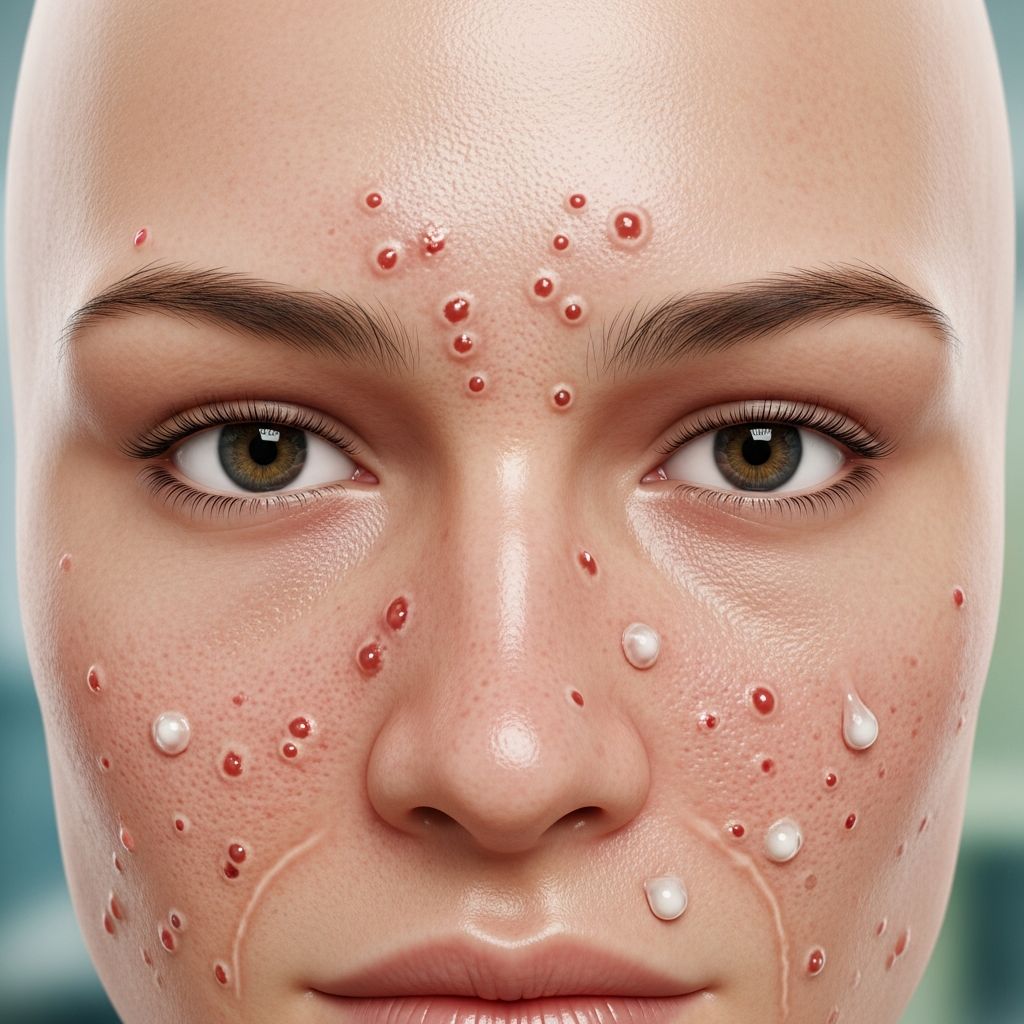
Acne vulgaris is a chronic inflammatory disorder affecting the pilosebaceous unit, characterized by the formation of comedones, papules, pustules, nodules, and cysts. This common skin condition most frequently affects adolescents and young adults, though it can persist into adulthood. Acne vulgaris develops primarily on the face and upper trunk and, while mild and moderate cases typically heal without scarring by the mid-20s, severe untreated acne can result in permanent skin damage and significant psychosocial impact.
What Is the Pilosebaceous Unit?
The pilosebaceous unit consists of a hair follicle and its accompanying sebaceous gland, which produces sebum—an oily substance that keeps the skin lubricated and protected. Understanding the structure and function of this unit is essential to comprehending how acne develops. The follicular infundibulum, the upper portion of the hair follicle, is where the pathological changes of acne vulgaris occur. When this structure becomes obstructed and inflamed, the conditions are set for acne lesion formation.
The Four Pathogenic Mechanisms of Acne Vulgaris
Acne vulgaris develops through four primary pathogenic events that work in concert to create the clinical manifestations we observe:
- Increased sebum production: Hormonal changes, particularly during puberty, stimulate sebaceous glands to produce excess sebum. This oily buildup creates an environment conducive to acne development.
- Follicular hyperkeratinization: Abnormal shedding of skin cells within the follicle leads to accumulation and obstruction. This process creates an environment where lesions can form.
- Bacterial colonization: The bacterium Cutibacterium acnes (formerly Propionibacterium acnes) naturally resides on the skin, but in acne-prone individuals, it overgrows within clogged pores, disrupting the skin’s microbiome.
- Inflammation: The immune system responds to bacterial overgrowth and follicular obstruction with inflammation, resulting in the red, tender lesions characteristic of inflammatory acne.
The Microcomedo: Foundation of All Acne Lesions
The microcomedo serves as the primary lesion and precursor for all clinical manifestations of acne vulgaris. Characterized by a small, hyperkeratotic plug composed primarily of corneocytes and located in the lower region of the follicular infundibulum, microcomedones gradually evolve into other acne lesions. This progression represents the natural history of untreated acne and underscores why early intervention is important.
Classification of Acne Lesions
Acne vulgaris presents with diverse lesion types, which are classified into noninflammatory and inflammatory categories:
Noninflammatory Lesions
- Closed comedones (whiteheads): These appear as small flesh-colored or whitish bumps where the follicle is closed at the skin surface, trapping sebum and dead skin cells beneath.
- Open comedones (blackheads): Contrary to popular belief, the dark color is not dirt but oxidized melanin and sebum. The follicle remains open to the skin surface.
Inflammatory Lesions
- Papules: Small, red bumps that feel tender or sore, representing early inflammatory responses within the follicle.
- Pustules: Pimples filled with pus, surrounded by redness and inflammation.
- Nodules and cysts: Large, deeper, and often painful lesions that can scar if left untreated, representing more severe inflammatory acne.
Severity Grading and Classification
Determining acne severity is crucial for selecting appropriate treatment. The Comprehensive Acne Severity Scale (CASS) grades acne from 0 to 5, with 0 representing clear skin and 5 representing very severe, highly inflammatory acne.
Mild Acne Vulgaris
Mild acne is characterized by a few scattered comedones or small inflammatory papules without scarring. Lesions may appear on a single body area or multiple areas, and nodules or confluence is absent. Mild acne typically presents as CASS grades 0-2.
Related Stories



Moderate Acne Vulgaris
Moderate acne involves more numerous inflammatory papules and pustules, often with some nodulopapular features. This classification requires more aggressive treatment than mild acne but may respond to topical and oral combination therapies without resorting to isotretinoin.
Severe Acne Vulgaris
Severe acne includes extensive nodulocystic lesions, often with significant scarring potential. Very severe acne (CASS grade 5) requires the most aggressive treatment approaches, including oral isotretinoin.
Risk Factors and Triggers
While acne vulgaris is multifactorial in origin, several triggers can exacerbate existing acne:
- Occlusive cosmetics and clothing that trap heat and moisture
- Certain cleansers and lotions that disrupt the skin barrier
- High humidity environments
- Specific medications (such as corticosteroids and lithium)
- Chemical exposure
- High intake of milk products and high-glycemic diet (in susceptible individuals)
Understanding and avoiding these triggers can help minimize acne severity and improve treatment outcomes.
Treatment Strategies Based on Severity
The American Academy of Dermatology and other professional organizations provide evidence-based treatment guidelines that tailor therapy to acne severity. Treatment selection should consider patient age, skin type, acne characteristics, and patient preferences.
Treatment for Mild Acne
Mild acne vulgaris responds well to topical monotherapy or combination therapy. Primary treatment approaches include:
- Topical retinoids: These vitamin A derivatives regulate skin cell turnover and reduce inflammation, helping treat deeper pimples while minimizing future breakouts and scarring risk.
- Topical antibiotics: These work by reducing bacterial counts, though monotherapy is not recommended due to antibiotic resistance concerns.
- Benzoyl peroxide: An effective antibacterial ingredient that targets C. acnes, reduces inflammation, and prevents antibiotic resistance.
- Azelaic acid: Offers antimicrobial and anti-inflammatory benefits with excellent safety profiles.
- Sulfur: A natural mineral that absorbs excess oil, inhibits bacterial growth, and soothes irritated skin.
Treatment for Moderate Acne
Moderate acne requires combination therapy, typically combining topical and systemic agents. Recommended approaches include:
- Fixed-dose combination treatments: Ideally containing benzoyl peroxide with either a topical retinoid or topical antibiotic, such as Epiduo (adapalene and benzoyl peroxide).
- Systemic antibiotics plus topical therapy: Oral doxycycline or other tetracyclines combined with topical retinoids and benzoyl peroxide. Systemic antibiotics should be used only in combination with benzoyl peroxide and retinoids for a maximum of 12 weeks.
- Hormonal therapy for female patients: Oral contraceptives or antiandrogens such as spironolactone can effectively reduce sebum production in hormonally-sensitive acne.
Treatment for Severe Acne
Severe acne, particularly nodulocystic disease with scarring potential, requires the most aggressive approach:
- Oral isotretinoin: A highly effective medication (dose 0.5-1 mg/kg/day for 20 weeks) that can provide long-term remission or cure of severe acne. This treatment requires careful monitoring due to potential side effects and is typically reserved for cases unresponsive to conventional therapy.
General Treatment Principles
Regardless of acne severity, several fundamental principles optimize outcomes:
Cleansing
Gentle soap-free cleansers used twice daily are adequate for most patients. Over-washing or using harsh products can irritate the skin and worsen inflammation.
Moisturization
Proper hydration is essential, particularly for patients using drying acne medications. Acne-specific moisturizers formulated to avoid comedone formation are recommended.
Formulation Selection
Cream and other non-alcohol-based topical formulations generally provide better absorption and tolerability than alcohol-based products.
Treatment Duration
Therapeutic interventions for acne should have a minimum duration of eight weeks to assess effectiveness, unless the patient experiences an allergy or intolerable adverse effects.
Combination Therapy Advantage
Monotherapy is not recommended for acne treatment given both the increasing prevalence of antibiotic resistance and decreased effectiveness compared to combination therapy.
When to Seek Specialist Care
If patients show inadequate improvement after sequential interventions lasting at least eight weeks each, referral to a dermatologist is recommended. Additionally, severe acne, acne with significant scarring, acne unresponsive to standard therapy, and cases requiring isotretinoin should be managed by dermatology specialists.
Frequently Asked Questions
Q: At what age does acne typically develop?
A: Acne vulgaris most often affects adolescents during puberty when hormonal changes stimulate sebaceous gland activity. However, acne can develop at any age and may persist into adulthood.
Q: Can diet affect acne?
A: While individual responses vary, a high intake of milk products and high-glycemic foods may trigger or exacerbate acne in susceptible individuals. Avoiding these triggers may help improve acne severity in some patients.
Q: Why does acne get worse with stress?
A: Stress triggers hormonal changes that increase sebum production and inflammation, potentially worsening acne. Additionally, stress-related behaviors like touching the face can introduce bacteria and aggravate existing lesions.
Q: How long does acne treatment take to work?
A: Most acne treatments require a minimum of eight weeks to assess effectiveness. Improvements may be gradual, and optimal results often take 12 weeks or longer, depending on the treatment approach and acne severity.
Q: Will acne leave permanent scars?
A: Mild and moderate acne usually heals without scarring by the mid-20s. However, severe inflammatory acne, particularly nodulocystic disease, has significant scarring potential if left untreated. Early and appropriate treatment minimizes scarring risk.
Q: Can topical antibiotics alone treat acne?
A: No. Topical antibiotics alone are not recommended due to increasing antibiotic resistance and decreased effectiveness. They should be combined with benzoyl peroxide and retinoids for optimal outcomes.
Q: Is isotretinoin safe?
A: Isotretinoin is highly effective for severe acne but requires careful medical supervision due to potential side effects. It is typically reserved for severe, scarring acne unresponsive to conventional therapy and should only be prescribed by experienced dermatologists with appropriate monitoring protocols in place.
References
- Updated Guidelines for Acne Management — American Academy of Dermatology. 2024. https://www.aad.org/news/updated-guidelines-acne-management
- Acne Vulgaris – Dermatologic Disorders — Merck Manuals Professional Edition. 2024. https://www.merckmanuals.com/professional/dermatologic-disorders/acne-and-related-disorders/acne-vulgaris
- Acne Vulgaris — StatPearls/NCBI Bookshelf, National Center for Biotechnology Information. 2024. https://www.ncbi.nlm.nih.gov/books/NBK459173/
- Acne Vulgaris Clinical Guidance — Primary Care Dermatology Society. 2024. https://www.pcds.org.uk/clinical-guidance/acne-vulgaris
- Acne Vulgaris: A Dermatologist’s Guide to Causes and Treatment — Slmd Skincare. 2024. https://slmdskincare.com/blogs/learn/what-is-acne-vulgaris
- Acne Vulgaris: A Guide to Diagnosis, Treatment, and Management — Visual DX. 2024. https://www.visualdx.com/blog/acne-vulgaris-a-guide-to-diagnosis-treatment-and-management/
- Acne Vulgaris: Diagnosis and Treatment — American Academy of Family Physicians. 2019. https://www.aafp.org/pubs/afp/issues/2019/1015/p475.html
Similar Articles








Read full bio of medha deb