Acne: A Complete Guide To Causes, Symptoms, And Treatment
Comprehensive guide to acne: causes, types, clinical features, diagnosis, and effective treatments for all severities.
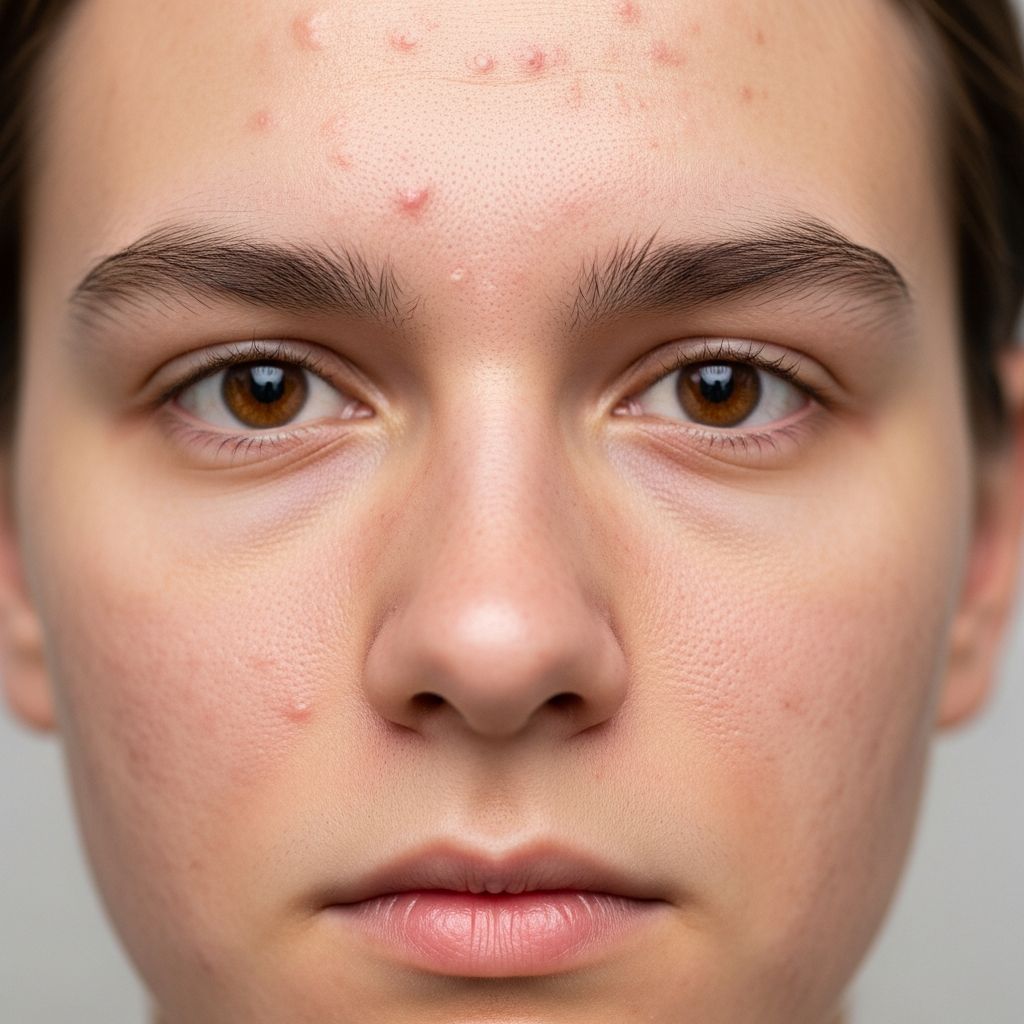
Acne is a common chronic disorder affecting the hair follicle and sebaceous gland, characterised by expansion and blockage of the follicle with inflammation. It primarily impacts adolescents but can persist or worsen in adulthood, affecting the face, neck, chest, and back[10].
Demographics
Acne affects nearly all individuals at some point, with both sexes and all races susceptible, though it predominantly occurs during adolescence. Adult acne, or postadolescent acne, may persist from teenage years or onset after age 25, often in women due to hormonal influences[10]. Severe forms like nodulocystic acne are more common in males.
Causes
Several factors contribute to acne development. Key causes include:
- Increased sebum production: Sebaceous glands enlarge and overproduce oil, especially on the forehead, chin, mid-back, ears, and genitals.
- Follicular hyperkeratinisation: Abnormal shedding of skin cells blocks the pilosebaceous unit (hair follicle and oil gland).
- Propionibacterium acnes (P. acnes) proliferation: Bacteria thrive in clogged pores, triggering inflammation.
- Inflammation: Immune response to bacteria and follicular contents leads to papules, pustules, and nodules.
Flares are provoked by hormonal changes (puberty, menstruation, pregnancy), medications (e.g., corticosteroids, lithium), cosmetics, friction, high humidity, and stress. Dietary factors like high dairy intake or high glycaemic index foods may influence some individuals, though evidence is weak. Smoking exacerbates comedonal acne.
Clinical features
Acne lesions centre on the pilosebaceous unit and include non-inflammatory and inflammatory types.
Non-inflammatory lesions
- Comedones: Primary lesion; plugs of sebum and keratin. Open comedones (blackheads) appear dark due to oxidation; closed comedones (whiteheads) are flesh-coloured. Comedonal acne mainly affects forehead and chin.
Inflammatory lesions
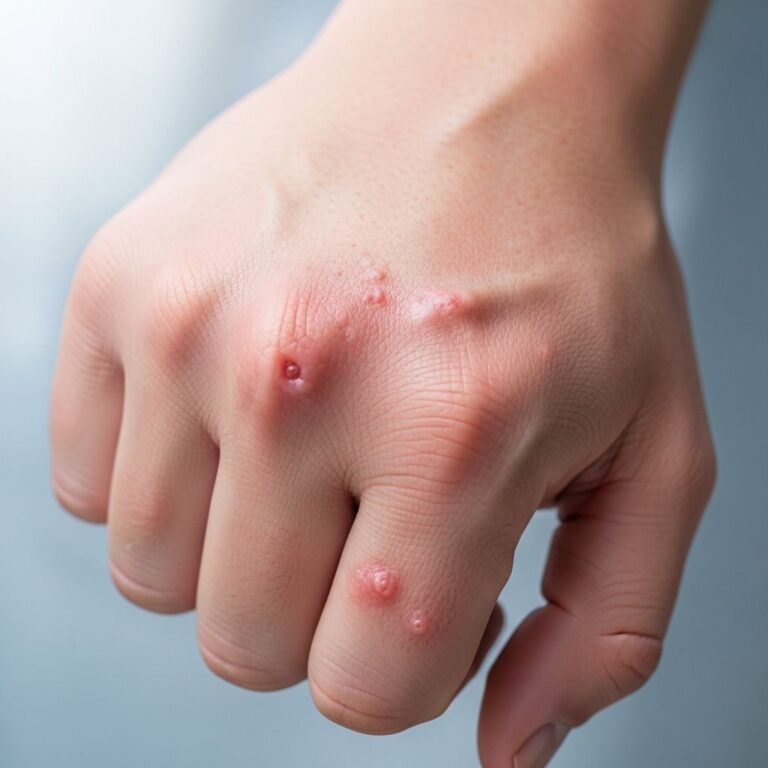
- Papules: Small red inflamed bumps.
- Pustules: Pus-filled lesions.
- Nodules: Large, deep painful inflammatory masses.
Secondary lesions
- Scarring: Atrophic (pitted) or hypertrophic from severe inflammation.
- Pseudocysts: Deep fluctuant swellings mimicking cysts.
Acne vulgaris features mixed comedones and superficial inflammatory lesions lasting 2-3 weeks; deeper nodules persist months. Patients often have oily skin (seborrhoea). Severity is mild (few comedones/papules), moderate (numerous lesions), or severe (nodules, scarring). Leeds grading (1-12) compares lesions to photographs.
Variants include:
- Acne conglobata: Severe nodulocystic with interconnected abscesses, sinuses, and scarring; more in males.
- Acne fulminans: Rare, systemic symptoms (fever, joint pain, weight loss), lytic bone lesions; hypersensitivity to P. acnes, triggered by isotretinoin or testosterone.
- Adult acne: Persistent or late-onset, often lower face in women[10].
Diagnostic tests
Diagnosis is clinical based on lesion morphology and distribution; tests are rarely needed. Atypical features (e.g., older age, systemic signs) warrant investigations like hormones (PCOS), swabs for resistant bacteria, or biopsy for rosacea/discoid lupus mimics.
Treatment
Treatment depends on severity: mild (topicals), moderate (topicals + orals), severe (systemics, referral). Improvement takes 4-6 weeks; continue long-term to prevent relapse.
Treatment of mild acne
Wash twice daily with mild cleanser; apply topicals to entire affected area. Over-the-counter options:
- Benzoyl peroxide (kills bacteria, comedolytic).
- Salicylic acid (keratolytic).
- Azelaic acid (anti-inflammatory, antibacterial).
Prescription topicals:
- Retinoids (adapalene, tretinoin): normalise keratinisation.
- Topical antibiotics (clindamycin, erythromycin).
- Combinations (clindamycin/benzoyl peroxide, adapalene/benzoyl peroxide).
Related Stories



For comedonal acne: oil-free cosmetics, low-sugar/fat/dairy diet, quit smoking. Blue light therapy for mild-moderate.
Treatment of moderately severe acne
Combine topicals with oral antibiotics (tetracycline, doxycycline, minocycline, erythromycin, trimethoprim) for 3-6 months; continue topicals post-antibiotics. Avoid dual topical/oral antibiotics to prevent resistance.
Treatment of severe acne
Isotretinoin (oral retinoid): For nodulocystic/conglobata; leads to long-term remission. Monitor lipids, liver, pregnancy prevention.
Hormonal therapy (women): Combined oral contraceptive pill (COCP) reduces testosterone/oil.
Acne fulminans: urgent dermatologist; corticosteroids, anti-TNF, dapsone, isotretinoin.
Physical treatments
- Lights/lasers (blue light, photodynamic).
- Chemical peels.
- Comedo extraction.
- Drainage/injection for nodules.
| Severity | Key Lesions | Treatments |
|---|---|---|
| Mild | Comedones, few papules | Topical benzoyl peroxide, retinoids, salicylic acid |
| Moderate | Numerous papules/pustules | Topicals + oral antibiotics 3-6 months |
| Severe | Nodules, scarring | Isotretinoin, hormonals, physical therapies |
Outlook
Most mild acne resolves with topicals; moderate requires 3-6 months orals; severe needs isotretinoin for remission. Scarring may persist; early treatment prevents it. Consult dermatologist if no improvement in 6 weeks or severe. Lifestyle: non-comedogenic products, gentle cleansing.
Frequently Asked Questions (FAQs)
Q: How long do acne treatments take to work?
A: Most take 4-6 weeks for noticeable improvement; full results in 3-6 months. Continue long-term.
Q: Can diet affect acne?
A: High dairy or glycaemic foods may worsen in some; evidence weak. Low sugar/fat/dairy advised for comedonal.
Q: Is isotretinoin safe?
A: Effective for severe acne but requires monitoring for side effects like dry skin, lipids. Teratogenic; strict pregnancy prevention.
Q: What causes adult acne?
A: Hormonal (androgens), persistent teen acne, or late-onset post-25[10].
Q: How to prevent scarring?
A: Treat early, avoid picking lesions, use anti-inflammatories.
References
- Acne management – DermNet — DermNet NZ. 2023. https://dermnetnz.org/topics/acne-treatment
- How To Get Rid Of Acne – DermNet — DermNet NZ. 2023. https://dermnetnz.org/topics/acne/how-to-get-rid-of-acne
- Comedonal acne – DermNet — DermNet NZ. 2023. https://dermnetnz.org/topics/comedonal-acne
- Acne – Follicular disorders – DermNet — DermNet NZ. 2023. https://dermnetnz.org/cme/follicular/acne
- Acne Vulgaris: Features, Types, and Treatments – DermNet — DermNet NZ. 2023. https://dermnetnz.org/topics/acne-vulgaris
- Acne – DermNet — DermNet NZ. 2023. https://dermnetnz.org/topics/acne
Similar Articles








Read full bio of medha deb