Acquired Blaschchkoid Dermatitis: Guide To Diagnosis & Treatment
Understanding the inflammatory skin condition along Blaschko lines, its symptoms, diagnosis, and management options.
Acquired blaschkoid dermatitis, also known as
blaschkitis
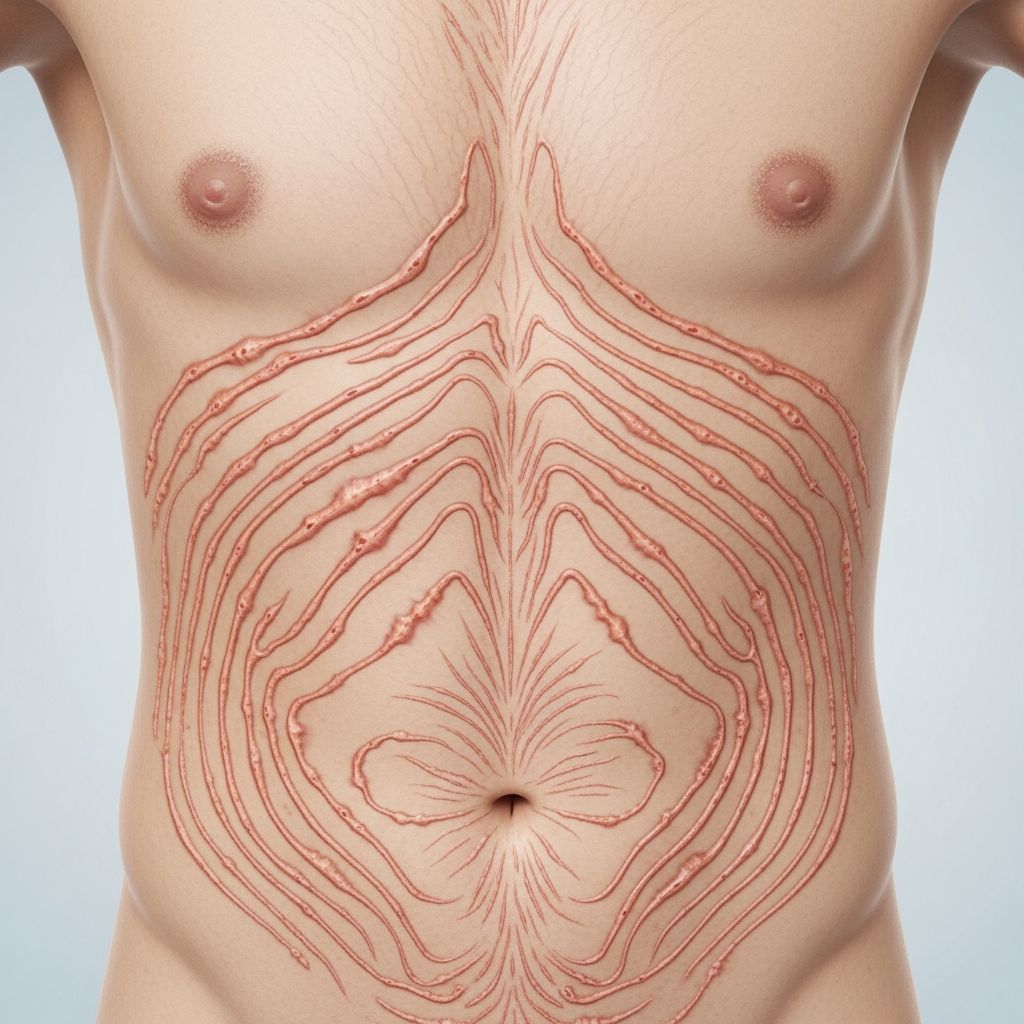
or idiopathic dermatitis along the lines of Blaschko, is a rare inflammatory skin condition that manifests as dry, red, and irritable lesions unilaterally alongBlaschko lines
. It is considered the adult counterpart to lichen striatus, which predominantly affects children, and arises postnatally due to genetic mosaicism triggered by external factors.What is acquired blaschkoid dermatitis?
Acquired blaschkoid dermatitis (ABD) represents an
acquired inflammatory dermatosis
that follows the distinctive patterns of Blaschko lines, which are embryologic migration paths of ectodermal cells visible only in certain mosaic skin disorders. Unlike congenital conditions, ABD develops later in life, typically in adults during their fourth or fifth decade, and is characterized by linear bands of erythematous papules or papulovesicles that may coalesce into plaques. The condition is unilateral, strictly respecting the midline, and most commonly involves the trunk, followed by extremities, with rare facial or neck involvement.The term ‘blaschkoid’ refers to its alignment with these lines, hypothesized to result from postzygotic somatic mutations or lyonization leading to genetically mosaic keratinocytes susceptible to T-cell mediated inflammation upon triggers like stress, infections, or medications. Histologically, it shows spongiotic dermatitis with epidermal spongiosis, band-like lymphocytic infiltrates, and sometimes necrotic keratinocytes, distinguishing it from similar entities.
Who gets acquired blaschkoid dermatitis?
ABD primarily affects adults, with a peak incidence in men and women aged 40-50 years, though cases in younger adults have been reported. It shows no strong gender predilection but is rarer in children, where lichen striatus predominates. Risk factors include a history of atopy, emotional stress, viral infections (e.g., recent herpes zoster-like triggers), medications (e.g., certolizumab, metronidazole, lisinopril), trauma, or underlying genetic mosaicism. One case described a 20-year-old with hypoplastic heart syndrome on long-term ASA, lisinopril, and metoprolol, suggesting possible drug triggers.
Prevalence is unknown due to its rarity, but it is more common on the trunk (central chest, intermamillary line) than extremities. Relapses occur in months to years, particularly under stress.
What causes acquired blaschkoid dermatitis?
The exact etiology remains idiopathic, but pathogenesis involves
genetic mosaicism
along Blaschko lines, where clonal keratinocyte populations become susceptible to autoimmune T-cell attacks triggered by exogenous factors. Proposed mechanisms include:- Postzygotic mutations or X-chromosome inactivation (lyonization) creating mosaic cells.
- Triggers: viral infections, medications, stress, trauma, or vaccinations.
- Inflammatory response: T-cell mediated against altered keratinocytes, leading to spongiosis and lymphocytic infiltrates.
Unlike lichen striatus, which may link to atopy or psoriasis, ABD’s adult onset and truncal preference suggest distinct but overlapping pathways.
What are the clinical features of acquired blaschkoid dermatitis?
ABD presents with sudden onset of
pruritic, erythematous, edematous papules (1-4 mm)
or papulovesicles along Blaschko lines, coalescing into 2-4 cm wide linear plaques or bands. Key features include:- Distribution: Unilateral, V-shaped on back, S-shaped on torso, linear on limbs; trunk most common.
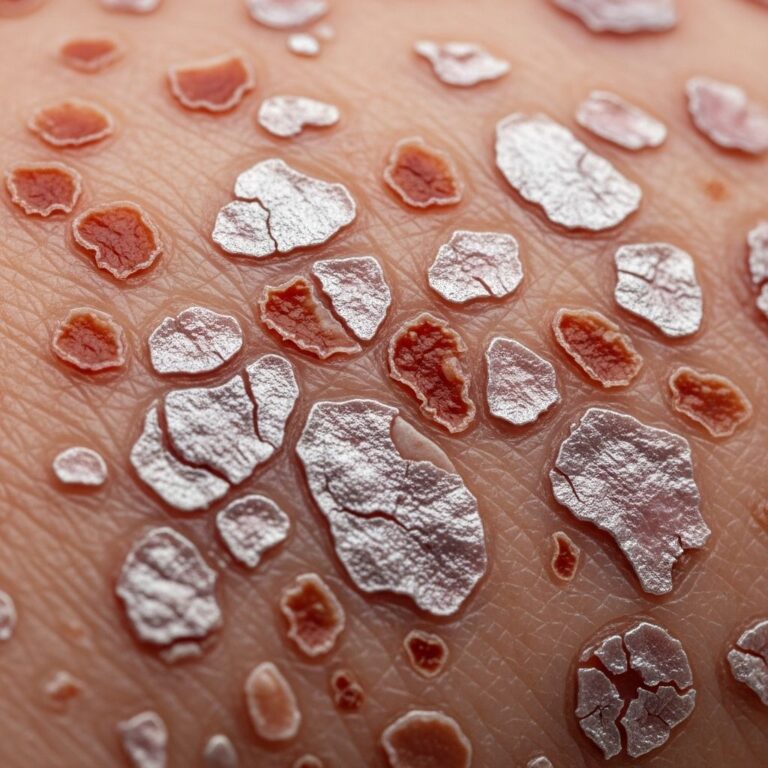
- Morphology: Dry, red, scaly, irritable lesions; fine scale, possible vesicles; asymptomatic to moderately pruritic.
- Progression: Rapid over weeks, resolves in weeks to months but relapses possible.
- Associated signs: Strict midline demarcation; post-inflammatory hyperpigmentation or hypopigmentation.
A case report detailed lesions starting on the biceps, spreading to chest and wrist over three months, responding well to topical steroids.
Related Stories



Diagnosis
Diagnosis is primarily
clinical
, based on characteristic linear distribution along Blaschko lines and history of adult onset. Differential includes lichen striatus, herpes zoster, linear psoriasis, or incontinentia pigmenti. Skin biopsy confirms spongiotic dermatitis with band-like infiltrates, dyskeratosis, and spongiosis, aiding differentiation.Table 1: ABD vs. Lichen Striatus vs. Blaschkitis (overlapping spectrum)
| Feature | Lichen Striatus | ABD/Blaschkitis |
|---|---|---|
| Age | Children | Adults (40-50s) |
| Site | Extremities (unilateral) | Trunk, extremities |
| Pathology | Dermal lymphocytic infiltrate, dyskeratosis | Spongiosis, band-like infiltrate |
| Duration | 6-12 months, self-resolve | Weeks-months, relapsing |
| Treatment Response | Topical steroids minimal effect | Variable; systemic steroids effective |
Treatment of acquired blaschkoid dermatitis
Mild cases require no treatment, resolving spontaneously with emollients for dryness. Pruritus management includes:
- First-line: Emollients; topical mid-potency corticosteroids (e.g., triamcinolone 0.1%) for symptomatic relief.
- Refractory cases: High-potency topicals (e.g., betamethasone dipropionate 0.05% twice daily, achieving near-complete resolution in 2 weeks).
- Severe/relapsing: Systemic corticosteroids; calcineurin inhibitors (pimecrolimus), acitretin, cyclosporine reported.
Topical steroids are often ineffective for core lesions but help symptoms; systemic therapy succeeds in non-responders. Observation is key as relapses occur.
What is the outcome for acquired blaschkoid dermatitis?
Lesions typically resolve in weeks to months without scarring, but recurrences are common over months-years, especially with triggers. Post-inflammatory dyspigmentation may persist temporarily. No malignant potential; prognosis excellent with management.
Related topics
- Lichen striatus
- Blaschko lines
- Adult blaschkitis
- Linear morphea
- Phytophotodermatitis
Frequently asked questions
What triggers acquired blaschkoid dermatitis?
Common triggers include stress, viral infections, medications, and trauma acting on mosaic-prone skin.
Does it go away on its own?
Yes, most cases self-resolve in weeks to months, though relapses occur.
Is a biopsy always needed?
No, clinical features suffice; biopsy for differentials.
Can children get it?
Rare; lichen striatus is the pediatric equivalent.
What if topical steroids fail?
Consider systemic steroids or observation.
References
- Blaschkolinear Acquired Inflammatory Skin Eruption (BLAISE) — Hackley B, et al. PMC. 2020-10-26. https://pmc.ncbi.nlm.nih.gov/articles/PMC7606174/
- Acquired Blaschkoid Dermatitis — DermNet NZ. Last updated 2023. https://dermnetnz.org/topics/acquired-blaschkoid-dermatitis
- Acquired Blaschko Dermatitis — VisualDx. Accessed 2026. https://iphone.visualdx.com/visualdx/diagnosis/acquired+blaschko+dermatitis?diagnosisId=56045&moduleId=101
- Acquired Blaschkoid Dermatitis — DoveMed. 2024-01-15. https://www.dovemed.com/diseases-conditions/acquired-blaschkoid-dermatitis
- Dermatologic Look-Alikes: Linearly Distributed Lesions — Clinical Advisor. 2023. https://www.clinicaladvisor.com/home/dermatologic-look-alikes/linearly-distributed-lesions/
- Lichen Striatus — NCBI Bookshelf. 2023-07-17. https://www.ncbi.nlm.nih.gov/books/NBK507830/
Similar Articles








Read full bio of medha deb