Acquired Dermal Macular Hyperpigmentation
Understanding the causes, types, diagnosis, and management of slate-grey to brown dermal pigment patches.
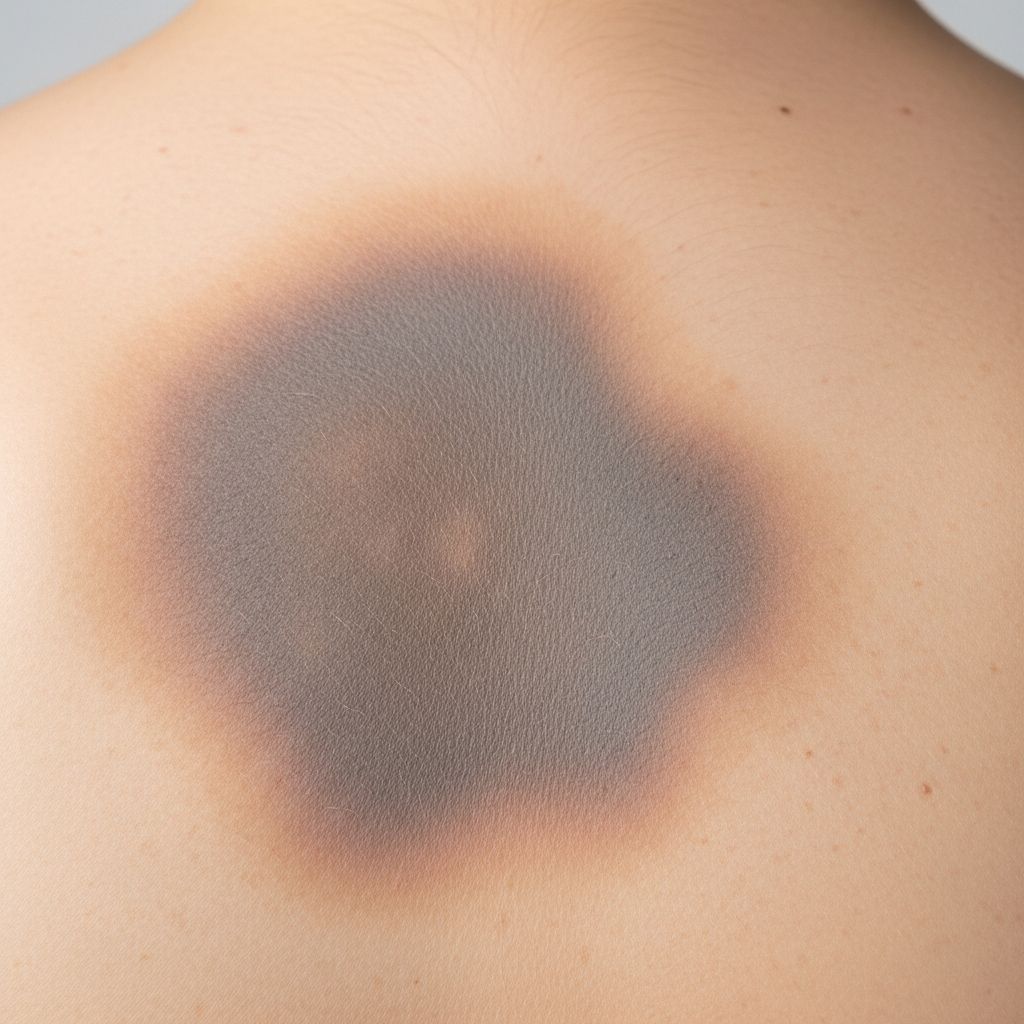
Acquired dermal macular hyperpigmentation (ADMH) is an umbrella term for a group of acquired pigmentary disorders characterized by the development of discrete or confluent macules and patches of variable shades of brown, slate-grey to grey-blue colour, preferentially localized on the face and other sun-exposed areas.
What is acquired dermal macular hyperpigmentation?
ADMH describes conditions where melanin pigment has been released from damaged basal keratinocytes into the dermis (pigment incontinence), resulting in slate-grey or brown patches visible through the epidermis. These disorders primarily affect individuals with darker Fitzpatrick skin types (III–VI), particularly middle-aged females, and manifest as persistent, asymptomatic hyperpigmented macules or patches on the face, neck, and flexures.
The pigmentation arises due to melanophages—macrophages that engulf melanin—in the upper dermis. Unlike epidermal hyperpigmentation, which fades with normal skin turnover, dermal pigment persists for months to years because the dermis lacks efficient clearance mechanisms.
Who gets acquired dermal macular hyperpigmentation?
ADMH predominantly affects adults, with a strong female predominance (female-to-male ratio often >3:1 across subtypes). Patients are typically middle-aged (30–50 years) with Fitzpatrick skin types III–VI, common in individuals of Asian, Latin American, Middle Eastern, or African descent.
- Lichen planus pigmentosus (LPP): Most common in Indian patients; insidious onset in 30–40s.
- Erythema dyschromicum perstans (EDP): Affects younger adults (20–40 years); reported worldwide but more in Latin America.
- Riehl melanosis: Middle-aged females, often with history of cosmetic use; prevalent in East Asians.
Genetic predisposition, chronic low-grade inflammation, and environmental triggers interplay in susceptible individuals.
What causes acquired dermal macular hyperpigmentation?
The exact etiology remains multifactorial and often idiopathic, but key mechanisms include:
- Post-inflammatory pigment incontinence: Basal cell vacuolar degeneration from interface dermatitis releases melanin into dermis, engulfed by melanophages.
- Contact allergens/irritants: Cosmetics, hair dyes (e.g., paraphenylenediamine), fragrances, mustard oil, amla oil provoke pigmented contact dermatitis.
- Friction/trauma: Repeated rubbing from clothing, masks, or devices induces low-grade inflammation.
- UV exposure: Exacerbates and perpetuates pigmentation; many cases photo-distributed.
- Other associations: Drugs (e.g., radiographic contrast), infections (e.g., whipworm), metals (e.g., cobalt).
In LPP, suspected culprits include photosensitizing agents like allyl thiocyanate in mustard oil. Riehl melanosis links to type IV hypersensitivity from low-dose allergens causing cytolytic reactions without overt eczema.
What are the clinical features of acquired dermal macular hyperpigmentation?
Lesions are usually asymptomatic (mild itch/burn in ~30% of LPP cases) and evolve insidiously without a prominent inflammatory phase.
| Feature | LPP | EDP | Riehl Melanosis |
|---|---|---|---|
| Morphology | Discrete dark brown macules coalescing to patches; well-defined margins | Ashy-grey polycyclic macules (0.5–2 cm); occasional erythematous rim | Diffuse/patchy brown-grey pigmentation; ill-defined |
| Distribution | Face (perioral), neck, trunk, flexures, sun-exposed | Trunk, proximal limbs; progresses to neck/face | Face (forehead, zygomatic, temples); symmetrical |
| Color | Slate-grey to brown-black | Blue-grey to ashy | Brown to blue-black |
| Course | Chronic; progressive then plateau | Persistent; may stabilize | Chronic; severe cases persistent |
Related Stories



Dermoscopy reveals brown dots/globules (melanophages), reticulate patterns, and pigment blotches; follicular variants show owl-eye structures.
Diagnosis of acquired dermal macular hyperpigmentation
Diagnosis relies on clinical features, dermoscopy, and histopathology to differentiate ADMH from mimics.
- Clinical pattern recognition: Distribution, morphology, and evolution guide subtyping.
- Dermoscopy: Dermal pigment globules, brown dots, arciform patterns (LPP); grey veil (EDP).
- Histopathology (gold standard): Dermal melanophages, basal vacuolization, mild perivascular lymphohistiocytic infiltrate, epidermal atrophy. No/limited lichenoid infiltrate distinguishes from active lichen planus.
- Patch testing: For Riehl melanosis/PCD suspects.
- Wood lamp: Highlights dermal location (poor contrast).
Differential diagnosis
- Exogenous ochronosis: History of hydroquinone; banana-shaped fibers on biopsy.
- Macular amyloidosis: Rippled pigmentation; amyloid on Congo red.
- Postinflammatory hyperpigmentation: History of inflammation; epidermal pigment dominant.
- Melasma: Epidermal/reticular; centrofacial.
- Drug-induced: Temporal association.
What is the treatment for acquired dermal macular hyperpigmentation?
Treatment is challenging due to dermal location; focus on halting progression, reducing pigment, and camouflage. No curative therapy exists; response varies.
- Sun protection: Broad-spectrum SPF 50+ daily; essential to prevent darkening.
- Topical agents:
- Triple combination (TC): Fluocinolone 0.01%, hydroquinone 4%, tretinoin 0.05%—reduces inflammation/melanogenesis (40–60% improvement in LPP).
- Azelaic acid 20%, kojic acid, arbutin—inhibit tyrosinase.
- Topical tacrolimus 0.1% or pimecrolimus—anti-inflammatory for subtle interface changes.
- Oral therapies (for progressive cases):
- Corticosteroids (0.5–1 mg/kg prednisolone, taper)—short courses for active inflammation.
- Dapsone 50–100 mg/day—anti-inflammatory; monitor hemolysis.
- Tranexamic acid 250 mg BID—reduces vascular factors/plasminogen; 2–3 months trial.
- Procedural:
- QS Nd:YAG 1064 nm laser (low fluence)—targets dermal melanin; 5–10 sessions.
- Chemical peels (TCA 15–20%, glycolic 35%)—adjunctive.
- Microneedling + topicals—enhances penetration.
- Cosmetics: Camouflage makeup for aesthetic relief.
Avoid hydroquinone long-term (>6 months) due to ochronosis risk in ADMH. Multidisciplinary approach yields best outcomes.
Prevention of acquired dermal macular hyperpigmentation
- Avoid known triggers: Patch test cosmetics/hair dyes; discontinue suspect products.
- Minimize friction/heat exposure.
- Rigorous photoprotection from onset.
- Early intervention in post-inflammatory phases.
Other names for acquired dermal macular hyperpigmentation
- Lichen planus pigmentosus (LPP)
- Erythema dyschromicum perstans (EDP), ashy dermatosis
- Riehl melanosis, pigmented contact dermatitis (PCD)
- Acquired macular pigmentation of unknown etiology (AMPUE)
Frequently Asked Questions
Q: Is ADMH curable?
A: No definitive cure; treatments lighten pigment and halt progression, but complete clearance is rare due to dermal location. Early intervention improves outcomes.
Q: Can ADMH resolve spontaneously?
A: Rare; most cases persist chronically unless triggers are removed and active treatment pursued.
Q: Is laser treatment safe for ADMH?
A: QS Nd:YAG is preferred for darker skins; low fluence minimizes post-inflammatory hyperpigmentation risk. Multiple sessions needed.
Q: Does sun exposure worsen ADMH?
A: Yes; UV stimulates melanogenesis and darkens existing dermal pigment. Strict sun protection is cornerstone.
Q: How to differentiate ADMH from melasma?
A: ADMH is dermal (slate-grey, dermoscopy globules), photo-aggravated but not purely photo-induced; melasma epidermal/reticular, centrofacial.
References
- Acquired Dermal Macular Hyperpigmentation — Skin Horizon. 2023. https://skinhorizon.co.uk/conditions/acquired-dermal-macular-hyperpigmentation/
- Acquired dermal macular hyperpigmentation – A name for conglomerate of entities — Cosmoderma. 2021-10-01. https://cosmoderma.org/acquired-dermal-macular-hyperpigmentation-a-name-for-conglomerate-of-entities/
- Acquired Dermal Macular Hyperpigmentation: An Update — PMC (Indian J Dermatol). 2021-09-07. https://pmc.ncbi.nlm.nih.gov/articles/PMC8456249/
- Acquired Macular Pigmentation of Unknown Etiology — Journal of Clinical and Aesthetic Dermatology. 2019-01. https://jcadonline.com/macular-pigmentation-january-2019/
- Follicular Variant of Acquired Dermal Macular Hyperpigmentation: A Case Report — Cureus. 2023. https://www.cureus.com/articles/125769-follicular-variant-of-acquired-dermal-macular-hyperpigmentation-a-case-report.pdf
Similar Articles








Read full bio of Sneha Tete