Undefined Acquired Keratoderma: Causes, Diagnosis, Treatment
Understanding acquired keratoderma: causes, clinical features, diagnosis, and effective management strategies for this palmoplantar skin condition.
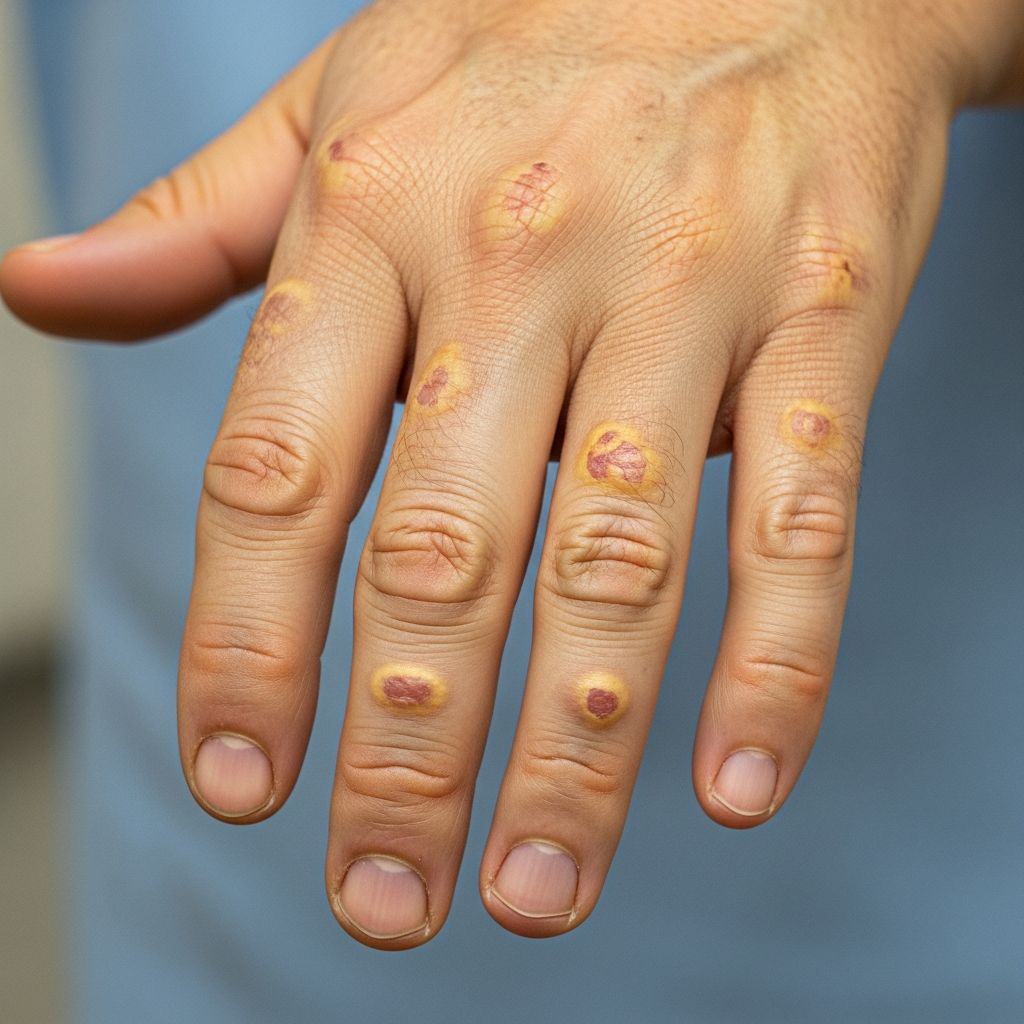
Acquired keratoderma refers to the non-hereditary development of hyperkeratosis, or abnormal thickening of the horny layer of the skin (stratum corneum), primarily affecting the palms and soles. Unlike hereditary forms that manifest early in life, acquired keratoderma arises later due to various underlying conditions, malignancies, infections, or idiopathic reasons. It presents as persistent, often painful or disabling skin changes that require targeted diagnosis and management.
This condition, also known as acquired palmoplantar keratoderma, can significantly impair daily activities due to fissuring, pain, and secondary infections. Early identification of associated systemic diseases is crucial, as treatment of the root cause may lead to resolution.
What is acquired keratoderma?
Acquired keratoderma is characterized by diffuse or focal hyperkeratotic plaques confined predominantly to the palms and soles. It develops in adulthood without a family history, distinguishing it from genetic palmoplantar keratodermas (PPK). The hyperkeratosis results from accelerated epidermal proliferation and impaired desquamation, often triggered by external or internal factors.
Clinically, it manifests as yellow-brown, adherent scales with possible erythema at the borders. Severity varies from mild thickening to severe, debilitating plaques causing mobility issues. Associated features may include hyperhidrosis, odor, or secondary bacterial/fungal infections due to fissures.
Who gets acquired keratoderma (epidemiology)?
Acquired keratoderma affects adults of any age, with prevalence linked to the frequency of underlying conditions. It is rare overall but more common in patients with chronic diseases, malignancies, or occupational exposures. No strong gender or ethnic predisposition is noted, though certain paraneoplastic forms show associations with specific cancers in older males.
Risk factors include:
- Chronic inflammatory or autoimmune diseases.
- Malignancies, particularly solid tumors.
- Prolonged exposure to irritants or trauma.
- Medications or metabolic disorders.
What causes acquired keratoderma?
Acquired keratoderma arises from diverse etiologies, broadly classified into reactive, associated with systemic diseases, paraneoplastic syndromes, and idiopathic cases.
Reactive keratoderma
Chronic mechanical irritation, friction, or pressure from occupations (e.g., farmers, athletes) or ill-fitting footwear leads to localized hyperkeratosis, mimicking calluses but more persistent.
Keratoderma associated with underlying diseases
Several systemic conditions trigger palmoplantar hyperkeratosis:
- Thyroid disease: Hypothyroidism or hyperthyroidism can cause dry, thickened skin.
- Cirrhosis: Liver failure leads to keratoderma with clubbing.
- Autoimmune diseases: Rheumatoid arthritis, lupus, or dermatomyositis.
- Inflammatory bowel disease: Ulcerative colitis or Crohn’s disease.
- Infections: HIV, hepatitis C, or leprosy.
- Malnutrition: Deficiencies in vitamins A, C, or zinc.
Keratoderma in association with malignancy
Paraneoplastic acanthosis nigricans or tripe palms (acquired pachydermia) present with velvety hyperpigmented plaques or exaggerated skin ridges, often preceding gastric adenocarcinoma diagnosis by months. Other cancers include bronchogenic carcinoma, ovarian, or breast malignancies.
Drug-induced keratoderma
Medications like lithium, clozapine, or chemotherapy agents induce hyperkeratosis, resolving upon discontinuation.
Idiopathic acquired keratoderma
When no cause is identified, it is termed idiopathic, managed symptomatically.
What are the clinical features of acquired keratoderma?
Features are typically confined to the palms and/or soles:
- Diffuse hyperkeratosis: Uniform thickening covering entire palmoplantar surfaces.
- Focal or localized: Plaques over pressure points.
- Painful fissures: Cracks leading to bleeding and infection.
- Erythema and scaling: Red borders with peeling.
- Hyperhidrosis: Excessive sweating exacerbating fissures.
- Nail changes: Rarely, dystrophy or clubbing.
Features in association with malignancy:
- Velvety, hyperpigmented plaques (acanthosis nigricans).
- Exaggerated dermatoglyphics (tripe palms).
- Pruritus or rapid onset.
Symptoms include pain on walking/standing, impaired grip, and recurrent infections.
How is acquired keratoderma diagnosed?
Acquired keratoderma is a clinical diagnosis based on detailed medical history and physical examination. Key differentiators from hereditary PPK include adult onset, no family history, and associated systemic features.
History: Age of onset, occupational exposure, drug intake, systemic symptoms, family history.
Examination: Distribution, morphology (diffuse vs. punctate), erythema, fissures.
If hereditary PPK suspected, genetic consultation is advised.
Investigations
Underlying causes should be investigated:
- Blood tests: Thyroid function, liver enzymes, tumor markers (CEA, CA19-9).
- Skin biopsy: Confirms compact orthokeratosis, acanthosis, hypergranulosis.
- Mycology/bacteriology: For superinfections.
- Imaging: PET/CT for malignancy screening.
Key histological features include marked hyperkeratosis, acanthosis, and absent parakeratosis.
How is acquired keratoderma managed?
Acquired keratoderma is best managed by treating any underlying condition(s), which may lead to resolution. Idiopathic cases focus on symptom relief.
General measures
- Emollients: Urea 10-40%, lactic acid creams daily.
- Occlusion: Overnight with plastic wrap.
- Debridement: Gentle paring by podiatrist.
- Footwear: Custom orthotics, protective padding.
Topical keratolytics
Combination therapy: Salicylic acid 6-17% + urea + lactic acid in ointment base, under occlusion. Provides temporary thinning.
Potent topical corticosteroids
Betamethasone or clobetasol for inflammatory variants, short-term.
Systemic therapy
Retinoids (acitretin 10-25mg daily) for refractory cases, with monitoring for side effects. Contraindicated in pregnancy.
Management of complications
- Hyperhidrosis: Aluminum chloride, botulinum toxin injections.
- Infections: Topical/systemic antibiotics/antifungals.
Surgical interventions
Severe cases: Excision with grafting, laser ablation (CO2), or dermabrasion for localized plaques.
Acquired keratoderma requires chronic management; recurrence is common upon discontinuation.
Comparison of Acquired vs. Hereditary Keratoderma
| Feature | Acquired | Hereditary |
|---|---|---|
| Onset | Adulthood | Infancy/childhood |
| Family history | Absent | Often present |
| Associations | Malignancy, systemic disease | Genetic mutations |
| Histology | Orthokeratosis | Variable (epidermolytic/non) |
| Treatment response | Underlying cause-directed | Symptomatic, retinoids |
Frequently Asked Questions (FAQs)
Is acquired keratoderma curable?
Treatment of underlying causes can resolve it; otherwise, management controls symptoms long-term.
Can acquired keratoderma indicate cancer?
Yes, especially tripe palms or acanthosis nigricans; screen for gastric/bronchial tumors.
What daily care helps?
Moisturize frequently, avoid irritants, use protective footwear.
Are oral retinoids safe?
Effective but require monitoring; avoid in pregnancy.
Does it affect nails or spread?
Rarely nails; confined to palms/soles usually.
References
- How To Diagnose And Manage Hereditary Palmoplantar Keratodermas — HMP Global Learning Network. 2023. https://www.hmpgloballearningnetwork.com/site/podiatry/how-diagnose-and-manage-hereditary-palmoplantar-keratodermas
- Acquired Keratoderma — DermNet NZ. 2024-01-15. https://dermnetnz.org/topics/acquired-keratoderma
- Diagnosis and Management of Inherited Palmoplantar Keratodermas — Acta Dermato-Venereologica. 2023-05-10. https://www.medicaljournals.se/acta/content/html/10.2340/00015555-3430
- Palmoplantar keratoderma — British Association of Dermatologists. 2024. https://www.skinhealthinfo.org.uk/condition/palmoplantar-keratoderma/
- Palmoplantar Keratodermas — Foundation for Ichthyosis & Related Skin Types. 2023. https://www.firstskinfoundation.org/types-of-ichthyosis/palmoplantar-keratodermas
Similar Articles








Read full bio of Sneha Tete