Acrocyanosis: Causes, Features and Treatment
Understanding acrocyanosis: A comprehensive guide to this vascular disorder affecting extremities.
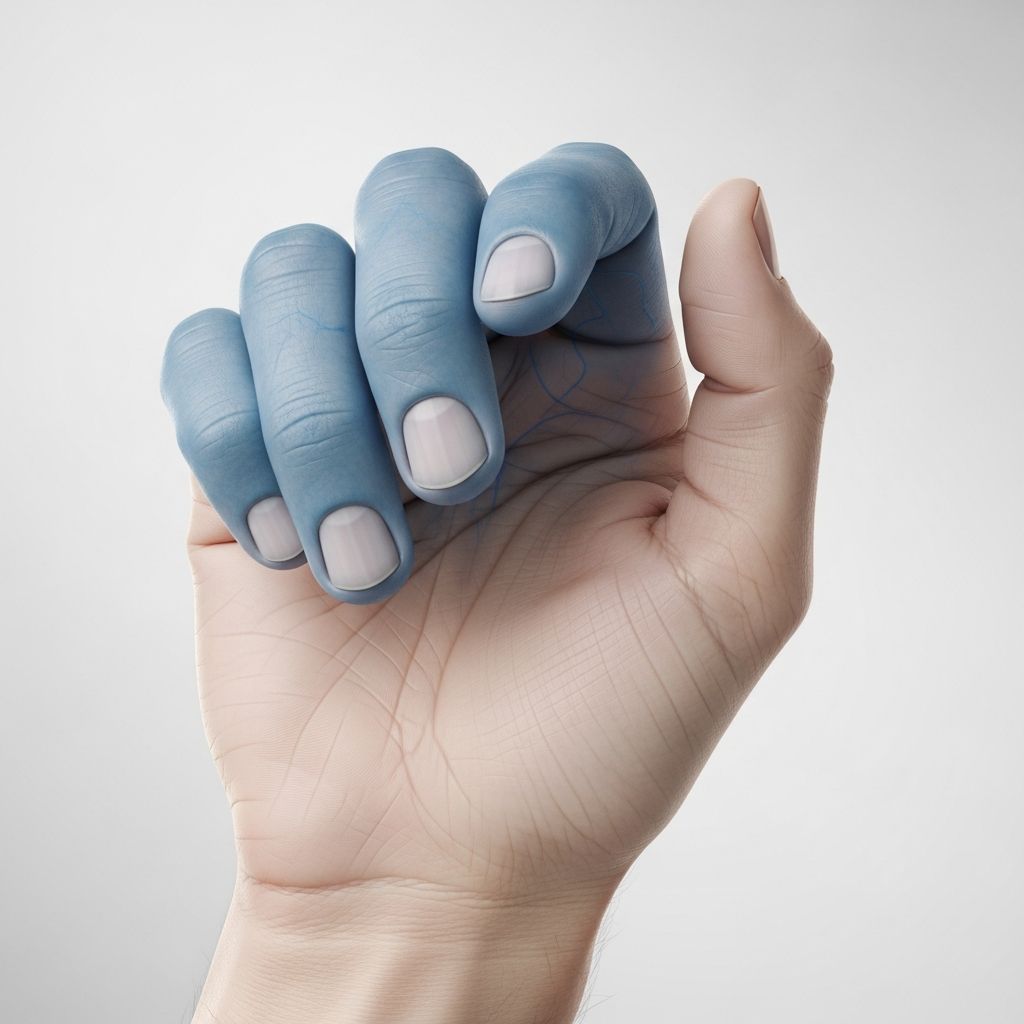
Acrocyanosis is a functional peripheral vascular disorder characterised by dusky mottled discolouration, or cyanosis, of the hands, feet, and sometimes the face. This painless condition results from vasospasm of the small vessels of the skin in response to cold exposure, and it can present as either a primary or secondary condition. Understanding the underlying mechanisms, clinical presentations, and management strategies is essential for both healthcare providers and patients affected by this condition.
Definition and Overview
Acrocyanosis represents a specific type of peripheral cyanosis, which describes bluish discoloration affecting the extremities due to inadequate oxygen-rich blood supply. The condition is characterised by persistent, painless blue discoloration that typically affects the distal parts of the body. Unlike other vascular conditions, acrocyanosis is not associated with occlusive artery disease, and the digits remain persistently cold and bluish.
The term “acrocyanosis” comes from the Greek words “akron” (extremity) and “kyanosis” (blueness), accurately describing the appearance of the condition. In patients with darker skin tones, the cyanosis may not appear distinctly blue, but there remains a noticeable colour contrast in the affected areas.
Classification: Primary vs Secondary Acrocyanosis
Acrocyanosis is classified into two distinct types based on the presence or absence of underlying conditions:
Primary Acrocyanosis
Primary acrocyanosis, also known as idiopathic or essential acrocyanosis, occurs when no underlying condition is present. The exact cause remains unknown in most cases, which explains the use of the term “idiopathic”. In primary acrocyanosis, symptoms are typically symmetrical, affecting both hands or both feet equally.
Secondary Acrocyanosis
Secondary acrocyanosis develops in association with another condition or following the administration of certain drugs. Symptoms in secondary acrocyanosis often affect only one side of the body, distinguishing it from the bilateral presentation of primary acrocyanosis. The severity and prognosis depend heavily on the underlying causative condition.
Causes and Etiology
Primary Acrocyanosis Causes
The cause of primary acrocyanosis involves constriction of the peripheral blood vessels, which may result from:
- Cold temperatures
- A combination of lowered oxygen pressure and increased wind exposure at high altitudes
- Genetic abnormalities of the blood vessels
Current research suggests that vasospastic reaction plays a dominant role in the pathophysiology of primary acrocyanosis, with reduced blood rheology being a secondary consideration.
Secondary Acrocyanosis Causes
Secondary acrocyanosis can develop from multiple underlying conditions. Contributing factors include:
- Lung conditions
- Arterial diseases
- Connective tissue diseases
- Blood conditions
- Infections
- Eating disorders (anorexia nervosa and bulimia nervosa)
- Certain medications
- Vascular diseases
- Cancer
Drug-induced acrocyanosis can result from medications including ergot alkaloids, selective serotonin reuptake inhibitors (SSRIs), tricyclic antidepressants, norepinephrine, liposomal amphotericin-B, and certain chemotherapy agents.
Pathophysiology
The underlying mechanism of acrocyanosis involves chronic vasospasm of small cutaneous arteries and arterioles. This vasospasm leads to compensatory dilatation in the capillary and post-capillary venules, resulting in the characteristic cyanosis and excessive sweating. While some aspects of acrocyanosis pathophysiology remain unknown, the current understanding emphasises the dominant role of vasospastic reactions.
Related Stories



The vasospastic response can be triggered or exacerbated by exposure to cold temperatures or emotional stress. The condition typically improves with rewarming of the affected areas.
Clinical Features and Presentation
Symptoms of Primary Acrocyanosis
Primary acrocyanosis presents with distinctive clinical characteristics:
- Bilateral, symmetrical, painless blue discolouration of fingers and toes
- Discolouration may extend to hands, feet, and sometimes the face
- Persistent symptoms throughout the year
- Excessive sweating of the hands and feet
- Cold hands and feet
- Swelling of digits (oedema)
- Worsening of symptoms due to cold or emotional stress
- Improvement of symptoms with rewarming
Clinical Examination Findings
Upon clinical examination, arterial pulses remain normal, and there is no proximal pallor, ulceration, or gangrene. A characteristic sign called the Crocq sign may be observed, wherein pressure on an affected area leads to slow and irregular return of blood from the periphery towards the centre.
Acrocyanosis in Newborns
It is not uncommon for newborns to present with acrocyanosis during the first few hours of life. This occurs because blood and oxygen initially circulate preferentially to vital organs such as the brain, lungs, and kidneys rather than to the extremities. This typically resolves as the baby’s body adapts to the new blood circulation pattern. The condition may return transiently if the infant becomes cold, such as after a bath, but this is considered normal and resolves spontaneously.
Diagnosis
Diagnosis of acrocyanosis is primarily clinical, based on the characteristic presentation of persistent, painless, bilateral blue discolouration of the extremities. The diagnosis is supported by the symmetrical nature of symptoms and the response to rewarming. Distinction from other vascular conditions such as Raynaud’s phenomenon is important, as Raynaud’s typically presents with colour changes progressing from white to blue to red and is often painful.
For secondary acrocyanosis, diagnosis requires investigation to identify the underlying causative condition. This may involve imaging studies, blood tests, or assessment for associated systemic conditions.
Comparison: Acrocyanosis vs Raynaud’s Phenomenon
| Feature | Acrocyanosis | Raynaud’s Phenomenon |
|---|---|---|
| Pain | Painless | Often painful |
| Colour Changes | Persistent blue discolouration | White, then blue, then red |
| Trigger | Cold exposure, emotional stress | Cold exposure, emotional stress |
| Symmetry | Typically bilateral and symmetrical | Can be unilateral or asymmetrical |
| Complications | No ulceration or gangrene | May cause ulcers of the skin |
| Vasodilator Response | Poor response to vasodilators | Good response to vasodilators |
Treatment and Management
Treatment of Primary Acrocyanosis
Primary acrocyanosis is usually harmless and may not require treatment. Treatment is not required for the majority of patients with acrocyanosis, and pharmacological intervention is rarely necessary. The approach to management focuses on symptom relief and reassurance:
- Reassurance: Patients should be reassured that the condition is harmless and does not indicate serious illness
- Thermal Management: Keeping hands and feet warm through the use of gloves and warm socks
- Cold Avoidance: Limiting exposure to cold temperatures
- Lifestyle Modifications: Ceasing smoking and implementing dietary and hygiene counselling
Pharmacological Interventions
For cases with more severe symptoms, medications may be considered. Alpha-blocker drugs that help relax muscles are sometimes used when symptoms are severe. However, vasodilators such as calcium channel blockers are not helpful for primary acrocyanosis, unlike their effectiveness in Raynaud’s phenomenon. Evidence suggests that medications such as calcium channel blockers and beta-blockers are typically ineffective for primary acrocyanosis.
In some cases, topically applied nicotinic acid derivatives and minoxidil can be beneficial. Sympathectomy, which involves selectively disrupting sympathetic nerve fibres supplying the involved area, can usually alleviate the cyanosis, but such an extreme procedure is rarely appropriate.
Treatment of Secondary Acrocyanosis
Treatment of secondary acrocyanosis depends entirely on the underlying cause. Proper treatment and management of the underlying condition can help resolve the symptoms related to secondary acrocyanosis. For example, if a person is experiencing drug-induced acrocyanosis, symptoms will improve after stopping the causative drug. A person experiencing drug-induced symptoms should discuss options for changing medications with their healthcare professional.
Secondary acrocyanosis can be serious depending on the underlying cause, so early identification and treatment of the primary condition is important.
Prognosis and Outcomes
Primary acrocyanosis is a harmless condition that goes away on its own in many cases. Many people outgrow the condition altogether. Symptoms should disappear once the body warms up. The long-term prognosis for primary acrocyanosis is generally excellent, with most patients experiencing minimal impact on quality of life.
For secondary acrocyanosis, prognosis depends on the severity and treatability of the underlying condition. Some underlying conditions causing secondary acrocyanosis are curable, making specific treatment of the primary disease very important.
When to Seek Medical Attention
If a person experiences symptoms of acrocyanosis, it is advisable to contact a doctor. Healthcare providers can determine whether the condition is occurring due to an underlying condition that requires treatment or represents benign primary acrocyanosis. This is particularly important to distinguish acrocyanosis from other serious vascular conditions that may require intervention.
Frequently Asked Questions (FAQs)
Q: Is acrocyanosis a serious condition?
A: Primary acrocyanosis is usually harmless and not serious. However, secondary acrocyanosis can be serious depending on the underlying cause, so medical evaluation is important to determine which type you have.
Q: Can acrocyanosis be cured?
A: There is no standard curative medical or surgical treatment for primary acrocyanosis. However, many people outgrow the condition or experience improvement with conservative measures. Secondary acrocyanosis may improve if the underlying cause is successfully treated.
Q: Why do my hands and feet turn blue?
A: In acrocyanosis, the blue discolouration is caused by vasospasm (constriction) of small blood vessels in the skin, leading to reduced oxygen-rich blood reaching the extremities.
Q: Can I prevent acrocyanosis symptoms?
A: While you cannot prevent primary acrocyanosis, you can manage symptoms by keeping extremities warm, avoiding cold exposure, avoiding stress, and not smoking. These measures help reduce symptom triggers.
Q: Is acrocyanosis the same as Raynaud’s phenomenon?
A: No. While both are triggered by cold and stress, Raynaud’s phenomenon typically causes colour changes (white, blue, red), is often painful, and responds to vasodilator medications, whereas acrocyanosis causes persistent blue discolouration, is painless, and does not respond to vasodilators.
Q: Should I take medication for acrocyanosis?
A: For primary acrocyanosis, medication is rarely necessary. Conservative measures like keeping warm are usually sufficient. Medications may be considered for severe secondary acrocyanosis, but always under medical guidance.
References
- Acrocyanosis: Causes, symptoms, and treatment — Medical News Today. 2024. https://www.medicalnewstoday.com/articles/acrocyanosis
- Acrocyanosis: An Overview — PubMed Central/National Center for Biotechnology Information. 2013. https://pmc.ncbi.nlm.nih.gov/articles/PMC3827510/
- Acrocyanosis: Symptoms, Causes & Treatment — Cleveland Clinic. 2024. https://my.clevelandclinic.org/health/diseases/acrocyanosis
- Acrocyanosis – Cardiovascular Disorders — Merck Manuals. 2024. https://www.merckmanuals.com/professional/cardiovascular-disorders/peripheral-arterial-disorders/acrocyanosis
- Acrocyanosis — Adult Down Syndrome Center, Advocate Health Care. 2024. https://adscresources.advocatehealth.com/acrocyanosis/
Similar Articles








Read full bio of medha deb