Acrocyanosis: Causes, Symptoms, and Treatment
Understanding persistent blue discoloration of extremities and management options.
Understanding Acrocyanosis: A Comprehensive Guide
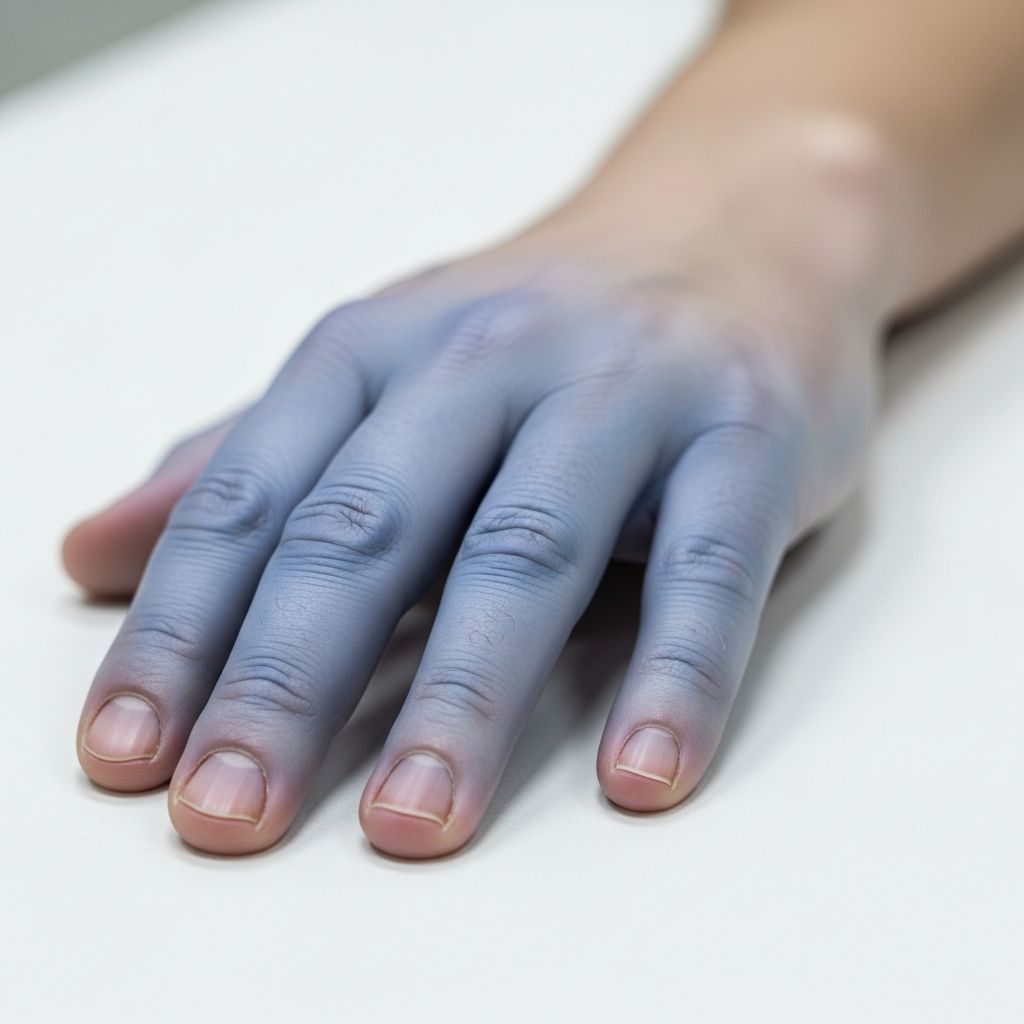
Acrocyanosis is a functional peripheral vascular disorder characterized by persistent, symmetrical bluish or cyanotic discoloration of the skin, most commonly affecting the hands and feet. The term derives from the Greek words akron (extremity) and kyanos (blue), perfectly describing this distinctive condition. Unlike other vascular disorders, acrocyanosis presents as a painless, persistent discoloration that doesn’t follow the dramatic color-changing episodes seen in other conditions. Understanding this condition is essential for proper diagnosis and management, as it can often be confused with more serious vascular disorders.
What Is Acrocyanosis?
Acrocyanosis represents bluish discoloration of the skin and mucous membranes due to diminished oxyhemoglobin in the blood vessels at the dermal and hypodermal levels. This condition may result from central or local tissue oxygenation defects, though the exact mechanisms remain partially understood by the medical community. The discoloration is typically painless and persistent, distinguishing it from episodic vascular conditions.
The hallmark feature of acrocyanosis is its symmetry and permanence. When only part of the hand is warmed, a sharp demarcation line appears between the cyanotic and warm zones, indicating that the primary vessel defect is localized to small arteries and arterioles rather than larger blood vessels. This observation has proven crucial in understanding the pathophysiology of this condition and differentiating it from other acrosyndromes.
Symptoms and Clinical Presentation
The clinical presentation of acrocyanosis is relatively straightforward, though it can create significant concern for patients unfamiliar with the condition:
- Persistent bluish or purple discoloration of the skin over extremities
- Symmetrical involvement, typically affecting both hands or both feet equally
- Local hypothermia or coolness in affected areas
- Increased sweatiness or hyperhidrosis in the affected regions
- Elastic infiltration or slight swelling of the skin
- Typically painless presentation in primary acrocyanosis
Unlike Raynaud’s phenomenon, which features episodic color changes in response to cold or stress, acrocyanosis maintains a constant cyanotic appearance throughout the year. The condition rarely progresses to trophic changes or ulceration except in the rare remittent necrotizing variety, making it generally a benign condition despite its alarming appearance.
Causes and Risk Factors
Primary Acrocyanosis
Primary acrocyanosis occurs without an identifiable underlying disease. The exact etiology remains unclear, though it is believed to involve idiopathic vasospastic dysfunction of small cutaneous vessels.
Secondary Acrocyanosis
Secondary acrocyanosis develops as a manifestation of an underlying systemic disease or medication. Potential causes include:
- Rheumatic conditions and autoimmune disorders
- Neoplastic diseases (cancer-related manifestations)
- Spinal cord injuries and neuropathies
- Infections with hypoxemia or cryoglobulinemia
- Sarcoidosis
- Eating disorders such as anorexia nervosa
- Medication side effects from tricyclic antidepressants, sirolimus, interferon, and other agents
- Sneddon’s syndrome and other thrombophilic conditions
Pathophysiology: Understanding the Mechanism
The pathophysiology of acrocyanosis centers on chronic vasospasm of small cutaneous arteries and arterioles. This vasospasm, combined with compensatory dilation of capillary and post-capillary venules, results in blood stasis and the characteristic cyanotic appearance. The reduced blood flow through these small vessels means less oxyhemoglobin reaches the skin surface, creating the bluish discoloration.
Related Stories



Current research suggests that blood rheology impairment and vasospastic reactions both play important roles in the condition’s development. In secondary acrocyanosis, specific mechanisms vary depending on the underlying cause. For example, tricyclic antidepressants may increase plasma norepinephrine and activate alpha-1 adrenergic receptors, while infections may involve cryoglobulin deposition or disseminated intravascular coagulation.
Diagnosis and Clinical Evaluation
Acrocyanosis can typically be diagnosed through careful clinical history and physical examination alone. The key diagnostic criteria include:
- Persistent and painless cyanosis of extremities
- Local hypothermia in affected areas
- Increased sweatiness of the skin
- Elastic infiltration of the integument
Several diagnostic tests may support the clinical diagnosis. Capillary oximetry showing normal oxygen saturation helps rule out vasocclusive disease. Capillaroscopy, which visualizes capillary venous stasis, is the most useful investigation in clinical practice, though it is not absolutely necessary for diagnosis.
Additional imaging studies including CT scan, MRI, and nerve conduction velocity studies may be warranted when secondary acrocyanosis is suspected, as these can help identify underlying neoplastic disease, spinal cord injuries, or neuropathy. However, for straightforward cases of primary acrocyanosis, extensive testing is unnecessary.
Differential Diagnosis
It is essential to differentiate acrocyanosis from other conditions presenting with similar findings:
| Condition | Characteristic Features | Key Differences from Acrocyanosis |
|---|---|---|
| Raynaud’s Phenomenon | Episodic triphasic color changes in response to cold or stress | Episodic rather than persistent; resolves with rewarming |
| Chilblains | Inflammatory response to cold with pain and blistering | Painful, episodic, and associated with inflammatory lesions |
| Acrocyanosis | Persistent, painless, symmetrical blue discoloration | Constant appearance, no episodic changes, benign course |
Treatment Options
Lifestyle Modifications and Conservative Management
For mild cases of acrocyanosis, extensive medical treatment is often unnecessary. Conservative management remains the cornerstone of therapy and includes:
- Consistent avoidance of cold exposure and trauma to affected areas
- Wearing protective gloves and slippers to maintain warmth
- Cessation of smoking to improve vascular function
- Proper dietary and hygiene counseling
- Patient reassurance that the bluish discoloration does not indicate serious illness
Many patients experience significant improvement with these lifestyle modifications alone, particularly when cold avoidance is strictly maintained.
Pharmacological Treatment
When conservative measures prove insufficient, several medication classes may provide benefit:
- Alpha-blocker drugs: These medications reduce vasospasm by blocking alpha-adrenergic receptors
- Calcium channel blockers: Drugs like nifedipine and diltiazem help relax blood vessel smooth muscle
- Pentoxifylline: May improve blood flow and rheology
- Selective serotonin antagonists: Ketanserin has shown promise in both primary and secondary acrocyanosis, with improvements noted in clinical symptoms and capillaroscopic findings
Treatment of Secondary Acrocyanosis
In cases of secondary acrocyanosis, treatment directed at the underlying cause is paramount and may lead to significant improvement. For example, in Sneddon’s syndrome, patients may respond to immunosuppressive treatment combined with anticoagulation, nifedipine, and captopril. Similarly, managing the underlying condition in anorexia nervosa or other systemic diseases can improve acrocyanotic symptoms.
Prognosis and Long-Term Outlook
Primary acrocyanosis is generally considered a benign condition with an excellent prognosis. Most patients experience no serious complications, maintain normal life expectancy, and carry no increased risk of death from the condition itself. Importantly, primary acrocyanosis often resolves naturally in middle age, providing hope for long-term improvement.
Trophic changes and ulceration are extremely rare except in the uncommon remittent necrotizing variety. The main goal of management is symptom control, improved quality of life, and reassurance regarding the condition’s benign nature. Patients should understand that while there is currently no cure for acrocyanosis, the condition is compatible with a normal, healthy life.
Frequently Asked Questions
Q: Is acrocyanosis the same as Raynaud’s phenomenon?
A: No. While both conditions affect extremities, they are distinctly different. Raynaud’s phenomenon features episodic, color-changing attacks triggered by cold or stress, whereas acrocyanosis presents as a persistent, painless, constant bluish discoloration that does not resolve with rewarming in the same dramatic fashion. However, Raynaud’s attacks can be superimposed on acrocyanosis in some patients.
Q: Is acrocyanosis dangerous or life-threatening?
A: Primary acrocyanosis is a benign condition and is not life-threatening. The bluish discoloration does not indicate serious illness or organ damage. However, secondary acrocyanosis associated with underlying serious diseases may require investigation and treatment of the primary condition.
Q: What can I do to manage acrocyanosis at home?
A: Keep affected areas warm by wearing gloves and socks, avoid exposure to cold temperatures, stop smoking if applicable, maintain good hygiene, and follow a balanced diet. These conservative measures often provide significant relief without requiring medications.
Q: When should I see a doctor about blue discoloration of my extremities?
A: Consult a healthcare provider if you notice persistent bluish discoloration of your hands or feet, especially if accompanied by pain, ulceration, or other concerning symptoms. Your doctor can differentiate acrocyanosis from other conditions and determine if any underlying disease investigation is needed.
Q: Can acrocyanosis be cured?
A: Currently, there is no cure for acrocyanosis, though symptoms can be managed effectively through lifestyle modifications and medications. Many cases improve naturally over time, particularly in primary acrocyanosis, which often resolves in middle age.
References
- Acrocyanosis: An Overview — PubMed Central/National Center for Biotechnology Information. 2012-10-15. https://pmc.ncbi.nlm.nih.gov/articles/PMC3827510/
- Acrocyanosis: The Flying Dutchman — PubMed Central/National Center for Biotechnology Information. 2011-08-20. https://pmc.ncbi.nlm.nih.gov/articles/PMC3156491/
- Acrocyanosis — Britannica Encyclopedia. https://www.britannica.com/science/acrocyanosis
Similar Articles








Read full bio of medha deb