Acrodermatitis Continua Of Hallopeau: Diagnosis And Treatment
Rare pustular skin disorder affecting fingertips and toes, leading to nail loss and chronic inflammation.
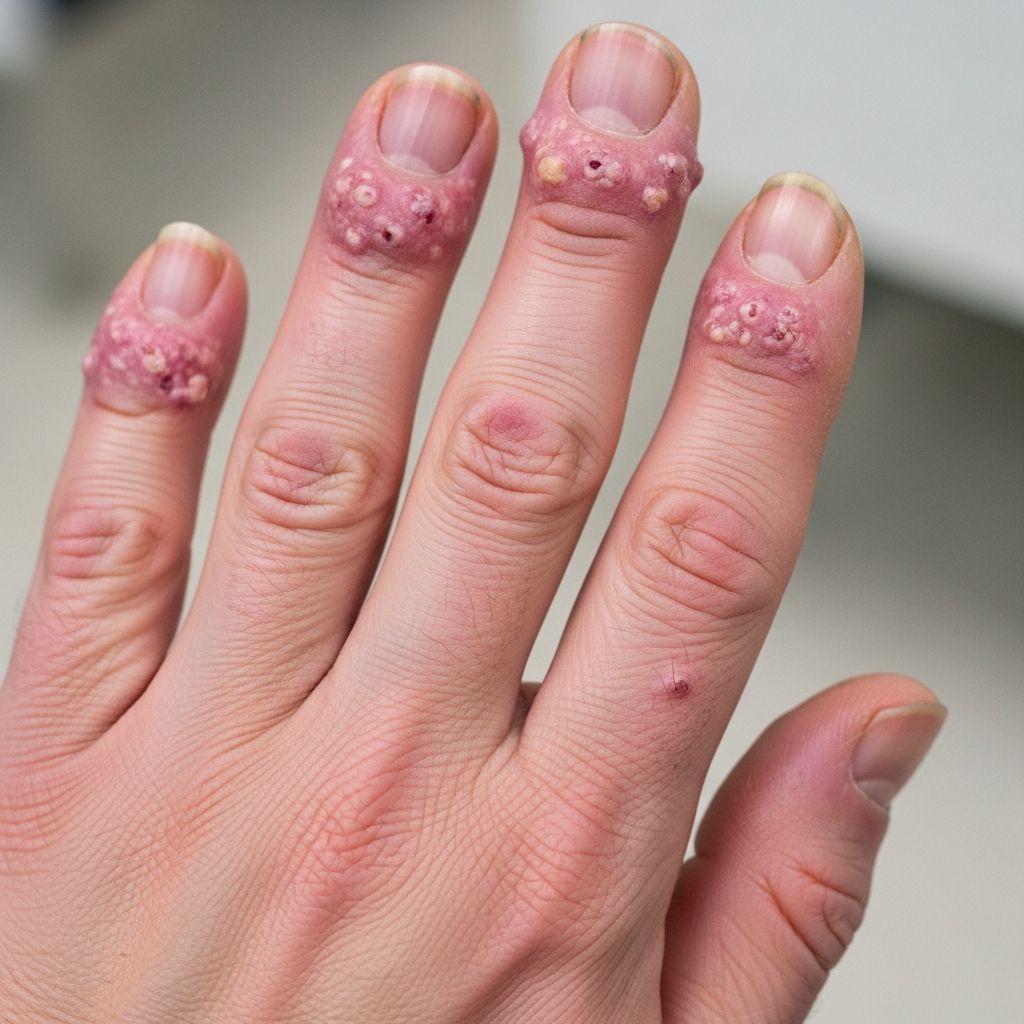
Acrodermatitis continua of Hallopeau (ACH), also known as acrodermatitis continua suppurativa of Hallopeau, is a rare chronic inflammatory skin disorder characterized by recurrent sterile pustular eruptions primarily affecting the tips of the fingers and toes.
What is acrodermatitis continua of Hallopeau?
ACH is a localized form of pustular psoriasis that typically begins on the distal phalanges of one digit, most commonly the thumb, and may spread to other fingers or toes over time. It features painful, sterile pustules that form on erythematous, scaly skin, leading to nail dystrophy, anonychia (nail loss), and in severe cases, bone resorption (osteolysis). Unlike generalized pustular psoriasis, ACH usually remains confined to the acral areas but can rarely generalize.
The condition is considered an autoimmune or autoinflammatory disorder with dysregulated immune responses in the skin, involving neutrophils and proinflammatory cytokines. It predominantly affects adults but can occur in children, often following minor trauma or infection via the Koebner phenomenon.
Who gets acrodermatitis continua of Hallopeau?
ACH is exceedingly rare, with no precise incidence data available due to its infrequency. It affects individuals of any age, though cases in children (infancy or toddlerhood) are documented and may be linked to genetic mutations. There is no strong gender predilection, but it can occur asymmetrically, starting in 80% of cases on a single digit, usually the thumb or index finger.
Risk factors include prior local trauma (e.g., manicure, splinters, burns), paronychia, or infections, though idiopathic onset occurs. Genetic predispositions, such as mutations in the IL36RN gene (encoding IL-36 receptor antagonist), CARD14, and AP1S3, are associated, particularly in early-onset or familial cases, leading to uncontrolled IL-36 mediated inflammation.
What causes acrodermatitis continua of Hallopeau?
The exact etiology remains unclear, but ACH is classified as a variant of pustular psoriasis with autoinflammatory features. Triggers often include localized trauma or infection at the distal phalanx, activating the Koebner phenomenon. Immunologically, it involves excessive innate immune responses: keratinocytes and neutrophils produce proinflammatory cytokines from the IL-1/IL-36 families, resulting in sterile neutrophilic pustules.
Genetic factors play a key role; IL36RN mutations disrupt IL-36 signaling inhibition, promoting pustule formation and increasing generalization risk. Histologically, spongiform pustules of Kogoj (intraepidermal neutrophil collections) are hallmark, with psoriasiform epidermal changes and perivascular infiltrates.
What are the clinical features of acrodermatitis continua of Hallopeau?
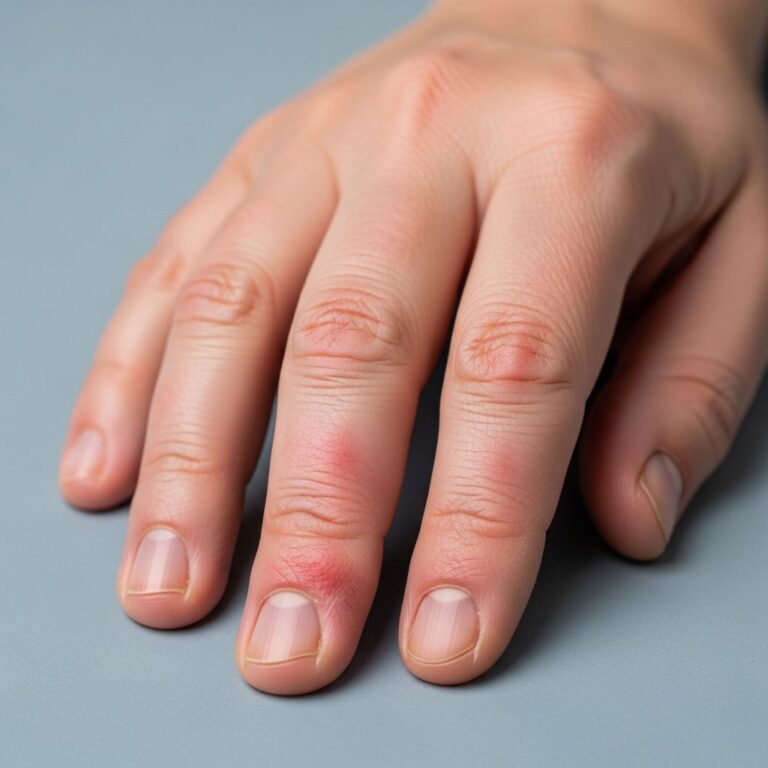
ACH typically starts acutely on one fingertip (thumb most common) with erythema, swelling, and tender sterile pustules. Pustules coalesce into ‘lakes of pus,’ burst to form glazed erosions, and recur, migrating under the nail bed and matrix.
- Acute phase: Red, scaly skin with small, painful pustules that join and rupture, leaving erythematous, glazed areas.
- Nail involvement: Pustules cause onychodystrophy, brittleness, detachment (onycholysis), and eventual anonychia; nail folds obliterated.
- Chronic phase: Atrophic, shiny skin with scaling, hyperkeratosis, and persistent pustulation; digits painful, swollen (dactylitis).
- Progression: Spreads to adjacent digits over months/years, rarely palms or dorsal hands; asymmetrical.
Severe complications include osteitis/osteolysis of distal phalanges (bone pain, shortening), acquired syndactyly, and rare generalization to pustular psoriasis with systemic symptoms. Pain and functional impairment significantly reduce quality of life.
Diagnosis
Diagnosis is primarily clinical, based on chronic sterile pustules on distal digits with nail destruction, unresponsive to antimicrobials. Key is excluding infections via pustule cultures (sterile), fungal tests (KOH for onychomycosis/Candida), and viral etiologies.
Histopathology confirms: spongiform pustules of Kogoj, psoriasiform hyperplasia, parakeratosis, and neutrophilic infiltrates. Differential includes paronychia, onychomycosis, candidal paronychia, and herpetic whitlow.
| Condition | Key Differentiators from ACH |
|---|---|
| Bacterial paronychia | Acute, pus responds to antibiotics, not recurrent. |
| Onychomycosis/Candida | Positive KOH, responds to antifungals, indolent. |
| Viral paronychia | Vesicles, acute painful onset. |
| Generalized pustular psoriasis | Widespread, systemic symptoms. |
Related Stories



Treatment of acrodermatitis continua of Hallopeau
Treatment is challenging, often requiring systemic therapies due to refractory nature. No cure exists; goals are pustule control, inflammation reduction, and preventing complications.
- Topical: High-potency corticosteroids, calcipotriol, tacrolimus for mild cases.
- Phototherapy: Narrowband UVB or PUVA.
- Systemic retinoids: Acitretin or isotretinoin effective for pustules and nail changes.
- Immunosuppressants: Methotrexate, cyclosporine.
- Biologics: IL-17/IL-23 inhibitors (secukinumab, ixekizumab), IL-36 antagonists (spesolimab) for refractory cases, especially IL36RN mutations.
Supportive: Wound care, pain management, antibiotics for secondary infections. Early intervention prevents irreversible damage.
What is the outcome for acrodermatitis continua of Hallopeau?
ACH follows a chronic, relapsing course with persistent pustulation and digit destruction if untreated. Long-term, 10% generalize to pustular psoriasis; most remain localized but cause pain, anonychia, osteolysis, and functional loss. With biologics, remission is possible, improving quality of life, though nail regrowth is rare.
Frequently Asked Questions
Is acrodermatitis continua of Hallopeau contagious?
No, ACH is a sterile, autoinflammatory condition not caused by pathogens and cannot be transmitted.
Can acrodermatitis continua of Hallopeau be cured?
No cure exists, but treatments control symptoms and prevent progression; biologics offer long-term remission in many cases.
Does ACH always cause nail loss?
Nail dystrophy and anonychia are common due to matrix involvement, but early treatment may preserve nails.
Is ACH a type of psoriasis?
Yes, considered a localized variant of pustular psoriasis with similar histology and genetics.
Can children get ACH?
Yes, often early-onset with genetic links; presents similarly but may be more aggressive.
References
- Acrodermatitis continua of Hallopeau — DermNet NZ. 2023. https://dermnetnz.org/topics/acrodermatitis-continua-of-hallopeau
- Acrodermatitis Continua Suppurativa of Hallopeau — Dermacompass. 2024. https://www.dermacompass.net/en/diseases/acrodermatitis-continua-suppurativa-of-hallopeau
- Acrodermatitis Continua of Hallopeau: A Diagnostic Challenge — de D Mitra et al., PMC (PubMed Central). 2022-12-01. https://pmc.ncbi.nlm.nih.gov/articles/PMC9910549/
- Acrodermatitis continua of Hallopeau: Everything to know — Medical News Today. 2023. https://www.medicalnewstoday.com/articles/acrodermatitis-continua-of-hallopeau
- Refractory Acrodermatitis Continua Hallopeau in a Pediatric — NA Del Rosario, JCAD. 2025. https://jcadonline.com/refractory-acrodermatitis-continua-hallopeau-pediatric/
- Acrodermatitis continua of Hallopeau — Primary Care Dermatology Society. 2024. https://www.pcds.org.uk/clinical-guidance/acrodermatitis-continua-of-hallopeau
Similar Articles








Read full bio of medha deb