Acrodermatitis Enteropathica: What You Need To Know
Rare zinc deficiency disorder causing skin lesions, diarrhoea, and alopecia – treatable with lifelong zinc supplementation.
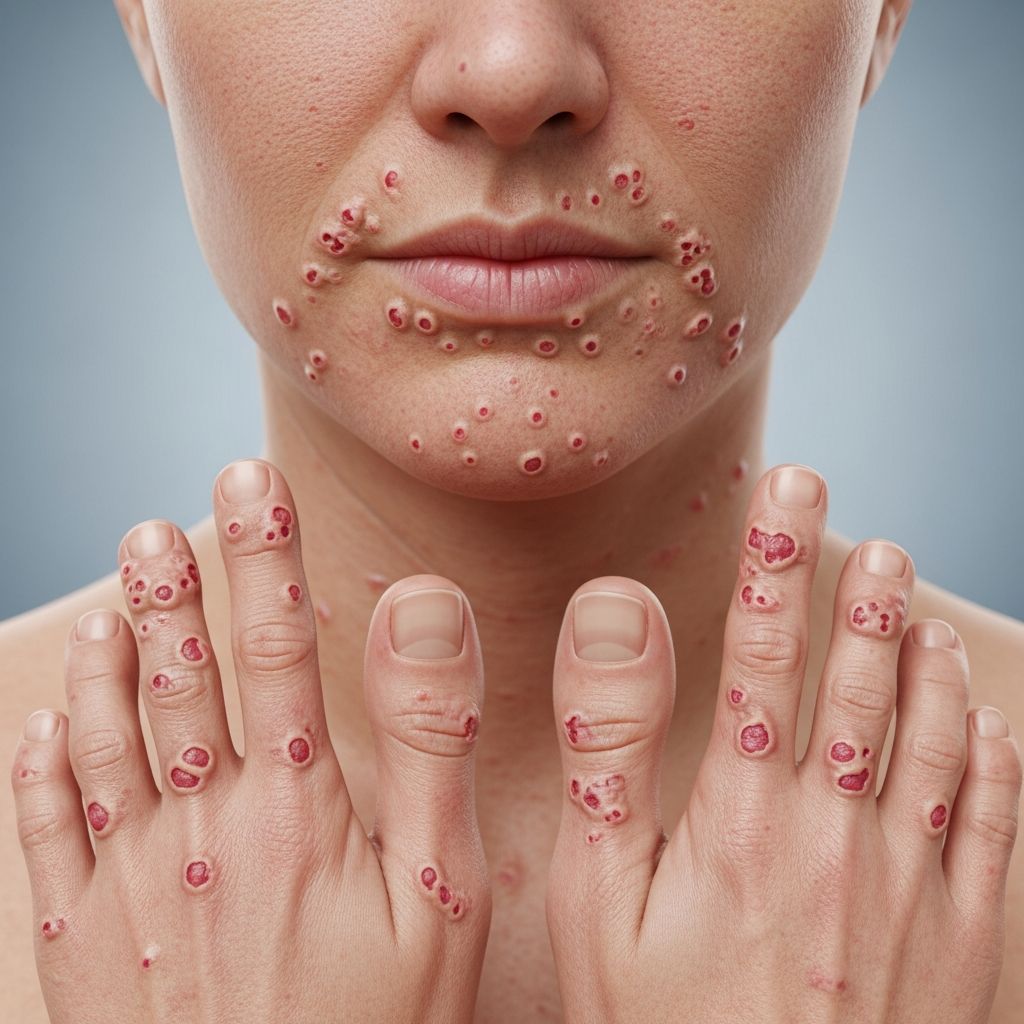
Acrodermatitis enteropathica is a rare autosomal recessive disorder of zinc metabolism characterised by zinc deficiency, resulting in the classic triad of periorificial and acral dermatitis, alopecia, and diarrhoea. Zinc is an essential trace element required as a cofactor for over 300 enzymes involved in DNA synthesis, immune function, protein metabolism, and wound healing. Deficiency manifests heterogeneously due to widespread enzymatic disruption. Primary (inherited) form arises from mutations in the SLC39A4 gene encoding the ZIP4 zinc transporter, impairing intestinal absorption. Acquired forms stem from dietary insufficiency, malabsorption syndromes, or increased losses. Prompt zinc supplementation reverses symptoms dramatically but requires lifelong adherence.
Introduction
Acrodermatitis enteropathica (AE), first described in 1936 by Danbolt and Closs, represents the prototype of inherited zinc deficiency. It affects approximately 1 in 500,000 live births for the congenital form. Both sexes are equally impacted in primary AE. The condition exemplifies how micronutrient deficiencies produce multisystem disease, underscoring zinc’s critical role in human physiology. Untreated, AE proves fatal within months to years due to intractable diarrhoea, secondary infections, and neurological deterioration. Modern recognition enables excellent outcomes via supplementation.
Zinc in the body
Zinc constitutes the second most abundant trace metal after iron, with total body content around 2-3 grams primarily in muscle (60%), bone (30%), and skin (5%). Daily requirements range 8-11 mg for adults, higher during growth, pregnancy, or lactation. Absorption occurs mainly in the duodenum and jejunum via ZIP4 transporters on the apical enterocyte membrane. Intracellular zinc homeostasis involves metallothioneins for storage and buffering, preventing toxicity or deficiency. Zinc fingers regulate gene transcription; deficiency disrupts keratinocyte proliferation, T-cell function, and enterocyte integrity. Plasma zinc levels (70-120 μg/dL) reflect only 0.1% of total stores, fluctuating with inflammation, thus unreliable alone for diagnosis.
- Absorption mechanisms: Active transport via SLC39A4 (ZIP4) for low luminal zinc; passive paracellular at high concentrations
- Excretion: Primarily pancreatic (2-3 mg/day), minimal renal
- Regulation: Metallothionein induction sequesters excess zinc
Primary AE stems from biallelic SLC39A4 loss-of-function variants on chromosome 8q24.3, abolishing ZIP4-mediated uptake. Over 50 mutations identified, mostly missense or nonsense.
Causes
AE manifests in primary or acquired forms.
Primary acrodermatitis enteropathica
Inherited autosomal recessively via SLC39A4 mutations. Breast milk protects neonates via maternal ZIP4 compensating low infant transporters; symptoms emerge days-weeks post-weaning in breastfed infants or immediately in formula-fed. Preterm infants risk earlier onset due to zinc-negative balance.
Acquired acrodermatitis enteropathica
Secondary to zinc depletion from:
- Malnutrition or unbalanced diets (e.g., veganism without supplementation)
- Malabsorption: Crohn disease, coeliac disease, post-bariatric surgery, short bowel syndrome
- Increased requirements: burns, sepsis, sickle cell crisis, malignancy
- Medications: penicillamine, deferoxamine
- Transient maternal breast milk zinc deficiency
- Total parenteral nutrition lacking zinc
Acquired AE predominates in older children/adults.
Clinical features
Symptoms develop periorificial/acral dermatitis, alopecia, diarrhoea – the pathognomonic triad. Prodrome includes irritability, anorexia, failure to thrive.
Skin findings
Erythematous, scaly plaques erode into vesicles/bullae, crusting in perioral (horseshoe), perianal, periocular, acral sites (hands/feet, elbows/knees). Lesions mimic psoriasis post-desquamation; paronychia common. Secondary impetiginisation (Staphylococcus) or candidiasis supervenes.
Related Stories



- Distribution: Acral (digits, extremities), periorificial (mouth, anus, eyes), anogenital, flexural
- Morphology: Pustular/vesicobullous → erosive → hyperkeratotic
Nail changes
Paronychia, Beau lines, onychoschizia, leukonychia.
Hair loss
Diffuse alopecia affecting scalp, eyebrows, eyelashes; sparse body hair.
Gastrointestinal
Profuse, watery diarrhoea from enterocyte dysfunction.
Neurological/ocular
Irritability, lethargy, ataxia, mood lability from cerebral cortex atrophy. Conjunctivitis, blepharitis, photophobia.
Systemic
Failure to thrive, hypogonadism (adolescents), recurrent infections.
Breastfed AE infants improve temporarily with weaning delay.
Diagnosis
Suspect AE in any infant/toddler with periorificial/acral dermatitis + diarrhoea/alopecia.
- Laboratory: Low serum zinc (<70 μg/dL), low alkaline phosphatase (zinc-dependent); normal/low-normal albumin
- Confirmatory: Elevated plasma zinc-binding ligand; therapeutic trial (rapid response)
- Genetic: SLC39A4 sequencing for primary AE
- Histology: Nonspecific parakeratosis, pallor of upper epidermis
Exclude infection via culture/biopsy.
Differential diagnoses
| Condition | Key Distinguishing Features |
|---|---|
| Atopic dermatitis/eczema | Flexural/pruritic; lacks triad; elevated IgE |
| Cutaneous candidiasis | Satellite pustules; KOH positive; responds to antifungals |
| Biotinidase deficiency | Conjunctivitis/alopecia; responds to biotin |
| Essential fatty acid deficiency | Similar dermatitis; low linoleic acid |
| Langerhans cell histiocytosis | Scalp/purpuric lesions; biopsy diagnostic |
| Immunodeficiency (SCID) | Recurrent infections; low T-cells |
Treatment
Zinc supplementation forms the cornerstone – curative for symptoms, lifelong for primary AE.
- Primary AE: Elemental zinc 3 mg/kg/day (e.g., zinc sulfate 220 mg = 50 mg elemental 3x/day infants)
- Acquired: 0.5-1 mg/kg/day + address underlying cause
- Forms: Sulfate (best tolerated), gluconate, acetate
- Dosing adjustments: Increase during growth spurts, pregnancy, intercurrent illness
Adjuncts: Antibiotics/antifungals for superinfection; nutritional support. Monitor zinc/copper q3-6 months to avoid toxicity (nausea, leucopenia).
Response: Diarrhoea/irritability resolve <24h; skin 1 week; hair 1 month.
Outcome
Prognosis excellent with early therapy; normal lifespan/development. Untreated mortality nears 100% from sepsis/malnutrition. Relapses occur with noncompliance, dose inadequacy, or increased needs. Long-term complications rare; subtle neurocognitive deficits reported occasionally. Pregnancy counselling essential – higher dosing prevents fetal risk.
Frequently Asked Questions
What is acrodermatitis enteropathica?
A rare zinc deficiency disorder causing dermatitis, alopecia, and diarrhoea due to impaired absorption.
Is acrodermatitis enteropathica curable?
No cure exists; lifelong zinc therapy controls symptoms completely.
How quickly does zinc treatment work?
Gastrointestinal/mood symptoms improve within 1 day; skin within 1 week.
Can acrodermatitis enteropathica be fatal?
Yes, if untreated, due to infections and malnutrition.
Who gets acrodermatitis enteropathica?
Primary form: infants post-weaning; acquired: any age with risk factors.
References
- Acrodermatitis Enteropathica — National Organization for Rare Disorders (rarediseases.org). 2023. https://rarediseases.org/rare-diseases/acrodermatitis-enteropathica/
- Acrodermatitis enteropathica: Causes, symptoms, outlook, and more — Medical News Today. 2023-10-24. https://www.medicalnewstoday.com/articles/acrodermatitis-enteropathica
- Acrodermatitis enteropathica: Features and Treatment — DermNet NZ. 2024. https://dermnetnz.org/topics/acrodermatitis-enteropathica
- Acrodermatitis enteropathica — Knowledge Hub — Genomics Education Programme, Health Education England. 2023. https://www.genomicseducation.hee.nhs.uk/genotes/knowledge-hub/acrodermatitis-enteropathica/
- Acrodermatitis Enteropathica — Metabolic Support UK. 2024. https://metabolicsupportuk.org/condition/acrodermatitis-enteropathica/
- Acrodermatitis enteropathica — Orphanet. 2023. https://www.orpha.net/en/disease/detail/37
- Acrodermatitis Enteropathica (Zinc Deficiency) — MD Searchlight. 2024. https://mdsearchlight.com/gut-health/acrodermatitis-enteropathica-zinc-deficiency/
Similar Articles








Read full bio of medha deb