Actinic Cheilitis: Solar Cheilitis Causes, Symptoms, and Treatment
Complete guide to actinic cheilitis: understand causes, recognize symptoms, and explore evidence-based treatment options.
Actinic Cheilitis (Solar Cheilitis): A Comprehensive Guide
Actinic cheilitis, also known as solar cheilitis, is a precancerous skin condition that primarily affects the lips due to chronic exposure to ultraviolet (UV) radiation from the sun. This condition represents a significant health concern because it can progress to squamous cell carcinoma if left untreated. The condition is characterized by persistent changes to the lip tissue and requires proper understanding and management to prevent serious complications.
The importance of recognizing and treating actinic cheilitis cannot be overstated, particularly for individuals who spend extended periods outdoors or have a history of sun exposure without adequate protection. Early detection and intervention can substantially reduce the risk of malignant transformation and preserve lip function and appearance.
What is Actinic Cheilitis?
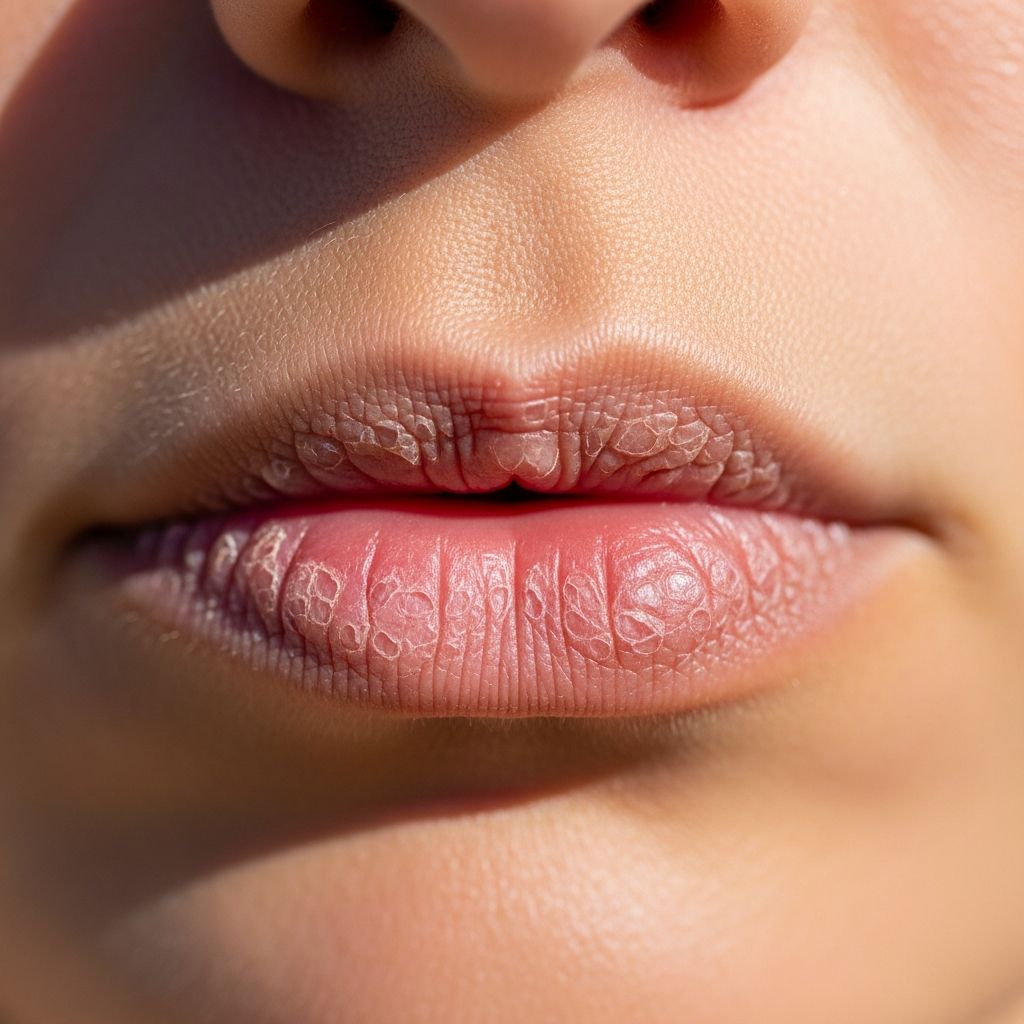
Actinic cheilitis is a premalignant lesion caused by chronic sun exposure, most commonly appearing on the lower lip along the vermillion border—the distinct line that separates the lip from surrounding facial skin. Unlike acute sunburn, which resolves with time, actinic cheilitis represents permanent damage to the lip tissue caused by cumulative UV radiation exposure over many years.
The condition affects both men and women, though individuals with fair skin, those who work outdoors, and those with a history of sun exposure are at particularly high risk. The lower lip is most frequently affected because it receives greater direct sun exposure than the upper lip, which is often shaded by the nose and brow.
Causes and Risk Factors
Primary Cause: UV Radiation
Repeated, long-term exposure of the lips to solar ultraviolet radiation is the primary cause of actinic cheilitis. Both UVA and UVB rays can cause cumulative DNA damage to keratinocytes (the primary cell type in the epidermis), leading to dysplasia and the characteristic changes seen in this condition.
Secondary Risk Factors
Several additional factors can increase an individual’s susceptibility to developing actinic cheilitis:
- Smoking: Tobacco use significantly increases the risk and severity of actinic cheilitis, as smoking impairs the skin’s ability to repair UV damage.
- Fair skin type: Individuals with lighter skin tones have less melanin, providing reduced natural protection against UV radiation.
- Immunosuppression: Individuals with compromised immune systems, including organ transplant recipients and those with certain medical conditions, face higher risk.
- Occupational exposure: Outdoor workers, farmers, lifeguards, and others with extended sun exposure are at elevated risk.
- Geographic location: Individuals living in regions with higher UV index, particularly near the equator or at high altitudes, face increased risk.
- History of tanning: Prior use of tanning beds or intentional sun exposure increases cumulative UV damage.
- Poor nutrition: Diets low in antioxidants and protective nutrients may reduce the skin’s capacity to combat oxidative stress from UV exposure.
Clinical Features and Symptoms
Early Presentation
The initial symptoms of actinic cheilitis typically include dryness and cracking of the lips, which may be mistaken for simple chapping or dehydration. Many individuals initially attribute these symptoms to environmental factors rather than recognizing them as signs of UV-induced damage.
Progressive Manifestations
As the condition progresses, patients may develop:
- Discoloration: Red, white, or pale patches on the lip surface
- Scaling and roughness: The affected area may feel like sandpaper or become scaly in appearance
- Swelling: The lip may appear enlarged or have areas of localized swelling
- Fissuring and ulceration: Painful cracks or small ulcers may develop, sometimes with crusting
- Loss of demarcation: The normally sharp vermillion border between the lip and surrounding skin becomes blurred or indistinct
- Soreness and sensitivity: The affected area may become tender, particularly when exposed to cold, spicy foods, or lip products
- Difficulty with cosmetics: Women may experience difficulty applying lipstick due to the loss of a defined lip line
Related Stories



These discolored or scaly patches are typically painless, though soreness may develop in more advanced cases. The changes are almost always confined to the lower lip, reflecting the greater UV exposure this area receives.
Diagnosis
Diagnosis of actinic cheilitis is typically based on clinical presentation and history. A healthcare provider will examine the affected area and inquire about sun exposure history, smoking status, and symptom duration.
Biopsy may be performed if the clinical presentation is unclear or if there are concerns about malignant transformation. Histopathological examination reveals epithelial dysplasia with loss of normal stratification, increased mitotic activity, and evidence of solar elastosis in the dermis.
Early diagnosis is crucial because intervention at the precancerous stage can prevent progression to squamous cell carcinoma and preserve lip function and appearance.
Treatment Options
Topical Therapeutic Agents
Topical medications are particularly useful when the affected area is extensive or when patients prefer non-invasive options. These unapproved topical therapies include:
- 5-Fluorouracil (5-FU): A chemotherapy agent that destroys dysplastic cells by inhibiting DNA synthesis. Applied as a thin layer once or twice daily for two to three weeks, 5-FU can cause significant inflammatory reactions including pain, burning, blistering, and peeling.
- Imiquimod: An immune-modulating agent that activates toll-like receptors and promotes apoptosis of abnormal cells. Typically applied several times weekly for multiple weeks.
- Ingenol mebutate gel: A newer topical agent that induces rapid necrosis and promotes immune-mediated clearance of dysplastic cells.
- Diclofenac gel: A topical nonsteroidal anti-inflammatory drug that may help reduce dysplasia through anti-inflammatory mechanisms.
- Trichloroacetic acid (TCA): A chemical peel agent that destroys the superficial skin layers where dysplasia resides.
Physical/Surgical Treatments
Physical treatments offer more immediate results and are often preferred for localized lesions:
- Cryotherapy: Application of liquid nitrogen to freeze and destroy the affected tissue. This is the most commonly used initial treatment, causing the affected skin to blister and peel away over one to two weeks. Cryotherapy may require repeat sessions for optimal results, as actinic cheilitis can be more aggressive than similar precancerous changes elsewhere on the skin.
- Electrocautery/Electrosurgery: Use of electrical current to destroy dysplastic tissue. Often performed in combination with curettage (scraping) to remove deeper lesions. Requires local anesthesia.
- Laser therapy: CO2, pulsed dye, or erbium lasers can precisely remove damaged tissue while promoting healthy regeneration. Provides good cosmetic outcomes.
- Photodynamic therapy (PDT): Application of a photosensitizing agent followed by exposure to specific wavelengths of light to destroy dysplastic cells. Usually requires two treatment sessions spaced one to two weeks apart.
- Chemical peel: Application of high-strength chemical solutions to remove the superficial skin layers. More intensive than cosmetic chemical peels.
- Vermilionectomy: Surgical excision of the affected lip tissue, typically reserved for extensive involvement. This permanent surgical approach has the most favorable long-term outcomes with fewer recurrences.
Treatment Comparison and Outcomes
Vermilionectomy and carbon dioxide laser treatment have the most favorable outcomes, with fewer recurrences compared to chemical peel and photodynamic therapy. However, these approaches may be reserved for more extensive disease or recurrent cases.
Cryotherapy remains the most common initial treatment due to its effectiveness, ease of administration, and availability in office-based settings. However, actinic cheilitis may require repeated cryotherapy sessions more frequently than similar lesions elsewhere on the skin.
Prognosis and Malignant Transformation
The natural history of untreated actinic cheilitis is concerning. Actinic cheilitis progresses to squamous cell carcinoma (SCC) in 6% to 10% of cases. Importantly, SCC that originates on the lips is more likely to spread to other areas of the body than SCC arising elsewhere on the skin, making prevention and early treatment particularly important.
With appropriate treatment, the prognosis is generally favorable. However, because it is impossible to determine which individual lesions will develop into skin cancer, all cases of actinic cheilitis should be treated with either medication or surgery.
Prevention and Long-Term Management
Sun Protection Strategies
Prevention and management of actinic cheilitis relies primarily on reducing further UV exposure:
- Daily broad-spectrum sunscreen: Apply sunscreen with SPF 30 or higher to the lips daily, year-round, and reapply every two hours and after swimming or sweating.
- Protective lip balms: Use lip balms containing sunscreen agents for ongoing protection throughout the day.
- Behavioral modification: Limit outdoor activities during peak UV hours (10 AM to 4 PM), seek shade when possible, and wear wide-brimmed hats and sunglasses.
- Avoidance of tanning: Never use tanning beds or intentionally expose lips to intense sun exposure.
- Seasonal vigilance: Maintain sun protection year-round, as UV exposure continues even on cloudy days and in winter months.
Lifestyle Modifications
Smoking cessation and lifelong, year-round, daily sun protection are essential. Smoking cessation significantly reduces the risk of progression and improves healing after treatment. Additionally, men can consider growing a moustache to provide natural shading for the upper lip.
Monitoring and Follow-Up
Following treatment, regular follow-up appointments are necessary to monitor for recurrence or progression. Patients should perform regular self-examinations of their lips and report any new or changing lesions to their healthcare provider promptly. Any development of nodules, ulcers that fail to heal, or significant color changes warrants immediate medical evaluation.
Frequently Asked Questions
Q: Is actinic cheilitis the same as skin cancer?
A: No. Actinic cheilitis is a precancerous condition, not cancer itself. However, it can progress to squamous cell carcinoma if left untreated, affecting 6-10% of cases. Early treatment prevents malignant transformation in the vast majority of patients.
Q: Can actinic cheilitis be prevented?
A: Yes, actinic cheilitis can be prevented through consistent sun protection measures including daily sunscreen use, protective clothing, limiting sun exposure during peak hours, and avoiding tanning beds. Smoking cessation also reduces risk.
Q: What is the most effective treatment for actinic cheilitis?
A: Treatment choice depends on the extent and severity of involvement. Cryotherapy is the most commonly used initial treatment. However, vermilionectomy and CO2 laser treatment offer the most favorable long-term outcomes with fewer recurrences.
Q: How long does treatment take?
A: Treatment duration varies by method. Cryotherapy is a single office visit, though multiple sessions may be needed. Topical treatments typically require 2-3 weeks of application. Photodynamic therapy usually requires two sessions spaced 1-2 weeks apart.
Q: Will actinic cheilitis come back after treatment?
A: Recurrence is possible, particularly if sun protection is not maintained. Vermilionectomy and CO2 laser have the lowest recurrence rates. Continued sun exposure significantly increases the risk of recurrence and progression to cancer.
Q: Should I see a specialist for actinic cheilitis?
A: A dermatologist can provide comprehensive evaluation and recommend the most appropriate treatment based on the extent of disease. If there is concern about malignant transformation, specialist evaluation and possible biopsy are warranted.
References
- Actinic cheilitis (Solar Cheilitis): With Images — DermNet. Accessed January 28, 2026. https://dermnetnz.org/topics/actinic-cheilitis
- Actinic Cheilitis: Causes, Symptoms & Treatment — Cleveland Clinic. 2023. https://my.clevelandclinic.org/health/diseases/23007-actinic-cheilitis
- Actinic Cheilitis – StatPearls — National Institutes of Health, National Center for Biotechnology Information. https://www.ncbi.nlm.nih.gov/books/NBK551553/
- Actinic Cheilitis: Symptoms, Treatment, Prevention, and More — Healthline. 2023. https://www.healthline.com/health/actinic-cheilitis
- Is Actinic Cheilitis the Same as Skin Cancer? — WebMD. https://www.webmd.com/oral-health/what-is-actinic-cheilitis
- Actinic Cheilitis – Causes, Symptoms, Diagnosis, and Treatment — Apollo Hospitals. https://www.apollohospitals.com/diseases-and-conditions/actinic-cheilitis
Similar Articles








Read full bio of medha deb