Actinic Keratosis: Symptoms, Causes, and Treatment Options
Understanding actinic keratosis: precancerous skin lesions and evidence-based treatment strategies.
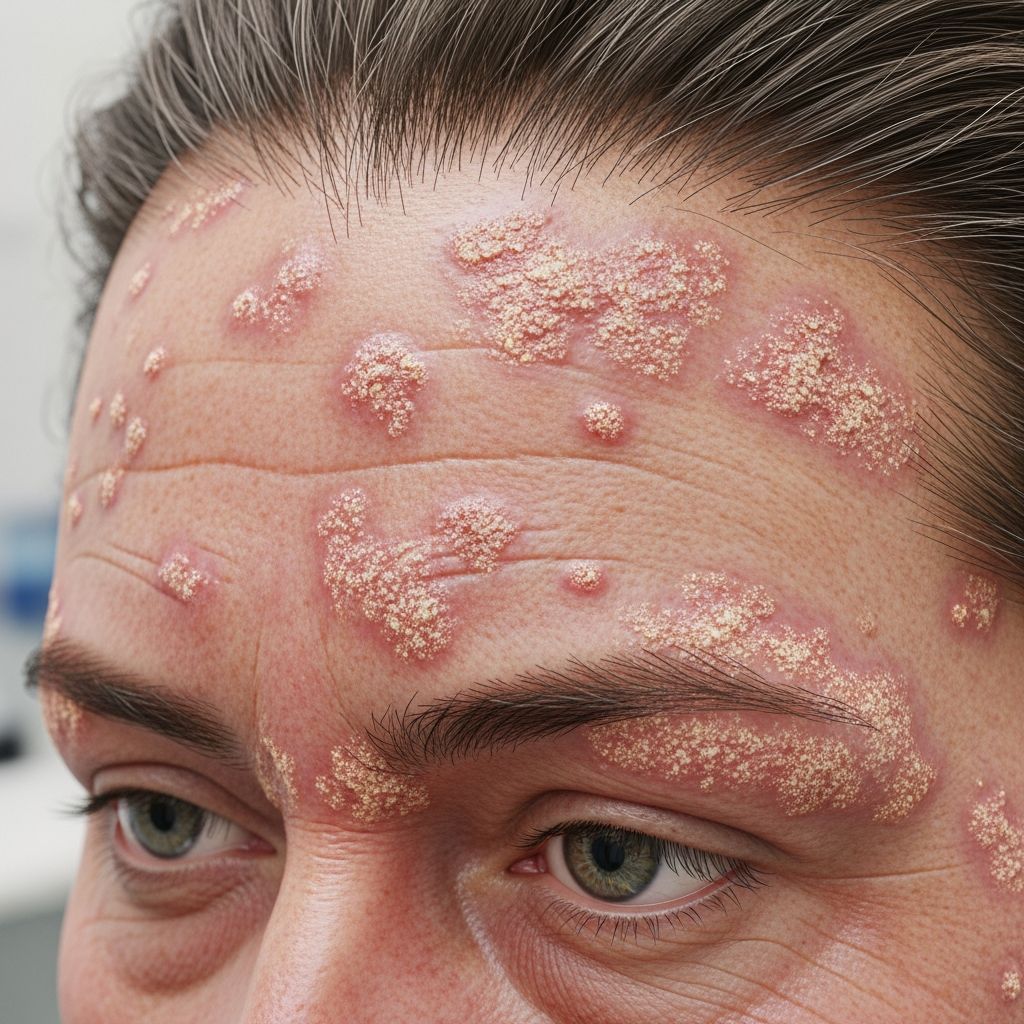
Understanding Actinic Keratosis
Actinic keratosis (AK), also known as solar keratosis, is a precancerous skin lesion that develops as a result of cumulative sun damage. These rough, scaly patches appear on areas of the skin that have experienced prolonged exposure to ultraviolet (UV) radiation. While actinic keratosis itself is not cancer, it represents an important warning sign that skin cells have been damaged and have the potential to become cancerous if left untreated. Understanding this condition, recognizing its symptoms, and seeking appropriate treatment are essential steps in maintaining skin health and preventing the development of squamous cell carcinoma, a potentially serious form of skin cancer.
The condition typically develops slowly and may go unnoticed initially, particularly if lesions are small or located in areas not frequently examined. However, because of the precancerous nature of actinic keratosis, early detection through regular skin examinations and prompt treatment are crucial for preventing progression to more serious skin conditions.
What Causes Actinic Keratosis?
Actinic keratosis results from the damaging effects of ultraviolet radiation on skin cells. UV rays damage the DNA within keratinocytes, the outer layer cells of the skin. Over time, repeated exposure to UV radiation causes these cells to grow abnormally, leading to the characteristic rough or scaly spots that define actinic keratosis.
The primary causes and contributing factors include:
- Prolonged exposure to ultraviolet (UV) radiation from the sun
- Frequent use of indoor tanning equipment, such as tanning beds
- Cumulative sun damage over many years
- Geographic location in areas with high sun exposure
- Occupational exposure to sunlight in outdoor work environments
The development of actinic keratosis is directly related to the cumulative effect of sun exposure throughout a person’s lifetime. Unlike acute sunburn, which occurs from a single intense exposure, actinic keratosis develops from the progressive accumulation of UV damage to skin cells over years or decades.
Risk Factors for Developing Actinic Keratosis
Certain demographic and lifestyle factors significantly increase the likelihood of developing actinic keratosis. Understanding these risk factors can help individuals take appropriate preventive measures and seek timely medical evaluation.
Individuals at highest risk for actinic keratosis include:
- People older than 40 or 50 years of age
- Individuals with light-colored or fair skin
- Those with blue or green eyes
- People with naturally red or blonde hair
- Individuals who work outdoors or spend considerable time in the sun
- People who do not regularly use sunscreen
- Those with a history of frequent sunburns or excessive sun exposure
- Individuals living in sunny climates
- People with a tendency to freckle or burn easily when exposed to sunlight
- Individuals with weakened immune systems
Age is one of the most significant risk factors, as actinic keratosis becomes increasingly common after age 40, reflecting the cumulative impact of sun exposure over decades. Fair-skinned individuals are particularly vulnerable because they have less melanin, the protective pigment that absorbs UV radiation.
Recognizing Actinic Keratosis: Symptoms and Appearance
Actinic keratosis presents with distinctive characteristics that make it recognizable to both patients and dermatologists. Early recognition of these symptoms is important for seeking timely treatment.
Common symptoms and physical characteristics of actinic keratosis include:
- Rough, dry, or scaly patches of skin, typically less than one inch in diameter
- Flat to slightly raised bumps or patches on the top layer of skin
- Scaly bumps that may resemble pimples
- Discolored areas that appear tan, brown, red, pink, white, or a combination of these colors
- Lesions that may itch, tingle, burn, bleed, or form crusts
- Brown areas on the face that resemble age spots
Actinic keratosis most commonly appears on areas that receive the greatest sun exposure, including the face, ears, forearms, scalp, neck, and back of the hands. The lesions typically grow slowly and may remain relatively stable for extended periods. However, without treatment, they can persist and potentially progress to more serious skin conditions.
Common Locations of Actinic Keratosis
Because actinic keratosis develops specifically on sun-exposed areas, certain body locations are more commonly affected than others. These include the scalp (particularly in individuals with thinning hair or baldness), the face and ears, the neck, the forearms and back of the hands, and the chest in individuals with significant sun exposure. Any area that has received chronic UV exposure may potentially develop actinic keratosis lesions.
Progression to Skin Cancer
One of the most important reasons to treat actinic keratosis promptly is its potential to develop into squamous cell carcinoma, a type of skin cancer that can be serious if left untreated. Without appropriate treatment, actinic keratosis lesions can persist and worsen over time. The progression from actinic keratosis to squamous cell carcinoma typically involves the lesion becoming thicker, more tender, and potentially developing into an open sore.
The exact progression rate varies among individuals, but given the potential severity of squamous cell carcinoma, it is essential not to ignore actinic keratosis lesions. Early detection and treatment significantly reduce the risk of developing invasive skin cancer and help preserve skin health and appearance.
Diagnosis of Actinic Keratosis
Actinic keratosis is typically diagnosed through a simple clinical examination by a dermatologist or qualified healthcare provider. A visual examination is usually sufficient to identify the characteristic appearance of actinic keratosis lesions. However, in some cases, particularly when the diagnosis is uncertain or to rule out other skin conditions, a dermatologist may recommend a skin biopsy, in which a small sample of the affected tissue is removed and examined under a microscope by a pathologist.
Regular skin examinations by a dermatologist are particularly important for individuals with multiple actinic keratosis lesions or significant risk factors, as this allows for ongoing monitoring and early detection of any new lesions or changes in existing ones.
Treatment Options for Actinic Keratosis
Actinic keratosis does not typically resolve on its own and requires medical intervention. Multiple effective treatment options are available, and the choice of treatment depends on factors such as the size and location of the lesion, the number of lesions present, patient preference, and the dermatologist’s clinical judgment.
Cryotherapy (Freezing)
Cryotherapy is the most common treatment method for actinic keratosis. This procedure involves applying liquid nitrogen directly to the lesion, which freezes and destroys the abnormal skin cells. The frozen tissue typically becomes red and inflamed and eventually peels away, revealing healthy skin underneath. Cryotherapy is quick, minimally invasive, and can be performed in an office setting without general anesthesia. Most patients experience minimal discomfort during the procedure, though some mild stinging or burning sensation may occur.
Topical Medications
Prescription creams and gels offer an effective alternative to surgical procedures, particularly for patients with multiple actinic keratosis lesions or those who prefer non-invasive treatment. Common topical medications include 5-fluorouracil, imiquimod, and diclofenac. These medications work by triggering the body’s immune response to destroy abnormal cells or by directly killing cancer cells. Patients apply these medications to the affected areas according to their dermatologist’s instructions. Potential side effects include redness, a burning sensation, and scaling of the skin. The treatment duration varies depending on the specific medication prescribed.
Photodynamic Therapy (PDT)
Photodynamic therapy is an increasingly popular treatment option that combines topical and light-based therapy. In this procedure, a photosensitizing agent is applied to the skin, followed by exposure to a specific wavelength of light that activates the medication and destroys abnormal cells. PDT is particularly effective for treating multiple lesions and can be especially useful for patients with extensive sun damage affecting large skin areas.
Chemical Peels
Chemical peels use strong acids to remove the top layers of skin, effectively eliminating actinic keratosis lesions along with other signs of sun damage. This treatment is particularly beneficial for patients with multiple lesions or those seeking to address overall sun damage and skin texture. The depth of the peel can be adjusted based on the extent of the lesions and the desired results.
Laser Therapy
Laser therapy uses focused light beams to destroy abnormal skin cells and remove actinic keratosis lesions. Ablative lasers vaporize the lesions and surrounding damaged skin, while non-ablative lasers work beneath the skin surface. Laser treatment is growing in popularity and offers excellent results, particularly for lesions in cosmetically sensitive areas.
Curettage and Electrosurgery
Curettage involves using a specialized instrument called a curet to scrape off the lesion. Electrosurgery uses an electrically heated instrument to destroy the abnormal tissue. Both procedures are minor surgical interventions that can be performed in an office setting with local anesthesia.
Treatment Comparison Table
| Treatment Method | Procedure Type | Recovery Time | Best For |
|---|---|---|---|
| Cryotherapy | Freezing with liquid nitrogen | Minimal, few days | Single or few lesions |
| Topical Medications | Creams and gels applied at home | Varies by medication | Multiple lesions, home treatment |
| Photodynamic Therapy | Light-activated topical agent | Few days to weeks | Multiple lesions, extensive damage |
| Chemical Peels | Acid-based skin removal | One to two weeks | Multiple lesions, overall sun damage |
| Laser Therapy | Focused light energy | Few days to weeks | Cosmetically sensitive areas |
| Curettage | Scraping with specialized instrument | Minimal, few days | Individual lesions |
Prevention and Sun Protection Strategies
While treatment of existing actinic keratosis lesions is important, prevention through sun protection is equally critical in reducing the risk of developing new lesions and preventing recurrence after treatment.
Effective prevention strategies include:
- Using broad-spectrum sunscreen with a sun protection factor (SPF) of 30 or higher daily
- Reapplying sunscreen every two hours, or more frequently if swimming or sweating
- Wearing protective clothing, including long-sleeved shirts, long pants, and wide-brimmed hats
- Seeking shade during peak sun hours, typically between 10 a.m. and 4 p.m.
- Avoiding indoor tanning beds and other artificial UV sources
- Checking skin regularly for new lesions or changes in existing ones
- Having annual skin examinations by a dermatologist, or more frequently if at high risk
Post-Treatment Care and Follow-up
After treatment for actinic keratosis, regular follow-up appointments with a dermatologist are vital. These visits allow for ongoing monitoring of the skin to catch any new lesions early and to ensure that treated lesions do not recur or progress. Your dermatologist will provide specific guidance on caring for the treated area during the healing process and will recommend ongoing sun protection measures to prevent new actinic keratosis lesions from developing.
Frequently Asked Questions
Q: Will actinic keratosis go away on its own?
A: No, actinic keratosis does not typically resolve without medical treatment. While lesions may remain stable for extended periods, they require professional intervention to prevent potential progression to skin cancer.
Q: What is the risk of actinic keratosis turning into cancer?
A: While not all actinic keratosis lesions progress to squamous cell carcinoma, they are precancerous and carry a significant risk, particularly if left untreated. Early treatment substantially reduces this risk.
Q: Which treatment is best for actinic keratosis?
A: The best treatment depends on individual factors including lesion size, location, number of lesions, and patient preference. Your dermatologist can recommend the most appropriate option after evaluating your specific situation.
Q: Can actinic keratosis come back after treatment?
A: Treated lesions may recur if sun protection measures are not maintained. Additionally, new actinic keratosis lesions may develop in previously affected areas or other sun-exposed skin. Ongoing sun protection and regular monitoring are essential.
Q: How often should I have my skin checked by a dermatologist?
A: Individuals with actinic keratosis history or significant risk factors should have annual skin examinations. Those with extensive sun damage or multiple lesions may benefit from more frequent monitoring.
Q: Does sunscreen prevent actinic keratosis?
A: Regular sunscreen use, combined with other sun protection measures, can significantly reduce the risk of developing new actinic keratosis lesions and is an important component of prevention and post-treatment care.
References
- Actinic Keratosis: Symptoms and Treatment — Creedmoor Skin Surgery Center. 2024. https://www.creedmoorskinsurgerycenter.com/conditions/actinic-keratosis
- Actinic Keratosis Symptoms and Treatment Options — Saint John’s Provincial Hospital Society. 2024. https://www.sjpp.org/dermatology/conditions/bumps-spots/actinic-keratosis/
- Actinic Keratosis: What It Is, Symptoms, Causes & Treatment — Cleveland Clinic. 2024. https://my.clevelandclinic.org/health/diseases/14148-actinic-keratosis
- Actinic keratosis – Symptoms & causes — Mayo Clinic. 2024. https://www.mayoclinic.org/diseases-conditions/actinic-keratosis/symptoms-causes/syc-20354969
- Actinic Keratosis Symptoms & Treatment — Aurora Health Care. 2024. https://www.aurorahealthcare.org/services/dermatology/actinic-keratosis
- Actinic Keratosis: Symptoms & Treatments — Mid-Tennessee Skin Surgery. 2024. https://www.midtn-skin.com/conditions/actinic-keratosis
Similar Articles








Read full bio of Sneha Tete