Actinic Prurigo: Symptoms, Diagnosis, And Treatment Guide
Actinic prurigo is a rare, chronic photodermatosis causing itchy rashes on sun-exposed skin, primarily affecting those with Native American ancestry.
What is actinic prurigo?
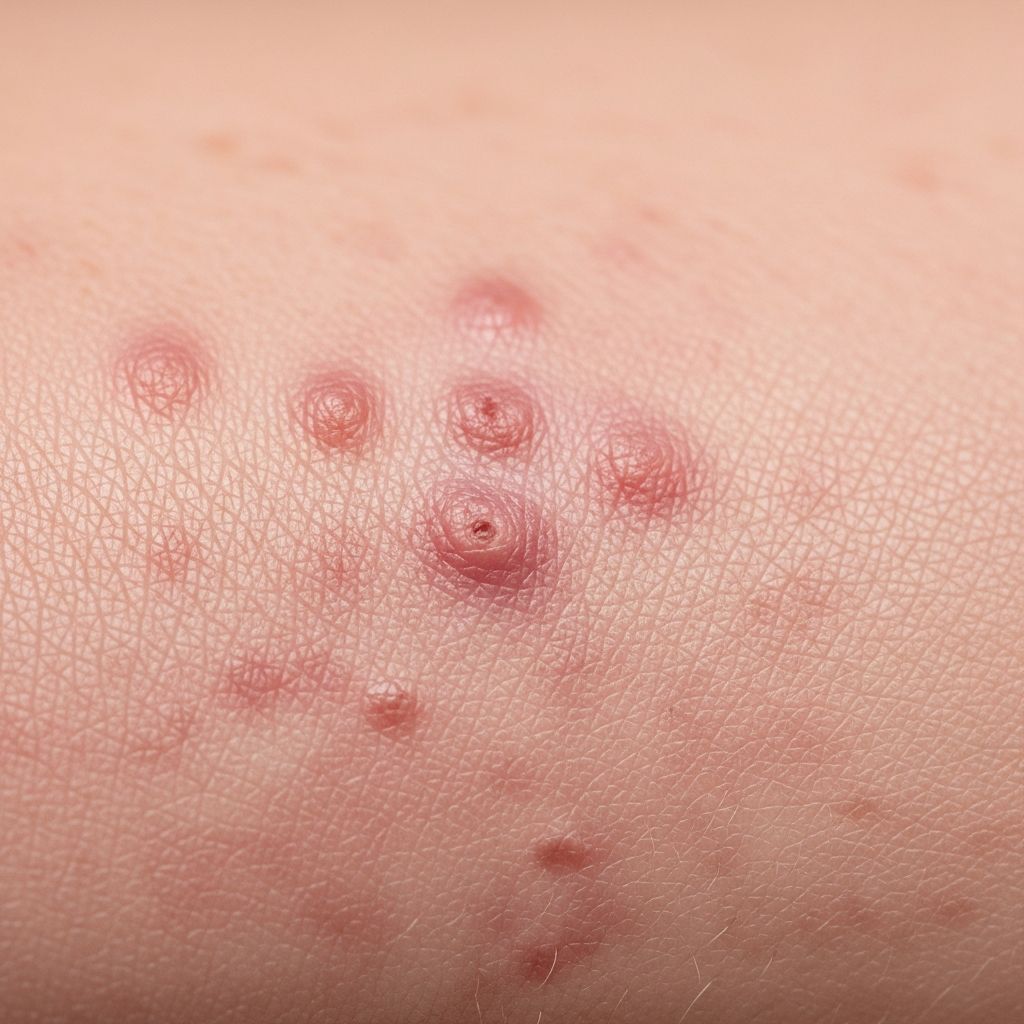
Actinic prurigo is a rare, chronic skin condition classified as an idiopathic photodermatosis, characterized by an abnormal immune response to ultraviolet (UV) radiation from sunlight. It manifests as intensely pruritic (itchy) papules, nodules, and plaques predominantly on sun-exposed areas such as the face, neck, arms, and dorsal hands. Unlike polymorphic light eruption, which is more common and episodic, actinic prurigo often persists year-round, with exacerbations in spring and summer, and shows a strong genetic predisposition, particularly in individuals of Native American, Mestizo, or mixed Indigenous-European ancestry.
The condition typically begins in childhood or adolescence, affecting females more frequently than males in a 2:1 ratio. It leads to significant quality-of-life impairments due to persistent itching, cosmetic disfigurement from lichenification (skin thickening from chronic scratching), and cheilitis (lip inflammation). Without intervention, lesions can evolve into hypertrophic scars or post-inflammatory hyperpigmentation.
Who gets actinic prurigo?
Actinic prurigo predominantly affects populations with Amerindian genetic heritage, including Native Americans in North, Central, and South America, as well as Mestizos in Mexico and Latin America. Prevalence is highest at high altitudes (>1000 meters above sea level) where UV intensity is greater, such as in the Andean regions of Bolivia, Peru, and Ecuador, with rates up to 10-20% in some Indigenous communities.
- High-risk groups: American Indians, Inuit populations, and those with mixed Native American-European ancestry.
- Age of onset: Childhood (mean age 8-10 years), rarely in adults.
- Gender: Females > males (2:1).
- Geographic factors: More common in tropical/high-altitude areas; improves at lower altitudes or with relocation to temperate climates.
Familial clustering is common, supporting a genetic basis, with human leukocyte antigen (HLA) alleles like HLA-DR4 and HLA-A30 linked to susceptibility.
What causes actinic prurigo?
The precise etiology remains unknown, but actinic prurigo involves a genetically determined exaggerated immune response to UV-A and UV-B radiation. Key pathophysiological mechanisms include:
- Genetic predisposition: Strong association with HLA class II alleles (e.g., DRB1*0407), leading to abnormal antigen presentation and T-cell activation in the skin.
- UV provocation: UV light triggers photoallergic or phototoxic reactions, releasing pro-inflammatory cytokines (IL-5, IFN-γ) and causing mast cell degranulation.
- Immune dysregulation: Delayed-type hypersensitivity with lymphocytic infiltrates in the dermis; persistent even without ongoing UV exposure in chronic cases.
- Environmental cofactors: High altitude, clear skies, and reflective surfaces amplify UV exposure.
No evidence supports nutritional deficiencies or food photosensitizers as primary causes, though these have been hypothesized.
What are the clinical features of actinic prurigo?
Symptoms onset hours to days after sun exposure, peaking in spring/summer. Persistent lesions occur year-round, especially in tropical regions.
| Site | Common Features |
|---|---|
| Face (esp. cheeks, nose) | Pruritic erythematous papules, excoriations, lichenified plaques |
| Lips (cheilitis) | Dry, scaly, ulcerated; most patients affected |
| V-neck, arms, hands | Dorsal papules/nodules; hypertrophic scarring |
| Eyes | Conjunctivitis, photophobia (10-20%) |
| Rare sites | Covered areas in severe cases |
Evolution: Acute: itchy red papules. Chronic: thickened, hyperpigmented skin with koebnerization (new lesions from trauma). Systemic symptoms like fever or malaise are absent.
Related Stories



Diagnosis
Diagnosis is primarily clinical, based on history of sun-induced pruritic lesions in at-risk populations. Key differentials include:
- Polymorphic light eruption
- Hydroa vacciniforme
- Lupus erythematosus
- Phytophotodermatitis
Investigations:
- Phototesting: Abnormal minimal erythema dose to UV-A/UV-B in 70%.
- Skin biopsy: Lymphocytic perivascular infiltrate, epidermal spongiosis.
- Patch testing: Rarely positive.
- HLA typing: Supportive in ambiguous cases.
No single test is diagnostic; correlation with ethnicity and persistence is crucial.
Treatment of actinic prurigo
There is no cure; management emphasizes rigorous sun protection and symptom control. Tailor to severity.
Sun protection (first-line for all)
- Broad-spectrum sunscreen (SPF 50+ PA++++), reapplied every 2 hours; UVA/UVB coverage essential even on cloudy days.
- Protective clothing: UPF 50+ hats, long sleeves, sunglasses.
- Behavioral: Avoid 10 AM-4 PM sun; seek shade; limit outdoor time.
Topical therapies
- High-potency corticosteroids (e.g., clobetasol) for acute flares: BID x 1-2 weeks, then taper.
- Calcineurin inhibitors (tacrolimus 0.1% ointment) for face/lips: steroid-sparing.
- Emollients/antihistamines: Relieve dryness/itch.
Systemic therapies (moderate-severe)
| Agent | Dose | Evidence/Notes |
|---|---|---|
| Thalidomide | 100-300 mg/day | Gold standard; 80-90% response; monitor neuropathy, teratogenic. |
| Antimalarials (chloroquine) | 100-200 mg/day | 50-70% efficacy; retinal screening required. |
| Systemic steroids (prednisone) | 0.5-1 mg/kg short courses | For flares; avoid long-term. |
| Cyclosporine | 3-5 mg/kg/day | Alternative immunosuppressant. |
Phototherapy
- Narrowband UVB or PUVA desensitization: For refractory cases; induces tolerance.
Pregnancy/children: Avoid thalidomide; use topicals/sun protection.
What is the outcome for actinic prurigo?
Chronic relapsing course; many improve in adulthood (30-50% spontaneous remission post-puberty). Thalidomide provides long-term control but requires monitoring. Untreated: scarring, psychological distress. Adherence to sun avoidance halts progression.
Prevention
- Lifelong sun protection strategies.
- Early treatment initiation.
- Genetic counseling for families.
Frequently Asked Questions
Is actinic prurigo curable?
No, but symptoms can be well-controlled with treatment and sun protection.
Does it affect children?
Yes, onset is typically in childhood; manage conservatively.
Can thalidomide cure it?
No, it suppresses symptoms; relapse common on discontinuation.
Is sunscreen enough?
Essential but often insufficient alone; combine with medications.
Does it go away in adulthood?
Possibly; some experience remission.
References
- Actinic Prurigo — StatPearls – NCBI Bookshelf. 2023-10-01. https://www.ncbi.nlm.nih.gov/books/NBK499957/
- Actinic prurigo — Wikipedia. 2024-05-15. https://en.wikipedia.org/wiki/Actinic_prurigo
- Actinic Prurigo – Skin Health Info — British Association of Dermatologists. 2023-01-01. https://www.skinhealthinfo.org.uk/condition/actinic-prurigo/
- Actinic prurigo — DermNet NZ. 2024-08-20. https://dermnetnz.org/topics/actinic-prurigo
- Actinic Prurigo — MD Searchlight. 2024-02-10. https://mdsearchlight.com/skin-problems-and-treatments/actinic-prurigo/
- Dermatology – Actinic Prurigo — Northern Care Alliance NHS. 2023-06-01. https://www.northerncarealliance.nhs.uk/patient-information/patient-leaflets/dermatology-actinic-prurigo
Similar Articles








Read full bio of medha deb