Actinomycosis: Comprehensive Guide To Diagnosis And Treatment
Chronic bacterial infection by Actinomyces causing suppurative granulomatous lesions with sinus tracts.
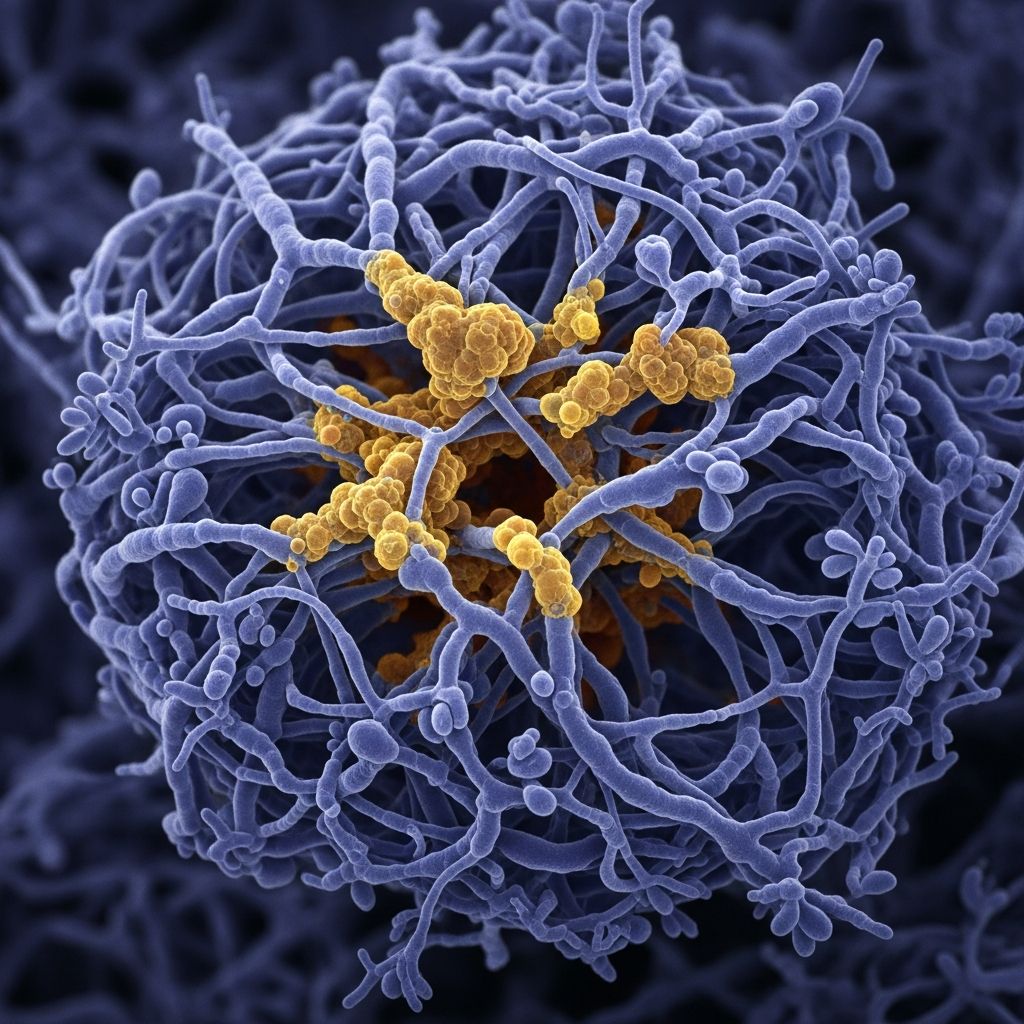
Actinomycosis is a chronic or slowly progressive infection caused by various bacterial species of the Actinomyces genus, most commonly Actinomyces israelii. It is characterized by the formation of suppurative granulomatous lesions that progress slowly, often forming multiple sinus tracts draining sulfur granules (visible aggregations of the bacteria).
What is actinomycosis?
Actinomycosis is an indigenous polymicrobial infection caused by filamentous, branching, Gram-positive, non-acid-fast Actinomyces bacteria normally found in the oropharynx, gastrointestinal tract and female genital tract. The disease is now uncommon but should be considered in persistent or recurrent soft tissue infections, especially with draining sinuses and sulphur granules (colonies of bacteria). Actinomycosis typically manifests as a chronic suppurative and granulomatous infection, progressing from abscess formation to fistulae and sinus tracts that discharge characteristic yellow sulfur granules. These granules represent microcolonies of the bacteria matted together with inflammatory debris.
Who gets actinomycosis? Actinomycosis affects individuals across all ages but is more prevalent in adults, particularly males in their fourth to sixth decades. Risk factors include poor oral hygiene, dental procedures, trauma, alcoholism, and immunocompromised states. Cervicofacial involvement accounts for approximately 50% of cases, often linked to dental caries or extractions. The infection requires a breach in mucosal barriers for the commensal bacteria to invade deeper tissues.
What causes actinomycosis?
Actinomycosis results from infection by Actinomyces species, anaerobic or microaerophilic Gram-positive bacilli that form branching filaments. Over 30 species exist, but human pathogens include primarily A. israelii (most common), A. gerencseriae, A. naeslundii, A. odontolyticus, A. viscosus, A. meyeri, A. graevenitzii and A. turicensis. Propionibacterium propionicum (formerly Arachnia propionica) causes similar infections and is regarded as the fourth most common Actinomyces species in human infections.
These bacteria are normal commensals in humans but become pathogenic when mucosal integrity is disrupted by trauma, surgery, dental procedures, or foreign bodies like intrauterine devices (IUDs). Co-infection with other anaerobes often occurs, complicating the polymicrobial nature. In cutaneous cases, primary inoculation via trauma or bites is rare but reported, as seen in leg pyomyositis cases without prior trauma history.
- Cervicofacial (50–70%): Poor dental hygiene, dental abscesses, mandibular fractures, oral surgery.
- Abdominopelvic (20%): Appendicitis, diverticulitis, bowel perforation, IUDs.
- Thoracic (15–20%): Aspiration of oropharyngeal secretions.
- Primary cutaneous (<2%): Trauma, human bites, surgical wounds.
- Central nervous system, disseminated: Rare, often hematogenous spread.
Clinical features of actinomycosis
Actinomycosis has an insidious onset, progressing over weeks to months. Lesions begin as indurated swellings or nodules, evolving into abscesses that rupture, forming sinus tracts with purulent discharge containing sulfur granules. Fibrosis and tissue induration mimic malignancy or tuberculosis. Systemic symptoms like fever and weight loss occur late.
Cervicofacial actinomycosis
The most common form (50–70% of cases), often termed “lumpy jaw.” Presents as a painless, firm swelling of the mandible or maxilla, with overlying erythema. Multiple sinuses develop, discharging pus with sulfur granules. Mandibular involvement predominates; submandibular, cheek, or temporomandibular regions affected. Pain develops with bone involvement (osteomyelitis). Regional lymphadenopathy rare due to poor lymphatic spread.
Related Stories



Abdominopelvic actinomycosis
Includes ileocecal (most common), appendiceal, and pelvic forms. Abdominal pain, mass, fever, weight loss; ileocecal mimics Crohn disease or cancer. Pelvic form in women with prolonged IUD use causes tubo-ovarian abscesses, pyosalpinx, infertility. Sinus tracts to abdominal wall or perianal area possible.
Pulmonary actinomycosis
Results from aspiration; presents as chronic pneumonia, abscess, or mass lesion. Symptoms: cough, hemoptysis, pleuritic pain, weight loss. Chest X-ray shows consolidation, cavitation, or mass. May invade chest wall, forming sinuses (“pulmonary actinomycosis with chest wall involvement”). Simulates tuberculosis or lung cancer.
Cutaneous actinomycosis
Rare (<2%); primary form from skin trauma (bites, punctures, surgery). Starts as pustule or nodule, progresses to indurated plaque, abscess, and sinuses with granules. Secondary cutaneous from contiguous spread (cervicofacial, thoracic). Extremity involvement uncommon, may cause pyomyositis or mimic sporotrichosis, nocardiosis, TB.
Musculoskeletal actinomycosis
Craniocerebral from direct spread or hematogenous. Spinal involvement causes epidural abscess, paraplegia. Extremity rare, post-trauma.
Diagnosis of actinomycosis
High suspicion in chronic suppurative infections with sinuses/granules. Definitive diagnosis requires histopathology and/or culture.
Histology
Biopsy shows suppuration and granulomatous inflammation; sulfur granules (1–2 mm, yellow, basophilic on H&E, Gram-positive filaments branching at 90°). Club-shaped filaments at periphery (Splendore-Hoeppli phenomenon). Special stains: Grocott methenamine silver (GMS), Gram, Giemsa. PCR for species identification.
| Feature | Description |
|---|---|
| Sulfur granules | Colonies of branching filaments, eosinophilic rim |
| Infiltrate | Neutrophils, macrophages, multinucleate giants |
| Bacteria | Gram-positive, non-acid fast filaments |
Microbiology
Culture on anaerobic media; strict anaerobes, slow-growing (2–4 weeks). Low yield (<50%) due to prior antibiotics. Sulfur granules for culture/biopsy. Molecular methods improving diagnosis.
Differential diagnosis
- Infections: Mycobacterial (TB, atypical), nocardiosis, sporotrichosis, botryomycosis, chromoblastomycosis.
- Neoplasia: Squamous cell carcinoma, lymphoma.
- Others: Wegener granulomatosis, actinomycetoma (Nocardia/Madurella).
Differentiate by granules (TB caseating, fungal septate hyphae), acid-fast stain (negative in Actinomyces).
Management of actinomycosis
Prolonged high-dose antibiotics (6–12 months); surgery adjunctive for abscess drainage, debridement.
Medical therapy
Penicillin G IV 12–20 million units/day (6–12 weeks), then oral penicillin V or amoxicillin 4–6 g/day. Alternatives: doxycycline, tetracycline, clindamycin (penicillin-allergic); monitor for resistance. Duration shorter post-surgery. Cutaneous cases respond to amoxicillin + cotrimoxazole 6–8 weeks.
Surgical therapy
Drainage of abscesses, debridement of necrotic tissue, resection of fistulae/masses. Essential for thoracic/abdominal with complications, musculoskeletal, or poor antibiotic response.
Monitoring
Clinical resolution, imaging, inflammatory markers. Relapse common if therapy inadequate.
Prognosis and complications
Excellent with early diagnosis/treatment (>90% cure). Delayed diagnosis leads to fibrosis, osteomyelitis, sepsis, death (5–10% untreated). Complications: fistulae, amyloidosis, malignancy mimicry.
Prevention of actinomycosis
- Good oral hygiene, timely dental care.
- Prompt IUD removal/change.
- Wound care post-trauma/surgery.
- Avoid aspiration in at-risk patients.
Frequently asked questions
What is the most common form of actinomycosis?
Cervicofacial actinomycosis, known as ‘lumpy jaw’, accounts for 50-70% of cases.
How is actinomycosis diagnosed?
By histopathology showing sulfur granules with branching Gram-positive filaments, confirmed by culture or PCR.
What is the treatment duration?
Prolonged antibiotics: IV penicillin 4-6 weeks, then oral 6-12 months total.
Is surgery always needed?
No, but required for abscess drainage, debridement, or complications.
Is actinomycosis contagious?
No, caused by endogenous commensal bacteria; not person-to-person.
References
- Primary cutaneous actinomycosis manifesting as pyomyositis: a diagnostic challenge — Cosmoderma. 2023. https://cosmoderma.org/primary-cutaneous-actinomycosis-manifesting-as-pyomyositis-a-diagnostic-challenge/
- Actinomycosis: etiology, clinical features, diagnosis, treatment, and management — PMC / NCBI. 2014-07-03. https://pmc.ncbi.nlm.nih.gov/articles/PMC4094581/
- Actinomycosis – StatPearls — NCBI Bookshelf. 2023. https://www.ncbi.nlm.nih.gov/books/NBK482151/
- Actinomycosis: Causes, Symptoms, Diagnosis & Treatment — Cleveland Clinic. 2023-10-27. https://my.clevelandclinic.org/health/diseases/24981-actinomycosis
- Actinomycosis – DermNet — DermNet NZ. 2023. https://dermnetnz.org/topics/actinomycosis
Similar Articles








Read full bio of medha deb