Acupuncture Essentials: An Evidence-Based Guide For 2025
Discover the science, benefits, and safe practices of acupuncture for modern wellness and pain relief.
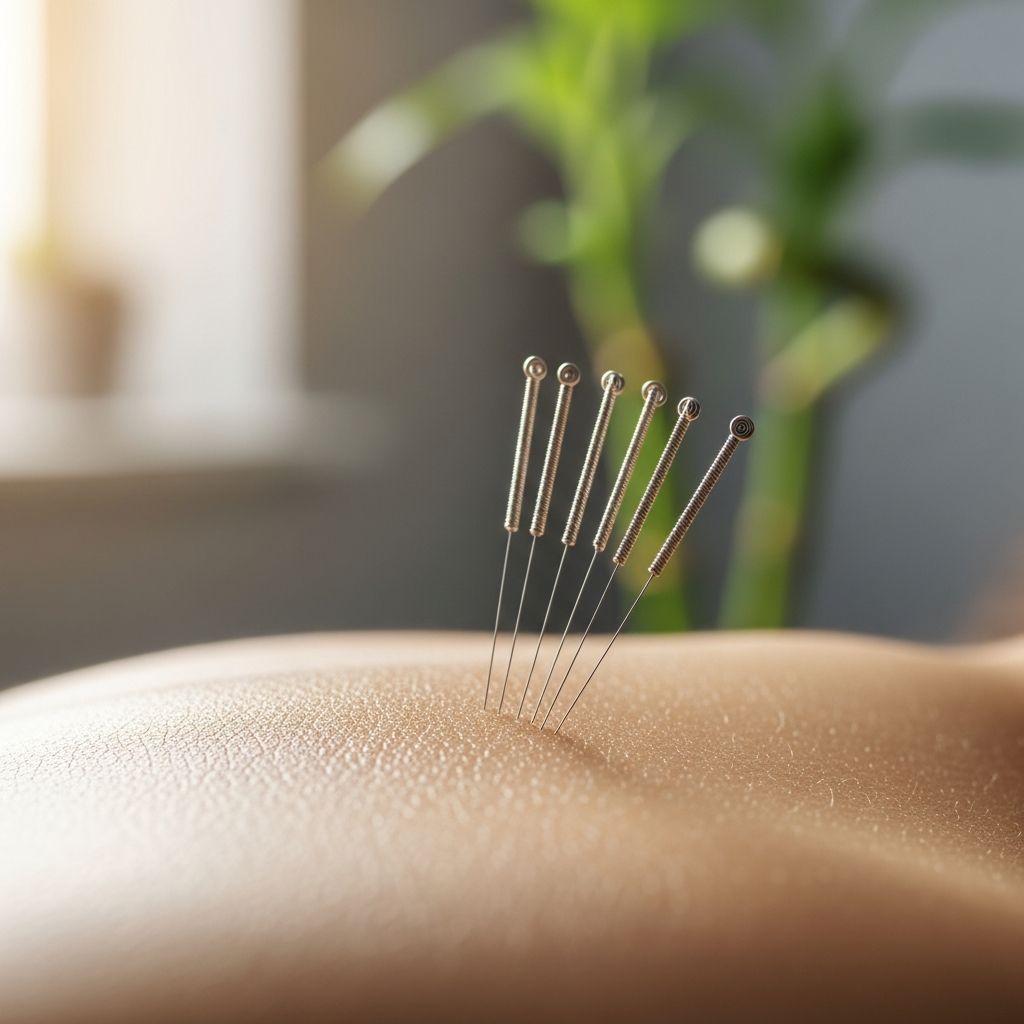
Acupuncture, a time-honored practice rooted in ancient traditions, involves inserting fine needles into specific body points to promote healing and balance. Modern research supports its use for various conditions, particularly chronic pain, with benefits extending beyond placebo effects.
Historical Foundations and Modern Evolution
Originating over 2,000 years ago in China, acupuncture forms a cornerstone of Traditional Chinese Medicine (TCM). Practitioners believe it regulates the flow of vital energy, or qi, along pathways called meridians to restore harmony in the body. Today, it integrates into Western healthcare as a complementary therapy, with adaptations like electroacupuncture enhancing its precision.
In contemporary settings, acupuncture draws from both TCM principles and evidence-based protocols. Sessions typically last 20-60 minutes, involving 6-15 treatments over weeks, tailored to individual needs. This evolution reflects rigorous clinical trials validating its role in pain management and beyond.
Scientific Mechanisms Behind Acupuncture
Research reveals multiple physiological pathways explaining acupuncture’s effects. It modulates the autonomic nervous system, influencing blood pressure, heart rate, and inflammation markers. Studies show reduced pro-inflammatory proteins, easing pain and swelling.
Functional MRI scans demonstrate central nervous system changes during treatment, including natural opioid release at spinal and brain levels for analgesia. Electroacupuncture activates the vagal-adrenal axis, releasing dopamine to tame inflammatory responses like cytokine storms in animal models.
Nonspecific effects, such as patient expectations and practitioner interaction, contribute alongside needle-specific stimulation. A study using video-guided imagery of prior sessions produced pain relief, highlighting psychological components.
Proven Benefits for Chronic Pain Conditions
Extensive meta-analyses confirm acupuncture’s efficacy for chronic pain. A review of 39 trials with 20,827 patients found clinically relevant effects persisting up to 12 months, outperforming no treatment and not fully attributable to placebo.
| Condition | Evidence Summary | Effect Size vs. Controls |
|---|---|---|
| Back/Neck Pain | 12 studies (8,003 participants): Superior to no treatment and sham; comparable to NSAIDs. | Moderate to large |
| Osteoarthritis (Knee/Hip) | 10 studies (2,413 participants): Better than no treatment/sham; effects last 1 year. | Moderate |
| Postoperative Pain | Multiple RCTs: Significant relief. | Moderate |
| Headaches | 20 studies (6,376 participants): Benefits persist 1 year. | Moderate |
Low back pain, affecting 22-48% of adults, shows improved function and reduced intensity in six RCTs, with benefits at 1-6 months. These findings position acupuncture as a reasonable non-opioid option amid the pain management crisis.
Beyond Pain: Applications for Other Health Issues
Acupuncture extends to non-pain conditions. For cancer-related symptoms, a 2020 review of nine studies (783 participants) showed auricular acupuncture outperforming sham for pain, especially combined with drugs. It also alleviates treatment-induced nausea/vomiting and fatigue, per meta-analyses.
- Seasonal Allergies: Evidence of symptom relief.
- Stress Incontinence (Women): Positive outcomes in trials.
- Asthma: Improves quality of life, not lung function.
- Fibromyalgia: Symptom reduction lasting one month.
- Labor Pain: Helpful per nine RCTs.
- Obesity: Supports modest weight loss.
A comprehensive mapping of systematic reviews notes modest moderate-certainty evidence, mostly for pain versus sham, with rare adverse effects.
Safety Profile and Potential Risks
Acupuncture is generally safe when performed by trained professionals. Reviews comparing it to usual care conclude it is at least as safe, with minimal serious complications. Common minor issues include soreness, bruising, or fatigue.
Risks rise with unqualified practitioners: infections from unsterile needles or organ injury from improper depth. Regulatory bodies recommend licensed acupuncturists using single-use needles. Contraindications include bleeding disorders, pacemakers (for electroacupuncture), and pregnancy for certain points.
Related Stories



Finding and Preparing for Acupuncture Treatment
Select providers certified by recognized bodies, such as those with medical or TCM credentials. Initial consultations assess medical history and goals, customizing point selection—fixed, flexible, or individualized.
Preparation tips:
- Eat lightly beforehand to avoid dizziness.
- Wear loose clothing for access to points.
- Discuss medications and conditions openly.
- Expect mild sensations like tingling or warmth.
Costs vary; insurance may cover for specific diagnoses. Track symptoms via a journal to evaluate progress.
Integrating Acupuncture into Conventional Care
As an adjunct, acupuncture complements drugs, physical therapy, and lifestyle changes. Family physicians increasingly refer patients, valuing its opioid-sparing potential. Ongoing research refines protocols, like optimal session frequency and combinations.
Despite vast trials, evidence certainty remains low-to-moderate for many uses due to study variability. Future studies should prioritize integration strategies.
Common Questions About Acupuncture
Does acupuncture hurt? Most feel minimal discomfort; needles are hair-thin.
How many sessions are needed? Typically 6-15 weekly, with maintenance as required.
Is it covered by insurance? Often for chronic pain; check policies.
Can children receive it? Yes, with adapted techniques.
What if I’m needle-phobic? Discuss acupressure or laser alternatives.
Results for migraines? Comparable to NSAIDs, per reviews.
Future Directions in Acupuncture Research
Emerging studies explore biomarkers, personalized protocols, and tech integrations like AI-guided needling. Inflammation modulation via neural pathways holds promise for autoimmune and chronic diseases. Rigorous trials will solidify its mainstream role.
References
- Research Finds Acupuncture Effective for Chronic Pain — American Academy of Family Physicians. 2018-05-21. https://www.aafp.org/news/health-of-the-public/20180521acupuncture.html
- Podcast: The Benefits of Acupuncture — BMC. Accessed 2026. https://www.bmc.org/podcasts/benefits-acupuncture
- Acupuncture: Effectiveness and Safety — National Center for Complementary and Integrative Health (NCCIH), NIH. Accessed 2026. https://www.nccih.nih.gov/health/acupuncture-effectiveness-and-safety
- Acupuncture – StatPearls — NCBI Bookshelf, NIH. 2023. https://www.ncbi.nlm.nih.gov/books/NBK532287/
- Use of Acupuncture for Adult Health Conditions, 2013 to … — JAMA Network Open. 2023. https://jamanetwork.com/journals/jamanetworkopen/fullarticle/2798899
- Exploring the Science of Acupuncture — Harvard Medical School. Accessed 2026. https://hms.harvard.edu/news/exploring-science-acupuncture
- Acupuncture — Mayo Clinic. Accessed 2026. https://www.mayoclinic.org/tests-procedures/acupuncture/about/pac-20392763
Similar Articles








Read full bio of medha deb