AGEP Pathology: Understanding Histological Features
Comprehensive guide to AGEP pathology: histological features, epidermis involvement, and diagnostic findings.
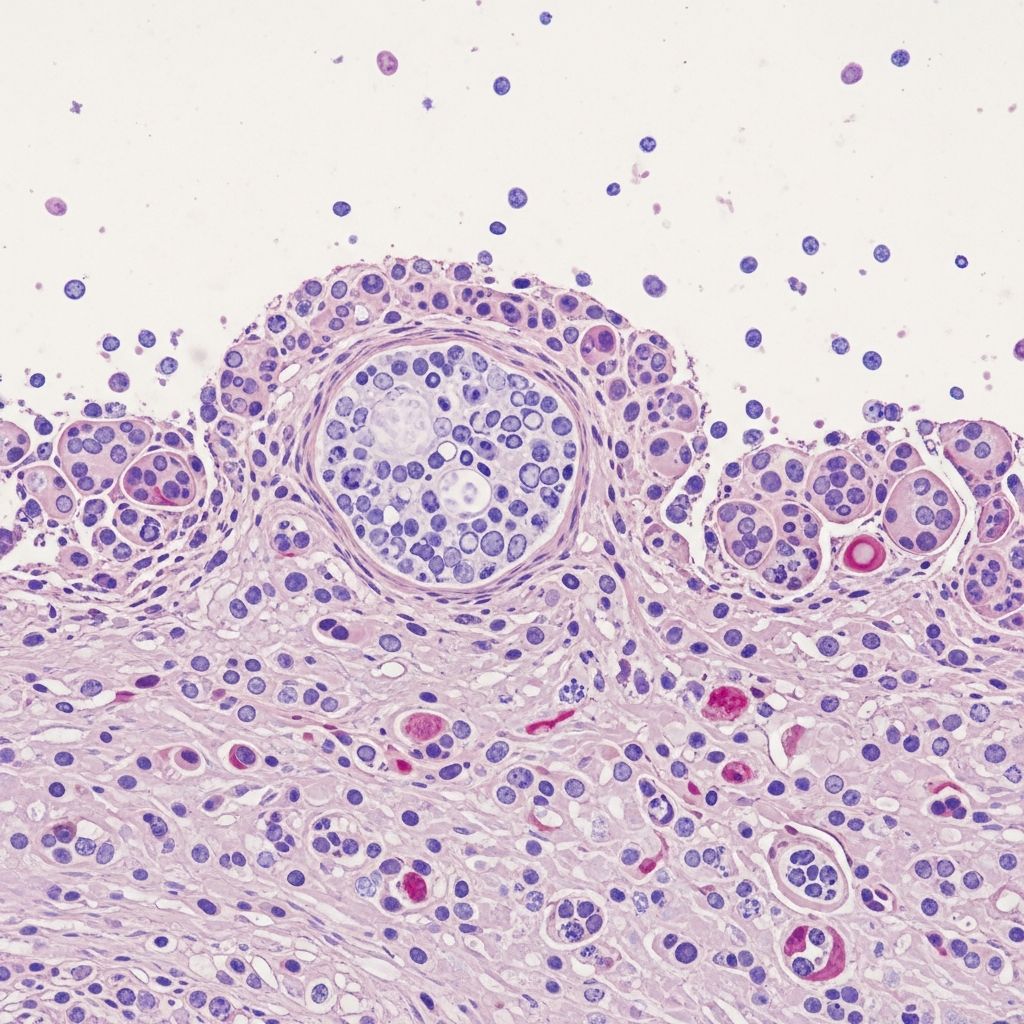
Understanding AGEP Pathology: A Comprehensive Overview
Acute generalised exanthematous pustulosis (AGEP) is a rare dermatosis that presents as multiple pustules on a generalized erythematous eruption. The condition represents a severe cutaneous adverse reaction, most commonly triggered by medications, with an incidence of 1-5 patients per million per year. Understanding the pathological mechanisms and histological features of AGEP is essential for accurate diagnosis and effective clinical management. This article provides an in-depth examination of the pathological processes underlying this serious skin condition.
Histopathological Features of AGEP
The histopathological examination of AGEP skin biopsies reveals distinctive findings that are crucial for confirming diagnosis. The most striking feature is the presence of neutrophilic spongiotic pustules, which represent the hallmark microscopic finding of this condition. These pustules are characteristically located within the stratum corneum and/or the epidermis, demonstrating a pattern that distinguishes AGEP from other pustular dermatoses.
Epidermal Changes
The epidermis in AGEP demonstrates specific alterations that contribute to pustule formation. There is spongiosis and minimal acanthosis of the epidermis, which represents the initial phase of tissue damage. Spongiosis refers to intercellular edema within the epidermis, a key mechanism that facilitates pustule formation and the separation of epidermal cells.
In addition to spongiosis, apoptotic keratinocytes are often observed in the adjacent epidermis surrounding the pustules. This programmed cell death represents a critical pathogenic mechanism in AGEP, resulting from the influx of cytotoxic T-cells and immune-mediated destruction of skin cells. The presence of apoptotic keratinocytes indicates the degree of cellular damage occurring in response to the causative medication.
Neutrophilic Pustule Formation
Neutrophilic pustules are the defining histological feature of AGEP and serve as the pathological basis for the clinical pustular eruption observed in affected patients. These pustules typically form in a subcorneal location, meaning they develop immediately beneath the stratum corneum, the outermost layer of the epidermis. The subcorneal position of these pustules explains why they are so superficial and often appear as pinhead-sized lesions on clinical examination.
The neutrophils that comprise these pustules are recruited to the skin as part of an aberrant immune response. This neutrophilic infiltration represents a shift in the immune cascade from the initial T-cell mediated phase to a more acute inflammatory state characterized by innate immune activation and neutrophil mobilization.
Dermal Response and Inflammatory Infiltrate
Beyond the epidermal changes, AGEP demonstrates a characteristic dermal response that is often underappreciated but contributes significantly to the pathological picture. There is often a dermal response which is rich in lymphocytes and eosinophils. This mixed inflammatory infiltrate in the dermis reflects the complex immune mechanisms driving AGEP pathogenesis.
Lymphocytic Infiltration
The lymphocytic component of the dermal infiltrate primarily consists of T-lymphocytes, which play a central role in initiating the pathological cascade of AGEP. The initial phase of AGEP pathogenesis involves an influx of CD8 cytotoxic T-cells. These cells recognize drug haptens or modified self-antigens presented by keratinocytes, leading to activation and subsequent release of cytotoxic granules that induce keratinocyte apoptosis.
Related Stories



Following the initial CD8 T-cell infiltration, CD4 helper T-cells enter the epidermis, producing critical chemokines and growth factors. Specifically, CXCL-8 (also known as interleukin-8) and granulocyte macrophage-colony stimulating factor (GM-CSF) are produced by these CD4 cells, creating a chemotactic gradient that recruits neutrophils to the site of inflammation.
Eosinophilic Component
The presence of eosinophils in the dermal infiltrate indicates activation of the adaptive immune response. Eosinophils may be recruited through IL-5 signaling and contribute to the inflammatory environment through the release of toxic granule proteins and additional cytokines. The degree of eosinophilic infiltration can vary among cases, reflecting heterogeneity in the immunological response to different causative drugs.
Pathogenic Mechanisms in AGEP
Understanding AGEP pathology requires comprehension of the underlying immunological mechanisms that drive this condition. AGEP is classified as a Type IV hypersensitivity reaction, a delayed T-cell mediated response to drug exposure.
Phase 1: T-Cell Recognition and Activation
The initial phase of AGEP begins when a causative medication is introduced. The drug either acts as a hapten (binding to endogenous proteins) or structurally mimics self-antigens, triggering recognition by antigen-presenting cells (APCs). These APCs present the drug-derived or modified antigen to CD8 and CD4 T-cells through the major histocompatibility complex (MHC), leading to T-cell activation and proliferation.
Phase 2: CD8-Mediated Cytotoxicity
Activated CD8 cytotoxic T-cells infiltrate the skin and recognize drug-haptenated or modified keratinocytes. Upon recognition, these cells release perforin and granzymes, which create pores in the keratinocyte cell membrane and activate intrinsic apoptotic pathways. This results in characteristic keratinocyte apoptosis observed in AGEP biopsies. The apoptosis of keratinocytes disrupts the barrier function of the epidermis and contributes to the visible pustule formation.
Phase 3: Neutrophil Recruitment and Inflammation
As keratinocytes undergo apoptosis, CD4 T-cells produce CXCL-8 and GM-CSF, potent neutrophil chemoattractants and activators. These cytokines create a concentration gradient that directs circulating neutrophils toward the epidermis. Neutrophils rapidly infiltrate the epidermis and accumulate in areas of spongiosis, forming the characteristic neutrophilic pustules. The neutrophils release additional inflammatory mediators, proteases, and reactive oxygen species, amplifying the inflammatory response.
Diagnostic Significance of Pathological Findings
The pathological features of AGEP are essential for diagnostic confirmation, particularly in atypical presentations. A skin biopsy demonstrating the characteristic findings—neutrophilic spongiotic pustules in the stratum corneum and/or epidermis, with surrounding apoptotic keratinocytes and a rich dermal infiltrate of lymphocytes and eosinophils—strongly supports the diagnosis of AGEP. These histological features help distinguish AGEP from other pustular dermatoses, including pustular psoriasis, acute pustular drug eruptions, and other cutaneous adverse reactions.
Comparison with Other Pustular Conditions
| Condition | Pustule Location | Neutrophils | Lymphocytic Infiltrate | Eosinophils |
|---|---|---|---|---|
| AGEP | Subcorneal/intraepidermal | Abundant | Rich, mixed | Often present |
| Pustular Psoriasis | Subcorneal | Abundant | Minimal | Minimal |
| Folliculitis | Follicular | Abundant | Variable | Variable |
Patch Testing in AGEP Pathology
Beyond standard histological examination, epicutaneous patch testing represents an important diagnostic tool that reflects the pathological basis of AGEP. Patch testing may support the diagnosis by causing a localized pustular reaction 48-96 hours after the offending drug is applied to the skin. This delayed pustular reaction mirrors the pathological cascade of AGEP in miniature, reproducing the T-cell mediated response and subsequent neutrophil infiltration in a controlled, localized manner. A positive patch test provides valuable confirmation that a specific medication is responsible for the patient’s eruption.
Progression and Resolution of Pathological Changes
The pathological changes in AGEP are typically self-limited and resolve following removal of the causative medication. As the offending drug is eliminated from the body, T-cell activation wanes, and production of CXCL-8 and GM-CSF decreases. Neutrophil recruitment slows, and the inflammatory infiltrate gradually resolves. The apoptotic keratinocytes are cleared by macrophages and other phagocytes, and the epidermis undergoes repair and restoration of barrier function.
Typically, the acute pathological process and associated clinical manifestations resolve within approximately 15 days following discontinuation of the causative drug. However, severe cases may have more persistent inflammatory changes and extended resolution times. In some instances, systemic corticosteroids may be necessary to accelerate resolution of the pathological inflammatory response, particularly in severe cases with significant systemic involvement.
Clinical Correlation with Pathology
The pathological findings in AGEP directly correlate with the clinical presentation observed in affected patients. The presence of neutrophilic spongiotic pustules explains the characteristic appearance of sterile, non-follicular pustules that arise rapidly on an erythematous base. The spongiosis accounts for the areas of erythema and edema surrounding the pustules, while the dermal lymphocytic infiltrate contributes to the systemic symptoms of fever and malaise often observed in AGEP patients.
The subcorneal location of pustules explains why they are so superficial and why the rash typically peels with characteristic collarettes of desquamation as it resolves. The presence of eosinophils in the dermal infiltrate may contribute to pruritis, a common complaint in AGEP. The mixed lymphocytic response explains why AGEP can occasionally overlap with other severe cutaneous adverse reactions, such as drug hypersensitivity syndrome or Stevens-Johnson syndrome/toxic epidermal necrolysis.
Laboratory Findings Associated with AGEP Pathology
While histopathology is the gold standard for diagnosis, systemic laboratory abnormalities often accompany the pathological skin changes in AGEP. Patients frequently demonstrate neutrophilia and eosinophilia in complete blood counts, reflecting the intense systemic immune activation underlying the condition. C-reactive protein and erythrocyte sedimentation rate are typically elevated, serving as markers of acute inflammation. Abnormalities in liver and kidney function tests may be observed in severe cases with systemic involvement, reflecting the potential for multiorgan disease in AGEP.
Factors Influencing Pathological Severity
The severity of pathological changes in AGEP varies among patients, influenced by several factors including the specific causative drug, individual genetic susceptibility to drug reactions, patient age, and presence of comorbidities. Older patients and those with significant underlying medical conditions tend to develop more severe pathological involvement and are at higher risk for serious complications and adverse outcomes.
Frequently Asked Questions About AGEP Pathology
Q: What is the most distinctive histological finding in AGEP?
A: The most striking feature is neutrophilic spongiotic pustules located within the stratum corneum and/or epidermis, accompanied by apoptotic keratinocytes and a rich dermal infiltrate of lymphocytes and eosinophils.
Q: How do the CD8 and CD4 T-cells contribute differently to AGEP pathology?
A: CD8 cytotoxic T-cells infiltrate initially and induce keratinocyte apoptosis through release of cytotoxic granules. Subsequently, CD4 helper T-cells produce CXCL-8 and GM-CSF, which recruit and activate neutrophils, leading to the characteristic pustule formation.
Q: Can patch testing help confirm AGEP diagnosis?
A: Yes, epicutaneous patch testing may cause a localized pustular reaction 48-96 hours after application of the offending drug, reproducing the pathological cascade and supporting the diagnosis of AGEP.
Q: How long do the pathological changes in AGEP typically persist?
A: The acute pathological process usually resolves within approximately 15 days following discontinuation of the causative medication, though severe cases may have more extended resolution times.
Q: What role do eosinophils play in AGEP pathology?
A: Eosinophils are part of the dermal infiltrate and contribute to inflammation through release of toxic granule proteins and cytokines. Their presence may contribute to pruritus, a common symptom in AGEP patients.
Q: Why are the pustules in AGEP subcorneal rather than follicular?
A: AGEP pustules form in response to T-cell mediated immune reactions and are non-follicular by nature. The subcorneal location results from the pattern of spongiosis and neutrophil infiltration in the superficial epidermis and stratum corneum.
References
- Acute generalised exanthematous pustulosis pathology — DermNet NZ. Accessed January 28, 2026. https://dermnetnz.org/topics/acute-generalised-exanthematous-pustulosis-pathology
- Acute generalised exanthematous pustulosis — National Center for Biotechnology Information (PubMed). 2012. https://pubmed.ncbi.nlm.nih.gov/22571555/
- Acute generalised exanthematous pustulosis (AGEP) — New Zealand Medicines and Medical Devices Safety Authority (Medsafe). December 2020. https://www.medsafe.govt.nz/profs/PUArticles/December2020/Acute-generalised-exanthematous-pustulosis-AGEP.html
- Acute Generalized Exanthematous Pustulosis — Practical Dermatology. https://practicaldermatology.com/topics/other-dermatology/acute-generalized-exanthematous-pustulosis/23387/
Similar Articles








Read full bio of medha deb