Acute Hair Matting: Causes, Symptoms, And Treatment Guide
Rare sudden scalp hair felting: causes, features, diagnosis, treatment, and prevention strategies explained.
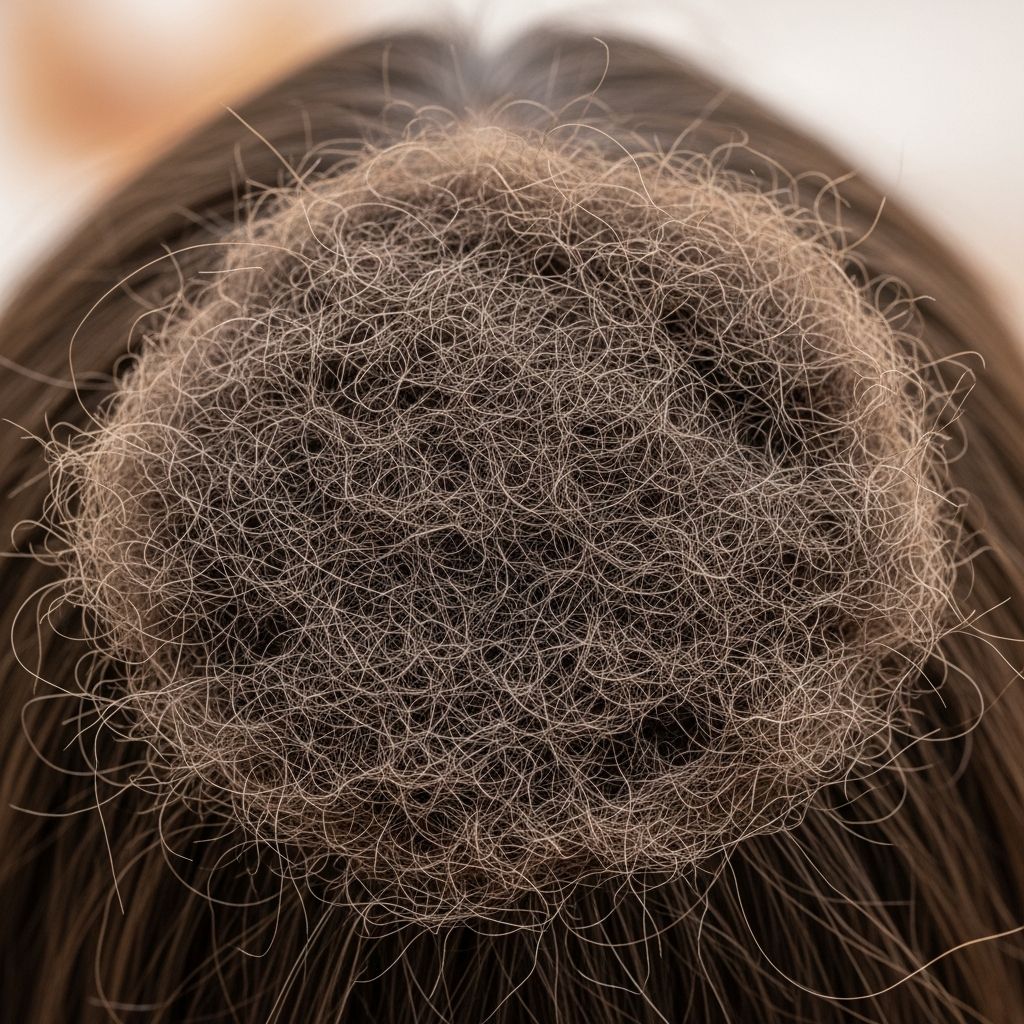
Acute hair matting, also known as plica polonica or acute scalp felting, is a rare acquired dermatological condition characterized by the sudden formation of a solid, impenetrable mass of matted scalp hair, typically on the vertex (crown) in otherwise healthy individuals. This phenomenon mimics the industrial ‘felting’ process in wool textiles, where hair fibers compact due to surface abrasion, friction, and moisture.
Introduction
Acute hair matting represents a severe, irreversible tangling of scalp hair that develops rapidly, often within days, transforming loose strands into a stiff, stony mass resembling a bird’s nest. Historically linked to poor hygiene and tight headwear in 19th-century Poland—hence ‘plica polonica’—it was associated with muddy, malodorous scalp masses complicated by lice and inflammation. Modern cases occur sporadically worldwide, unrelated to epidemics, and affect individuals with long hair regardless of mental health status, challenging outdated stereotypes of ‘hysterical tendencies’. The condition underscores the interplay of physical, chemical, and behavioral factors in hair integrity.
Who is affected? Demographics reveal no strong age or gender bias, though it predominantly strikes those with lengthy, untreated hair. Reports span adults and occasionally children, with cases documented in diverse ethnicities. Unlike chronic tangling, acute matting is abrupt and localized.
Other Forms of Hair Matting
Distinct from acute hair matting, other matting variants include:
- Plica neuropathica: Diffuse scalp tangling tied to psychological factors or neglect, often with underlying psychiatric illness.
- Diffuse uncombable hair syndrome: Genetic disorder causing frizzy, unmanageable hair prone to widespread tangling.
- Trichonodosis: Single-hair knots from friction, not mass matting.
- Prolonged hair casting: Buildup of desquamated cells forming casts that mimic matting but are removable.
Acute matting uniquely forms a single, solid vertex mass, differentiating it clinically.
Demographics
Affecting otherwise healthy people, acute hair matting shows no demographic predilection for age, sex, or ethnicity. It favors individuals with long scalp hair, as length facilitates fiber entanglement. Case reports highlight women post-styling or vigorous washing, but men are not exempt. Incidence remains undocumented due to rarity, with fewer than 100 global publications.
Causes
The etiology involves multifactorial mechanisms compacting hair cuticles via abrasion and friction. Key contributors include:
- Physical factors: Vigorous shampooing, tight hairstyles, or head coverings generating friction; moisture from sweat softens cuticles for interlocking.
- Chemical factors: Harsh shampoos with cationic detergents, alkaline cleansers, or herbal mixes roughening cuticles; damaged shafts split longitudinally.
- Behavioral factors: Neglect in combing/washing, allowing progressive tangling; sleeping with wet hair or excessive sweating.
- Predispositions: Long hair, seborrheic dermatitis, psoriasis, chemotherapy/radiation altering texture, or immunosuppressants.
Scanning electron microscopy reveals cuticle abrasion and fiber compaction akin to wool felting. No infectious or parasitic primary role, though secondary infestations occur.
Clinical Features
Symptoms emerge suddenly: a prominent, stiff, impenetrable hair mass on the vertex, often malodorous from trapped debris. The scalp beneath appears normal initially, with matted hair resisting separation. Progression: minor tangles escalate to irreversible compaction within 12-48 hours. Associated pain arises from traction on follicles.

Complications
Bacterial superinfection is primary, with impetigo (honey-crusted lesions) from Staphylococcus or Streptococcus due to occluded follicles. Boggy inflammation, lice, or fungal overgrowth may develop. Chronic cases risk cicatricial alopecia (scarring hair loss) from sustained tension. Psychological distress from cosmetic impact and treatment pain is common.
Related Stories



Diagnosis
Diagnosis is clinical, based on history of sudden vertex matting in healthy scalps. Examination confirms a hard, non-penetrable mass excluding reversible knots. No biopsies needed; rule out differentials via inspection.
Differential Diagnoses
| Condition | Key Distinctions from Acute Hair Matting |
|---|---|
| Plica neuropathica | Diffuse, psychological link, reversible early |
| Diffuse uncombable hair | Genetic, lifelong frizz, no solid mass |
| Trichonodosis | Isolated knots, combable |
| Hair casts | Removable cylindrical sheaths |
| Pediculosis | Lice/nits visible, diffuse itch |
Treatment
Treatment proves challenging and often palliative. Strategies escalate by severity:
- Early intervention: Soften with organic solvents (acetone, olive oil) overnight, then manually separate using wide-tooth combs or knitting needles.
- Advanced cases: Cut out matted section under local anesthesia; full shaving if extensive.
- Adjuncts: Mild shampoos, conditioners post-detangling; antibiotics for impetigo.
- Supportive: Psychiatric counseling if distress evident.
Success rates vary; solvents achieve partial detangling in 20-30% early cases, but excision is definitive.
Outcome
New hair regrows normally from follicles, typically 1 cm/month, restoring coverage in 6-12 months. Scarring is rare absent complications. Recurrence prevented via vigilant care. Patients report emotional recovery post-cosmetic restoration.
Prevention
Proactive hair hygiene averts matting:
- Routine mild shampooing (2-3x/week).
- Daily conditioning and gentle combing from roots to ends.
- Avoid vigorous rubbing, tight styles, sleeping wet.
- Pat dry; use microfiber towels.
- Regular trims for long hair.
For at-risk (post-chemo, dermatitis), opt for detangling sprays sans harsh chemicals.
Frequently Asked Questions (FAQs)
Is acute hair matting permanent?
Not the scalp damage, but the mat requires cutting; regrowth is normal.
Can I detangle acute hair matting at home?
Early mild cases possibly with oil/comb; severe needs professional excision.
Does mental health cause acute hair matting?
Outdated myth; physical/chemical factors predominate, though neglect links exist.
How fast does acute hair matting develop?
Suddenly, often overnight after washing/styling.
Is acute hair matting contagious?
No, noninfectious; hygiene prevents.
References
- Acute hair matting – DermNet — DermNet New Zealand. 2023-05-15. https://dermnetnz.org/topics/acute-hair-matting
- Sudden Hair “Felting” during Styling Procedure: The Puzzle is Solved — PMC (PubMed Central). 2023-03-20. https://pmc.ncbi.nlm.nih.gov/articles/PMC10075346/
- Localized and Diffuse Forms of Hair Tangling — Donovan Hair Clinic. 2024-01-10. https://donovanmedical.com/hair-blog/hair-matting
- Plica neuropathica — Wikipedia (referencing primary derm sources). 2025-06-12. https://en.wikipedia.org/wiki/Plica_neuropathica
- Understanding Acute Hair Matting and How to Deal with It — Hidoc Dr. 2024-08-05. https://hidocdr.com/articles-details.php?artId=e46817bd-fe3d-4f47-99a3-df68ac5d1346
Similar Articles








Read full bio of medha deb