Acute Respiratory Distress Syndrome (ARDS)
Understanding ARDS: A life-threatening lung condition requiring immediate medical intervention.
What is Acute Respiratory Distress Syndrome (ARDS)?
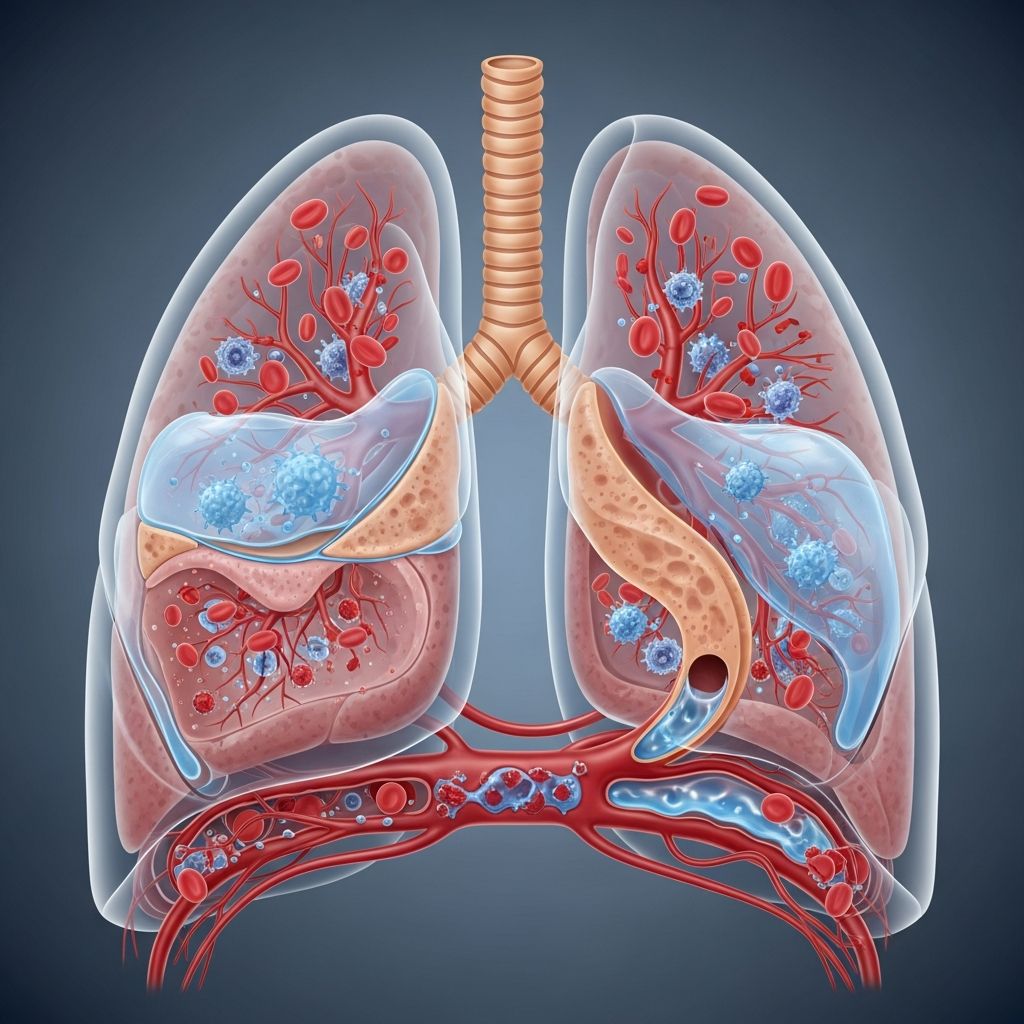
Acute respiratory distress syndrome (ARDS) is a life-threatening lung injury characterized by fluid buildup in the small air sacs of your lungs, known as alveoli. This condition prevents your lungs from filling with air properly and results in dangerously low oxygen levels in your blood, a condition called hypoxia. ARDS is a serious medical emergency that typically develops rapidly and can worsen within hours to days of the initial triggering event.
When ARDS develops, the alveoli become filled with fluid rather than air, making it extremely difficult for oxygen to pass into your bloodstream. This reduced oxygen delivery affects multiple organ systems, including your brain, heart, kidneys, and stomach. Healthcare providers classify ARDS into three severity levels—mild, moderate, and severe—based on the oxygen level in your blood relative to the oxygen being provided.
Prevalence and Impact
ARDS affects a substantial number of people globally. In the United States alone, approximately 200,000 people develop ARDS each year, while worldwide, the condition impacts around 3 million people annually. The condition is responsible for roughly 10% of all intensive care unit (ICU) admissions and is the reason at least 25% of hospitalized patients require mechanical ventilation. Understanding ARDS is critical for healthcare providers and patients alike, as early recognition and treatment can significantly improve outcomes.
Understanding the Three Stages of ARDS
Healthcare providers sometimes classify ARDS into three distinct stages based on the lung’s inflammatory response and healing process:
– Exudative Stage: The initial phase where inflammation and fluid buildup occur in the lungs- Proliferative Stage: The intermediate phase where the lungs begin their repair process- Fibrotic Stage: The final phase characterized by scar tissue formation in the lungs and potentially prolonged need for ventilation support
It is important to note that not all patients progress through all three stages. Some individuals may recover during the earlier stages, while others may require extended support and experience long-term complications.
Causes of Acute Respiratory Distress Syndrome
ARDS can develop from numerous medical conditions and events. The most common causes include:
– Sepsis (a severe blood infection)- Pneumonia- COVID-19 and other respiratory viral infections- Aspiration (when stomach contents enter the lungs)- Trauma or severe injuries- Pancreatitis- Blood transfusions- Near-drowning incidents- Inhalation of harmful substances- Fat embolism (when fat particles enter blood vessels)- Drug toxicity or adverse reactions
Most cases of ARDS occur in hospitalized patients who are already receiving treatment for an infection, illness, or trauma. However, if you experience symptoms of ARDS outside a hospital setting, immediate emergency medical attention is essential.
Related Stories



Risk Factors for Developing ARDS
While ARDS can develop in any hospitalized patient, certain factors increase the likelihood of developing this condition:
– Pre-existing chronic lung diseases- Pre-existing heart conditions- Alcohol abuse or alcohol use disorder- Recent chemotherapy or immunosuppressive therapy- Severe malnutrition- Advanced age- Sepsis from bacterial or fungal infections- Multiple trauma injuries- Aspiration of gastric contents- Prolonged mechanical ventilation
Understanding these risk factors helps healthcare providers identify high-risk patients and monitor them more closely for early signs of ARDS development.
Recognizing the Symptoms of ARDS
Symptoms of ARDS typically develop rapidly, often within hours to a few days of the triggering event. The severity and specific symptoms may vary depending on the underlying cause, the severity of the condition, and any pre-existing lung or heart conditions. Common symptoms include:
– Severe shortness of breath (dyspnea)- Rapid breathing- Low blood oxygen levels (hypoxia)- Increased work of breathing- Anxiety and agitation- Blue coloring of the skin or lips (cyanosis)- Confusion or altered mental status- Extreme fatigue and weakness- Chest pain or discomfort
ARDS can worsen rapidly, often progressing from mild respiratory distress to severe respiratory failure within a short timeframe. If you experience any of these symptoms and are not hospitalized, contact 911 or your local emergency services immediately.
How ARDS is Diagnosed
Healthcare providers diagnose ARDS based on a comprehensive evaluation that includes physical examination and multiple diagnostic tests. Since ARDS symptoms are similar to chronic lung diseases and heart conditions, providers must perform thorough testing to rule out other potential causes.
A typical diagnostic workup for ARDS includes:
– Chest X-ray or CT scan: To visualize bilateral infiltrates (fluid in both lungs)- Arterial blood gas (ABG) test: To measure oxygen and carbon dioxide levels in the blood- Pulse oximetry: To continuously monitor oxygen saturation levels- Echocardiography: To assess cardiac function and exclude heart-related causes of pulmonary edema- Blood tests: To identify infections or other underlying conditions- Sputum culture: To identify causative organisms if infection is suspected- Physical examination: Including lung auscultation to detect abnormal breath sounds
The severity of ARDS is determined by comparing the oxygen level in your blood with the amount of oxygen being administered. This comparison helps healthcare providers classify ARDS as mild, moderate, or severe.
Treatment Options for ARDS
The primary goal of ARDS treatment is to increase oxygen levels in the blood to prevent organ failure and improve survival rates. Treatment is comprehensive and typically involves multiple interventions:
Mechanical Ventilation: Most ARDS patients require mechanical ventilation to support breathing and ensure adequate oxygenation. Ventilators deliver oxygen-rich air into the lungs, bypassing the damaged alveoli to some extent. Low-tidal volume ventilation based on ideal body weight is considered the cornerstone of care for mechanically ventilated ARDS patients.
Oxygen Therapy: Supplemental oxygen is provided to maximize blood oxygen levels and reduce hypoxia-related organ damage.
Prone Positioning: Recent clinical advances have shown that positioning patients face-down (prone positioning) can improve oxygen flow and outcomes in severe ARDS cases. This technique has become an important adjunctive therapy that helps prevent complications and increases successful extubation rates.
Adjunctive Therapies: Depending on patient characteristics and facility capabilities, additional treatments may include neuromuscular blockade, extracorporeal membrane oxygenation (ECMO), or high-frequency oscillatory ventilation (HFOV).
Treating Underlying Conditions: Addressing the primary cause of ARDS is critical. This may involve antibiotics for infections, supportive care for trauma, or specific interventions for other underlying conditions.
Fluid Management: Careful monitoring and management of fluid intake and output helps prevent additional fluid accumulation in the lungs.
Complications and Long-term Effects
ARDS can lead to several serious and life-threatening complications, which may develop during hospitalization or after discharge:
– Secondary infections or sepsis- Ventilator-associated pneumonia- Organ failure (kidney, heart, liver, or brain)- Barotrauma (lung injury from mechanical ventilation)- Muscle weakness and atrophy from prolonged ICU stay- Post-traumatic stress disorder or depression- Persistent cognitive impairment- Pulmonary fibrosis (scarring of lung tissue)- Chronic respiratory problems requiring ongoing oxygen therapy- Tracheostomy complications
Long-term survivors of ARDS may experience persistent respiratory limitations, reduced exercise tolerance, and decreased quality of life. Rehabilitation and follow-up care are important for optimizing recovery.
Survival Rates and Prognosis
Survival rates for ARDS are approximately 55% to 70% when treatment is provided promptly. However, survival rates decline significantly if treatment is delayed or if other organs begin to fail. Several factors influence the prognosis and outlook for ARDS patients:
– Age (younger patients typically have better outcomes)- Underlying medical conditions and health history- Severity of respiratory distress- Cause of ARDS (trauma and blood transfusion-related causes often have better outcomes)- Time to treatment initiation- Presence of complications- Organ function status
The improved outcomes in recent years are largely due to advanced care protocols, newer ventilator technologies, and adjunctive therapies like prone positioning. Patients younger than 65 years tend to have better survival rates and reduced complications. Your healthcare provider will discuss your specific prognosis based on your individual circumstances.
Prevention and When to Seek Medical Attention
Most ARDS cases occur in hospitalized patients where healthcare providers are already monitoring vital signs and clinical status. However, prompt sharing of any symptoms with your medical team is crucial for early detection and intervention. If you experience symptoms of ARDS outside a hospital setting, contact 911 or your local emergency services immediately without delay.
Frequently Asked Questions About ARDS
Q: How quickly does ARDS develop?
A: ARDS typically develops within a few hours to a few days of the triggering event. The condition can worsen rapidly, sometimes progressing from mild symptoms to severe respiratory failure within hours.
Q: Can ARDS be prevented?
A: While ARDS cannot always be prevented, managing risk factors and underlying conditions can reduce the likelihood of developing ARDS. Early treatment of infections, careful fluid management, and appropriate supportive care during hospitalization help reduce ARDS risk.
Q: What is the difference between ARDS and acute respiratory failure?
A: ARDS is a specific type of acute respiratory failure characterized by fluid buildup in the alveoli and reduced oxygen levels. Not all respiratory failure is ARDS, as respiratory failure can result from other causes affecting the lungs or respiratory system.
Q: How long does ARDS typically last?
A: The duration of ARDS varies widely depending on severity, underlying cause, and individual patient factors. Some patients recover within days to weeks, while others may require weeks to months of ICU support and mechanical ventilation.
Q: What happens after recovery from ARDS?
A: ARDS survivors may experience long-term effects including persistent respiratory problems, reduced exercise tolerance, muscle weakness, and psychological effects. Rehabilitation, follow-up care with pulmonologists, and gradual return to normal activities are often recommended.
Q: Is ARDS the same as pneumonia?
A: No. While pneumonia can cause ARDS, they are different conditions. Pneumonia is an infection of the lungs, while ARDS is a lung injury that can result from pneumonia or other conditions causing diffuse alveolar damage.
Living with ARDS: Moving Forward
ARDS is indeed a serious and potentially life-threatening condition. However, with improved medical care, advanced ventilator technologies, and evidence-based treatment protocols including prone positioning, more people are surviving ARDS and returning to meaningful lives. Your healthcare team remains your best resource for understanding your specific condition, treatment options, and what to expect during recovery. If breathing issues or respiratory concerns are affecting your quality of life, respiratory therapy programs can provide specialized support to help you feel better and regain functionality.
References
- Acute Respiratory Distress Syndrome (ARDS) — Cleveland Clinic. December 7, 2023. https://my.clevelandclinic.org/health/diseases/15283-acute-respiratory-distress-syndrome-ards
- Acute Respiratory Distress Syndrome: Implications of Recent Studies — Cleveland Clinic Journal of Medicine, 81(11):683-692. 2014. https://www.ccjm.org/content/ccjom/81/11/683.full.pdf
- Acute Respiratory Distress Syndrome: Why a Definition Matters — Cleveland Clinic Journal of Medicine, 92(9):565-575. 2025. https://www.ccjm.org/content/92/9/565
- Acute Respiratory Distress Syndrome in COVID-19 — ConsultQD, Cleveland Clinic. https://consultqd.clevelandclinic.org/progression-to-ards-in-covid-19-heres-what-it-looks-like
- Acute Respiratory Distress Syndrome Epidemiology and Management — PubMed, National Center for Biotechnology Information. September 2022. https://pubmed.ncbi.nlm.nih.gov/35953211/
- Respiratory Failure: Causes, Symptoms & Treatment — Cleveland Clinic. https://my.clevelandclinic.org/health/diseases/24835-respiratory-failure
- Acute Respiratory Distress Syndrome: Global Definition Evolution — PubMed, National Center for Biotechnology Information. May 2024. https://pubmed.ncbi.nlm.nih.gov/40897458/
Similar Articles








Read full bio of medha deb